 Her Happy Kitchen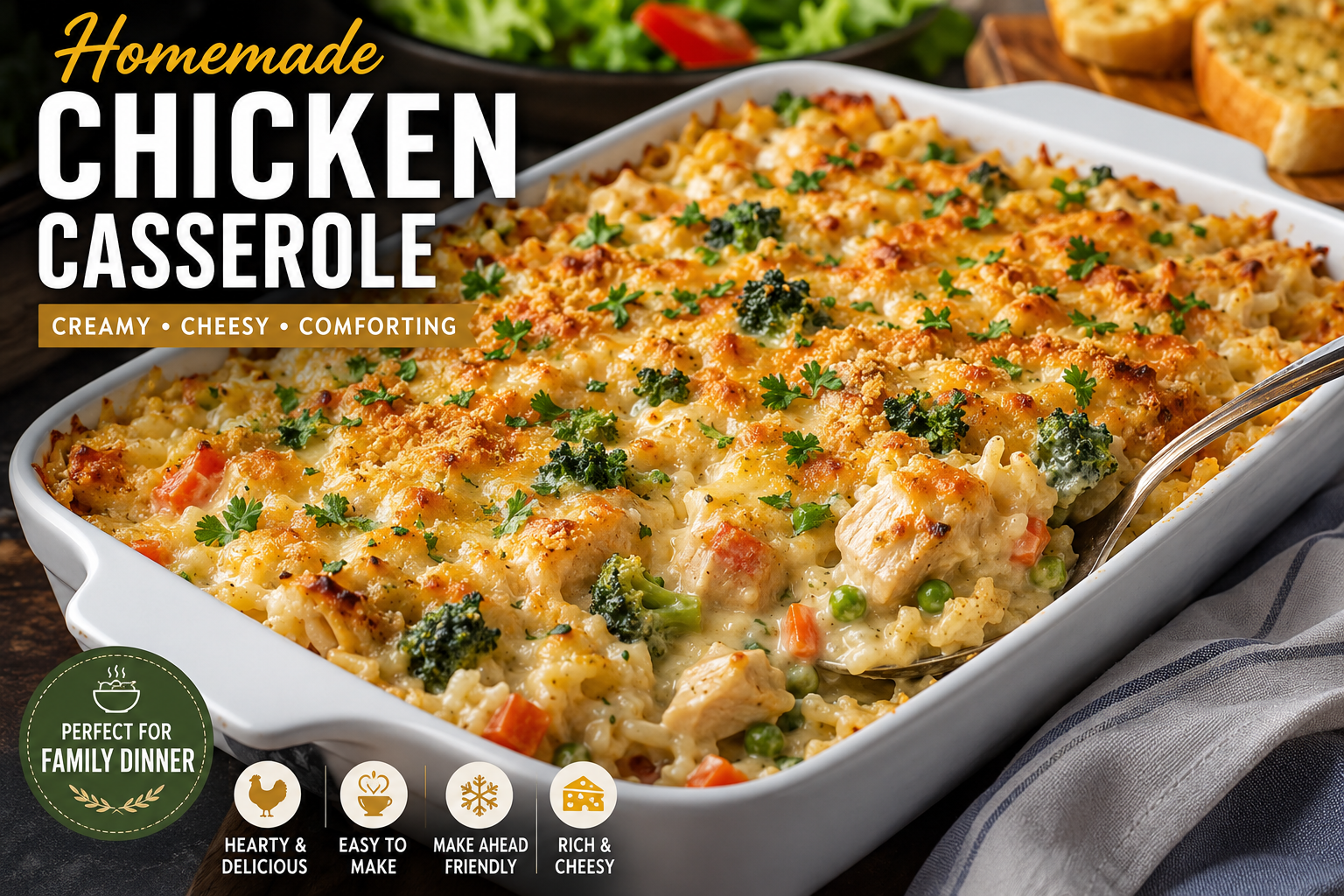
Introduction
If you’re looking for a warm, creamy, cheesy, and comforting meal that the whole family will love, this Chicken Casserole Recipe is exactly what you need. Made with tender chicken, creamy sauce, vegetables, flavorful seasonings, and a delicious golden cheese topping, this homemade casserole is the perfect combination of convenience and comfort.
Chicken Casserole is one of those recipes that can turn simple everyday ingredients into a satisfying family dinner. Everything comes together in one baking dish, allowing the flavors to blend beautifully while the cheese melts into a golden, bubbly topping. The result is a hearty meal that’s creamy, savory, filling, and incredibly easy to prepare.
One of the biggest advantages of Chicken Casserole is its versatility. You can prepare it with cooked chicken, leftover roasted chicken, rotisserie-style chicken, or freshly cooked chicken breasts. You can also add vegetables, pasta, rice, potatoes, mushrooms, broccoli, or corn depending on what you have available in your kitchen.
This recipe is especially useful on busy weeknights because much of the preparation can be completed ahead of time. Simply prepare the casserole, cover it, refrigerate it, and bake it when you’re ready for dinner. It’s also an excellent choice for family gatherings, potlucks, weekend lunches, and casual entertaining.
The creamy sauce is one of the most important parts of a delicious Chicken Casserole. It coats the chicken and vegetables while keeping the entire dish moist and flavorful. Combined with melted cheddar or mozzarella cheese and a crispy golden topping, it creates the comforting texture that makes casserole recipes so popular.
Whether you’re a beginner or an experienced home cook, this recipe is easy to customize. You can make it extra cheesy, add spicy seasonings, include more vegetables, use rice instead of pasta, or create a lighter version with different ingredients.
In this complete Chicken Casserole guide, you’ll learn how to choose the best chicken, prepare the creamy filling, combine all the ingredients, bake the casserole perfectly, prevent it from becoming watery, store leftovers, reheat them properly, and create delicious variations for different occasions.
Once you try this homemade Chicken Casserole, you’ll have an easy and dependable dinner recipe that you can return to whenever you need something warm, comforting, and satisfying.
What Is Chicken Casserole?
Chicken Casserole is a baked comfort-food dish that combines chicken with a creamy or savory sauce, vegetables, carbohydrates such as pasta or rice, and a flavorful topping.
The ingredients are usually mixed together in a baking dish and then cooked in the oven until everything is hot, creamy, and beautifully browned on top.
Unlike recipes that require several separate cooking steps, casseroles are designed to bring multiple ingredients together in one dish.
That’s what makes Chicken Casserole especially convenient for busy families.
Why You’ll Love This Chicken Casserole
There are plenty of reasons to add this recipe to your regular dinner rotation.
- Easy to prepare with simple ingredients.
- Perfect for busy weeknights.
- Creamy, cheesy, and comforting.
- Family-friendly.
- Excellent for leftovers.
- Great for meal prep.
- Easy to customize.
- Perfect for potlucks and gatherings.
- A great way to use leftover chicken.
- Can be prepared ahead of time.
Every serving combines tender chicken, creamy sauce, vegetables, and melted cheese in one satisfying meal.
Ingredients You’ll Need
For the Chicken
- 2 pounds boneless, skinless chicken breasts or thighs
- 1 tablespoon olive oil
- 1 teaspoon garlic powder
- 1 teaspoon onion powder
- 1 teaspoon paprika
- ½ teaspoon Italian seasoning
- Salt to taste
- Black pepper to taste
Chicken thighs provide a particularly juicy result, while chicken breasts offer a leaner option.
You can also use leftover cooked chicken to make preparation even faster.
For the Casserole
- 3 cups cooked pasta or rice
- 1½ cups broccoli florets
- 1 cup sliced mushrooms
- 1 cup sweet corn
- 1 cup shredded cheddar cheese
- ½ cup shredded mozzarella cheese
- 1 can cream of chicken soup
- ½ cup chicken broth
- ½ cup sour cream
- 2 cloves garlic, minced
- 1 teaspoon Italian seasoning
- Salt to taste
- Black pepper to taste
You can adjust the vegetables according to what you have available.
For the Topping
For an extra flavorful and crunchy topping, use:
- ½ cup shredded cheddar cheese
- ¼ cup breadcrumbs
- 2 tablespoons grated Parmesan cheese
- 1 tablespoon melted butter
- Fresh parsley for garnish
The topping becomes golden and slightly crispy during baking while the cheese underneath melts into the creamy casserole.
Choosing the Best Chicken
Chicken breasts are one of the most common choices for casseroles because they are easy to prepare and have a mild flavor that works well with creamy sauces.
Chicken thighs are another excellent option.
Chicken Breasts
- Lean
- Mild flavor
- Easy to slice
- Works well with creamy sauces
Chicken Thighs
- Juicier
- More flavorful
- More forgiving during cooking
- Excellent for casseroles
If you’re short on time, leftover cooked chicken is also a great option.
Shredded or chopped cooked chicken can be mixed directly with the casserole ingredients.
Best Vegetables for Chicken Casserole
Vegetables add flavor, texture, color, and variety to the dish.
Some excellent choices include:
- Broccoli
- Mushrooms
- Sweet corn
- Green peas
- Carrots
- Bell peppers
- Spinach
- Green beans
- Zucchini
You don’t need to use every vegetable.
Choose two or three that complement the creamy sauce and chicken.
Broccoli and mushrooms are particularly good because they absorb the sauce while maintaining their texture during baking.
Choosing the Best Cheese
Cheese creates the rich, creamy topping that makes Chicken Casserole so comforting.
Cheddar
Provides a strong, savory flavor and excellent melting.
Mozzarella
Creates a smooth, stretchy texture.
Parmesan
Adds a salty, nutty flavor and helps create a golden topping.
For a balanced casserole, combining cheddar and mozzarella works especially well.
A small amount of Parmesan can then be added to the topping for extra flavor.
Preparing the Ingredients Before Cooking
Before assembling the casserole, prepare everything first.
- Cook the chicken if you’re using raw chicken.
- Cook the pasta or rice.
- Chop the vegetables.
- Mince the garlic.
- Shred the cheese.
- Measure the sauce ingredients.
- Prepare the breadcrumb topping.
- Preheat the oven.
Having everything ready makes assembly much easier and prevents unnecessary delays.
The Secret to a Creamy Chicken Casserole
The key is creating the right balance between the sauce and the solid ingredients.
Too little sauce can make the casserole dry.
Too much liquid can make it watery.
The chicken, vegetables, and pasta or rice should be coated in sauce without swimming in it.
Using chicken broth and sour cream alongside cream of chicken soup creates a creamy mixture with enough moisture to keep the casserole tender during baking.
How to Prevent a Watery Casserole
A watery casserole is one of the most common problems.
To avoid it:
- Drain canned vegetables properly.
- Don’t add excessive broth.
- Cook watery vegetables briefly before adding them.
- Don’t overcrowd the casserole with uncooked vegetables.
- Allow the casserole to rest after baking.
Resting is especially important because the sauce thickens slightly as the casserole cools.
Why Resting the Casserole Matters
Once the casserole comes out of the oven, don’t immediately cut into it.
Allow it to rest for approximately 5–10 minutes.
This gives the sauce time to settle and helps the casserole hold together when served.
It also reduces the risk of burning your mouth on extremely hot sauce and cheese.
Best Baking Dish
A medium or large oven-safe baking dish works well.
A 9 × 13-inch baking dish is especially convenient for a family-sized casserole.
Lightly grease the dish before adding the ingredients.
This helps prevent sticking and makes serving easier.
Helpful Tips Before You Start
For the best Chicken Casserole:
- Use flavorful cooked chicken.
- Don’t add too much liquid.
- Use freshly shredded cheese when possible.
- Season the sauce before baking.
- Spread the ingredients evenly in the dish.
- Don’t overbake.
- Allow the casserole to rest before serving.
- Add fresh herbs just before serving.
With these simple techniques, you’ll be ready to create a creamy, cheesy, hearty Chicken Casserole that’s perfect for family dinners, meal prep, gatherings, and cozy weekends at home.
How to Make Chicken Casserole – Step-by-Step Cooking Method
Now that all the ingredients are prepared, it’s time to make this delicious Chicken Casserole. The recipe is simple, but following the correct order helps create tender chicken, flavorful vegetables, a creamy filling, and a beautifully golden cheese topping.
The most important thing is to avoid adding too much liquid and to cook the casserole just until everything is hot and the cheese has melted.
Step 1: Prepare the Chicken
If you’re using raw chicken breasts or thighs, begin by patting them dry with paper towels.
Cut the chicken into small, evenly sized pieces.
Season with:
- Salt
- Black pepper
- Garlic powder
- Onion powder
- Paprika
- Italian seasoning
Toss the chicken thoroughly so the seasoning coats every piece.
Allow it to rest for about 10 minutes.
This gives the seasoning time to flavor the chicken before cooking.
Step 2: Cook the Chicken
Heat a large skillet over medium-high heat.
Add:
- 1 tablespoon olive oil
Once the oil is hot, add the seasoned chicken.
Cook for approximately 5–7 minutes, stirring occasionally, until the chicken is cooked through and lightly golden.
Avoid overcrowding the skillet.
If necessary, cook the chicken in batches.
Once cooked, transfer the chicken to a clean plate.
Set it aside while preparing the remaining ingredients.
If you’re using leftover cooked chicken, simply chop or shred it and skip this cooking step.
Step 3: Prepare the Pasta or Rice
If you’re making a pasta-based casserole, cook the pasta according to the package directions.
For the best texture, cook it until just tender rather than extremely soft.
The pasta will continue cooking slightly while the casserole bakes.
If you’re using rice, prepare it separately before assembling the casserole.
Allow the cooked pasta or rice to drain and cool slightly.
Step 4: Prepare the Vegetables
Heat the same skillet over medium heat.
Add the vegetables:
- Broccoli
- Mushrooms
- Sweet corn
You can also add:
- Carrots
- Bell peppers
- Green peas
- Spinach
Cook the vegetables for approximately 3–5 minutes.
The goal isn’t to completely cook them.
They should become slightly tender while retaining some texture.
Avoid overcooking the vegetables because they’ll continue cooking inside the oven.
Step 5: Prepare the Creamy Sauce
In a large mixing bowl, combine:
- Cream of chicken soup
- Chicken broth
- Sour cream
- Minced garlic
- Italian seasoning
- Black pepper
- A small amount of salt
Whisk everything together until smooth.
The mixture should be creamy rather than watery.
Taste the sauce before adding it to the casserole.
Adjust the seasoning if necessary.
Step 6: Add the Cheese
Add:
- 1 cup shredded cheddar cheese
- ½ cup shredded mozzarella cheese
Reserve some cheese for the top.
Stir the cheese into the creamy mixture.
The cheese will melt during baking and create a rich, smooth filling.
Step 7: Combine the Chicken and Vegetables
Add the cooked chicken to the bowl containing the creamy sauce.
Add the cooked vegetables.
Stir gently until everything is evenly coated.
Make sure the sauce reaches all the chicken and vegetables.
This ensures every serving contains a balanced combination of ingredients.
Step 8: Add the Pasta or Rice
Add the cooked pasta or rice to the mixture.
Fold everything together gently.
Avoid stirring too aggressively because soft pasta can break apart.
The final mixture should look creamy and evenly coated.
If it looks extremely dry, add a small splash of chicken broth.
If it looks watery, don’t add more liquid.
Step 9: Prepare the Baking Dish
Preheat the oven to 375°F (190°C).
Lightly grease a 9 × 13-inch baking dish with butter or cooking spray.
Spread the casserole mixture evenly inside the dish.
Use a spatula to smooth the surface.
An even layer helps the casserole cook consistently.
Step 10: Prepare the Topping
In a small bowl, combine:
- ½ cup shredded cheddar
- ¼ cup breadcrumbs
- 2 tablespoons Parmesan cheese
- 1 tablespoon melted butter
Mix until the breadcrumbs are lightly coated.
Spread this mixture evenly over the casserole.
The breadcrumbs will become golden and crispy while the cheese melts underneath.
Step 11: Bake the Casserole
Place the baking dish in the preheated oven.
Bake for approximately 25–30 minutes.
The casserole should become:
- Hot throughout
- Creamy in the center
- Golden around the edges
- Melted and bubbly on top
If the top needs more color, you can briefly use the broiler at the end.
Watch carefully because the cheese can brown quickly.
Step 12: Check the Temperature
If you’re using freshly cooked chicken, make sure the chicken reaches a safe internal temperature of 165°F (74°C).
If the chicken was already fully cooked before assembling the casserole, the main goal is to heat the entire casserole thoroughly.
A kitchen thermometer is useful for checking the center.
Step 13: Let It Rest
Remove the casserole from the oven.
Allow it to rest for 5–10 minutes before serving.
This short resting period allows the creamy sauce to thicken slightly and helps the casserole hold its shape.
Don’t worry if the casserole looks very creamy immediately after coming out of the oven.
It will become more cohesive as it rests.
Step 14: Garnish
Just before serving, add fresh garnishes such as:
- Chopped parsley
- Fresh green onions
- Extra Parmesan
- Cracked black pepper
For a little heat, you can also add a small amount of red pepper flakes.
Fresh herbs provide color and brightness that balance the rich creamy filling.
How to Know Your Chicken Casserole Is Perfect
A properly baked Chicken Casserole should have:
Golden Top
The cheese and breadcrumbs should be lightly golden.
Creamy Center
The filling should remain moist and creamy without being watery.
Tender Chicken
The chicken should be fully cooked and easy to cut.
Soft but Firm Vegetables
The vegetables should be tender while retaining some texture.
Balanced Flavor
You should be able to taste the chicken, cheese, vegetables, herbs, and creamy sauce without one ingredient overpowering everything else.
Expert Cooking Tips
For the best results every time:
- Don’t overcook the chicken before baking.
- Cook pasta slightly less than completely tender.
- Drain vegetables properly.
- Don’t add too much broth.
- Use freshly shredded cheese when possible.
- Spread the casserole evenly.
- Bake until hot and bubbly rather than excessively long.
- Let it rest before serving.
- Add fresh herbs at the end.
Serving the Chicken Casserole
Serve the casserole while it’s warm.
It pairs beautifully with:
- Garlic bread
- Dinner rolls
- Fresh garden salad
- Steamed vegetables
- Roasted broccoli
- Garlic toast
- Simple cucumber salad
The creamy filling is especially delicious with warm crusty bread.
This complete cooking method gives you a creamy, cheesy, flavorful Chicken Casserole with tender chicken, vegetables, and a golden topping that’s perfect for a comforting homemade dinner.
Chicken Casserole Variations, Flavor Ideas, Toppings, and Creative Versions
One of the best things about Chicken Casserole is how easy it is to customize. The basic recipe provides a creamy and comforting foundation, but you can change the vegetables, starch, cheese, seasonings, and toppings to create completely different versions.
Whether you prefer a cheesy casserole, spicy chicken casserole, creamy mushroom version, Mexican-inspired casserole, or vegetable-packed meal, the same basic cooking method can be adapted in countless ways.
Classic Creamy Chicken Casserole
The classic version keeps things simple and comforting.
It combines:
- Tender chicken
- Creamy sauce
- Cooked pasta or rice
- Broccoli
- Cheddar cheese
- Mozzarella
- Golden breadcrumb topping
This is an excellent version for a family dinner because the flavors are mild and familiar.
Cheesy Chicken Casserole
If you love extra cheese, increase the cheese layers.
Try combining:
- Cheddar
- Mozzarella
- Parmesan
- Monterey Jack
Cheddar provides a strong savory flavor, mozzarella creates a stretchy texture, and Parmesan adds a nutty finish.
For the best result, don’t simply add cheese everywhere.
Reserve some for the top so it melts into a golden layer during baking.
Chicken Broccoli Casserole
Chicken and broccoli are a classic combination.
For this version, use:
- Cooked chicken
- Broccoli
- Creamy sauce
- Cheddar cheese
- Parmesan
- Breadcrumbs
Lightly steam or sauté the broccoli before adding it.
Avoid overcooking it because it will continue cooking in the oven.
Chicken Mushroom Casserole
Mushrooms add a rich earthy flavor that works beautifully with creamy sauce.
Slice mushrooms thinly and sauté them before adding them to the casserole.
You can also add:
- Garlic
- Black pepper
- Thyme
- Parsley
The mushrooms absorb the creamy sauce and create an especially savory filling.
Chicken and Rice Casserole
Rice is an excellent alternative to pasta.
Use:
- Cooked white rice
- Brown rice
- Jasmine rice
- Basmati rice
Combine the rice with chicken, vegetables, creamy sauce, and cheese.
Rice absorbs the sauce beautifully and creates a hearty one-dish meal.
If using cooked rice, avoid adding excessive broth because the rice can become too soft during baking.
Chicken Pasta Casserole
For pasta lovers, this version is perfect.
Good pasta choices include:
- Penne
- Rotini
- Fusilli
- Rigatoni
- Shells
- Elbow macaroni
Short pasta shapes are particularly useful because they hold the creamy sauce inside their curves and spaces.
Cook the pasta slightly underdone before baking.
Spicy Chicken Casserole
If you enjoy bold flavors, create a spicy version by adding:
- Red pepper flakes
- Jalapeños
- Hot sauce
- Cayenne pepper
- Pepper Jack cheese
You can also add diced green chilies for extra flavor.
Start with a small amount of heat and adjust according to your preference.
Mexican-Inspired Chicken Casserole
Turn your casserole into a Mexican-inspired dinner.
Add:
- Corn
- Black beans
- Bell peppers
- Salsa
- Mexican-style cheese
- Cumin
- Chili powder
Instead of traditional Italian herbs, use:
- Cumin
- Chili powder
- Paprika
- Garlic powder
Top with fresh cilantro after baking.
Serve with avocado, lime, or a fresh tomato salad.
Buffalo Chicken Casserole
For a Buffalo-inspired version, combine:
- Shredded chicken
- Buffalo-style hot sauce
- Creamy dressing
- Cheddar cheese
- Mozzarella
- Pasta or rice
Add a small amount of green onion after baking.
The result is creamy, tangy, cheesy, and spicy.
Garlic Parmesan Chicken Casserole
For a rich garlic-forward version, increase the Parmesan and garlic.
Use:
- Fresh minced garlic
- Parmesan cheese
- Mozzarella
- Italian seasoning
- Black pepper
A small amount of fresh parsley added at the end gives the casserole a bright finish.
Chicken Alfredo Casserole
You can transform the casserole into an Alfredo-style dish.
Replace the tomato-based or basic creamy sauce with Alfredo sauce.
Combine:
- Chicken
- Fettuccine or penne
- Alfredo sauce
- Broccoli
- Parmesan
- Mozzarella
Bake until the cheese melts and the edges become lightly golden.
Chicken Spinach Casserole
Spinach works particularly well with creamy sauces.
Use:
- Fresh spinach
- Chicken
- Creamy sauce
- Mozzarella
- Parmesan
- Garlic
Add the spinach toward the end of the vegetable-cooking stage.
This helps preserve its color and texture.
Chicken Corn Casserole
Sweet corn adds a mild sweetness that balances savory chicken and cheese.
Combine:
- Chicken
- Sweet corn
- Cheddar
- Creamy sauce
- Black pepper
- Paprika
For extra texture, add a light breadcrumb topping.
Chicken Vegetable Casserole
For a vegetable-packed version, use a combination of:
- Broccoli
- Carrots
- Peas
- Corn
- Bell peppers
- Mushrooms
Don’t add too many watery vegetables without preparing them first.
Steam or sauté vegetables briefly before assembling the casserole.
Chicken Potato Casserole
Potatoes can replace pasta or rice.
Use cooked potato cubes and combine them with:
- Chicken
- Cheddar
- Creamy sauce
- Garlic
- Black pepper
- Green onions
Bake until the potatoes are hot and the cheese is golden.
This creates an especially hearty comfort-food casserole.
Chicken Stuffing Casserole
For a cozy variation, add seasoned stuffing as a topping.
Combine the chicken and creamy filling in the baking dish.
Spread prepared stuffing over the top.
Bake until the stuffing becomes golden and crisp.
This version is especially suitable for fall and holiday-style dinners.
Chicken Biscuit Casserole
Instead of breadcrumbs, use biscuit dough as the topping.
Prepare the creamy chicken filling and place it in an oven-safe dish.
Arrange biscuit pieces over the top.
Bake until the biscuits are golden and cooked through.
The result combines creamy chicken filling with a soft, fluffy topping.
Crunchy Chicken Casserole Toppings
If you want extra texture, try:
- Panko breadcrumbs
- Crushed crackers
- Crispy fried onions
- Toasted breadcrumbs
- Crushed cornflakes
- Parmesan breadcrumbs
Mixing breadcrumbs with a small amount of melted butter helps create a golden, crunchy topping.
Best Herbs and Seasonings
The right seasonings can completely change the flavor.
For a classic version:
- Italian seasoning
- Garlic powder
- Onion powder
- Black pepper
- Paprika
For a richer herb flavor:
- Thyme
- Rosemary
- Parsley
- Oregano
For a spicy version:
- Chili flakes
- Cayenne
- Smoked paprika
- Hot sauce
Use seasonings gradually and taste the sauce before baking.
Best Cheese Combinations
Different cheeses create different results.
Cheddar + Mozzarella
Balanced and family-friendly.
Mozzarella + Parmesan
Mild, creamy, and savory.
Cheddar + Monterey Jack
Rich and smooth.
Pepper Jack + Cheddar
Creamy with a spicy kick.
Mozzarella + Parmesan + Provolone
Extra rich and Italian-inspired.
How to Make a Lighter Chicken Casserole
For a lighter version, make a few simple adjustments.
- Use chicken breast.
- Reduce the amount of cheese.
- Add extra vegetables.
- Use a lighter creamy sauce.
- Replace some pasta with vegetables.
- Serve with a fresh salad.
You can still maintain the comforting character of the casserole without making every ingredient heavy.
How to Make a High-Protein Version
Chicken already provides protein, but you can increase the protein content by using:
- Extra chicken
- Greek yogurt in the sauce
- Cottage cheese
- High-protein pasta
Choose additions that complement the creamy sauce rather than overpowering it.
How to Make a Kid-Friendly Version
For children who prefer mild flavors:
- Use mild cheddar.
- Avoid spicy peppers.
- Keep vegetables finely chopped.
- Use familiar pasta shapes.
- Keep the seasoning simple.
You can also serve vegetables on the side if they’re not popular in the casserole itself.
Best Toppings After Baking
Fresh toppings can make a baked casserole taste brighter.
Try:
- Green onions
- Fresh parsley
- Fresh cilantro
- Parmesan
- Cracked black pepper
- Chopped tomatoes
- Avocado for Mexican-inspired versions
Add fresh toppings immediately before serving.
Creative Serving Ideas
Chicken Casserole doesn’t have to be served exactly the same way every time.
You can serve it:
- Over a bed of salad
- With garlic bread
- Alongside roasted vegetables
- With steamed rice
- With fresh tortillas
- In individual ramekins
- As part of a buffet
- In lunch containers
Individual portions are particularly useful when serving guests.
How to Make Individual Chicken Casseroles
Instead of using one large baking dish, divide the mixture between small oven-safe dishes.
Add cheese and toppings to each portion.
Bake until hot and golden.
Individual casseroles are ideal for:
- Dinner parties
- Family dinners
- Meal prep
- Special occasions
They also make portioning easier.
Final Tips for Customizing Chicken Casserole
No matter which variation you choose:
- Keep the sauce balanced.
- Don’t add excessive liquid.
- Prepare watery vegetables first.
- Cook pasta or rice before assembling.
- Season every component.
- Reserve cheese for the top.
- Don’t overbake.
- Let the casserole rest before serving.
- Add fresh herbs at the end.
Once you understand the basic Chicken Casserole method, you can create countless versions using ingredients already available in your kitchen.
Chicken Casserole Expert Cooking Tips, Common Mistakes, Sauce Secrets, and Perfect Texture Guide
A delicious Chicken Casserole is more than simply mixing ingredients together and putting them in the oven. The best casseroles have a creamy but not watery filling, tender chicken, vegetables with good texture, and a golden topping that adds a satisfying contrast.
A few simple cooking techniques can make a major difference in the final result. Understanding these techniques also makes it easier to troubleshoot problems when something doesn’t turn out exactly as expected.
The Secret to a Perfect Chicken Casserole
A great Chicken Casserole depends on four important elements:
- Tender and flavorful chicken
- Creamy, well-seasoned sauce
- Properly cooked vegetables and pasta or rice
- Golden, flavorful topping
If any one of these components is unbalanced, the casserole may become dry, watery, bland, or overly heavy.
The goal is to make every ingredient contribute something useful without allowing one ingredient to overpower the others.
How to Keep Chicken Tender
Chicken can become dry when it is cooked for too long.
To keep it tender:
- Cut the chicken into evenly sized pieces.
- Avoid overcooking it before baking.
- Season it properly.
- Use chicken thighs if you prefer a naturally juicier result.
- If using cooked chicken, don’t bake the casserole longer than necessary.
If you’re using raw chicken, always make sure it reaches 165°F (74°C) internally.
Why You Shouldn’t Overcook the Chicken Before Baking
The chicken will continue cooking inside the casserole.
If you completely cook the chicken for a long time in the skillet and then bake it for another 30 minutes, it can become dry.
A better approach is to cook raw chicken just until done, then keep the final oven stage focused on heating the casserole and melting the cheese.
How to Make the Creamy Sauce Better
The sauce is the foundation of the casserole.
For a flavorful sauce:
- Use chicken broth for savory depth.
- Add garlic for aroma.
- Use Italian herbs for a balanced flavor.
- Add sour cream for creaminess and mild tang.
- Use cheese for richness.
- Taste before assembling.
Always taste the sauce before adding it to the casserole.
Once everything is mixed together, adjusting the seasoning becomes more difficult.
How to Prevent the Sauce from Becoming Watery
A watery casserole can happen when vegetables or other ingredients release too much moisture.
Common causes include:
- Frozen vegetables not drained properly.
- Excess chicken broth.
- Very watery mushrooms.
- Too many vegetables.
- Adding uncooked pasta.
- Using too much sauce.
To prevent this, drain ingredients carefully and avoid adding unnecessary liquid.
How to Fix a Watery Casserole
If the casserole looks slightly watery after baking, don’t immediately add more ingredients.
First, allow it to rest for 10–15 minutes.
The sauce will naturally thicken as it cools.
If the casserole is still too loose, next time reduce the amount of broth slightly and make sure watery vegetables are cooked and drained before assembly.
How to Prevent a Dry Casserole
A dry casserole is usually caused by insufficient sauce or excessive baking.
To prevent dryness:
- Use enough creamy sauce to coat the ingredients.
- Don’t overcook pasta or rice before assembly.
- Cover the casserole briefly if the top browns too quickly.
- Avoid baking significantly longer than necessary.
The filling should remain creamy when served.
How to Get a Golden, Crispy Topping
The topping is one of the best parts of a casserole.
For extra crunch, combine:
- Panko breadcrumbs
- Parmesan cheese
- Melted butter
- Shredded cheddar
Spread the mixture evenly across the top.
Avoid creating an extremely thick layer because it may become too heavy.
A thin, even topping produces better browning and crunch.
How to Prevent the Cheese from Burning
If the cheese is becoming dark before the casserole is hot throughout, cover the dish loosely with foil.
Continue baking until the center is hot.
Remove the foil during the final few minutes to allow the top to brown.
This gives you melted cheese without an overly dark surface.
Should You Cover Chicken Casserole While Baking?
It depends on the recipe.
If the casserole contains plenty of moisture and you want the top to brown, baking uncovered usually works well.
If the top is browning too quickly, cover it loosely with foil.
For casseroles that need to retain more moisture, covering for part of the cooking time can be helpful.
Why Letting the Casserole Rest Is Important
Resting allows:
- Sauce to thicken
- Cheese to settle
- Ingredients to hold together
- Heat to distribute more evenly
Allow the casserole to rest for approximately 5–10 minutes before serving.
For very creamy casseroles, a slightly longer resting period can make serving easier.
How to Get Better Flavor
Don’t rely entirely on cheese and cream for flavor.
Build the taste gradually.
Chicken
Season before cooking.
Vegetables
Lightly season while sautéing.
Sauce
Taste and adjust before combining.
Topping
Use Parmesan, herbs, and breadcrumbs.
This creates multiple layers of flavor rather than one heavy flavor.
Common Mistake: Adding Too Many Ingredients
Chicken Casserole is customizable, but adding everything you have in the refrigerator isn’t always a good idea.
Too many ingredients can:
- Overcrowd the dish.
- Release excess moisture.
- Dilute the sauce.
- Make the flavors confusing.
- Prevent even cooking.
Choose a few ingredients that complement each other.
For example:
Chicken + broccoli + mushrooms + cheddar is a simple and balanced combination.
Common Mistake: Using Too Much Cheese
More cheese doesn’t always mean a better casserole.
Excess cheese can make the dish:
- Too oily
- Too salty
- Too heavy
- Difficult to serve
Use enough cheese to create a creamy filling and golden topping while allowing the chicken and vegetables to remain noticeable.
Common Mistake: Using Cold Ingredients
Extremely cold ingredients can increase the time needed to heat the casserole.
If possible, allow refrigerated ingredients such as cooked chicken and sauce to lose some of their chill before assembly.
However, don’t leave perishable ingredients at room temperature for extended periods.
Common Mistake: Overcooking Pasta
Very soft pasta can become mushy during baking.
Cook pasta until just tender.
It will continue cooking in the oven as it absorbs some of the creamy sauce.
This is especially important when preparing pasta-based casseroles.
Common Mistake: Adding Raw Watery Vegetables
Some vegetables release significant moisture while baking.
Mushrooms, zucchini, spinach, and frozen vegetables can contribute extra liquid.
Sauté or drain them when necessary before adding them to the casserole.
How to Make the Casserole More Flavorful Without Extra Salt
If you want stronger flavor without simply adding more salt, try:
- Fresh garlic
- Black pepper
- Paprika
- Italian herbs
- Parmesan
- Fresh parsley
- Roasted vegetables
- A small amount of mustard
These ingredients can add complexity without relying entirely on salt.
How to Make It More Aromatic
Fresh herbs are excellent for finishing.
Try:
- Parsley
- Basil
- Thyme
- Oregano
- Green onions
Add delicate fresh herbs after baking.
This keeps their aroma brighter.
How to Make Chicken Casserole Extra Creamy
For a richer texture, you can combine:
- Cream of chicken soup
- Sour cream
- Shredded cheese
- Chicken broth
The key is moderation.
Adding too much of every creamy ingredient can make the casserole excessively heavy.
Balance the sauce with vegetables and chicken.
How to Make It Extra Crunchy
If texture is your priority, increase the contrast between the creamy filling and crispy topping.
Use:
- Panko breadcrumbs
- Parmesan
- Melted butter
- Crispy fried onions
Spread the topping evenly and bake uncovered toward the end.
How to Make a Restaurant-Style Presentation
Presentation can make a simple casserole look much more impressive.
After baking:
- Let it rest.
- Add fresh parsley.
- Sprinkle a little Parmesan.
- Add sliced green onions.
- Serve clean portions with a spatula.
Avoid scooping randomly through the center.
A clean serving helps maintain the layers and makes the dish look more appetizing.
Best Baking Temperature
A temperature around 375°F (190°C) works well for this style of casserole.
It provides enough heat to warm the center while allowing the cheese and breadcrumb topping to brown gradually.
If you’re using a different casserole recipe or a different baking dish size, cooking time may need to be adjusted.
How to Know When the Casserole Is Ready
Look for these signs:
- Cheese is fully melted.
- Edges are bubbling.
- Center is hot.
- Top is lightly golden.
- Chicken is fully cooked.
- Sauce has thickened slightly.
If the top looks perfect but the center isn’t hot, cover loosely with foil and continue baking.
Final Expert Checklist
Before serving, make sure:
- Chicken is tender.
- Chicken reaches 165°F (74°C) when raw chicken is used.
- Pasta or rice isn’t mushy.
- Vegetables retain some texture.
- Sauce is creamy rather than watery.
- Cheese is melted.
- Topping is golden.
- Casserole has rested.
- Fresh herbs have been added.
When all these elements come together, you’ll have a creamy, cheesy, comforting Chicken Casserole with the perfect balance of textures and flavors.
Chicken Casserole Storage, Freezing, Reheating, Meal Prep, and Leftover Ideas
One of the biggest advantages of Chicken Casserole is that it stores and reheats well when handled properly. This makes it an excellent choice for busy families, meal preparation, make-ahead dinners, and occasions when you want to prepare food in advance.
The key to keeping leftover casserole delicious is proper cooling, storage, and reheating. Because the dish contains chicken, dairy, vegetables, and sometimes pasta or rice, it’s important to handle leftovers safely and avoid leaving them at room temperature for extended periods.
How to Store Chicken Casserole
After baking, allow the casserole to cool briefly before storing it.
Transfer leftovers into a clean airtight container or cover the baking dish securely.
Store the casserole in the refrigerator.
For best quality, refrigerated leftovers are generally best consumed within 3–4 days.
If you’re preparing the casserole specifically for meal prep, divide it into individual containers once it has cooled sufficiently.
This makes reheating portions much easier throughout the week.
How to Cool the Casserole Properly
Don’t leave cooked casserole sitting out for a long time.
Once the initial heat has reduced, portion the leftovers into suitable containers and refrigerate them promptly.
Avoid placing a very large, extremely hot dish directly into a crowded refrigerator if it can significantly raise the temperature around other foods.
Dividing the casserole into smaller portions helps it cool more efficiently.
Best Containers for Storage
Airtight containers are ideal.
Choose containers that:
- Seal properly
- Are refrigerator-safe
- Are suitable for reheating if needed
- Have enough room for the portion
- Don’t allow excess air exposure
Glass containers are convenient when you want to move food directly from the refrigerator to the oven, provided the container is designed for that use.
Always follow the manufacturer’s instructions regarding temperature changes.
Can Chicken Casserole Be Frozen?
Yes.
Chicken Casserole can be frozen, although the texture of creamy sauces may change slightly after thawing.
For best results, freeze the casserole in individual portions.
This allows you to thaw and reheat only what you need.
How to Freeze Chicken Casserole
Follow these steps:
- Allow the cooked casserole to cool.
- Divide it into individual portions.
- Place portions into freezer-safe containers.
- Seal tightly.
- Label each container with the date.
- Place in the freezer.
For best quality, use frozen casserole within approximately 2–3 months.
While it may remain safe longer when continuously frozen, texture and flavor are generally better when consumed within this period.
Can You Freeze an Unbaked Chicken Casserole?
Yes, depending on the ingredients.
An assembled unbaked casserole can often be frozen before cooking.
However, ingredients such as certain creamy sauces, pasta, and vegetables may change texture after freezing and thawing.
If you’re planning to freeze the casserole before baking, use ingredients that tolerate freezing well and follow proper food-safety practices.
Best Way to Thaw Frozen Chicken Casserole
The refrigerator is generally the safest method for thawing.
Move the frozen casserole from the freezer to the refrigerator and allow it to thaw gradually.
For a large casserole, this can take many hours or overnight.
Avoid leaving the casserole at room temperature for extended periods.
Can You Bake It Directly from Frozen?
Some casseroles can be baked from frozen, but cooking time will be significantly longer.
If the casserole is in a freezer-safe baking dish, it can often go directly into the oven once the dish has been prepared for that temperature change.
Follow the dish manufacturer’s instructions and ensure the center becomes thoroughly hot.
When possible, thawing in the refrigerator provides more predictable cooking.
How to Reheat Chicken Casserole in the Oven
The oven is one of the best methods for reheating a larger portion.
Preheat the oven to approximately 350°F (175°C).
Place the casserole in an oven-safe dish.
Cover loosely with foil.
Heat until the center is thoroughly hot.
Remove the foil during the final few minutes if you want the cheese and topping to regain some crispness.
The exact reheating time depends on the portion size and starting temperature.
How to Reheat Chicken Casserole in the Microwave
The microwave is convenient for individual portions.
Place one serving on a microwave-safe plate or container.
Cover loosely.
Heat in short intervals, stirring or rotating when appropriate.
Continue until the center is thoroughly hot.
Because microwaving adds moisture and softens crunchy toppings, the casserole may not have the same texture as when freshly baked.
How to Reheat Chicken Casserole in an Air Fryer
An air fryer can work particularly well for smaller portions.
Place the casserole in an appropriate heat-safe container.
Heat according to your appliance’s instructions.
The circulating hot air can help improve the texture of the cheese and breadcrumb topping.
Check the center before serving.
How to Prevent Reheated Casserole from Drying Out
If your casserole becomes dry during reheating, add a small amount of:
- Chicken broth
- Milk
- Cream
- Extra sauce
Add only a little at a time.
Too much liquid can make the casserole watery.
Covering the casserole with foil while reheating in the oven also helps retain moisture.
How to Keep the Topping Crispy
The topping naturally softens in the refrigerator.
To restore some of its texture:
- Reheat in the oven.
- Remove the foil near the end.
- Use an air fryer for individual portions.
- Add a small amount of fresh Parmesan.
- Add a few fresh breadcrumbs before reheating if desired.
Avoid reheating for an unnecessarily long time.
Meal Prep Chicken Casserole
Chicken Casserole is excellent for meal preparation because it can provide several ready-to-eat portions from one baking dish.
A simple meal-prep process is:
Step 1
Prepare the chicken.
Step 2
Cook the pasta or rice.
Step 3
Prepare the vegetables.
Step 4
Mix the creamy sauce.
Step 5
Combine everything.
Step 6
Bake the casserole.
Step 7
Allow it to cool appropriately.
Step 8
Divide into individual containers.
Step 9
Refrigerate the portions you plan to eat soon.
Step 10
Freeze additional portions if desired.
This saves time during busy weekdays.
Make-Ahead Chicken Casserole
Chicken Casserole can often be assembled ahead of time.
Prepare the filling and transfer it into the baking dish.
Cover and refrigerate it until you’re ready to bake.
Keep the casserole refrigerated and bake it according to your planned serving time.
If the casserole is very cold when it goes into the oven, it may require additional baking time.
Always ensure the center becomes thoroughly hot.
Should You Add the Topping Before Refrigerating?
For the best texture, consider keeping the crunchy breadcrumb topping separate until you’re ready to bake.
The longer breadcrumbs sit on a moist casserole, the softer they become.
Instead:
- Prepare the casserole filling.
- Refrigerate it covered.
- Prepare the topping separately.
- Add the topping shortly before baking.
- Bake until golden.
This produces a noticeably better crust.
How to Use Leftover Chicken Casserole
If you have leftovers, you don’t have to eat the same meal in exactly the same form.
Try transforming the leftovers into:
- Stuffed wraps
- Baked tortilla rolls
- Toasted sandwiches
- Rice bowls
- Loaded baked potatoes
- Pasta bowls
- Lunch boxes
For example, spoon reheated casserole into a tortilla, add a little cheese, and toast it in a skillet for a completely different meal.
Chicken Casserole Lunch Box
For a packed lunch, divide the casserole into individual portions.
Pair it with:
- Fresh fruit
- Simple salad
- Cucumber slices
- Roasted vegetables
- Bread
Use a suitable insulated food container if the meal needs to remain warm until lunchtime.
Freezer Meal Planning
If you frequently prepare meals ahead, make two casseroles at once.
Serve one fresh.
Prepare the second specifically for freezing.
Label it with:
- Recipe name
- Date
- Suggested reheating method
This creates an easy homemade freezer meal for a future busy day.
Storage Mistakes to Avoid
Avoid these common mistakes:
- Leaving the casserole at room temperature for too long.
- Storing it uncovered.
- Freezing it in a container that isn’t freezer-safe.
- Repeatedly reheating the entire casserole.
- Adding too much liquid during reheating.
- Freezing an overly watery casserole.
- Forgetting to label frozen portions.
Good storage habits help preserve both quality and food safety.
Best Reheating Method by Situation
One Small Portion
Microwave or air fryer.
Several Portions
Oven.
Frozen Portion
Thaw in the refrigerator, then reheat.
Want Crispy Topping
Oven or air fryer.
Want Maximum Convenience
Microwave.
Choose the method based on whether speed or texture is your priority.
Final Storage and Meal Prep Tips
For the best results:
- Refrigerate leftovers promptly.
- Use airtight containers.
- Eat refrigerated leftovers within 3–4 days.
- Freeze portions for longer storage.
- Label frozen meals.
- Thaw in the refrigerator when possible.
- Reheat until thoroughly hot.
- Add fresh toppings after reheating.
- Keep crunchy toppings separate when making the casserole ahead.
With proper storage and reheating, Chicken Casserole can remain a convenient and satisfying meal long after the original dinner is finished.
It’s one of the reasons this recipe works so well for busy households: one baking dish can provide a delicious dinner today and several convenient meals later.
Best Side Dishes, Sauces, Serving Ideas, Presentation Tips, and Perfect Pairings for Chicken Casserole
A creamy Chicken Casserole is already a complete and satisfying meal, but the right side dishes can make it feel even more special. Because the casserole is rich, creamy, and cheesy, fresh, crunchy, roasted, or lightly seasoned sides work especially well.
Whether you’re preparing a simple family dinner, hosting guests, making a holiday meal, or serving the casserole at a potluck, choosing complementary sides can create a balanced and impressive table.
What to Serve with Chicken Casserole
The best sides should complement the creamy casserole rather than compete with it.
Excellent options include:
- Garlic bread
- Dinner rolls
- Garden salad
- Caesar salad
- Roasted vegetables
- Steamed broccoli
- Green beans
- Corn
- Cucumber salad
- Roasted potatoes
If the casserole already contains pasta or rice, choose lighter vegetable sides.
If the casserole is mainly chicken and vegetables, bread or potatoes can make the meal more filling.
1. Garlic Bread
Garlic bread is one of the easiest and most delicious sides for Chicken Casserole.
The crispy edges and buttery garlic flavor provide a great contrast to the creamy filling.
For homemade garlic bread, spread a mixture of:
- Soft butter
- Minced garlic
- Parsley
- Parmesan cheese
over sliced French or Italian bread.
Toast until golden.
Serve warm alongside the casserole.
The bread is also perfect for scooping up leftover creamy sauce from the plate.
2. Fresh Garden Salad
A fresh salad adds brightness and crunch.
Combine:
- Romaine lettuce
- Cherry tomatoes
- Cucumbers
- Carrots
- Red onions
- Bell peppers
Dress lightly with:
- Olive oil
- Lemon juice
- Black pepper
The fresh vegetables provide a refreshing contrast to the rich casserole.
3. Caesar Salad
A Caesar salad is another excellent pairing.
The crisp lettuce and Parmesan complement the cheesy chicken casserole.
Keep the dressing moderate so the entire meal doesn’t become overly rich.
Add crunchy croutons for extra texture.
4. Roasted Broccoli
Roasted broccoli pairs beautifully with creamy chicken.
Toss broccoli florets with:
- Olive oil
- Garlic
- Black pepper
- A little Parmesan
Roast until the edges become lightly browned.
The roasted flavor adds depth to the meal while keeping the side simple.
5. Green Beans
Green beans are a lighter option.
Steam or roast them until tender but still slightly crisp.
Finish with:
- Butter
- Black pepper
- Lemon juice
- Parmesan, optional
The fresh flavor balances the creamy casserole.
6. Roasted Carrots
Carrots add natural sweetness and beautiful color.
Roast sliced carrots with a little olive oil and black pepper.
You can also add a small amount of honey and herbs for a sweeter variation.
7. Corn on the Cob
Sweet corn is especially good with cheesy Chicken Casserole.
Serve it:
- Steamed
- Boiled
- Grilled
- Roasted
Add butter and a little black pepper before serving.
8. Dinner Rolls
Soft dinner rolls are perfect for family dinners.
They are especially useful when the casserole contains plenty of creamy sauce.
Warm the rolls shortly before serving.
For extra flavor, brush them with melted butter and parsley.
Best Sauces and Condiments
Chicken Casserole usually doesn’t require additional sauce, but small amounts of complementary condiments can create interesting flavor variations.
Try:
- Garlic sauce
- Ranch-style dressing
- Hot sauce
- Herb butter
- Creamy Parmesan sauce
- Salsa for Mexican-inspired versions
Use sauces sparingly because the casserole is already flavorful and creamy.
Spicy Serving Option
If you enjoy heat, add a small amount of:
- Hot sauce
- Red pepper flakes
- Sliced jalapeños
- Chili oil
These work especially well with plain chicken and cheese casseroles.
For a family meal, keep the casserole mild and serve spicy toppings separately so everyone can customize their portion.
Fresh Garnishes
Fresh garnishes can completely change the appearance of the casserole.
Try:
- Chopped parsley
- Green onions
- Fresh basil
- Fresh cilantro
- Parmesan cheese
- Cracked black pepper
Add them immediately before serving.
Fresh herbs provide color and a bright aroma that contrasts with the creamy filling.
How to Plate Chicken Casserole
Presentation doesn’t have to be complicated.
Use a large serving spoon or spatula to lift a neat portion.
Place it in the center of the plate.
Add a small amount of fresh garnish.
If serving with salad or vegetables, arrange the sides beside the casserole rather than underneath it.
This keeps the colors distinct and makes the plate look cleaner.
Restaurant-Style Presentation
For a more elegant presentation:
- Use warm serving plates.
- Place a neat portion of casserole in the center.
- Sprinkle fresh parsley over the top.
- Add a little Parmesan.
- Place roasted vegetables alongside.
- Add a small piece of garlic bread.
- Finish with freshly cracked black pepper.
Avoid adding too many garnishes.
Simple presentation often looks more professional.
Serving Chicken Casserole for a Family Dinner
For a relaxed family meal, place the baking dish directly on a heat-safe serving surface.
Add:
- Fresh parsley
- Green onions
- Extra cheese if desired
Serve sides in separate bowls.
This allows everyone to choose their preferred combination.
Serving Chicken Casserole at a Party
Chicken Casserole works well for casual gatherings and potlucks.
If serving a group:
- Prepare a large casserole.
- Keep it warm.
- Cut or portion it neatly.
- Provide serving utensils.
- Keep toppings separate.
- Offer fresh salad and bread on the side.
Individual ramekins can also be used for a more polished presentation.
Chicken Casserole for Potlucks
For potlucks, choose a casserole that travels well.
A pasta-based Chicken Casserole is particularly convenient.
Prepare it in a transportable baking dish.
Keep it covered while traveling.
If reheating is necessary, make sure the dish is suitable for the reheating method.
Add fresh herbs after reheating.
Holiday Chicken Casserole
Chicken Casserole can also become part of a holiday-style meal.
Serve it with:
- Roasted vegetables
- Dinner rolls
- Fresh salad
- Mashed potatoes
- Cranberry-style fruit side
For holidays, a golden breadcrumb topping adds a particularly attractive finish.
Best Drinks to Serve
Refreshing non-alcoholic drinks pair well with creamy Chicken Casserole.
Good options include:
- Sparkling water
- Lemon water
- Fresh lemonade
- Iced tea
- Apple juice
- Orange juice
- Cucumber-infused water
Citrus-based drinks can provide a refreshing contrast to the creamy dish.
Best Chicken Casserole Combinations
Classic Comfort Meal
Chicken Casserole + Garlic Bread + Garden Salad
Cheesy Family Dinner
Chicken Casserole + Roasted Broccoli + Dinner Rolls
Light Meal
Chicken Casserole + Cucumber Salad + Steamed Vegetables
Party Meal
Chicken Casserole + Garlic Bread + Caesar Salad + Roasted Vegetables
Spicy Meal
Spicy Chicken Casserole + Corn Salad + Fresh Lime
How to Make the Meal More Balanced
If your casserole contains:
Pasta + Cream Sauce + Cheese
choose lighter sides such as salad or steamed vegetables.
If your casserole contains:
Chicken + Vegetables + Light Sauce
you can add bread, rice, or potatoes.
This simple approach prevents the entire meal from becoming overly heavy.
Best Serving Temperature
Chicken Casserole tastes best when served warm.
Allow it to rest briefly after baking, but don’t let it become completely cold before serving.
If you’re serving guests, keep the casserole warm without overheating it.
Excessive heat can dry out the edges and cause the sauce to separate.
Expert Serving Tips
For the best experience:
- Rest the casserole before serving.
- Add fresh herbs at the last moment.
- Serve bread warm.
- Keep sauces on the side.
- Use clean serving portions.
- Pair rich casserole with fresh vegetables.
- Don’t overload the plate.
- Serve immediately whenever possible.
A few simple presentation choices can turn an everyday Chicken Casserole into a beautiful restaurant-style meal.
Chicken Casserole Nutrition, Healthier Versions, Ingredient Substitutions, and Dietary-Friendly Ideas
Chicken Casserole is a comforting meal that can be adapted in many ways depending on your nutritional preferences and dietary needs. Because the recipe contains chicken, vegetables, carbohydrates, dairy, and a creamy sauce, it can provide a satisfying combination of protein, carbohydrates, fats, and other nutrients.
The exact nutritional value depends heavily on the ingredients and portion size. A casserole made with chicken breast, plenty of vegetables, and a lighter sauce will have a different nutritional profile from one made with extra cheese, cream, and a large amount of pasta.
Rather than focusing on one fixed nutritional number, it’s more useful to understand how changing individual ingredients affects the overall dish.
Protein in Chicken Casserole
Chicken is the primary protein source.
Both chicken breast and chicken thighs work well, but they have different characteristics.
Chicken Breast
Chicken breast is:
- High in protein
- Relatively lean
- Mild in flavor
- Easy to portion
It’s a good option when you want a lighter casserole.
Chicken Thighs
Chicken thighs generally provide:
- Richer flavor
- Juicier texture
- More fat than breast meat
They are particularly useful when you want a very tender casserole.
Vegetables Add Variety
Adding vegetables increases the variety of nutrients and textures in the dish.
Good choices include:
- Broccoli
- Carrots
- Peas
- Corn
- Mushrooms
- Bell peppers
- Green beans
- Spinach
- Zucchini
Using several different vegetables also makes the casserole more colorful and visually appealing.
How to Make a Healthier Chicken Casserole
You don’t have to completely change the recipe to make it lighter.
Small adjustments can make a meaningful difference.
Try:
- Using skinless chicken breast.
- Adding more vegetables.
- Reducing the amount of cheese.
- Using a lighter creamy sauce.
- Replacing some pasta with vegetables.
- Serving a smaller amount of bread on the side.
- Using low-sodium broth or soup where appropriate.
The goal is to maintain the comforting texture and flavor while adjusting the ingredients to your preferences.
How to Reduce the Amount of Cheese
Cheese provides richness, but you don’t necessarily need a very large quantity.
Instead of covering the entire casserole with a thick layer, use a moderate amount and distribute it evenly.
You can also choose stronger-flavored cheeses, allowing a smaller amount to provide noticeable flavor.
Fresh Parmesan is particularly useful because its strong savory flavor means you don’t need as much.
How to Increase Vegetables
If you want more vegetables, gradually increase the amount.
Good combinations include:
Broccoli + Mushrooms
Earthy and savory.
Carrots + Peas
Mild and slightly sweet.
Bell Peppers + Corn
Colorful and naturally sweet.
Spinach + Mushrooms
Excellent with creamy sauces.
Avoid adding too many vegetables at once because they can release excess moisture and change the texture of the casserole.
Whole-Grain Options
You can replace regular pasta with whole-grain pasta if you prefer.
Brown rice can also replace white rice.
These substitutions change the texture slightly but can add more dietary fiber.
Cook grains according to their instructions before adding them to the casserole.
Gluten-Free Chicken Casserole
A gluten-free version is possible with a few substitutions.
Use:
- Gluten-free pasta or rice
- Gluten-free breadcrumbs
- Gluten-free cream sauce ingredients
- Certified gluten-free soup if using canned soup
Always check packaged ingredient labels if you need to avoid gluten strictly.
Dairy-Free Chicken Casserole
To create a dairy-free version, replace dairy ingredients with suitable alternatives.
Possible substitutions include:
- Dairy-free sour cream
- Dairy-free shredded cheese
- Dairy-free creamy sauce
- Plant-based butter
Check all packaged ingredients because prepared soups, sauces, and seasonings can contain dairy.
The final flavor and melting behavior will depend on the substitutes you choose.
Lower-Sodium Version
Many casserole ingredients can contain sodium, particularly:
- Canned soups
- Cheese
- Broth
- Prepared seasonings
To reduce sodium:
- Choose low-sodium broth.
- Use reduced-sodium soup when available.
- Use fresh garlic and herbs.
- Avoid adding unnecessary salt.
- Taste before seasoning.
Fresh herbs and spices can provide plenty of flavor without relying entirely on salt.
Higher-Protein Chicken Casserole
If you want a protein-focused version, increase the amount of chicken and use protein-rich ingredients that complement the recipe.
Options include:
- Extra chicken breast
- Greek yogurt in suitable sauces
- Cottage cheese
- Higher-protein pasta
Keep the sauce balanced so the additional protein doesn’t make the casserole dry.
Chicken Casserole Without Pasta
You don’t need pasta to make a satisfying casserole.
Replace it with:
- Extra vegetables
- Potatoes
- Cauliflower
- Rice
- Beans
A vegetable-heavy version can still be creamy and filling.
Chicken Casserole Without Rice
If you don’t have rice, use:
- Pasta
- Potatoes
- Quinoa
- Couscous
- Extra vegetables
Choose the substitute based on the flavor and texture you want.
Chicken Casserole Without Cream of Chicken Soup
If you prefer not to use canned soup, prepare a simple homemade creamy sauce.
A basic sauce can be made using:
- Butter
- Flour
- Chicken broth
- Milk
- Garlic
- Black pepper
- Parmesan
Cook the butter and flour together briefly, then gradually whisk in the broth and milk.
Simmer until the sauce thickens.
This gives you greater control over the flavor and ingredients.
Can Greek Yogurt Be Used?
Greek yogurt can add creaminess and tang.
However, it should be incorporated carefully because very high heat can cause some dairy products to separate.
For a smoother result, mix it into the sauce away from extremely high heat.
Can Cottage Cheese Be Used?
Yes.
Cottage cheese can be blended or mixed into the creamy filling.
It provides a different texture and can work especially well in higher-protein variations.
Blend it first if you prefer a smoother sauce.
Can Frozen Vegetables Be Used?
Yes.
Frozen vegetables are convenient and work well in casseroles.
The important step is to drain excess moisture.
If frozen vegetables are added with a large amount of ice or water, the casserole may become watery.
Thaw and drain them when appropriate.
Can Rotisserie Chicken Be Used?
Absolutely.
Rotisserie or leftover cooked chicken is one of the easiest ways to make Chicken Casserole quickly.
Remove the bones and skin if necessary.
Shred or chop the chicken.
Then mix it directly into the casserole filling.
Because the chicken is already cooked, avoid unnecessary extra cooking before baking.
Can Leftover Vegetables Be Used?
Yes.
Chicken Casserole is an excellent way to use leftover cooked vegetables.
Good options include:
- Roasted broccoli
- Green beans
- Carrots
- Peas
- Corn
- Roasted peppers
Make sure the vegetables aren’t excessively wet before adding them.
How to Make Chicken Casserole More Flavorful Without Making It Heavier
Use herbs, spices, and aromatic ingredients.
Try:
- Fresh garlic
- Onion
- Black pepper
- Paprika
- Italian seasoning
- Thyme
- Parsley
- Oregano
- Lemon zest
A small amount of acidity can also brighten a rich creamy dish.
Portion and Serving Considerations
Chicken Casserole can be quite filling because it often combines chicken, pasta or rice, cheese, and creamy sauce.
Serve a reasonable portion alongside vegetables or salad.
This allows you to enjoy the rich casserole while creating a more balanced meal.
Ingredient Substitution Guide
| Original Ingredient | Possible Substitute |
|---|---|
| Chicken breast | Chicken thighs |
| Pasta | Rice |
| Rice | Potatoes |
| Cheddar | Monterey Jack |
| Mozzarella | Provolone |
| Sour cream | Plain Greek yogurt |
| Regular breadcrumbs | Panko |
| Fresh vegetables | Thawed frozen vegetables |
| Chicken broth | Low-sodium broth |
| Creamy canned soup | Homemade cream sauce |
Always remember that substitutions can change the texture, moisture, and cooking time.
Important Ingredient Balance
When making substitutions, maintain the basic balance:
Protein + Sauce + Vegetables + Starch + Cheese + Topping
Changing one ingredient is usually easy.
Changing several ingredients at the same time may require adjusting the amount of liquid and cooking time.
For example, replacing pasta with vegetables can reduce the amount of starch available to absorb sauce, so you may need less liquid.
Final Nutrition and Substitution Tips
For a more balanced Chicken Casserole:
- Choose a lean protein source.
- Add plenty of vegetables.
- Keep the sauce creamy but not excessive.
- Use cheese according to your preference.
- Choose whole-grain pasta or rice if desired.
- Watch the moisture content of vegetables.
- Taste the sauce before adding extra salt.
- Adjust portions according to your meal plan.
The flexibility of Chicken Casserole is what makes it such a useful recipe. With a few thoughtful substitutions, you can create a version that fits your ingredients, preferences, and occasion while keeping the comforting character of the original dish.
Common Chicken Casserole Mistakes, Troubleshooting Guide, and Professional Chef Tips
Even though Chicken Casserole is a relatively simple recipe, a few small mistakes can affect the final texture and flavor. The good news is that most problems are easy to prevent once you understand what causes them.
A perfect casserole should have tender chicken, creamy sauce, properly cooked vegetables, a satisfying starch component, and a golden topping. The following tips will help you identify common problems and improve your results every time.
Mistake 1: Dry Chicken
Dry chicken is one of the most common problems.
This usually happens because the chicken is cooked for too long before being added to the casserole or because the casserole is baked for too long.
How to Prevent It
- Cut chicken into evenly sized pieces.
- Avoid overcooking it in the skillet.
- Use chicken thighs if you prefer extra juiciness.
- Don’t bake the casserole longer than necessary.
- Keep enough sauce around the chicken.
If using raw chicken, always check that it reaches 165°F (74°C) internally.
Mistake 2: Watery Casserole
A watery casserole can happen when vegetables release too much moisture or too much broth is added.
Common causes include:
- Frozen vegetables containing excess water
- Watery mushrooms
- Too much chicken broth
- Too many fresh vegetables
- Excessively thin sauce
Solution
Drain vegetables thoroughly.
Sauté watery vegetables briefly before assembling.
Measure liquids carefully.
Allow the casserole to rest after baking.
Mistake 3: Mushy Pasta
Pasta can become too soft because it continues cooking in the oven.
Solution
Cook pasta until just tender.
Don’t cook it until extremely soft before adding it to the casserole.
The remaining cooking happens during baking as the pasta absorbs some of the creamy sauce.
Mistake 4: Bland Flavor
Sometimes the casserole looks perfect but tastes bland.
This usually happens because the individual components weren’t seasoned properly.
Fix
Season the chicken.
Season the vegetables.
Taste the sauce.
Use garlic, herbs, black pepper, and Parmesan to build flavor.
Don’t wait until the casserole is already baked to discover that it needs more seasoning.
Mistake 5: Too Much Cheese
Cheese adds flavor and creaminess, but excessive cheese can make the casserole greasy and heavy.
Solution
Use cheese strategically.
Add some to the filling and reserve some for the topping.
Strong cheeses such as Parmesan can provide significant flavor in smaller quantities.
Mistake 6: Burnt Cheese
If the cheese turns dark before the casserole is heated through, the oven temperature may be too high or the casserole may be positioned too close to the top heating element.
Solution
Cover loosely with foil.
Continue baking until the center is hot.
Remove the foil near the end to restore some browning.
If using a broiler, watch the casserole continuously.
Mistake 7: Soggy Breadcrumb Topping
Breadcrumbs absorb moisture from the creamy filling.
If they’re added too early and the casserole sits for a long time before baking, they can lose their crunch.
Solution
Prepare the topping separately.
Add it shortly before baking.
Use panko for extra crunch.
Mix the breadcrumbs with a little melted butter for better browning.
Mistake 8: Uneven Cooking
Large pieces of chicken or vegetables can cause some parts to cook faster than others.
Solution
Cut ingredients into similar sizes.
Spread the mixture evenly in the baking dish.
Avoid creating extremely thick sections.
Mistake 9: Overfilling the Baking Dish
A baking dish that’s filled too high can make the casserole cook unevenly.
The center may remain cool while the edges become overly browned.
Solution
Use a sufficiently large baking dish.
Spread the ingredients into an even layer.
If necessary, divide the recipe between two dishes.
Mistake 10: Using Too Much Liquid
It’s tempting to add extra broth because the mixture looks thick before baking.
However, vegetables and other ingredients release additional moisture during cooking.
Solution
Start with the recommended amount.
If the mixture looks slightly thick before baking, that’s often acceptable.
The ingredients will release moisture as they cook.
Mistake 11: Not Resting the Casserole
Serving immediately can make the casserole look loose and difficult to portion.
Solution
Let it rest for approximately 5–10 minutes.
The sauce thickens slightly and the ingredients become easier to serve.
Mistake 12: Using Pre-Shredded Cheese
Pre-shredded cheese can sometimes contain ingredients that affect how smoothly it melts.
Freshly shredded cheese generally provides a smoother texture.
Best Choices
- Freshly shredded cheddar
- Freshly shredded mozzarella
- Freshly grated Parmesan
Mistake 13: Forgetting the Aromatics
Chicken and creamy sauce alone can taste flat.
Garlic, onion, herbs, and spices provide the flavor foundation.
Start with aromatic ingredients before building the sauce.
Mistake 14: Overcooking Vegetables
Vegetables should retain some texture.
If they’re completely soft before going into the oven, they may become mushy after baking.
Solution
Cook vegetables briefly before assembly.
Mistake 15: Adding Too Many Different Flavors
A casserole can become confusing if it contains too many unrelated ingredients.
For example, mixing several strong cheeses, multiple sauces, spicy peppers, and many vegetables may overpower the chicken.
Choose a clear flavor direction.
Professional Chef Tip: Build Flavor in Layers
Professional cooks don’t rely on one ingredient to create flavor.
Instead:
Layer 1
Season the chicken.
Layer 2
Brown the chicken lightly.
Layer 3
Sauté aromatics.
Layer 4
Season the vegetables.
Layer 5
Build the creamy sauce.
Layer 6
Add cheese.
Layer 7
Finish with fresh herbs.
Each stage contributes something different.
Professional Chef Tip: Use the Same Pan
Whenever possible, cook the chicken and vegetables in the same skillet.
The browned bits left behind contain concentrated flavor.
When the sauce is prepared in the same pan, those flavorful bits become part of the final dish.
This creates a deeper, more savory result without requiring complicated ingredients.
Professional Chef Tip: Don’t Rush the Sauce
A creamy sauce should be smooth and properly seasoned.
Give the ingredients enough time to combine.
Whisk gradually when adding liquids.
Avoid extremely high heat when using dairy-based ingredients.
Gentle heating helps maintain a smoother texture.
Professional Chef Tip: Use Fresh Herbs at the End
Fresh herbs are delicate.
Adding them too early can reduce their aroma and bright flavor.
Instead, garnish the finished casserole with:
- Parsley
- Basil
- Green onions
- Cilantro
Choose the herb that matches the style of your casserole.
Professional Chef Tip: Create Texture Contrast
A creamy casserole benefits from contrasting textures.
Combine:
Creamy filling + tender chicken + soft vegetables + crispy topping
This makes every bite more interesting.
Panko breadcrumbs, crispy onions, or Parmesan can help create that contrast.
Professional Chef Tip: Taste Before Baking
Always taste the sauce before assembling the casserole.
Check:
- Salt
- Pepper
- Garlic
- Herbs
- Creaminess
- Overall balance
Once the casserole is baked, making major seasoning adjustments becomes difficult.
Professional Chef Tip: Don’t Overbake
The oven is mainly finishing the casserole.
If all ingredients are already cooked, you don’t need to bake it for an excessively long time.
Bake until:
- The center is hot.
- Cheese is melted.
- Edges are bubbling.
- Topping is golden.
Then remove it.
Quick Troubleshooting Table
| Problem | Likely Cause | Solution |
|---|---|---|
| Dry chicken | Overcooking | Reduce cooking time |
| Watery sauce | Too much liquid | Reduce broth and drain vegetables |
| Mushy pasta | Overcooked pasta | Cook pasta until just tender |
| Bland flavor | Under-seasoning | Season each component |
| Burnt cheese | Excessive heat | Cover with foil |
| Soft topping | Excess moisture | Add topping later and use panko |
| Greasy casserole | Too much cheese | Reduce cheese |
| Uneven cooking | Uneven ingredient sizes | Cut ingredients evenly |
| Loose casserole | Not rested | Rest 5–10 minutes |
| Dry filling | Too little sauce | Add enough creamy sauce |
Final Professional Checklist
Before serving, ask yourself:
- Is the chicken tender?
- Is it fully cooked?
- Is the sauce creamy?
- Are the vegetables still slightly textured?
- Is the pasta or rice properly cooked?
- Is the cheese melted?
- Is the topping golden?
- Has the casserole rested?
- Does it taste properly seasoned?
- Does the presentation look clean?
If the answer is yes to all of these, your Chicken Casserole is ready to serve.
With these troubleshooting techniques and professional cooking principles, even beginners can consistently produce a creamy, flavorful, golden Chicken Casserole that tastes homemade, comforting, and satisfying.
Chicken Casserole Meal Planning, Party Preparation, Family Serving, and Creative Leftover Ideas
Chicken Casserole is one of the most convenient recipes for meal planning because it can be prepared in advance, easily adjusted for different serving sizes, and transformed into completely different meals when leftovers remain.
Whether you’re cooking for two people, a large family, a weekend gathering, a potluck, or a busy week ahead, a few simple planning techniques can make the entire process easier.
How to Prepare Chicken Casserole for a Busy Weeknight
If you have limited time in the evening, prepare the ingredients earlier in the day.
You can:
- Cook the chicken in advance.
- Prepare the pasta or rice.
- Chop the vegetables.
- Mix the creamy sauce.
- Shred the cheese.
- Prepare the topping separately.
Store the prepared components appropriately until you’re ready to assemble.
When dinner time arrives, combine everything, add the topping, and bake.
This can significantly reduce the amount of work required during the busiest part of the day.
Weekend Meal Prep Strategy
Chicken Casserole works particularly well as a weekend meal-prep recipe.
A simple plan is:
Saturday or Sunday
Cook the chicken.
Prepare the vegetables.
Cook the pasta or rice.
Make the sauce.
Assemble and bake the casserole.
Allow it to cool appropriately.
Divide it into individual portions.
Store portions in the refrigerator or freezer according to your planned schedule.
This gives you convenient homemade meals without needing to cook from scratch every evening.
Preparing Chicken Casserole for a Family
For a family dinner, a large 9 × 13-inch baking dish is a convenient option.
Prepare enough chicken and filling to create an even layer.
Avoid filling the dish excessively high.
If you’re doubling the recipe, consider using two baking dishes rather than one extremely deep dish.
This helps the casserole cook more evenly.
How to Double the Recipe
Doubling Chicken Casserole is relatively simple.
Increase the ingredients proportionally:
- Chicken
- Pasta or rice
- Vegetables
- Sauce
- Cheese
- Topping
However, don’t automatically double the baking time.
A larger quantity may require more time, but cooking time depends on the depth and size of the baking dish.
If you’re using two standard dishes, the original cooking time may remain similar.
Always check that the centers are thoroughly hot.
How to Make a Smaller Chicken Casserole
For a smaller household, reduce the ingredients proportionally.
A smaller baking dish works well.
The most important thing is maintaining the balance between:
Chicken + Sauce + Vegetables + Starch + Cheese
Avoid making the casserole extremely deep because that can affect cooking time and texture.
Chicken Casserole for a Dinner Party
For guests, presentation becomes more important.
Prepare the casserole in an attractive oven-safe dish.
Add a generous but balanced cheese topping.
Finish with fresh parsley and Parmesan.
Serve with:
- Fresh salad
- Garlic bread
- Roasted vegetables
- Dinner rolls
Keep additional toppings and sauces available separately.
This allows guests to customize their plates.
Chicken Casserole for a Potluck
Potlucks are ideal for casserole recipes because they are easy to transport and serve.
For a potluck:
- Prepare the casserole in a transportable baking dish.
- Cover it securely.
- Transport carefully.
- Reheat if necessary using a suitable method.
- Add fresh herbs just before serving.
- Place a serving spoon beside the dish.
Avoid leaving the casserole at unsafe temperatures for extended periods.
Individual Chicken Casserole Portions
For parties or special dinners, divide the mixture into small oven-safe ramekins.
Add the cheese and breadcrumb topping individually.
Bake until each portion is hot and golden.
Individual portions offer several advantages:
- Easy serving
- Attractive presentation
- Better portion control
- Convenient reheating
- Great for guests
Chicken Casserole for Kids
For a family with children, keep the basic casserole mild.
Use:
- Mild cheddar
- Mozzarella
- Small pasta shapes
- Finely chopped vegetables
- Mild seasoning
Avoid adding spicy ingredients to the main casserole.
Instead, serve hot sauce or chili flakes separately for adults.
Chicken Casserole for Special Occasions
You can make the casserole feel more special by improving the presentation rather than dramatically changing the recipe.
Try:
- Fresh herbs
- High-quality cheese
- Homemade creamy sauce
- Roasted vegetables
- Golden panko topping
- Individual portions
A simple garnish can make a familiar dish look much more elegant.
Creative Leftover Idea: Chicken Casserole Wrap
Leftover casserole can be turned into a warm wrap.
Place a small amount of reheated casserole inside a tortilla.
Add:
- Fresh lettuce
- Green onions
- A little cheese
- Hot sauce, optional
Roll tightly.
Toast briefly in a skillet until the tortilla becomes lightly golden.
This creates a completely different meal from the original casserole.
Creative Leftover Idea: Chicken Casserole Quesadilla
Spread a small amount of leftover casserole between two tortillas.
Add a little shredded cheese.
Cook in a skillet over medium heat until the tortilla becomes crisp and the cheese melts.
Cut into triangles and serve warm.
This is especially delicious with Mexican-inspired Chicken Casserole.
Creative Leftover Idea: Chicken Casserole Baked Potato
Bake a potato until tender.
Slice it open.
Fill it with reheated Chicken Casserole.
Add:
- Cheddar cheese
- Green onions
- Black pepper
Return it briefly to the oven until the cheese melts.
This creates a hearty second-day meal.
Creative Leftover Idea: Chicken Casserole Pasta Bowl
If your casserole contains chicken and creamy sauce, mix the leftovers with freshly cooked pasta.
Add a splash of chicken broth or milk if necessary to loosen the sauce.
Heat gently until everything is warm.
Finish with Parmesan and parsley.
Creative Leftover Idea: Chicken Casserole Toast
Toast a slice of thick bread.
Add reheated casserole on top.
Finish with Parmesan and black pepper.
Broil briefly if desired until the cheese becomes golden.
This is an easy lunch option.
Creative Leftover Idea: Chicken Casserole Rice Bowl
Place warm rice in a bowl.
Add reheated casserole.
Top with:
- Green onions
- Fresh herbs
- Black pepper
- A small amount of hot sauce
This creates a simple rice bowl without needing to prepare an entirely new dish.
How to Make Chicken Casserole More Exciting the Next Day
Instead of simply reheating it exactly as it was, change the toppings.
Try:
Day 1
Chicken Casserole + Garlic Bread
Day 2
Chicken Casserole Wrap + Salad
Day 3
Chicken Casserole Baked Potato
This keeps leftovers from feeling repetitive.
How to Prepare Chicken Casserole for Freezer Meals
If you’re intentionally preparing freezer meals, choose ingredients that freeze well.
Pasta and creamy sauces can sometimes change texture after freezing.
For better results:
- Don’t overcook pasta.
- Keep the sauce slightly thick.
- Cool the casserole properly.
- Freeze in meal-sized portions.
- Use freezer-safe containers.
- Label everything.
When reheating, add a small amount of sauce or broth if needed.
Family-Style Serving Setup
For a relaxed dinner, place the casserole in the center of the table.
Surround it with:
- Garlic bread
- Salad
- Roasted vegetables
- Dinner rolls
- Optional sauces
Provide a large serving spoon or spatula.
This creates a simple family-style meal where everyone can serve themselves.
Buffet-Style Chicken Casserole
For a larger gathering, create a small serving station.
Place the casserole alongside:
- Salad
- Bread
- Roasted vegetables
- Pickles
- Fresh herbs
- Hot sauce
- Extra Parmesan
Keep utensils and plates nearby.
This makes the meal easy for guests to assemble.
How to Keep Chicken Casserole Warm for Serving
If you’re serving the casserole over an extended period, use appropriate food-warming equipment when available.
Avoid keeping food warm for excessive periods because the texture can deteriorate.
The edges may become dry while the center remains creamy.
For best quality, serve the casserole as close to its preparation time as practical.
Best Planning Tips
If you know you’ll have a busy week:
- Prepare chicken ahead.
- Chop vegetables in advance.
- Cook grains ahead.
- Mix sauce before dinner time.
- Shred cheese ahead.
- Keep toppings ready.
- Assemble shortly before baking.
This turns Chicken Casserole into an extremely convenient weeknight meal.
Final Meal-Planning Checklist
Before preparing Chicken Casserole for the week, make sure you have:
- Chicken
- Pasta or rice
- Vegetables
- Creamy sauce ingredients
- Cheese
- Breadcrumbs
- Fresh herbs
- Storage containers
- Labels for frozen portions
With these items prepared, the recipe becomes much easier to manage.
Chicken Casserole isn’t just a delicious dinner—it’s also a practical recipe for meal planning, entertaining, family meals, and creative leftovers. Once you’ve mastered the basic version, you can adapt it to whatever ingredients you have available while still creating a warm, satisfying homemade meal.
Frequently Asked Questions, Final Expert Tips, and Conclusion
Chicken Casserole is one of those recipes that becomes easier and more enjoyable the more often you make it. Once you understand how the chicken, sauce, vegetables, starch, cheese, and topping work together, you can confidently create different versions based on your family’s preferences and the ingredients available in your kitchen.
Below are answers to some of the most common questions people have when preparing Chicken Casserole at home.
Frequently Asked Questions
Can I use leftover chicken for Chicken Casserole?
Absolutely.
Leftover cooked chicken is one of the easiest ways to prepare this recipe.
You can use:
- Roasted chicken
- Baked chicken
- Grilled chicken
- Shredded chicken
- Previously cooked chicken breasts
- Cooked chicken thighs
Simply chop or shred the chicken and mix it with the other casserole ingredients.
Because the chicken is already cooked, avoid unnecessary additional cooking before assembling.
Can I use rotisserie chicken?
Yes.
Rotisserie chicken is an excellent shortcut.
Remove the bones and skin if necessary, then shred or chop the meat.
It adds plenty of flavor while reducing preparation time.
If the rotisserie chicken is already heavily seasoned, taste the casserole before adding additional salt.
Can I use chicken thighs instead of chicken breasts?
Yes.
Chicken thighs are often particularly juicy and flavorful.
They work beautifully in creamy casseroles.
If using boneless thighs, remove any excess fat and cut them into evenly sized pieces before cooking.
Can I make Chicken Casserole without pasta?
Yes.
You can replace pasta with:
- Rice
- Potatoes
- Cauliflower
- Extra vegetables
- Beans
- Quinoa
The amount of sauce may need to be adjusted depending on the replacement.
Can I make Chicken Casserole without rice?
Absolutely.
Pasta is the easiest replacement, but potatoes and vegetables can also work well.
Choose an ingredient that complements the sauce and can withstand baking.
Can I prepare Chicken Casserole ahead of time?
Yes.
You can assemble the casserole ahead of time and refrigerate it until you’re ready to bake.
For the best topping texture, keep the breadcrumbs separate and add them shortly before baking.
If the casserole is thoroughly chilled, it may need additional oven time.
Always ensure the center becomes thoroughly hot before serving.
Can I freeze Chicken Casserole?
Yes.
Cooked Chicken Casserole can be divided into freezer-safe portions and frozen.
For best quality, use frozen portions within approximately 2–3 months.
Thaw in the refrigerator when possible before reheating.
Why is my Chicken Casserole watery?
The most common causes are:
- Too much broth
- Watery vegetables
- Frozen vegetables that weren’t drained
- Excess sauce
- Ingredients releasing moisture during baking
Allow the casserole to rest after baking.
Next time, drain vegetables carefully and reduce unnecessary liquid.
Why is my Chicken Casserole dry?
A dry casserole can result from:
- Too little sauce
- Overcooked chicken
- Overcooked pasta
- Excessive baking time
Make sure the ingredients are well coated in sauce before baking.
Avoid leaving the casserole in the oven longer than necessary.
What cheese is best for Chicken Casserole?
There isn’t one single answer.
Popular choices include:
- Cheddar
- Mozzarella
- Monterey Jack
- Parmesan
- Provolone
- Pepper Jack
For a balanced classic casserole, cheddar and mozzarella make an excellent combination.
Can I use frozen vegetables?
Yes.
Frozen vegetables are convenient and work well.
The important step is to remove excess moisture.
Thaw and drain them when appropriate.
This helps prevent a watery casserole.
Can I use homemade cream sauce instead of canned soup?
Definitely.
A homemade sauce allows you to control:
- Salt
- Creaminess
- Seasonings
- Thickness
- Ingredients
A simple homemade sauce made with butter, flour, milk, and chicken broth works very well.
Can I make Chicken Casserole spicy?
Yes.
Add:
- Red pepper flakes
- Cayenne pepper
- Jalapeños
- Hot sauce
- Pepper Jack cheese
For a family meal, it’s often better to keep the main casserole mild and offer spicy toppings separately.
Can I add mushrooms?
Yes.
Mushrooms are an excellent addition to creamy Chicken Casserole.
Sauté them first so they release some of their moisture and develop a richer flavor.
Can I add broccoli?
Absolutely.
Broccoli is one of the best vegetables for this recipe.
Lightly steam or sauté it before adding it to the casserole.
Avoid overcooking because it will continue cooking in the oven.
Can I use another type of pasta?
Yes.
Good choices include:
- Penne
- Rotini
- Fusilli
- Rigatoni
- Shells
- Elbow macaroni
Short pasta shapes generally work especially well because they hold the creamy sauce.
Can I make an individual Chicken Casserole?
Yes.
Divide the mixture between small oven-safe dishes.
Add the cheese and topping to each portion.
Bake until hot and golden.
Individual casseroles are perfect for dinner parties and personalized meals.
Final Expert Tips
Before making Chicken Casserole again, remember these important principles:
1. Season Every Layer
Don’t rely only on the sauce.
Season the chicken, vegetables, and sauce separately.
2. Control Moisture
Drain vegetables and measure broth carefully.
Too much moisture is one of the biggest causes of disappointing casseroles.
3. Don’t Overcook
Chicken, pasta, and vegetables should not be excessively cooked before entering the oven.
They continue cooking during baking.
4. Use Good Cheese
Freshly shredded cheese usually melts beautifully and provides excellent flavor.
5. Create Texture
A creamy filling becomes much more enjoyable with a crispy breadcrumb or Parmesan topping.
6. Rest Before Serving
Give the casserole a few minutes to settle after baking.
This improves both texture and presentation.
7. Garnish at the End
Fresh parsley, green onions, basil, or Parmesan can make the finished dish look and taste fresher.
8. Keep the Flavor Balanced
The best Chicken Casserole isn’t necessarily the one with the most cheese or sauce.
It’s the one where chicken, vegetables, starch, sauce, cheese, and seasoning work together.
Why This Chicken Casserole Recipe Works
This recipe succeeds because every component has a purpose.
Chicken provides tender, savory protein.
Vegetables add color, texture, and freshness.
Pasta or rice makes the meal hearty and satisfying.
Creamy sauce brings everything together.
Cheese adds richness and creates a delicious melted topping.
Breadcrumbs provide a crispy contrast.
Fresh herbs brighten the final dish.
When these components are balanced correctly, the result is a casserole that’s creamy without being watery, cheesy without being overwhelmingly heavy, and flavorful without needing complicated ingredients.
Final Serving Idea
For the ultimate homemade Chicken Casserole dinner, serve a generous portion with:
- Warm garlic bread
- Fresh garden salad
- Roasted broccoli
- Chopped parsley
- Freshly grated Parmesan
The contrast between the creamy casserole, crisp vegetables, and warm bread creates a complete and satisfying meal.
Final Thoughts
Chicken Casserole is more than just an easy baked dinner. It’s a flexible recipe that can adapt to different ingredients, preferences, occasions, and schedules.
You can make it with chicken breast or thighs, pasta or rice, broccoli or mushrooms, cheddar or mozzarella, and a variety of seasonings and toppings.
You can prepare it fresh for a family dinner, assemble it ahead of time for a busy weeknight, freeze portions for future meals, or transform leftovers into wraps, quesadillas, baked potatoes, and rice bowls.
The most important thing is to maintain the balance between the creamy sauce, tender chicken, vegetables, starch, cheese, and crispy topping.
Once you’ve mastered that basic balance, you’ll be able to create your own signature Chicken Casserole using whatever ingredients you have available.
Whether you’re cooking for your family, preparing a meal for guests, planning a potluck, or simply craving something warm and comforting, this homemade Chicken Casserole is a dependable recipe that delivers delicious results every time.
From the creamy filling to the golden cheesy topping, every bite is packed with comforting flavor