 Her Happy Kitchen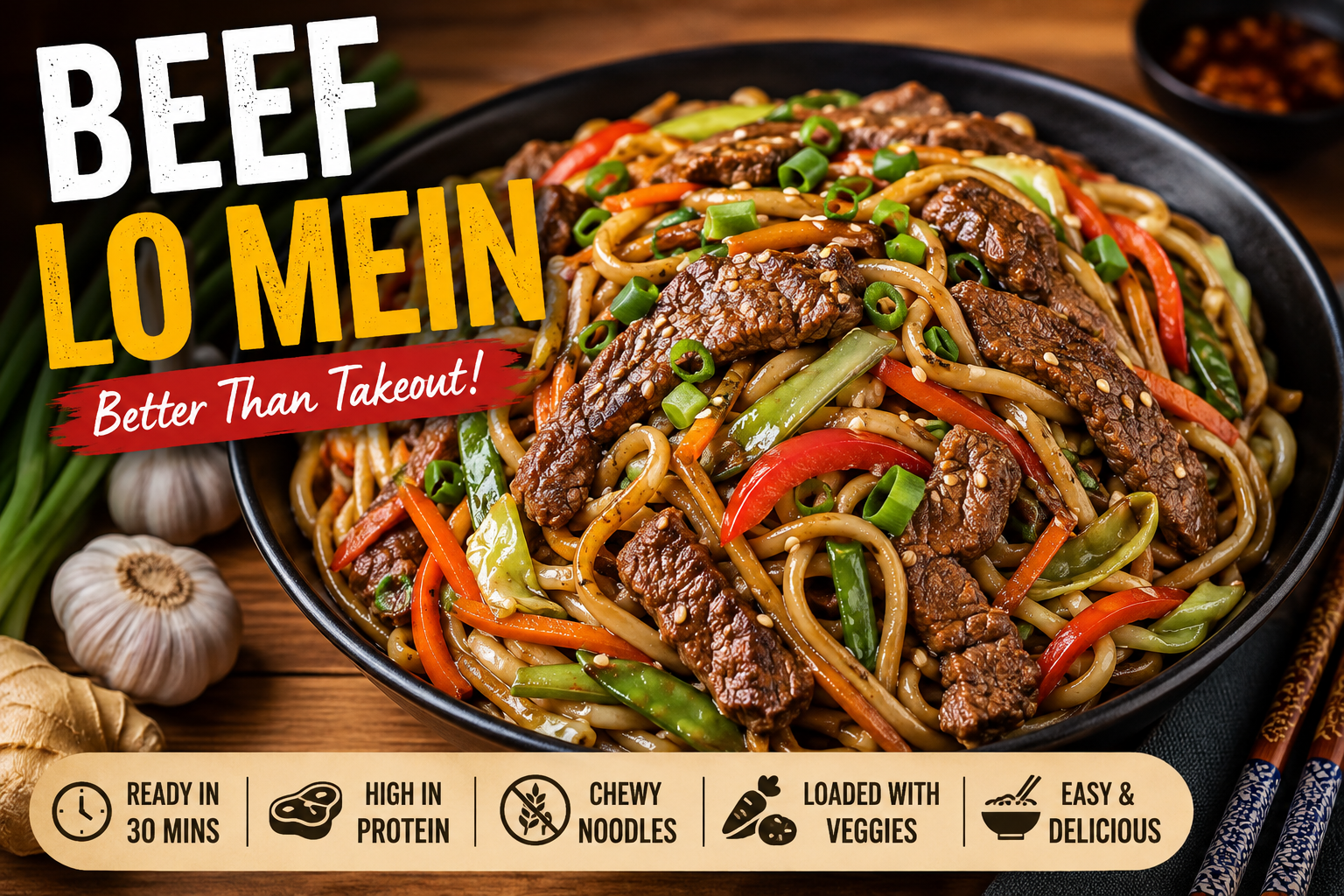
Introduction
If you’re craving a delicious, savory, and satisfying Chinese-American noodle dish that can be prepared at home, this Beef Lo Mein Recipe is exactly what you need. Made with tender strips of beef, soft chewy noodles, colorful vegetables, and a rich homemade sauce, Beef Lo Mein is one of those meals that combines everything you want in a comforting dinner. Every bite brings together juicy beef, flavorful noodles, crunchy vegetables, aromatic garlic and ginger, and a glossy sauce that coats every ingredient beautifully.
Beef Lo Mein is especially popular because it delivers the comforting taste of restaurant-style Chinese noodles without requiring complicated cooking techniques. With a few simple ingredients and a hot skillet or wok, you can prepare a complete meal that’s perfect for lunch, dinner, family gatherings, or weekend takeout nights at home. The best part is that everything cooks quickly, making this recipe especially useful when you need a flavorful meal on a busy day.
The secret to excellent Beef Lo Mein is achieving the right balance between the noodles, beef, vegetables, and sauce. The beef should be tender and lightly seared, while the noodles should remain soft but pleasantly chewy. Vegetables should add freshness and a little crunch rather than becoming overly soft. Finally, the sauce should be savory, slightly sweet, aromatic, and rich enough to coat every noodle without making the dish heavy or watery.
Another great feature of homemade Beef Lo Mein is its versatility. You can use your favorite vegetables, change the type of noodles, adjust the sauce according to your taste, or make the dish mild or spicy. Bell peppers, carrots, cabbage, broccoli, mushrooms, snow peas, and green onions all work beautifully. You can also substitute beef with chicken, shrimp, or tofu if you want to create a different version of the same delicious noodle dish.
Making Beef Lo Mein at home also gives you complete control over the ingredients. You can choose a good-quality cut of beef, use fresh vegetables, reduce the amount of oil, adjust the sodium level, and control how much sauce goes into the noodles. This makes homemade Lo Mein a practical alternative to ordering takeout while still delivering the rich and satisfying flavors you love.
One of the most important techniques is preparing all the ingredients before turning on the stove. Lo Mein comes together quickly, so there isn’t much time to stop and chop vegetables or measure sauces once the cooking begins. Having the beef sliced, vegetables prepared, noodles cooked, and sauce mixed beforehand makes the entire process easier and helps prevent ingredients from overcooking.
The beef also needs special attention. Thinly sliced beef cooks extremely quickly, which is why choosing the right cut and slicing it correctly can make a huge difference. Cuts such as flank steak, sirloin, or another tender beef cut work well. Slicing the beef thinly against the grain shortens the muscle fibers and helps create tender pieces that are easy to eat with noodles.
The sauce is another important part of the recipe. A homemade Lo Mein sauce usually combines soy sauce with oyster sauce, sesame oil, a little sweetness, garlic, ginger, and other seasonings. These ingredients create layers of salty, savory, nutty, aromatic, and slightly sweet flavors. When tossed with hot noodles, the sauce becomes glossy and coats the entire dish.
Fresh vegetables bring another dimension to Beef Lo Mein. Their colors make the dish visually appealing, while their different textures keep every bite interesting. Crisp carrots, tender bell peppers, crunchy cabbage, earthy mushrooms, and fresh green onions can all work together to create a colorful and balanced noodle dish.
Beef Lo Mein is also excellent for meal preparation. Leftovers can be refrigerated and reheated for a quick lunch or dinner. Because the noodles and beef are already cooked together, you can simply portion the dish into containers and enjoy it throughout the week. Keeping a little extra sauce available can help restore moisture when reheating.
Whether you’re cooking for yourself, your family, or a group of guests, Beef Lo Mein is an impressive yet surprisingly easy meal. It looks colorful and restaurant-quality when served, but the actual cooking process can be completed in a short amount of time once everything is prepared.
In this complete Beef Lo Mein guide, you’ll learn everything you need to know about creating the perfect homemade version. We’ll cover choosing the best beef, selecting the right noodles, preparing vegetables, making the homemade sauce, cooking the beef properly, stir-frying everything together, avoiding common mistakes, storing leftovers, reheating the noodles, creating variations, and serving the finished dish.
By the end of this recipe, you’ll have all the techniques necessary to make flavorful, tender, and satisfying Beef Lo Mein whenever you’re craving Chinese-style noodles at home.
What Is Beef Lo Mein?
Beef Lo Mein is a Chinese-style noodle dish made by tossing cooked wheat-based noodles with stir-fried beef, vegetables, and a savory sauce. The name “Lo Mein” is commonly associated with tossed or mixed noodles, which are combined with the other ingredients rather than being primarily stir-fried until crispy.
The dish is known for its soft, chewy noodles and flavorful sauce. Unlike fried rice or crispy noodle dishes, Lo Mein focuses on tender noodles coated in sauce and combined with quickly cooked ingredients.
A typical Beef Lo Mein includes:
- Tender sliced beef
- Soft wheat noodles
- Garlic and ginger
- Mixed vegetables
- Soy sauce
- Oyster sauce
- Sesame oil
- Aromatic seasonings
The combination creates a meal that’s hearty enough to serve as a complete dinner.
Why You’ll Love This Beef Lo Mein Recipe
There are many reasons this homemade Beef Lo Mein deserves a place in your regular meal rotation.
- Tender and flavorful beef
- Soft, chewy noodles
- Fresh colorful vegetables
- Rich homemade Lo Mein sauce
- Ready relatively quickly
- Perfect for busy weeknight dinners
- Easy to customize
- Great for meal prep
- Family-friendly
- Better than many takeout versions
- Uses simple ingredients
- Works with many different vegetables
The combination of savory beef, chewy noodles, fresh vegetables, and glossy sauce makes every serving incredibly satisfying.
What Makes Restaurant-Style Beef Lo Mein Special?
Restaurant Lo Mein often tastes different because professional kitchens use very high heat and cook the ingredients quickly.
The beef is usually seared rather than slowly cooked, allowing it to develop a flavorful exterior while remaining tender inside. Vegetables are cooked just long enough to become hot while maintaining some of their natural crunch.
The noodles are then added with the sauce and tossed rapidly so that every strand becomes evenly coated.
At home, you can recreate this technique by using a large wok or heavy skillet and avoiding overcrowding.
The goal is simple:
Hot pan + quick cooking + properly prepared ingredients = flavorful Beef Lo Mein.
The Secret to Tender Beef
One of the biggest differences between average and excellent Beef Lo Mein is the texture of the beef.
Thin slices are essential.
Always try to slice the beef against the grain. This makes the muscle fibers shorter and produces a more tender bite.
You can also place the beef in the freezer for approximately 20–30 minutes before slicing. The slightly firmer texture makes it much easier to cut thin, even strips.
Avoid cutting the beef into thick chunks because they take longer to cook and can become chewy before the outside develops a good sear.
The Importance of High Heat
Lo Mein is best cooked quickly over relatively high heat.
A hot wok or skillet helps:
- Sear the beef
- Quickly cook vegetables
- Prevent excessive steaming
- Develop deeper flavor
- Keep vegetables slightly crisp
However, high heat also means you need to stay near the stove and keep the ingredients moving when necessary.
Preparing everything beforehand is therefore extremely important.
Why Homemade Beef Lo Mein Is Better
Making Beef Lo Mein at home allows you to customize almost every part of the meal.
You can:
- Choose your favorite beef cut.
- Add extra vegetables.
- Control the amount of sauce.
- Adjust sweetness.
- Reduce sodium.
- Increase spice.
- Use more noodles or protein.
- Make individual portions.
- Prepare leftovers for the next day.
Most importantly, homemade cooking allows you to serve the dish immediately while the noodles are hot and the beef is freshly cooked.
What You’ll Learn in This Complete Guide
This recipe guide will take you through every stage of making Beef Lo Mein.
You’ll learn:
Part 1
Introduction, background, ingredients overview, and preparation fundamentals.
Part 2
Detailed ingredients, best beef cuts, noodles, vegetables, and homemade sauce.
Part 3
Complete step-by-step cooking instructions.
Part 4
Professional techniques and secrets for better flavor and texture.
Part 5
Vegetable combinations, sauce variations, and creative recipe adaptations.
Part 6
Serving ideas, side dishes, and presentation tips.
Part 7
Storage, freezing, reheating, and meal-preparation methods.
Part 8
Common mistakes, troubleshooting, and expert solutions.
Part 9
Nutrition information, lighter variations, and frequently asked questions.
Part 10
Final recipe summary, expert tips, and conclusion.
With the right ingredients and techniques, making restaurant-style Beef Lo Mein at home becomes much easier than it first appears.
Ingredients You’ll Need – Best Beef, Noodles, Vegetables, Homemade Lo Mein Sauce, Marinade, and Essential Kitchen Equipment
Now that you’ve learned what makes Beef Lo Mein so delicious, it’s time to take a closer look at the ingredients. While this recipe is simple, choosing the right beef, noodles, vegetables, and sauce ingredients can make a major difference in the final flavor and texture.
The best Beef Lo Mein has several elements working together. The beef should be tender and lightly seared, the noodles should be soft and chewy without becoming mushy, the vegetables should retain some freshness and crunch, and the sauce should be savory, slightly sweet, aromatic, and glossy.
Preparing every ingredient before cooking is especially important because Lo Mein comes together quickly over high heat. Once the wok is hot, you won’t have much time to stop and prepare another ingredient. Having everything measured, sliced, and ready allows you to concentrate on cooking rather than rushing between different tasks.
Ingredients for the Beef
For approximately 4 servings, you’ll need:
- 1 pound (450 g) flank steak, sirloin, or another tender beef cut
- 1 tablespoon low-sodium soy sauce
- 1 teaspoon cornstarch
- 1 teaspoon sesame oil
- ½ teaspoon freshly ground black pepper
- 1 teaspoon vegetable oil
The small amount of cornstarch helps create a light coating around the beef while protecting it from becoming dry during high-heat cooking.
Choosing the Best Beef
The beef is one of the most important ingredients in this recipe.
Good options include:
- Flank steak
- Sirloin steak
- Top sirloin
- Ribeye
- Tenderloin
Flank steak is particularly popular because it has excellent beef flavor and becomes tender when sliced correctly.
Sirloin is another excellent choice because it is relatively lean while still producing tender results when cooked quickly.
Ribeye can create an especially rich Lo Mein because of its natural marbling, although it is more expensive.
Whatever cut you choose, avoid thick pieces of beef. Lo Mein works best with very thin slices that cook quickly.
How to Slice Beef Correctly
Place the beef on a cutting board and look closely at the direction of the muscle fibers.
These visible lines are called the grain.
Slice across the grain rather than along it.
Cutting across the grain shortens the muscle fibers and makes the finished beef easier to chew.
For even thinner slices, place the beef in the freezer for approximately 20–30 minutes before cutting.
The meat should become firm but not frozen solid.
Use a sharp knife and cut the beef into thin strips of similar size so everything cooks evenly.
Ingredients for the Lo Mein Noodles
You’ll need approximately:
- 12 ounces (340 g) Lo Mein noodles
- Water for boiling
- A small amount of vegetable oil, if needed
Traditional Lo Mein noodles are usually made from wheat flour and have a pleasant chewy texture.
If authentic Lo Mein noodles aren’t available, you can use:
- Chinese egg noodles
- Fresh wheat noodles
- Dried wheat noodles
- Japanese ramen-style wheat noodles
- Spaghetti as a convenient substitute
Spaghetti won’t provide exactly the same texture, but it can work when specialty noodles aren’t available.
How to Choose the Best Noodles
The noodles should be:
- Soft but chewy
- Flexible
- Strong enough to hold the sauce
- Not overly thin
- Not mushy
Avoid overcooking them.
Ideally, cook the noodles slightly under the package’s recommended cooking time because they’ll continue cooking when tossed in the hot wok with the beef and sauce.
After draining, rinse according to the noodle package instructions if appropriate for the noodle type, then drain thoroughly.
Excess water can dilute the sauce and make the finished Lo Mein watery.
Fresh Vegetables You’ll Need
A colorful mixture of vegetables gives Beef Lo Mein its signature appearance and adds different textures.
Recommended vegetables include:
- 1 medium carrot, julienned
- 1 bell pepper, thinly sliced
- 1 cup shredded cabbage
- 1 cup sliced mushrooms
- ½ cup snow peas
- 3–4 green onions, sliced
- ½ small onion, thinly sliced
You don’t have to use every vegetable listed.
Choose your favorite combination based on what you have available.
Why Vegetables Should Be Cut Thinly
Lo Mein cooks very quickly.
Thick vegetables may remain raw while the noodles and beef become overcooked.
Thin, evenly sliced vegetables cook much more efficiently.
Julienne carrots, thinly slice peppers, and shred cabbage so that everything can cook within a few minutes.
Uniform cutting also makes the finished dish look much more professional.
The Homemade Lo Mein Sauce
The sauce is the heart of the recipe.
For a rich, balanced sauce, combine:
- ¼ cup low-sodium soy sauce
- 2 tablespoons oyster sauce
- 1 tablespoon hoisin sauce
- 1 tablespoon sesame oil
- 1 tablespoon brown sugar
- 1 tablespoon rice vinegar
- 2 cloves garlic, finely minced
- 1 teaspoon fresh ginger, grated
- ½ teaspoon white pepper
- ½ teaspoon chili flakes, optional
Whisk everything together in a small bowl before cooking.
This creates a savory, slightly sweet, aromatic sauce that coats the noodles beautifully.
Why Oyster Sauce Is Important
Oyster sauce adds deep savory flavor and a subtle sweetness.
It helps give Beef Lo Mein the rich restaurant-style taste that plain soy sauce alone cannot provide.
If you don’t have oyster sauce, you can substitute a suitable vegetarian mushroom-based stir-fry sauce, although the flavor will be slightly different.
The Role of Sesame Oil
Sesame oil should be used carefully.
It provides a distinctive nutty aroma that immediately makes the dish smell like restaurant-style Chinese noodles.
Because sesame oil has a strong flavor, a small amount is usually enough.
It is especially useful as part of the finishing sauce rather than as the primary cooking oil.
Fresh Garlic and Ginger
Fresh garlic and ginger add incredible aroma.
Garlic contributes:
- Savory flavor
- Rich aroma
- Depth
Ginger contributes:
- Warmth
- Freshness
- Slight spiciness
Fresh versions are strongly recommended because they provide a much brighter flavor than dried powders.
Optional Spice Additions
If you enjoy spicy Beef Lo Mein, you can customize the sauce with:
- Crushed red pepper flakes
- Fresh sliced chili
- Chili garlic sauce
- Sriracha
- Chili oil
For a mild family-friendly version, simply leave these ingredients out.
Optional Garnishes
Once the Beef Lo Mein is cooked, finish it with:
- Sliced green onions
- Toasted sesame seeds
- Fresh cilantro
- Thinly sliced red chili
- A small drizzle of sesame oil
Garnishes aren’t essential, but they make the finished dish more attractive and add another layer of freshness.
Essential Kitchen Equipment
You don’t need complicated equipment.
You’ll need:
- Large wok or heavy skillet
- Sharp chef’s knife
- Cutting board
- Large pot for noodles
- Colander
- Mixing bowls
- Measuring spoons
- Measuring cups
- Tongs
- Wooden spoon or wok spatula
A wok is ideal because its shape makes it easy to toss ingredients over high heat.
However, a large heavy skillet works perfectly well at home.
Why a Large Pan Matters
Avoid using a small frying pan.
When too many ingredients are packed into a small pan, the temperature drops rapidly.
Instead of searing, the beef and vegetables begin steaming.
This can result in:
- Watery sauce
- Soft vegetables
- Less flavorful beef
- Sticky noodles
A large wok or skillet provides enough space for the ingredients to cook properly.
If your pan isn’t large enough, cook the beef and vegetables in separate batches.
Preparation Before Cooking
Before turning on the stove, complete these steps:
- Slice the beef thinly.
- Mix the beef marinade.
- Marinate the beef briefly.
- Cook the noodles.
- Drain the noodles thoroughly.
- Slice all vegetables.
- Mince the garlic.
- Grate the ginger.
- Mix the Lo Mein sauce.
- Prepare the garnishes.
Place everything close to the stove.
Once cooking begins, the entire dish can come together very quickly.
Important Tips for Preparing the Noodles
Don’t leave freshly cooked noodles sitting in a large amount of water.
Drain them thoroughly.
If they become sticky while waiting, gently separate them before adding them to the wok.
Avoid adding excessive oil because too much oil can prevent the sauce from coating the noodles properly.
The goal is noodles that are separate, chewy, and ready to absorb the sauce.
How to Prepare the Beef Before Stir-Frying
Place the sliced beef into a bowl.
Add:
- Soy sauce
- Cornstarch
- Sesame oil
- Black pepper
Mix gently until every strip is lightly coated.
Let the beef rest for approximately 10–15 minutes.
This brief marinade seasons the meat while the cornstarch creates a light protective coating.
A Simple Organization Trick
Arrange your ingredients in the order you’ll use them.
For example:
First: Beef
Second: Aromatics
Third: Vegetables
Fourth: Noodles
Fifth: Sauce
Last: Garnishes
This simple organization can make the cooking process much easier, especially if you’re preparing Beef Lo Mein for the first time.
Final Ingredient Checklist
Before cooking, make sure you have:
Protein
- Beef
- Soy sauce
- Cornstarch
- Sesame oil
Noodles
- Lo Mein noodles or another suitable wheat noodle
Vegetables
- Carrot
- Bell pepper
- Cabbage
- Mushrooms
- Snow peas
- Onion
- Green onions
Sauce
- Soy sauce
- Oyster sauce
- Hoisin sauce
- Sesame oil
- Brown sugar
- Rice vinegar
- Garlic
- Ginger
- White pepper
Optional
- Chili flakes
- Sesame seeds
- Fresh chili
- Cilantro
Having everything prepared means you’re ready to move directly into the most important stage: high-heat cooking.
In the next part, you’ll learn the complete step-by-step method for searing the beef, stir-frying the vegetables, combining the noodles, adding the sauce, and creating glossy restaurant-style Beef Lo Mein without making the noodles soggy or the beef chewy.
Step-by-Step Cooking Instructions – How to Make Tender Beef Lo Mein with Perfectly Chewy Noodles and Glossy Sauce
Now that all the ingredients are prepared, it’s time to bring everything together and make delicious Beef Lo Mein. The cooking process is quick, so keep all your ingredients close to the stove before turning on the heat. The goal is to cook the beef quickly, keep the vegetables slightly crisp, prevent the noodles from becoming mushy, and coat everything evenly with the savory homemade sauce.
The most important rule is high heat and quick cooking. A hot wok or large skillet creates the seared flavor that makes restaurant-style Lo Mein so delicious. Avoid adding too many ingredients at once because overcrowding lowers the temperature and causes the ingredients to steam instead of sear.
Step 1: Cook the Lo Mein Noodles
Bring a large pot of water to a boil.
Add the Lo Mein noodles and cook according to the package instructions.
For the best texture, cook them slightly less than the recommended time if the package allows. The noodles will continue cooking later when they’re tossed with the hot beef, vegetables, and sauce.
The noodles should be:
- Soft
- Flexible
- Slightly chewy
- Completely cooked but not mushy
Once they’re ready, drain them thoroughly.
If your noodle package recommends rinsing, rinse them according to those instructions.
Set the noodles aside.
Make sure they’re well drained because excess water can dilute the sauce.
Step 2: Marinate the Beef
Place the thinly sliced beef into a mixing bowl.
Add:
- 1 tablespoon low-sodium soy sauce
- 1 teaspoon cornstarch
- 1 teaspoon sesame oil
- ½ teaspoon black pepper
Mix gently until every piece is lightly coated.
Allow the beef to rest for approximately 10–15 minutes.
This short marinade seasons the meat and helps create a tender texture during high-heat cooking.
Avoid adding too much cornstarch because a heavy coating can make the beef overly sticky.
Step 3: Heat the Wok
Place a large wok or heavy skillet over high heat.
Allow it to heat for approximately 1–2 minutes.
Add:
- 1 tablespoon vegetable oil
The oil should become hot and lightly shimmering.
A properly heated wok is essential because the beef needs to sear quickly.
Step 4: Sear the Beef
Carefully add the marinated beef to the hot wok.
Spread the pieces into a single layer.
Avoid stirring immediately.
Allow the beef to cook undisturbed for approximately 1–2 minutes so it can develop a flavorful seared surface.
Then stir-fry for another 1–2 minutes.
The beef should become:
- Lightly browned
- Tender
- Aromatic
- Cooked through
Because the slices are thin, they don’t need much time.
Do not overcook the beef.
Once cooked, transfer it to a clean plate.
Keeping the beef separate temporarily prevents it from becoming tough while you prepare the vegetables.
Step 5: Add the Aromatics
Using the same wok, add another small amount of oil if necessary.
Add:
- 2 cloves minced garlic
- 1 teaspoon freshly grated ginger
Stir-fry for approximately 20–30 seconds.
The garlic and ginger should become fragrant without turning dark.
This short cooking time is enough to release their natural aroma into the oil.
Be careful because garlic can burn quickly over high heat.
Step 6: Stir-Fry the Onion and Carrots
Add:
- Sliced onion
- Julienned carrots
Stir-fry for approximately 1–2 minutes.
Keep the vegetables moving around the wok.
The carrots should begin to soften slightly while maintaining some crunch.
The onions should become fragrant and slightly translucent.
Don’t cook them until completely soft because the vegetables will continue cooking later.
Step 7: Add Bell Peppers and Mushrooms
Add:
- Sliced bell pepper
- Sliced mushrooms
Continue stir-frying for approximately 2 minutes.
The vegetables should become tender-crisp.
Avoid overcooking them.
Good Beef Lo Mein should have a variety of textures rather than soft vegetables throughout.
Step 8: Add the Cabbage and Snow Peas
Now add:
- Shredded cabbage
- Snow peas
Stir-fry for another 1–2 minutes.
The cabbage should soften slightly while the snow peas remain bright and crisp.
At this point, the wok should smell incredibly aromatic.
Step 9: Return the Beef
Add the cooked beef back into the wok.
Toss everything together for approximately 30–60 seconds.
This allows the beef juices and vegetable flavors to begin combining.
Keep the heat high.
Step 10: Add the Cooked Noodles
Add the drained Lo Mein noodles to the wok.
Using tongs or a wok spatula, gently toss the noodles with the beef and vegetables.
Avoid aggressively stirring because the noodles can break.
Lift and toss them repeatedly so the ingredients become evenly distributed.
Step 11: Add the Homemade Lo Mein Sauce
Pour the prepared sauce around the sides of the hot wok rather than dumping it directly into one spot.
This allows the sauce to heat immediately and spread more evenly.
The sauce should include:
- Soy sauce
- Oyster sauce
- Hoisin sauce
- Sesame oil
- Brown sugar
- Rice vinegar
- Garlic
- Ginger
- White pepper
Toss everything together continuously for approximately 1–2 minutes.
The sauce should coat the noodles evenly and create a beautiful glossy finish.
Step 12: Toss Everything Together
Continue tossing the Beef Lo Mein over high heat.
Make sure:
- Every noodle is coated.
- Beef is evenly distributed.
- Vegetables are mixed throughout.
- Sauce isn’t collecting at the bottom.
If the noodles look slightly dry, add 1 tablespoon of water or low-sodium broth and toss again.
Don’t add too much liquid.
The finished Lo Mein should be glossy rather than watery.
Step 13: Taste and Adjust the Seasoning
Before removing the wok from the heat, taste a small portion.
Adjust according to your preference.
For more savory flavor, add a small amount of soy sauce.
For more sweetness, add a tiny amount of brown sugar or hoisin sauce.
For extra spice, add:
- Chili flakes
- Chili garlic sauce
- Fresh sliced chili
- Chili oil
Make small adjustments because the sauce becomes more concentrated as it cooks.
Step 14: Finish with Green Onions
Turn off the heat.
Add the sliced green onions.
Toss gently for approximately 20–30 seconds.
Adding some green onions at the end keeps their fresh flavor and bright color.
Reserve a few pieces for garnishing.
Step 15: Add the Final Garnishes
Transfer the Beef Lo Mein to a large serving dish.
Finish with:
- Sliced green onions
- Toasted sesame seeds
- Fresh cilantro
- Thinly sliced red chili, optional
- A tiny drizzle of sesame oil
The garnishes add freshness, color, and aroma.
How to Know Your Beef Lo Mein Is Perfect
A properly cooked Beef Lo Mein should have:
Tender Beef
The beef should be easy to chew and lightly seared on the outside.
Chewy Noodles
The noodles should remain soft but retain a pleasant bite.
Crisp-Tender Vegetables
Vegetables should be cooked but still have some texture.
Glossy Sauce
The sauce should coat the noodles rather than pool underneath them.
Balanced Flavor
You should taste a combination of:
- Savory soy sauce
- Rich oyster sauce
- Slight sweetness
- Nutty sesame oil
- Fresh garlic
- Warm ginger
Common Cooking Problems and Solutions
If the Beef Becomes Tough
The most likely causes are:
- Slices were too thick.
- Beef was overcooked.
- The wok wasn’t hot enough.
Next time, slice thinner and cook the beef quickly over high heat.
If the Noodles Become Mushy
This usually happens because:
- They were overcooked initially.
- Too much liquid was added.
- They were cooked too long in the wok.
Cook the noodles slightly less and toss everything together quickly.
If the Lo Mein Is Too Salty
Add a small amount of:
- Plain cooked noodles
- Unsalted vegetables
- A splash of water
Avoid adding more soy sauce.
If the Lo Mein Is Too Dry
Add a small splash of water or unsalted broth and toss over high heat.
You can also add a little extra sauce.
If the Vegetables Are Too Soft
Cook them for less time next time and maintain higher heat.
The goal is tender-crisp, not completely soft vegetables.
Expert Tips for Restaurant-Style Results
For the best Beef Lo Mein:
- Use a very hot wok.
- Cook the beef in a single layer.
- Don’t overcrowd the pan.
- Keep the vegetables slightly crisp.
- Drain noodles thoroughly.
- Add sauce near the end.
- Toss quickly over high heat.
- Don’t overcook the noodles.
- Add fresh green onions at the end.
- Serve immediately.
The entire final stir-frying process should be relatively quick. Once the noodles enter the wok, keep everything moving and avoid leaving the pan unattended.
When prepared correctly, you’ll have tender beef, chewy noodles, crisp vegetables, and a rich glossy sauce in every bite.
Serve the Beef Lo Mein immediately while it’s hot and aromatic for the best restaurant-style experience.
Restaurant-Style Beef Lo Mein Secrets, Expert Cooking Techniques, Sauce Tips, Noodle Tricks, and Common Mistakes to Avoid
Making delicious Beef Lo Mein at home is easy, but achieving that authentic restaurant-style flavor and texture requires a few important techniques. The ingredients are simple, yet small details—such as how you slice the beef, how hot your wok is, when you add the sauce, and how you cook the noodles—can make a huge difference in the finished dish.
The goal isn’t simply to combine beef, noodles, vegetables, and sauce. Each ingredient should retain its own texture while contributing to the overall flavor. The beef should be tender and lightly seared, the vegetables should remain colorful and crisp-tender, and the noodles should be chewy and coated in a glossy sauce.
The Secret to Restaurant-Style Beef Lo Mein
Professional kitchens usually rely on a few fundamental techniques:
- Very high cooking heat
- Thinly sliced beef
- Small cooking batches
- Properly cooked noodles
- Fresh aromatics
- Balanced sauce
- Quick stir-frying
The cooking process is intentionally fast.
Once the wok becomes hot, ingredients are added one after another and cooked within minutes.
This helps preserve texture and prevents the dish from becoming watery.
Secret Tip 1: Slice the Beef Against the Grain
This is one of the most important techniques.
Look for the long lines running through the beef.
Those lines indicate the direction of the muscle fibers.
Slice across those lines rather than parallel to them.
This shortens the muscle fibers and makes the beef much easier to chew.
For extremely thin slices, place the beef in the freezer for 20–30 minutes before cutting.
Secret Tip 2: Don’t Over-Marinate the Beef
The beef doesn’t require a complicated marinade.
A simple mixture of:
- Soy sauce
- Cornstarch
- Sesame oil
- Black pepper
is enough.
Allow the beef to marinate for approximately 10–15 minutes.
Longer isn’t always better.
A short marinade provides flavor while keeping the beef ready for quick high-heat cooking.
Secret Tip 3: Keep the Wok Extremely Hot
A hot wok is essential for authentic stir-fry flavor.
Heat the wok before adding oil.
When the oil begins to shimmer, add the beef.
The high temperature allows the outside of the beef to develop a flavorful sear before the inside becomes overcooked.
If your wok isn’t hot enough, the beef may release liquid and begin steaming.
Secret Tip 4: Cook Beef in Batches
Never overcrowd the wok.
If you have a large quantity of beef, cook it in two batches.
Overcrowding causes the temperature to drop.
Instead of searing, the beef begins steaming.
This can result in:
- Tough beef
- Excess liquid
- Weak flavor
- Poor browning
Cooking smaller batches produces much better results.
Secret Tip 5: Don’t Overcook the Noodles
Noodles are one of the easiest parts of Lo Mein to accidentally overcook.
Cook them until they’re just tender.
They should still have a slight chewy texture.
Remember that the noodles will continue cooking when they’re tossed with the hot sauce and other ingredients.
Slightly undercooked noodles are therefore preferable to soft, mushy noodles.
Secret Tip 6: Drain the Noodles Thoroughly
Water is one of the biggest enemies of flavorful Lo Mein.
After cooking the noodles:
- Drain them completely.
- Shake off excess water.
- Allow them to steam briefly.
- Separate them gently if necessary.
Too much water dilutes the sauce and prevents it from clinging properly to the noodles.
Secret Tip 7: Prepare the Sauce Before Cooking
Never start cooking the beef before preparing your sauce.
Combine all sauce ingredients in a bowl first.
This allows you to pour the sauce into the wok quickly when needed.
Lo Mein cooks too quickly for you to measure individual ingredients while the wok is already hot.
How to Balance the Sauce
A great Lo Mein sauce should contain several flavor elements.
Saltiness
Soy sauce provides the main salty flavor.
Umami
Oyster sauce adds deep savory richness.
Sweetness
Brown sugar and hoisin sauce provide gentle sweetness.
Acidity
Rice vinegar adds brightness and prevents the sauce from tasting heavy.
Aroma
Sesame oil, garlic, and ginger provide the characteristic fragrance.
The result should taste balanced rather than overwhelmingly salty or sweet.
How to Make the Sauce Less Salty
If your sauce tastes too salty:
- Use low-sodium soy sauce.
- Reduce the amount of soy sauce.
- Add more noodles.
- Add unsalted vegetables.
- Add a small splash of water.
Avoid trying to fix excessive salt with large amounts of sugar.
How to Make Lo Mein Spicier
For extra heat, add:
- Chili garlic sauce
- Sriracha
- Red pepper flakes
- Fresh sliced chilies
- Chili oil
Start with a small amount and increase gradually.
This lets you control the spice level without overpowering the other flavors.
How to Make a Sweeter Lo Mein
If you prefer a sweeter restaurant-style sauce, add:
- Brown sugar
- Honey
- Hoisin sauce
Use small amounts because too much sweetness can overpower the savory flavors.
Best Vegetables for Beef Lo Mein
There are countless vegetable combinations you can use.
Excellent options include:
- Carrots
- Bell peppers
- Cabbage
- Mushrooms
- Snow peas
- Broccoli
- Bean sprouts
- Baby corn
- Bok choy
- Green onions
Choose vegetables with different colors and textures to make the dish more appealing.
How to Keep Vegetables Crisp
The secret is simple:
Cook quickly over high heat.
Don’t cover the wok.
Don’t add excessive water.
Don’t cook vegetables for too long.
You want them hot and tender while still maintaining some crunch.
Best Order for Adding Vegetables
Not every vegetable cooks at the same speed.
A useful order is:
First
Carrots and onions.
Second
Broccoli and mushrooms.
Third
Bell peppers and cabbage.
Last
Snow peas, bean sprouts, and green onions.
This helps each vegetable reach the right texture.
Can You Use Different Noodles?
Absolutely.
If Lo Mein noodles aren’t available, try:
- Chinese egg noodles
- Fresh wheat noodles
- Chow mein noodles
- Ramen-style wheat noodles
- Spaghetti
- Udon noodles
Each produces a slightly different texture, but the sauce and cooking technique remain similar.
Beef Lo Mein Without a Wok
Don’t have a wok?
No problem.
Use a large, heavy skillet.
The most important thing is that the pan:
- Retains heat well.
- Has enough surface area.
- Isn’t overcrowded.
A cast-iron skillet can work particularly well because it maintains high heat.
Common Mistakes to Avoid
Mistake 1: Thick Beef Slices
Thick pieces take longer to cook and can become chewy.
Solution: Slice very thinly against the grain.
Mistake 2: Cold Pan
A cold pan prevents proper searing.
Solution: Preheat the wok thoroughly before adding the beef.
Mistake 3: Overcrowding
Too many ingredients lower the temperature.
Solution: Cook in batches.
Mistake 4: Mushy Noodles
Overcooked noodles become soft and sticky.
Solution: Cook noodles slightly less and finish them in the wok.
Mistake 5: Too Much Sauce
Excess sauce can make the noodles soggy.
Solution: Add enough sauce to coat the noodles without leaving a pool at the bottom.
Mistake 6: Burning Garlic
Garlic burns quickly over high heat.
Solution: Add garlic after the beef and cook it for only a short time.
Mistake 7: Overcooking Vegetables
Very soft vegetables lose their texture.
Solution: Stir-fry quickly and remove them from the heat as soon as they’re tender-crisp.
Professional Chef’s Final Tips
For consistently excellent Beef Lo Mein:
- Prepare every ingredient before cooking.
- Use thinly sliced beef.
- Keep the wok hot.
- Cook beef in batches.
- Don’t overcook the noodles.
- Drain noodles thoroughly.
- Use fresh garlic and ginger.
- Balance the sauce carefully.
- Add sauce near the end.
- Toss quickly over high heat.
- Finish with fresh green onions.
- Serve immediately.
These techniques transform a simple noodle dish into tender, savory, glossy, restaurant-style Beef Lo Mein with incredible texture and flavor.
Creative Beef Lo Mein Variations, Different Sauces, Vegetable Combinations, Protein Alternatives, and Fusion Ideas
One of the best things about Beef Lo Mein is how easy it is to customize. The classic combination of tender beef, chewy noodles, vegetables, and savory sauce is delicious on its own, but once you understand the basic technique, you can create countless variations using different vegetables, sauces, proteins, and seasonings.
Whether you prefer a spicy noodle dish, an extra-garlicky version, a vegetable-packed meal, or a completely different fusion recipe, the same basic Lo Mein method can be adapted to suit your taste. This makes Beef Lo Mein an excellent recipe for using ingredients already available in your kitchen.
Classic Beef Lo Mein
The classic version keeps the ingredients simple.
It includes:
- Thinly sliced beef
- Lo Mein noodles
- Carrots
- Bell peppers
- Cabbage
- Mushrooms
- Garlic
- Ginger
- Soy sauce
- Oyster sauce
- Sesame oil
- Green onions
This version is perfect if you’re making Beef Lo Mein for the first time because the flavors are balanced and familiar.
Spicy Beef Lo Mein
If you enjoy heat, transform the classic recipe into a spicy noodle dish.
Add:
- Chili garlic sauce
- Fresh red chilies
- Crushed chili flakes
- Sriracha
- Chili oil
For an extra spicy version, combine chili garlic sauce with a small amount of chili oil.
Add the spicy ingredients gradually so the heat doesn’t overpower the beef and sauce.
Garlic Lover’s Beef Lo Mein
For an extra-garlicky version, increase the fresh garlic.
Use approximately:
- 4–5 cloves garlic
Cook the garlic briefly in hot oil before adding the vegetables.
You can also finish the dish with a small amount of freshly minced garlic and green onions for a stronger aroma.
Ginger Beef Lo Mein
Fresh ginger gives the noodles a warm and slightly spicy flavor.
Add extra grated ginger to the sauce.
You can also cut fresh ginger into very thin strips and stir-fry it with the vegetables.
This version pairs especially well with mushrooms, cabbage, and green onions.
Vegetable-Packed Beef Lo Mein
If you want to increase the vegetables, add:
- Broccoli
- Carrots
- Bell peppers
- Cabbage
- Mushrooms
- Snow peas
- Bean sprouts
- Baby corn
- Bok choy
Use a variety of colors to make the finished dish visually appealing.
Cook harder vegetables first and softer vegetables later so everything reaches the right texture.
Mushroom Beef Lo Mein
Mushrooms add an earthy, savory flavor that works beautifully with beef.
Try:
- Shiitake mushrooms
- Cremini mushrooms
- Button mushrooms
- Oyster mushrooms
Slice them thinly and cook until lightly browned.
Their natural savory flavor works especially well with oyster sauce and sesame oil.
Beef and Broccoli Lo Mein
Combine two classic takeout favorites into one meal.
Add:
- Small broccoli florets
- Thinly sliced beef
- Lo Mein noodles
- Garlic
- Ginger
- Soy sauce
- Oyster sauce
Blanch the broccoli briefly before stir-frying if the florets are large.
This helps them cook quickly while maintaining some crunch.
Sweet and Savory Beef Lo Mein
For a slightly sweeter version, increase the sweetness in the sauce.
Add:
- Brown sugar
- Honey
- Hoisin sauce
Use small amounts and taste as you go.
The goal is a subtle sweetness that balances the salty and savory flavors.
Sesame Beef Lo Mein
For stronger sesame flavor, add:
- Toasted sesame seeds
- A small amount of sesame oil
- Optional tahini for a fusion variation
Finish with sesame seeds immediately before serving.
The nutty aroma pairs beautifully with beef and noodles.
Beef Lo Mein with Egg
Add scrambled egg for extra richness and protein.
To make it:
- Heat a little oil in the wok.
- Add beaten eggs.
- Scramble until just cooked.
- Remove and set aside.
- Cook the beef and vegetables.
- Return the egg with the noodles.
- Toss everything together.
This creates a delicious combination of Beef Lo Mein and fried-rice-style flavors.
Chicken Lo Mein Variation
If you don’t have beef, use thinly sliced chicken instead.
Good choices include:
- Chicken breast
- Chicken thighs
- Chicken tenderloins
Use the same sauce and vegetables.
Chicken cooks quickly, so avoid overcooking it.
Shrimp Lo Mein
Shrimp is another excellent protein option.
Use peeled and deveined shrimp.
Cook the shrimp quickly until opaque and cooked through, then remove them before stir-frying the vegetables.
Return the shrimp when adding the noodles and sauce.
Tofu Lo Mein
For a vegetarian option, use firm tofu.
Cut the tofu into small cubes.
Pan-sear until golden before adding it to the noodles.
Tofu absorbs the sauce beautifully and works particularly well with mushrooms, broccoli, and bok choy.
Vegetarian Lo Mein
You can completely omit the meat.
Increase the amount of:
- Mushrooms
- Broccoli
- Bell peppers
- Cabbage
- Carrots
- Snow peas
- Bean sprouts
Use a vegetarian mushroom-based stir-fry sauce instead of traditional oyster sauce.
Low-Spice Family Lo Mein
For a mild version:
- Skip chili flakes.
- Skip fresh chilies.
- Use mild vegetables.
- Reduce black pepper.
- Keep the sauce slightly sweeter.
This creates a family-friendly dish with plenty of savory flavor but very little heat.
Low-Sodium Lo Mein
To reduce sodium:
- Use low-sodium soy sauce.
- Reduce oyster sauce.
- Add more fresh vegetables.
- Avoid adding extra salt.
- Use unsalted cooking ingredients where possible.
Fresh garlic, ginger, sesame oil, and vinegar can provide plenty of flavor without relying entirely on salt.
Gluten-Free Lo Mein Variation
For a gluten-free version, carefully choose:
- Gluten-free noodles
- Gluten-free soy sauce or tamari
- Gluten-free oyster-style sauce
Always check product labels because sauces and noodles can vary.
Korean-Inspired Beef Lo Mein
For a fusion version, add Korean-inspired flavors such as:
- Gochujang
- Sesame seeds
- Green onions
- Garlic
- Ginger
A small amount of gochujang adds sweetness, spice, and depth.
Thai-Inspired Beef Noodles
For a Thai-inspired variation, add:
- Fresh lime juice
- Chili
- Cilantro
- Peanut sauce
- Fresh basil
The bright lime and herbs create a completely different flavor profile while still working beautifully with the noodles.
Peanut Beef Lo Mein
For a creamy fusion sauce, add a small amount of smooth peanut butter to the Lo Mein sauce.
Combine it with:
- Soy sauce
- Rice vinegar
- Sesame oil
- Garlic
- Ginger
Add a little warm water if necessary to create a smooth sauce.
Crispy Beef Lo Mein
For extra texture, allow some of the beef to develop a deeper sear before tossing it with the noodles.
You can also finish the dish with:
- Crispy fried onions
- Toasted sesame seeds
- Thin crispy vegetables
Don’t overcook the beef simply to make it crispy—the goal is a light caramelized exterior with tender meat inside.
Leftover Beef Lo Mein Transformation Ideas
Leftovers can become completely different meals.
Try turning them into:
- Lo Mein lettuce wraps
- Beef noodle bowls
- Crispy noodle cakes
- Beef noodle stir-fry
- Lunchbox noodle portions
- Stuffed wraps
Adding a fresh garnish or a small amount of sauce can make leftovers taste almost like a new meal.
Best Combination of Vegetables
For a balanced Beef Lo Mein, try this combination:
- Carrots for sweetness
- Bell peppers for freshness
- Cabbage for crunch
- Mushrooms for umami
- Snow peas for texture
- Green onions for freshness
This combination creates excellent color and variety in every bite.
How to Customize the Sauce
The easiest way to personalize Beef Lo Mein is by adjusting the sauce.
More Savory
Add a little oyster sauce.
More Sweet
Add brown sugar or honey.
More Spicy
Add chili garlic sauce.
More Tangy
Add rice vinegar.
More Nutty
Add sesame oil or toasted sesame seeds.
More Aromatic
Add extra garlic and ginger.
Make small adjustments rather than changing large amounts at once.
Final Tips for Creating Your Own Version
Once you’ve mastered the classic recipe, remember these basic rules:
- Keep the beef thin.
- Keep the noodles chewy.
- Keep vegetables crisp-tender.
- Use high heat.
- Don’t overcrowd the wok.
- Balance salty, sweet, sour, and savory flavors.
- Add sauce near the end.
- Finish with fresh garnishes.
With these variations, Beef Lo Mein can become a completely different meal every time you prepare it. Whether you prefer classic restaurant-style noodles, a spicy version, a vegetable-packed bowl, or a creative fusion recipe, the basic technique remains simple and reliable.
Best Side Dishes, Serving Ideas, Presentation Tips, Meal Prep, Storage, Freezing, and Reheating Beef Lo Mein
A delicious bowl of Beef Lo Mein can easily become a complete meal on its own, but pairing it with the right sides, garnishes, and drinks can make the entire dining experience even better. Whether you’re serving this noodle dish for a family dinner, weekend meal, lunch gathering, or casual party, a few simple additions can turn homemade Beef Lo Mein into a restaurant-style spread.
Because Beef Lo Mein already contains protein, noodles, vegetables, and a flavorful sauce, the best side dishes are usually lighter and refreshing. Fresh salads, steamed vegetables, dumplings, spring rolls, and simple soups all complement the rich noodles without overwhelming their flavor.
Best Side Dishes for Beef Lo Mein
Here are some excellent options to serve alongside Beef Lo Mein:
- Vegetable spring rolls
- Steamed dumplings
- Chicken or vegetable dumplings
- Egg rolls
- Cucumber salad
- Asian-style slaw
- Steamed broccoli
- Stir-fried vegetables
- Edamame
- Hot and sour soup
- Egg drop soup
- Fresh fruit
These sides provide different textures and flavors while keeping the meal balanced.
Crispy Spring Rolls
Spring rolls are one of the easiest sides to pair with Beef Lo Mein.
Their crispy exterior contrasts beautifully with the soft noodles.
Serve them with:
- Sweet chili sauce
- Soy dipping sauce
- Sesame dipping sauce
Keep the dipping sauce on the side so the spring rolls remain crispy.
Steamed Dumplings
Steamed dumplings are another excellent choice.
You can serve:
- Vegetable dumplings
- Chicken dumplings
- Beef dumplings
- Shrimp dumplings
A simple dipping sauce made from soy sauce, rice vinegar, and a little sesame oil works beautifully.
Fresh Cucumber Salad
A refreshing cucumber salad can balance the richness of the noodles.
Combine:
- Thinly sliced cucumber
- Rice vinegar
- Sesame oil
- Green onions
- Sesame seeds
For extra flavor, add a small amount of chili flakes.
The cool, crisp cucumber creates a wonderful contrast with the hot Beef Lo Mein.
Asian-Style Slaw
Make a simple slaw using:
- Shredded cabbage
- Carrots
- Green onions
- Rice vinegar
- Sesame oil
The crunchy vegetables provide freshness and texture.
Steamed Vegetables
If you want a lighter meal, serve Beef Lo Mein with steamed vegetables.
Excellent choices include:
- Broccoli
- Green beans
- Snow peas
- Bok choy
- Carrots
- Cauliflower
Keep the vegetables lightly cooked so they remain crisp and colorful.
Best Drinks to Serve
Refreshing drinks pair especially well with savory noodles.
Try:
- Iced green tea
- Lemon water
- Sparkling water
- Ginger tea
- Fresh lemonade
- Fruit-infused water
A chilled drink can help balance the rich, savory sauce.
How to Present Beef Lo Mein
Presentation can make a simple homemade meal look restaurant-quality.
Transfer the noodles to a large serving bowl.
Arrange the beef and vegetables throughout the noodles rather than leaving everything at the bottom.
Finish with:
- Green onions
- Toasted sesame seeds
- Fresh cilantro
- Thinly sliced chili
- A small drizzle of sesame oil
Serve immediately while the noodles are hot.
Individual Serving Bowls
For family dinners, divide the Beef Lo Mein into individual bowls.
Place a generous portion in each bowl.
Add a few pieces of beef on top so the dish looks colorful and appetizing.
Finish with green onions and sesame seeds.
This simple presentation makes homemade noodles look much more professional.
Beef Lo Mein Party Table
If you’re serving several guests, create a simple Asian-inspired meal.
Offer:
- Beef Lo Mein
- Spring rolls
- Dumplings
- Cucumber salad
- Steamed vegetables
- Dipping sauces
- Fresh fruit
Guests can combine different dishes according to their preferences.
How to Store Leftover Beef Lo Mein
Allow leftovers to cool before storing.
Transfer the noodles into an airtight container.
Refrigerate promptly and use within 3–4 days for best quality.
Store the noodles separately from any fresh garnishes whenever possible.
Green onions and herbs are best added after reheating.
Can You Freeze Beef Lo Mein?
Yes, Beef Lo Mein can be frozen, although the noodles may become slightly softer after thawing.
For best results:
- Cool the noodles completely.
- Divide into individual portions.
- Place in freezer-safe containers.
- Remove excess air.
- Label with the date.
Use within approximately 2 months for the best texture.
How to Reheat Beef Lo Mein
Stovetop Method
This is usually the best method.
Place the noodles in a large skillet.
Add:
- 1–2 tablespoons water or broth
Heat over medium heat.
Toss frequently for 3–5 minutes until hot.
If the noodles seem dry, add a small amount of extra sauce.
Avoid adding too much liquid.
Microwave Method
Place one serving into a microwave-safe bowl.
Add a small splash of water.
Cover loosely.
Heat for 1–2 minutes, then stir.
Continue heating in short intervals until completely hot.
Reheating Without Making Noodles Mushy
The key is to avoid excessive heat and liquid.
Don’t pour a large amount of water into the noodles.
Instead:
Small amount of liquid + moderate heat + frequent tossing
This helps restore moisture while preserving the noodle texture.
Meal Prep Tips
Beef Lo Mein is excellent for meal preparation.
You can prepare:
- Beef in advance
- Vegetables in advance
- Sauce in advance
- Noodles shortly before serving
For the freshest texture, keep the sauce separate until you’re ready to combine everything.
Best Meal Prep Containers
Use containers with separate compartments if possible.
This allows you to keep:
- Beef Lo Mein
- Fresh vegetables
- Garnishes
- Dipping sauces
separate until mealtime.
For lunch boxes, add fresh green onions or sesame seeds after reheating.
How Long Does Beef Lo Mein Stay Fresh?
For best quality:
Refrigerator
Approximately 3–4 days.
Freezer
Approximately 2 months for the best texture.
Always check the food for unusual appearance or smell before consuming leftovers.
How to Make Leftovers Taste Fresh Again
After reheating, add a few fresh ingredients.
Try:
- Fresh green onions
- Sesame seeds
- A tiny drizzle of sesame oil
- Fresh chili
- A splash of rice vinegar
These additions can brighten the flavor and make leftover noodles taste much fresher.
Perfect Lunchbox Beef Lo Mein
For a convenient packed lunch:
- Portion the Beef Lo Mein into a container.
- Allow it to cool appropriately before refrigerating.
- Add garnishes separately.
- Reheat thoroughly when ready to eat.
- Add fresh green onions before serving.
This makes Beef Lo Mein a convenient option for busy weekdays.
Serving Tips for the Best Experience
For the best Beef Lo Mein:
- Serve immediately after cooking.
- Keep garnishes fresh.
- Don’t drown the noodles in sauce.
- Serve side dishes separately.
- Use warm serving bowls when possible.
- Add sesame seeds just before serving.
- Keep leftover noodles refrigerated promptly.
Whether you’re enjoying it fresh from the wok or reheating it for lunch the next day, these techniques help maintain the delicious combination of tender beef, chewy noodles, crisp vegetables, and savory sauce.
With the right side dishes, presentation, storage, and reheating methods, your homemade Beef Lo Mein can easily become a complete restaurant-style meal that’s perfect for both everyday dinners and special gatherings.
Nutrition Facts, Health Benefits, Healthy Beef Lo Mein Variations, Frequently Asked Questions, and Expert Tips
Beef Lo Mein is a satisfying one-pan meal that combines protein, carbohydrates, vegetables, and flavorful seasonings in one delicious dish. While restaurant versions can sometimes contain large amounts of oil and sodium, homemade Beef Lo Mein gives you much more control over the ingredients. You can choose leaner beef, increase the vegetables, use low-sodium sauces, and adjust the amount of oil according to your preferences.
The nutritional value depends on the noodles, beef cut, sauce, and portion size, but with thoughtful ingredient choices, Beef Lo Mein can fit comfortably into a balanced meal.
Approximate Nutrition Information
One serving of homemade Beef Lo Mein may provide approximately:
- Calories: 550–700 kcal
- Protein: 30–40 g
- Carbohydrates: 60–75 g
- Fat: 18–28 g
- Fiber: 4–7 g
- Iron: Moderate
- Vitamin C: Moderate
- Vitamin A: Moderate
These numbers are estimates and can vary considerably depending on the exact ingredients and serving size.
Protein from Beef
Beef provides high-quality protein that supports normal growth, tissue repair, and muscle maintenance.
It also contains important nutrients such as:
- Iron
- Zinc
- Vitamin B12
- Selenium
Choosing a leaner cut can reduce the amount of saturated fat while still providing plenty of protein.
Vegetables Add Important Nutrients
One of the easiest ways to improve homemade Beef Lo Mein is to increase the vegetables.
Carrots provide beta-carotene, while bell peppers contribute vitamin C.
Cabbage, mushrooms, snow peas, and green onions add additional vitamins, minerals, fiber, and plant compounds.
Using several colorful vegetables also makes the dish more appealing.
How to Make Beef Lo Mein Healthier
You can make a lighter version with a few simple adjustments.
Use Lean Beef
Choose:
- Sirloin
- Lean flank steak
- Top sirloin
Trim visible excess fat when appropriate.
Add More Vegetables
Increase the amount of:
- Broccoli
- Cabbage
- Carrots
- Mushrooms
- Bell peppers
- Snow peas
This increases volume and fiber without requiring a large increase in noodles.
Reduce Sodium
Use:
- Low-sodium soy sauce
- Less oyster sauce
- Fresh garlic
- Fresh ginger
- Rice vinegar
These ingredients provide plenty of flavor without relying entirely on salt.
Control the Oil
Because the wok is hot, you only need a modest amount of oil.
Adding too much can make the finished noodles greasy.
Can Beef Lo Mein Be Made Without Beef?
Absolutely.
The same recipe can be transformed into several delicious alternatives.
Try:
- Chicken Lo Mein
- Shrimp Lo Mein
- Tofu Lo Mein
- Vegetable Lo Mein
- Mushroom Lo Mein
The sauce and cooking technique can remain almost identical.
Can I Use Chicken Instead of Beef?
Yes.
Thinly sliced chicken breast or thighs work beautifully.
Chicken cooks quickly, so watch it carefully to avoid overcooking.
Can I Use Frozen Vegetables?
Yes, but fresh vegetables generally provide better texture.
If using frozen vegetables:
- Thaw them when practical.
- Drain excess moisture.
- Avoid adding too many at once.
- Cook over high heat.
Excess water can cause the wok temperature to drop.
Can I Make Beef Lo Mein Ahead of Time?
Yes.
You can prepare the components in advance.
For the best texture:
- Slice and marinate the beef.
- Chop vegetables.
- Mix the sauce.
- Cook noodles shortly before combining everything.
This makes the final cooking process extremely quick.
Can I Use Spaghetti Instead of Lo Mein Noodles?
Yes.
Spaghetti is a convenient substitute when specialty Asian noodles aren’t available.
It won’t have exactly the same texture as traditional Lo Mein noodles, but the sauce and stir-fry technique still work well.
Why Are My Noodles Sticky?
Sticky noodles usually result from:
- Overcooking
- Excess moisture
- Not draining properly
- Leaving cooked noodles together for too long
Cook the noodles carefully and drain them thoroughly before adding them to the wok.
Why Is My Beef Tough?
Common causes include:
- Thick slices
- Slicing with the grain
- Overcooking
- Insufficient pan heat
- Overcrowding
Slice thinly against the grain and cook quickly over high heat.
Why Does My Lo Mein Taste Bland?
If your Lo Mein lacks flavor, check the sauce balance.
You may need a small amount of:
- Soy sauce for saltiness
- Oyster sauce for umami
- Rice vinegar for brightness
- Brown sugar for sweetness
- Garlic and ginger for aroma
Always add small amounts and taste as you go.
Why Is My Lo Mein Too Salty?
The most common cause is too much soy sauce or oyster sauce.
To correct it, add:
- More plain cooked noodles
- Additional unsalted vegetables
- A small splash of water
Avoid adding more salty ingredients.
Why Is My Sauce Watery?
A watery Lo Mein usually happens because the noodles or vegetables contain too much moisture.
Make sure:
- Noodles are thoroughly drained.
- Vegetables aren’t excessively wet.
- The wok remains hot.
- You don’t add unnecessary water.
Toss everything over high heat until the excess moisture evaporates.
Frequently Asked Questions
What is the best beef for Lo Mein?
Flank steak and sirloin are excellent choices because they can be sliced thinly and cooked quickly.
Do I have to use a wok?
No.
A large heavy skillet works perfectly well.
The important thing is having enough surface area and maintaining high heat.
Is Beef Lo Mein spicy?
Traditional Beef Lo Mein doesn’t have to be spicy.
You can add chili sauce, chili oil, or fresh chilies if you enjoy heat.
Can children eat Beef Lo Mein?
A mild version can be made without chili ingredients and with reduced seasoning, making it a flexible family meal.
How long can Beef Lo Mein be stored?
For best quality, refrigerated leftovers should generally be eaten within 3–4 days.
Freeze portions for longer storage, understanding that the noodles may soften somewhat after thawing.
Final Expert Checklist
Before serving your Beef Lo Mein, make sure:
- Beef is thinly sliced.
- Beef is tender and lightly seared.
- Noodles are chewy rather than mushy.
- Vegetables remain crisp-tender.
- Sauce coats the noodles evenly.
- The dish isn’t watery.
- Seasoning is balanced.
- Green onions are added at the end.
- Garnishes are fresh.
Final Thoughts
Homemade Beef Lo Mein is proof that restaurant-style food doesn’t require complicated ingredients or professional equipment. With tender beef, chewy noodles, colorful vegetables, fresh garlic and ginger, and a balanced homemade sauce, you can create a satisfying meal in your own kitchen.
The key is simple: prepare everything first, keep the pan hot, cook quickly, and avoid overcrowding.
Once you’ve mastered the basic technique, you can easily customize Beef Lo Mein with different vegetables, proteins, spice levels, and sauces. Whether you’re preparing a quick weekday dinner, meal-prepping lunches, or cooking for guests, this versatile noodle dish is sure to become a favorite.
Advanced Beef Lo Mein Techniques, Homemade Sauce Secrets, Wok Skills, Troubleshooting, and Professional Cooking Tips
Now that you’ve learned the basic recipe, ingredient selection, variations, serving methods, and nutrition information, it’s time to explore the techniques that can take your Beef Lo Mein from good to exceptional. The difference between an ordinary noodle dish and restaurant-quality Lo Mein often comes down to small details: how the beef is prepared, how the noodles are handled, how the wok is heated, and how the sauce is introduced.
These techniques are especially useful when you’re cooking for guests or simply want to make consistently delicious Beef Lo Mein at home.
The Importance of Mise en Place
Professional kitchens prepare ingredients before cooking begins. This technique is known as mise en place, meaning everything is prepared and organized in advance.
For Beef Lo Mein, this is particularly important because stir-frying happens quickly.
Before heating your wok, have:
- Sliced beef
- Cooked noodles
- Chopped vegetables
- Minced garlic
- Grated ginger
- Prepared sauce
- Cooking oil
- Garnishes
within easy reach.
Once the wok is hot, you should be able to add each ingredient immediately.
How to Get Better Beef Browning
A flavorful sear depends on direct contact between the beef and the hot cooking surface.
To improve browning:
- Pat the beef dry before marinating.
- Avoid excessive marinade.
- Heat the wok thoroughly.
- Cook in small batches.
- Give the beef enough space.
- Avoid constantly stirring during the first minute.
Allowing the beef to sit briefly against the hot surface creates a light caramelized crust.
Why Cornstarch Helps the Beef
A small amount of cornstarch creates a thin coating around the beef.
This can help:
- Retain moisture
- Improve tenderness
- Create a lightly crisp exterior
- Help the sauce cling to the beef
The coating should be light.
Too much cornstarch can create a thick, gummy texture.
How to Prevent Noodles from Sticking
Cooked noodles can become sticky if they’re left sitting too long.
To prevent this:
- Don’t overcook them.
- Drain them thoroughly.
- Separate them gently.
- Avoid leaving them submerged in water.
- Toss them with the other ingredients fairly quickly.
If the noodles become sticky before cooking, gently separate them with clean tongs or chopsticks.
Avoid adding excessive oil because it can prevent the sauce from coating the noodles properly.
The Best Way to Add Sauce
Don’t pour the entire sauce into one place and leave it there.
Instead, pour it around the sides of the hot wok.
The heat quickly warms the sauce and helps distribute it throughout the noodles.
Then toss continuously until the noodles are evenly coated.
This technique creates a glossy finish without making the dish watery.
How to Achieve a Glossy Sauce
A beautiful Lo Mein sauce should lightly cling to every noodle.
To achieve this:
- Use the correct sauce ratio.
- Keep the wok hot.
- Drain noodles thoroughly.
- Don’t add too much liquid.
- Toss quickly.
- Allow excess moisture to evaporate.
The final noodles should look shiny but not wet.
How to Improve the Umami Flavor
If your Beef Lo Mein tastes flat, the problem may be insufficient umami.
Good sources include:
- Oyster sauce
- Hoisin sauce
- Soy sauce
- Mushrooms
- Properly browned beef
Fresh garlic and ginger also help create greater depth.
The goal is to build layers rather than relying on one ingredient.
How to Balance Five Key Flavors
Excellent Lo Mein contains several flavor elements.
Salty
Soy sauce.
Sweet
Brown sugar or hoisin sauce.
Savory
Oyster sauce and beef.
Tangy
Rice vinegar.
Aromatic
Garlic, ginger, and sesame oil.
If one flavor becomes too dominant, adjust the other elements carefully.
How to Make Beef Lo Mein More Aromatic
Fresh aromatics make an enormous difference.
Try adding:
- Fresh garlic
- Fresh ginger
- Green onions
- Sesame oil
- Fresh cilantro
For an especially fragrant version, add a small amount of sliced green onion near the end rather than cooking all of it at the beginning.
How to Cook for a Large Group
If you’re preparing Beef Lo Mein for many people, don’t simply multiply everything and put it into one wok.
A large quantity can overcrowd the cooking surface.
Instead:
- Cook the beef in batches.
- Cook vegetables in batches.
- Combine everything at the end.
- Add sauce gradually.
This maintains better texture and prevents steaming.
Restaurant-Style Batch Cooking
For a party, you can prepare components beforehand.
Several Hours Before Serving
Prepare:
- Beef
- Vegetables
- Sauce
- Garnishes
Shortly Before Serving
Cook the noodles.
At Serving Time
Quickly stir-fry everything together.
This gives you the convenience of advance preparation while keeping the finished noodles fresh.
How to Keep Beef Tender During Meal Prep
If you’re preparing Beef Lo Mein for later, slightly undercook the beef during the initial searing stage.
It will continue cooking when the entire dish is reheated.
However, the beef should still be safely cooked before serving.
Avoid repeatedly reheating the entire batch. Instead, portion the noodles into individual servings and reheat only what you need.
How to Keep Vegetables Colorful
Bright vegetables make Beef Lo Mein look much more appetizing.
To maintain their color:
- Use high heat.
- Cook quickly.
- Avoid overcooking.
- Don’t add excessive water.
- Add delicate vegetables later.
Green onions, snow peas, and peppers should retain some of their natural brightness.
Troubleshooting: Beef Lo Mein Is Greasy
If the finished dish feels too oily, possible causes include:
- Too much cooking oil.
- Fatty beef.
- Excess sesame oil.
- Too much sauce.
Next time, reduce the cooking oil and use a leaner beef cut.
Remember that sesame oil is strongly flavored, so a small amount is usually sufficient.
Troubleshooting: Beef Lo Mein Is Too Sweet
If the sauce tastes overly sweet, balance it with:
- A small amount of rice vinegar.
- A little additional soy sauce.
- Fresh ginger.
- More unsauced noodles.
Add ingredients gradually and taste after each adjustment.
Troubleshooting: Beef Lo Mein Is Too Sour
Too much vinegar can make the sauce overly sharp.
Balance it with:
- A small amount of brown sugar.
- Additional noodles.
- A little oyster sauce.
Avoid adding large quantities at once.
Troubleshooting: Beef Lo Mein Has No Wok Flavor
If your noodles taste more like boiled noodles than stir-fried Lo Mein, the pan may not have been hot enough.
Try:
- Preheating the wok longer.
- Cooking smaller batches.
- Avoiding excess liquid.
- Keeping ingredients moving.
- Allowing the beef to sear before stirring.
High heat is one of the defining characteristics of good stir-fried noodles.
How to Make Beef Lo Mein Extra Smoky
If your equipment and cooking setup allow it, a very hot wok can create a lightly smoky, toasted flavor often associated with restaurant stir-fries.
The key is to avoid burning the ingredients.
Use:
- High heat
- Small batches
- Quick tossing
- Minimal excess liquid
The desired result is a subtle roasted aroma, not burnt food.
How to Make the Dish More Colorful
A visually appealing Lo Mein should contain contrasting colors.
Try combining:
- Orange carrots
- Red or yellow bell peppers
- Green snow peas
- White cabbage
- Brown mushrooms
- Bright green onions
This creates a beautiful restaurant-style presentation.
Professional Knife Skills
Uniform cutting isn’t just about appearance.
It also ensures that ingredients cook at approximately the same speed.
Cut:
- Beef into thin strips.
- Carrots into thin matchsticks.
- Peppers into narrow strips.
- Mushrooms into thin slices.
- Cabbage into fine shreds.
A sharp knife makes preparation safer and more precise.
Final Professional Checklist
Before serving your Beef Lo Mein, ask yourself:
Is the beef tender?
Are the noodles chewy?
Are the vegetables crisp-tender?
Does the sauce coat the noodles evenly?
Is the dish balanced between salty, sweet, savory, and tangy flavors?
Does the finished dish look colorful and glossy?
If the answer is yes, you’ve created excellent homemade Beef Lo Mein.
These advanced techniques make it much easier to reproduce the flavor and texture of restaurant-style noodles at home. Once you become comfortable with high-heat cooking, ingredient organization, sauce balancing, and proper noodle handling, you can confidently customize Beef Lo Mein to suit almost any preference.
Perfect Beef Lo Mein Meal Planning, Family Dinner Ideas, Leftover Transformations, Budget Tips, and Complete Recipe Guide
Beef Lo Mein is more than just a quick noodle dish. With the right planning, it can become an easy family dinner, a convenient meal-prep option, a party dish, or a budget-friendly way to use ingredients already available in your kitchen. Because the recipe is so customizable, you can adjust the quantity, vegetables, protein, and sauce depending on how many people you’re serving.
This section brings together practical ideas that make homemade Beef Lo Mein easier to prepare, easier to store, and easier to customize for different occasions.
How to Plan Beef Lo Mein for a Family Dinner
For a family meal, prepare the main components before cooking:
- Thinly sliced beef
- Lo Mein noodles
- Two or three vegetables
- Homemade sauce
- Fresh green onions
- Sesame seeds
Choose vegetables that cook quickly, such as bell peppers, cabbage, carrots, and mushrooms.
This keeps preparation simple while still creating a colorful and satisfying meal.
How Much Beef Lo Mein Should You Make?
For approximately 4 servings, about:
- 1 pound beef
- 12 ounces noodles
- 3–4 cups mixed vegetables
is a useful starting point.
For larger gatherings, increase the ingredients proportionally but cook in batches rather than overcrowding one wok.
Budget-Friendly Beef Lo Mein
You don’t need expensive ingredients to make delicious Lo Mein.
To keep costs down:
- Choose sirloin instead of premium steak.
- Buy vegetables that are in season.
- Use cabbage and carrots generously.
- Purchase noodles in larger packages.
- Use leftover vegetables from previous meals.
- Prepare the sauce at home instead of buying bottled stir-fry sauce.
Cabbage, carrots, onions, and mushrooms are especially useful because they’re affordable and work beautifully with the sauce.
Using Leftover Vegetables
Beef Lo Mein is an excellent way to use vegetables that need to be cooked soon.
You can add:
- Leftover broccoli
- Bell peppers
- Carrots
- Cabbage
- Green beans
- Mushrooms
- Snow peas
- Bok choy
Cut everything into similar-sized pieces and cook according to firmness.
This reduces food waste while creating a completely new meal.
Turning Leftover Beef Lo Mein Into a New Meal
Don’t let leftovers become boring.
You can transform them into several different dishes.
Lo Mein Lettuce Cups
Spoon reheated Beef Lo Mein into crisp lettuce leaves.
Top with:
- Green onions
- Sesame seeds
- Fresh chili
The fresh lettuce creates a crunchy contrast with the warm noodles.
Crispy Lo Mein Cakes
For another creative idea, place leftover noodles into a lightly oiled skillet and press them into a thin layer.
Cook until the bottom becomes crisp.
Flip carefully and cook the other side.
This creates a crispy noodle cake with tender noodles inside.
Beef Lo Mein Rice Bowl
You can also combine leftover Beef Lo Mein with freshly cooked rice.
Add:
- Steamed broccoli
- Green onions
- Sesame seeds
- A small amount of extra sauce
This creates a filling mixed noodle-and-rice bowl.
Beef Lo Mein Wrap
Place reheated Beef Lo Mein inside a soft tortilla.
Add:
- Shredded lettuce
- Cucumber
- Green onions
- A small drizzle of sauce
Roll tightly and serve immediately.
It’s an easy way to turn leftovers into a portable lunch.
How to Prepare Beef Lo Mein for Lunchboxes
For packed lunches:
- Cook the Beef Lo Mein.
- Divide it into individual portions.
- Cool and refrigerate promptly.
- Store garnishes separately when possible.
- Reheat thoroughly before eating.
- Add fresh green onions or sesame seeds afterward.
Individual portions make busy weekdays much easier.
Beef Lo Mein for Parties
For parties, prepare the ingredients ahead of time.
Before Guests Arrive
Prepare:
- Beef
- Vegetables
- Sauce
- Garnishes
- Noodles
Shortly Before Serving
Cook the ingredients in batches and combine them.
Keep the finished noodles warm and serve in a large dish.
Offer additional:
- Chili sauce
- Soy sauce
- Sesame seeds
- Green onions
so guests can customize their portions.
Kid-Friendly Beef Lo Mein
For a mild family-friendly version:
- Skip chili flakes.
- Reduce black pepper.
- Use a mild sauce.
- Add sweet vegetables such as carrots and bell peppers.
- Cut the beef into small, easy-to-eat pieces.
You can also allow children to choose their favorite vegetables.
Extra-Protein Beef Lo Mein
If you want a higher-protein version, increase the amount of beef or add another protein such as:
- Egg
- Tofu
- Shrimp
Keep the overall amount of noodles and sauce balanced so the dish doesn’t become too heavy.
Extra-Vegetable Beef Lo Mein
For a vegetable-heavy version, use a larger amount of:
- Broccoli
- Cabbage
- Mushrooms
- Carrots
- Bell peppers
- Snow peas
The extra vegetables add color, texture, and fiber while making the meal more filling.
How to Make Beef Lo Mein Faster
When you’re short on time, preparation is the key.
You can prepare these ingredients earlier:
- Slice beef
- Chop vegetables
- Mix sauce
- Cook noodles
Store prepared ingredients safely in the refrigerator until you’re ready to cook.
Then the final stir-frying process takes only a few minutes.
Weekend Meal Prep Strategy
A simple weekend preparation plan can make weekday meals much easier.
Prepare on the Weekend
- Slice the beef.
- Chop vegetables.
- Prepare sauce.
- Portion noodles.
During the Week
Cook fresh portions quickly in a hot wok.
This provides the convenience of meal prep while preserving the texture of freshly cooked noodles.
How to Keep the Recipe Consistent
If you make Beef Lo Mein frequently, measure your sauce ingredients consistently.
Keep a basic sauce ratio and adjust it only when you intentionally want:
- More sweetness
- More spice
- More acidity
- More umami
This helps you reproduce your favorite version every time.
Complete Beef Lo Mein Cooking Formula
Remember this simple process:
1. Prepare
Slice everything before cooking.
2. Cook Noodles
Keep them slightly chewy.
3. Sear Beef
Use high heat and small batches.
4. Cook Aromatics
Add garlic and ginger briefly.
5. Stir-Fry Vegetables
Cook from firmest to softest.
6. Return Beef
Combine with the vegetables.
7. Add Noodles
Toss gently.
8. Add Sauce
Coat everything evenly.
9. Finish
Add green onions and sesame seeds.
10. Serve
Enjoy immediately while hot.
The Most Important Rules to Remember
If you remember only a few things, remember these:
- Slice beef thinly against the grain.
- Keep the wok hot.
- Don’t overcrowd the pan.
- Don’t overcook the noodles.
- Drain noodles thoroughly.
- Prepare sauce before cooking.
- Keep vegetables crisp-tender.
- Add sauce near the end.
- Use fresh garlic and ginger.
- Serve immediately.
These simple principles are the foundation of excellent homemade Beef Lo Mein.
Final Recipe Advice
Beef Lo Mein doesn’t require complicated equipment, rare ingredients, or advanced culinary skills. The real secret is preparation and timing. Once everything is sliced, measured, and ready, the cooking process becomes fast and enjoyable.
Tender beef, chewy noodles, colorful vegetables, and a glossy homemade sauce come together to create a comforting meal that works for almost any occasion.
Whether you’re preparing a quick weekday dinner, feeding your family, planning lunchboxes, hosting guests, or using up leftover vegetables, this versatile Beef Lo Mein Recipe gives you countless ways to create a delicious homemade meal.
Final Beef Lo Mein Guide – Expert Secrets, Best Flavor Combinations, Serving Ideas, Troubleshooting, and Frequently Asked Questions
After learning the ingredients, cooking method, variations, storage techniques, meal-prep ideas, and professional tips, you’re now ready to bring everything together. This final section focuses on the small details that can make your Beef Lo Mein consistently delicious every time you prepare it.
The beauty of homemade Beef Lo Mein is that the recipe is flexible. Once you understand the basic technique, you can change the vegetables, protein, spice level, noodles, and sauce while still maintaining the essential character of the dish.
How to Get the Best Flavor Every Time
The most flavorful Beef Lo Mein starts with properly prepared ingredients.
Before cooking:
- Slice the beef thinly.
- Marinate it briefly.
- Prepare the sauce.
- Cook the noodles carefully.
- Cut vegetables evenly.
- Mince fresh garlic.
- Grate fresh ginger.
- Prepare garnishes.
Good preparation makes the actual cooking process much easier.
The Perfect Beef-to-Noodle Balance
A common mistake is using too many noodles and not enough beef or vegetables.
A good bowl should contain a balanced mixture of:
- Tender beef
- Chewy noodles
- Colorful vegetables
- Aromatic sauce
You should be able to get several ingredients in every bite.
If the dish feels mostly like noodles, increase the beef or vegetables next time.
How Much Sauce Should You Use?
The sauce should coat the noodles without collecting heavily at the bottom of the wok.
Start with the recommended amount.
If the noodles look dry, add a small amount more.
Avoid adding too much sauce at once because it can make the noodles:
- Soggy
- Heavy
- Too salty
- Difficult to stir-fry
A glossy coating is better than a large amount of liquid.
How to Make Beef Lo Mein Extra Aromatic
For a stronger restaurant-style aroma, use fresh:
- Garlic
- Ginger
- Green onions
- Sesame oil
You can also add a small amount of freshly sliced chili.
Cook the garlic and ginger briefly so their fragrance is released without allowing them to burn.
Best Flavor Combination
For a balanced homemade Beef Lo Mein, the following combination works especially well:
Tender beef + chewy wheat noodles + mushrooms + carrots + bell peppers + cabbage + garlic + ginger + soy sauce + oyster sauce + sesame oil.
This combination provides:
- Savory flavor
- Gentle sweetness
- Umami
- Freshness
- Nutty aroma
- Different textures
How to Make It Taste Less Like Homemade Takeout
If your homemade Lo Mein doesn’t taste like restaurant noodles, focus on three things:
1. Heat
The wok must be properly heated.
2. Timing
Ingredients should be cooked quickly rather than slowly simmered.
3. Sauce
The sauce should be balanced and concentrated rather than watery.
These three factors make a noticeable difference.
Frequently Asked Questions
Can I use pre-cooked beef?
Yes, but freshly cooked beef generally provides better texture.
If using leftover beef, slice it thinly and add it near the end so it doesn’t become dry.
Can I use leftover noodles?
Yes.
Leftover noodles can work well as long as they’re stored properly and aren’t overly soft.
Separate them gently before adding them to the wok.
Can I make Beef Lo Mein without oyster sauce?
Yes.
You can substitute a suitable mushroom-based stir-fry sauce or use additional soy and hoisin sauce.
The flavor will be slightly different but still delicious.
Can I make the sauce ahead of time?
Absolutely.
Prepare the sauce in advance and keep it refrigerated in a sealed container until you’re ready to cook.
Give it a good stir before using.
Can I prepare the vegetables ahead of time?
Yes.
Wash, dry, and cut the vegetables ahead of time.
Store them properly in the refrigerator until cooking.
Keeping them dry helps them stir-fry rather than steam.
Can I make Beef Lo Mein vegetarian?
Yes.
Replace the beef with:
- Tofu
- Mushrooms
- Extra vegetables
- Plant-based protein
Use a vegetarian stir-fry sauce instead of traditional oyster sauce.
Can I make it gluten-free?
Yes, provided you choose certified gluten-free ingredients.
Use:
- Gluten-free noodles
- Tamari or gluten-free soy sauce
- Gluten-free oyster-style sauce
Check labels carefully because sauces and noodles can contain wheat.
How to Make Restaurant-Style Presentation
Place the noodles into a large bowl rather than spreading them across a flat plate.
Arrange a few pieces of beef and colorful vegetables near the top.
Finish with:
- Green onions
- Sesame seeds
- Fresh herbs
- Thin chili slices
The contrast of colors makes the dish much more appetizing.
Best Garnish Combination
A simple combination is:
- Green onions
- Toasted sesame seeds
- Fresh cilantro
For spicy Beef Lo Mein, add a few thin slices of fresh chili.
Don’t overload the dish with garnishes. A few fresh ingredients are enough.
Best Occasions to Serve Beef Lo Mein
This recipe works beautifully for:
- Family dinners
- Weekend lunches
- Birthday meals
- Casual parties
- Dinner gatherings
- Meal-prep lunches
- Quick weeknight dinners
- Homemade takeout nights
It’s filling, customizable, and easy to serve to several people.
A Simple Beef Lo Mein Dinner Menu
For a complete meal, serve:
Main Dish
Beef Lo Mein
Side
Steamed dumplings or spring rolls
Fresh Side
Cucumber salad
Drink
Iced green tea or sparkling water
Dessert
Fresh fruit
This creates a simple but impressive meal without requiring complicated recipes.
Final Expert Checklist
Before serving, check that:
- The beef is thinly sliced.
- The beef is tender.
- The noodles are chewy.
- The vegetables still have texture.
- The sauce is glossy.
- The dish isn’t watery.
- The seasoning is balanced.
- The noodles aren’t overly salty.
- Fresh garnishes have been added.
- The dish is served hot.
If all ten points are satisfied, your Beef Lo Mein is ready to enjoy.
Final Thoughts
Homemade Beef Lo Mein is one of those recipes that becomes easier and better every time you make it. The basic ingredients are simple, but proper preparation and high-heat cooking transform them into a flavorful restaurant-style meal.
The key is to keep the process fast and organized. Prepare everything before heating the wok, cook the beef quickly, keep the vegetables crisp-tender, protect the noodles from overcooking, and add the sauce toward the end.
Once you’ve mastered the basic recipe, don’t be afraid to experiment. Try different vegetables, change the spice level, use chicken or shrimp, add tofu, or create your own sauce combination.
Whether you’re making Beef Lo Mein for a quick family dinner, preparing lunches for the week, or hosting a casual gathering, this versatile recipe delivers tender beef, chewy noodles, colorful vegetables, and rich savory flavor in every bite.
With these techniques and ideas, you’ll have everything you need to make delicious homemade Beef Lo Mein whenever the craving for restaurant-style noodles strikes.