 Her Happy Kitchen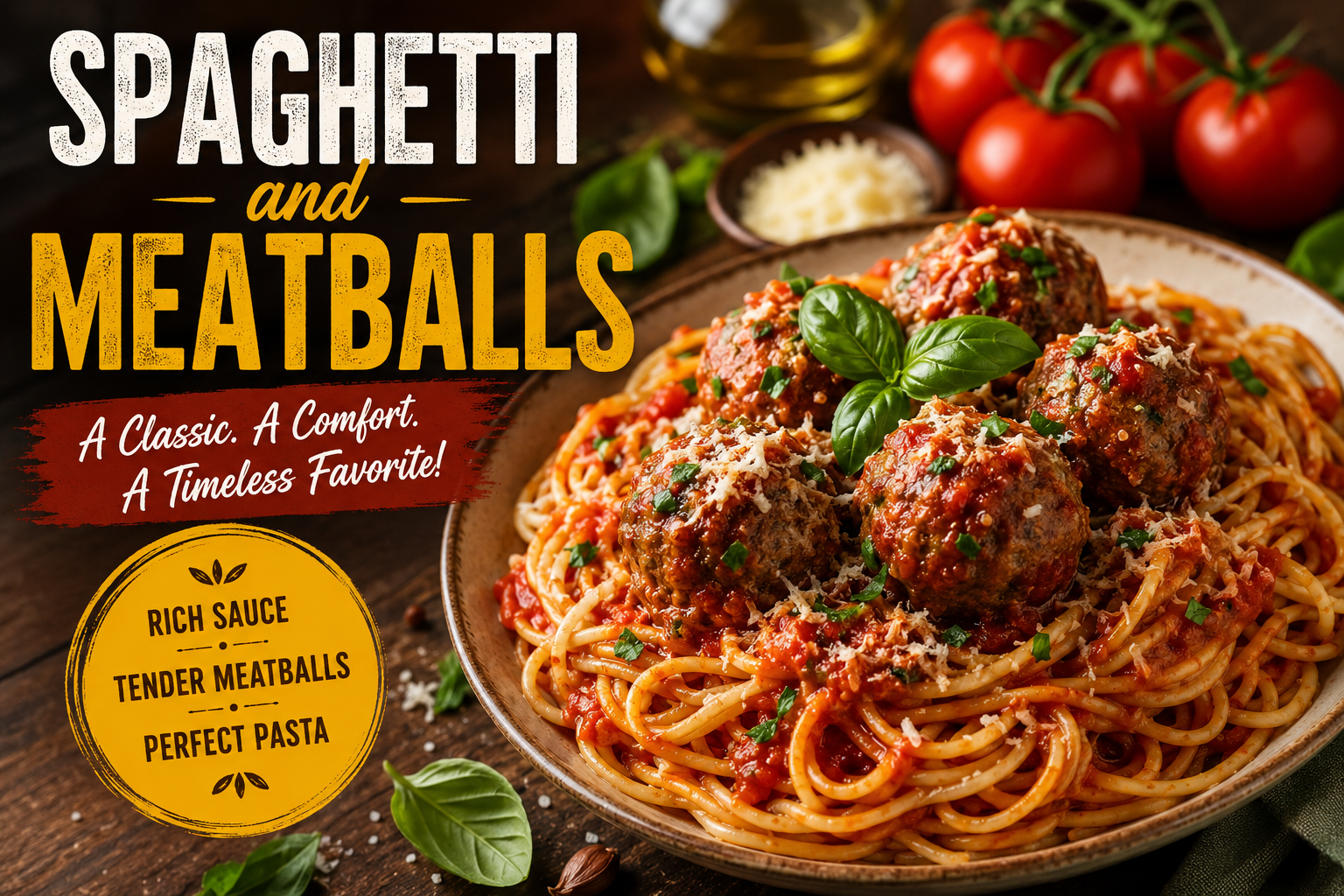
INTRODUCTION
Spaghetti and Meatballs is a classic comfort-food dish that brings together tender, flavorful meatballs, rich tomato sauce, and perfectly cooked spaghetti. It is a warm, satisfying, and delicious meal that can turn an ordinary dinner into something special.
Few dishes are as comforting as a generous plate of spaghetti covered in flavorful tomato sauce and topped with juicy homemade meatballs. The combination of soft pasta, savory meatballs, aromatic herbs, garlic, tomatoes, and melted or freshly grated cheese creates a meal that is both hearty and incredibly satisfying.
One of the best things about Spaghetti and Meatballs is that it can be enjoyed in many different situations. It can be prepared as a quick family dinner, served during a relaxed weekend meal, made for guests, or enjoyed as a comforting homemade dish after a busy day.
The recipe may look simple, but the quality of the final dish depends on several small details. The meatballs should be tender and flavorful rather than dry or overly dense. The tomato sauce should have a pleasant balance of sweetness, acidity, herbs, and savory flavor. The spaghetti should be cooked properly so that it has a satisfying texture and can hold the sauce beautifully.
Choosing the right ingredients is an important first step. Ground meat forms the foundation of the meatballs, while breadcrumbs, egg, garlic, herbs, cheese, salt, and pepper help create their texture and flavor. The tomato sauce can be made with tomatoes, onions, garlic, herbs, and carefully balanced seasonings.
The cooking method also matters. Meatballs can be browned in a skillet, baked in the oven, or gently cooked in tomato sauce. Each method creates a slightly different result. Browning can provide additional savory flavor, while simmering the meatballs in sauce allows them to absorb the rich tomato flavor.
The sauce itself is another important part of the dish. A good tomato sauce should not simply taste like canned tomatoes. It should have depth and balance. Slowly softening onions, cooking garlic carefully, using flavorful herbs, and allowing the sauce to simmer can help develop a richer taste.
Spaghetti is the traditional pasta choice for this dish, but there is room for creativity. Other pasta shapes can also work well, depending on how much sauce you prefer and how you want the final meal to look.
The finishing touches can make the dish even more appealing. Fresh herbs can add color and aroma, while grated cheese can provide additional savory flavor. A simple side salad, roasted vegetables, or warm bread can complete the meal.
Another advantage of homemade Spaghetti and Meatballs is flexibility. You can adjust the seasoning according to your preferences, change the type of meat, add extra vegetables, make the sauce thicker or thinner, or create smaller or larger meatballs.
You can also prepare the dish in larger quantities for family meals. Properly stored leftovers can provide another convenient meal, making this recipe useful for meal planning as well as special occasions.
For beginners, Spaghetti and Meatballs is a wonderful recipe to learn because it teaches several useful cooking techniques. You can learn how to combine ingredients without overworking ground meat, how to shape meatballs evenly, how to develop flavor through browning, how to prepare a balanced tomato sauce, and how to cook pasta correctly.
For experienced home cooks, the recipe offers plenty of opportunities for customization. You can experiment with herbs, different tomato products, meat combinations, cheese varieties, vegetables, and serving styles while maintaining the comforting character of the dish.
A truly enjoyable plate of Spaghetti and Meatballs should have a balance of textures and flavors. The spaghetti should be tender but not mushy. The meatballs should be moist and flavorful. The tomato sauce should coat the pasta without becoming excessively watery. The herbs and seasonings should complement the main ingredients rather than overpower them.
The aroma is also an important part of the experience. As the onions and garlic cook, the kitchen begins to fill with a warm savory fragrance. When tomatoes, herbs, and meatballs are combined, the sauce develops an inviting aroma that makes the finished meal even more appealing.
Spaghetti and Meatballs is also a dish that can bring people together. A large serving bowl placed in the center of the dinner table can create a welcoming family-style meal. Everyone can serve themselves, add cheese or herbs, and enjoy the dish according to their own preferences.
Whether you are cooking for yourself, your family, or guests, the recipe can be adapted to fit the occasion. A simple presentation works perfectly for an everyday dinner, while careful plating and fresh garnishes can make it suitable for a more special meal.
The purpose of this complete recipe guide is to make Spaghetti and Meatballs easier to understand and prepare. Instead of simply following a list of instructions, you will learn why each important step matters and how small changes can affect the final result.
From preparing the meatball mixture to creating the tomato sauce, cooking the spaghetti, combining the ingredients, and serving the finished dish, every stage contributes to the overall experience.
With the right ingredients, careful preparation, and a little patience, you can create a homemade plate of Spaghetti and Meatballs that is comforting, flavorful, and memorable.
This is more than just a pasta recipe. It is a classic homemade meal that can become part of family dinners, weekend traditions, celebrations, and everyday comfort.
So prepare your kitchen, gather your ingredients, and get ready to make a delicious homemade Spaghetti and Meatballs that is full of flavor, warmth, and classic comfort.
CHOOSING THE RIGHT INGREDIENTS
A delicious plate of Spaghetti and Meatballs begins with carefully selected ingredients. Although this dish uses familiar pantry staples, the quality and balance of those ingredients can make a noticeable difference in the final result. The goal is not to use the most expensive ingredients, but to choose ingredients that complement one another and prepare them properly.
The main components are ground meat, breadcrumbs, egg, garlic, herbs, cheese, tomatoes, onions, spaghetti, and seasonings. Each ingredient contributes something different to the finished dish. The meat provides richness, breadcrumbs help create tenderness, tomatoes form the foundation of the sauce, and herbs and garlic build aroma.
SELECTING THE GROUND MEAT
Ground beef is a popular choice for homemade meatballs because it provides a rich, savory flavor. The amount of fat in the meat can affect the texture significantly. Meat that is extremely lean may produce firmer meatballs, especially if it is cooked longer than necessary.
A moderate amount of fat can help keep the meatballs moist and flavorful. Different suitable ground-meat combinations can also be used when you want to create a different flavor profile.
If using poultry or another lean ground meat, pay particular attention to moisture and cooking time. Lean meat can become dry if overcooked.
Always handle raw meat carefully, keep it refrigerated when not being prepared, and cook ground meat according to appropriate food-safety guidance.
THE ROLE OF BREADCRUMBS
Breadcrumbs are an important part of many meatball recipes. They help create a softer and more tender texture by holding moisture within the meat mixture.
Some recipes combine breadcrumbs with milk before adding them to the meat. This creates a soft mixture that can contribute to tender meatballs.
The amount of breadcrumbs should be balanced. Too few may make the mixture difficult to shape, while too many can create dense meatballs that lose some of the natural flavor of the meat.
USING EGGS AS A BINDER
Egg helps hold the meatball mixture together. It allows the meat, breadcrumbs, herbs, cheese, and seasonings to form a cohesive mixture that can be shaped easily.
The amount of egg should be appropriate for the amount of meat being used. Too much egg can change the texture and make the mixture softer than necessary.
ADDING GARLIC
Garlic gives the meatballs a wonderful savory aroma. Freshly minced garlic is an excellent option when available.
The garlic should be distributed evenly throughout the mixture so that every meatball receives a balanced amount.
Garlic can be adjusted according to personal preference, but excessive garlic may overpower the other flavors.
CHOOSING HERBS
Herbs add freshness and aroma to the meatballs and tomato sauce.
Parsley can provide a fresh, clean flavor.
Oregano can add an earthy herbal note.
Basil works especially well with tomato-based sauces.
A combination of suitable Italian-style herbs can create a familiar and comforting flavor.
Fresh herbs and dried herbs have different strengths, so quantities should be adjusted accordingly.
ADDING CHEESE
Grated hard cheese can add savory depth to the meatballs. It also creates a natural connection between the meatballs and tomato sauce.
Freshly grated cheese can provide excellent flavor and aroma.
Because cheese may already contain salt, consider its saltiness when seasoning the meat mixture.
SEASONING THE MEATBALL MIXTURE
Seasoning should be distributed throughout the meat mixture rather than added only to the outside.
Salt enhances the natural flavor of the meat.
Black pepper provides gentle warmth.
Garlic and herbs create aroma.
Cheese adds additional savory depth.
A properly seasoned meatball should taste flavorful on its own before being combined with the sauce.
TESTING THE SEASONING
If you are unsure about the seasoning, take a very small portion of the mixture and cook it separately.
Allow it to cook safely, then taste it.
If it needs more salt, pepper, herbs, or another seasoning, adjust the remaining mixture.
This simple step can prevent an entire batch of meatballs from turning out under-seasoned.
MIXING THE MEATBALL INGREDIENTS
Place the ground meat into a large clean bowl.
Add the breadcrumbs, egg, garlic, herbs, cheese, salt, pepper, and any other ingredients required by your recipe.
Mix everything gently until the ingredients are evenly distributed.
Do not continue mixing after the mixture becomes uniform.
WHY OVERMIXING SHOULD BE AVOIDED
Overmixing ground meat can produce dense and firm meatballs.
The proteins in the meat become more tightly connected as the mixture is handled.
A gentle mixing technique helps maintain a softer texture.
Think of mixing as combining rather than kneading.
Once everything is evenly distributed, stop.
SHAPING THE MEATBALLS
Divide the mixture into portions of approximately equal size.
Gently roll each portion between your hands.
Try not to compress the mixture excessively.
The meatballs should hold their shape without becoming tightly packed.
Consistent sizing is important because meatballs of different sizes will cook at different rates.
CHOOSING THE IDEAL SIZE
There is no single correct meatball size.
Small meatballs cook quickly and are easy to serve.
Medium meatballs provide a good balance between cooking time, texture, and presentation.
Large meatballs create a dramatic presentation but require more careful cooking.
For spaghetti, medium-sized meatballs are often a convenient choice.
PREPARING MEATBALLS AHEAD OF TIME
Meatballs can be prepared ahead when convenient.
After shaping them, place them in a suitable covered container and refrigerate them.
Keeping the meatballs cold until cooking helps with safe food handling and can also make them easier to manage.
Do not leave raw meat sitting at room temperature for extended periods.
COOKING THE MEATBALLS
There are several methods for cooking meatballs.
They can be browned in a skillet, baked in the oven, simmered directly in tomato sauce, or browned first and then finished in the sauce.
Each method has advantages.
Skillet browning can create a flavorful exterior.
Baking is convenient for larger quantities.
Simmering in sauce allows the meatballs to absorb tomato flavor.
Combining browning with gentle simmering can provide both exterior flavor and a tender final texture.
BROWNING THE MEATBALLS
If using a skillet, heat the pan appropriately and add a suitable amount of cooking fat.
Place the meatballs into the pan without overcrowding.
Allow them to brown before turning.
Rotate them carefully so several sides develop color.
Avoid constantly moving the meatballs.
A well-browned exterior can contribute additional savory flavor to the final dish.
WHY BROWNING ADDS FLAVOR
Browning creates complex savory flavors on the surface of the meat.
The browned meatballs also contribute flavorful residue to the cooking pan.
If the sauce is prepared in the same pan, these flavorful bits can become part of the sauce.
This is one reason browning can make the final dish taste deeper and more developed.
BAKING THE MEATBALLS
Baking is another convenient option.
Arrange the meatballs with enough space between them so they cook evenly.
Bake according to the recipe and appropriate food-safety guidance.
A food thermometer can be useful for confirming safe internal doneness.
Baking can be especially convenient when preparing a large batch.
SIMMERING MEATBALLS IN SAUCE
Meatballs can also be gently cooked in tomato sauce.
Place them carefully into the sauce.
Maintain a gentle cooking temperature.
Avoid aggressive stirring because the meatballs can break apart before they become firm.
As they cook, the meatballs can absorb some of
BUILDING DEEPER FLAVOR
A truly memorable plate of Spaghetti and Meatballs is not only about combining meatballs, pasta, and tomato sauce. The best results come from building flavor gradually. Each ingredient should contribute something useful, while the overall dish should remain balanced.
The meatballs should taste savory and aromatic.
The tomato sauce should have depth without becoming overwhelmingly acidic.
The spaghetti should provide a neutral foundation that allows the sauce to shine.
Fresh herbs and cheese should complete the dish without overpowering it.
DEVELOPING THE TOMATO SAUCE
Tomato sauce can be simple, but allowing the ingredients enough time to develop their flavors can make a significant difference.
Start by gently cooking the onions.
Once they become soft and fragrant, add the garlic.
Cook the garlic briefly.
Then add the tomatoes and seasonings.
Allow the sauce to simmer gently.
As it cooks, the water gradually evaporates and the flavors become more concentrated.
This does not mean the sauce needs to cook for an extremely long time. The important thing is to control the heat and taste the sauce during cooking.
THE IMPORTANCE OF LOW AND GENTLE HEAT
High heat is not always the best approach.
A very aggressive boil can cause the sauce to reduce too quickly and may create an uneven texture.
Gentle heat allows the sauce to develop gradually.
It also gives the meatballs an opportunity to cook through while absorbing some of the surrounding flavor.
Keep an eye on the sauce and stir when needed.
CREATING A RICHER SAUCE
There are several ways to create a richer tomato sauce.
Slowly cooked onions can add natural sweetness.
Garlic provides savory aroma.
Good-quality tomatoes provide a strong foundation.
Herbs add complexity.
A suitable cooking fat can add richness.
The meatballs themselves can contribute additional savory flavor when simmered in the sauce.
The key is balance.
Adding more ingredients does not automatically create a better sauce.
BALANCING ACIDITY
Tomato sauces naturally have acidity.
Some tomatoes are sweeter and less acidic, while others can taste sharper.
Taste the sauce before making adjustments.
If it is too acidic, consider whether additional cooking time or more softened onion may help.
A small amount of another balancing ingredient may also be used depending on the recipe.
Avoid adding a large quantity of sugar simply because the sauce tastes sharp.
The goal is balance, not sweetness.
ADDING A LITTLE HEAT
If you enjoy spicy food, Spaghetti and Meatballs can easily be customized.
A small amount of crushed red pepper can add warmth.
You can also use another suitable chili ingredient.
Add spice gradually.
It is much easier to increase heat than to remove it from a finished sauce.
The spice should complement the tomato and meat rather than dominate the dish.
MAKING THE MEATBALLS EXTRA TENDER
Tender meatballs require careful handling.
Use an appropriate amount of moisture.
Breadcrumbs can help hold moisture.
Avoid overmixing.
Do not compress the meatballs too tightly.
Avoid unnecessary overcooking.
These simple techniques can have a major effect on the final texture.
USING MILK-SOAKED BREADCRUMBS
Some meatball recipes use breadcrumbs soaked in milk.
This creates a soft mixture that can help keep the meatballs tender.
The breadcrumbs absorb the liquid before they are combined with the meat.
This technique can be particularly useful when you want a softer texture.
Use enough liquid to soften the breadcrumbs without making the meat mixture excessively wet.
ADDING ONION TO MEATBALLS
Finely chopped or grated onion can add moisture and sweetness to meatballs.
If using raw onion, make sure it is cut very finely so it distributes evenly.
You can also cook the onion first and allow it to cool before adding it to the meat mixture.
Cooked onion can provide a sweeter, softer flavor.
USING FRESH HERBS
Fresh parsley can add brightness to the meatballs.
Fresh basil can complement the tomato sauce.
Other suitable herbs can also be used according to your preferred flavor profile.
Chop fresh herbs finely so they distribute evenly.
Do not add excessive quantities.
CREATING A MORE SAVORY MEATBALL
A more savory meatball can be created through a combination of cheese, garlic, herbs, and proper seasoning.
Browning the meatballs can also add depth.
The meatball should still taste like meat, however.
The supporting ingredients should enhance rather than hide the main ingredient.
DIFFERENT MEATBALL VARIATIONS
One of the best things about homemade meatballs is flexibility.
You can use different suitable ground meats.
You can combine meats.
You can make smaller meatballs for appetizers.
You can make larger meatballs for a dramatic dinner presentation.
You can adjust the herbs.
You can add finely chopped vegetables.
You can create a spicier version.
The basic technique remains similar.
CHICKEN OR TURKEY MEATBALLS
Lean poultry can be used for a different style of meatball.
Because poultry can be leaner than some beef mixtures, moisture becomes especially important.
Breadcrumbs, egg, and other suitable ingredients can help maintain a tender texture.
Cook poultry meatballs according to appropriate food-safety guidance.
The resulting dish will have a lighter flavor than a beef-based version.
MAKING SMALL MEATBALLS
Small meatballs are useful when serving a large group.
They cook relatively quickly and are easy to portion.
They also work well with smaller pasta shapes.
Make sure all meatballs are approximately the same size.
Consistent size remains important regardless of the shape you choose.
MAKING LARGE MEATBALLS
Large meatballs can make the dish feel more dramatic and substantial.
They require more careful cooking because the center takes longer to heat through.
Use a food thermometer when appropriate to verify safe internal doneness.
Large meatballs can look especially attractive when placed on top of a neatly arranged serving of spaghetti.
CREATING A SPICY VERSION
For a spicy variation, add a controlled amount of chili flakes to the sauce.
You can also season the meatballs with a little additional pepper or another suitable spice.
Start with a small quantity.
Taste the sauce.
Increase the heat gradually if needed.
CREATING A CHEESY VERSION
Cheese can be incorporated into the meatballs and used as a finishing ingredient.
You can also serve additional grated cheese at the table.
For a richer variation, a suitable cheese can be added near the end of cooking.
The cheese should complement the tomato sauce rather than make the dish excessively heavy.
ADDING VEGETABLES
Vegetables can add color, texture, and additional nutrients.
Finely chopped carrots can add natural sweetness.
Bell peppers can add color and mild flavor.
Spinach can be added to the sauce near the end of cooking.
Mushrooms can provide earthy flavor.
Zucchini can also be incorporated into some customized versions.
Do not add too many vegetables at once.
The main identity of the dish should remain recognizable.
MUSHROOM SPAGHETTI AND MEATBALLS
Mushrooms can be sautéed separately and added to the tomato sauce.
Cook them until their excess moisture has reduced.
Properly cooked mushrooms can provide a pleasant savory and earthy flavor.
They can be particularly good when combined with garlic and herbs.
SPINACH TOMATO SAUCE
Spinach can be added toward the end of sauce preparation.
It wilts quickly.
Adding it late helps maintain some of its color and texture.
Use a moderate amount so the sauce does not become overwhelmed by the vegetable flavor.
ROASTED VEGETABLE SIDE DISHES
If you prefer to keep vegetables separate from the sauce, roasted vegetables make an excellent side.
Broccoli, carrots, zucchini, bell peppers, and other suitable vegetables can be roasted until tender.
A simple seasoning is usually enough.
The roasted vegetables provide contrast to the soft spaghetti and meatballs.
CHOOSING THE RIGHT PASTA
Spaghetti is the classic choice, but it is not the only option.
Linguine can work well.
Fettuccine can provide a broader surface for sauce.
Penne makes a more compact serving.
Rigatoni can hold sauce inside the pasta.
Small pasta shapes can work especially well with smaller meatballs.
Choose according to your preferred texture and presentation.
WHY SAUCE SHOULD CLING TO THE PASTA
A good tomato sauce should coat the spaghetti rather than sit entirely at the bottom of the plate.
Pasta starch can help.
Do not make the sauce excessively watery.
If necessary, toss the pasta with the sauce before serving.
This helps distribute the flavor more evenly.
USING PASTA WATER CORRECTLY
Reserved pasta water should be added gradually.
A small amount can loosen a thick sauce.
The starch can help create a smoother connection between pasta and sauce.
Do not add too much.
You want the sauce to remain flavorful and concentrated.
FAMILY-STYLE PRESENTATION
For a family meal, place the spaghetti in a large serving dish.
Pour or spoon the tomato sauce over the pasta.
Arrange the meatballs on top.
Add grated cheese and fresh herbs.
Place the dish in the center of the table.
This creates a warm and welcoming presentation.
RESTAURANT-STYLE PRESENTATION
For an individual restaurant-style presentation, begin with a neat portion of spaghetti.
Twirl the pasta into a compact mound.
Add tomato sauce.
Place two or three meatballs on top or beside the pasta.
Finish with grated cheese and a small amount of fresh herbs.
Keep the plate clean.
Avoid excessive garnish.
ADDING FRESH BASIL
Fresh basil can add a beautiful aroma.
Tear or gently cut the leaves rather than crushing them excessively.
Add them near the end.
Basil works especially well with tomato-based sauces.
ADDING PARSLEY
Parsley provides freshness and color.
It can be finely chopped and sprinkled over the finished dish.
A small amount is usually enough.
CHOOSING CHEESE FOR SERVING
A hard grated cheese is a classic choice.
Freshly grated cheese generally offers a stronger aroma and a pleasant texture.
Add it immediately before serving.
You can also place a bowl of grated cheese on the table so everyone can add their preferred amount.
SERVING WITH BREAD
Warm bread can be an excellent accompaniment.
It can be used to enjoy remaining tomato sauce.
A simple crusty loaf can provide a pleasant contrast to the soft pasta.
Garlic bread is another popular option.
SERVING WITH SALAD
A fresh salad can balance the richness of the dish.
Leafy greens, tomatoes, cucumbers, and a light dressing can provide freshness.
A slightly acidic dressing can work especially well alongside a rich tomato and meat-based meal.
SERVING WITH ROASTED VEGETABLES
Roasted vegetables provide another way to add color and texture.
Season them simply.
Serve them alongside the pasta.
This can turn the meal into a more complete dinner.
CREATING A FAMILY DINNER
Spaghetti and Meatballs works especially well as a family meal.
Prepare a large batch.
Serve the pasta and meatballs in separate or shared dishes.
Place cheese and herbs on the table.
Allow everyone to customize their portion.
This makes the meal interactive and relaxed.
PREPARING THE DISH FOR GUESTS
If you are serving guests, prepare as much as possible before they arrive.
Shape the meatballs in advance.
Prepare the sauce.
Organize the ingredients.
Cook the pasta closer to serving time.
This reduces stress and allows you to focus on presentation.
MEAL PREPARATION
Spaghetti and Meatballs can also be useful for meal planning.
The meatballs and sauce can be prepared in advance.
Store them safely in suitable containers.
Cooked pasta can be prepared separately when needed.
Keeping components separate can help maintain a better texture.
STORING LEFTOVERS
Allow food to cool appropriately and refrigerate leftovers promptly.
Use airtight containers.
If possible, store pasta and sauce separately.
This can help prevent the spaghetti from absorbing too much sauce and becoming overly soft.
Follow appropriate food-safety guidance for storage times.
REHEATING THE SAUCE AND MEATBALLS
Reheat the sauce and meatballs gently.
Stir carefully.
Avoid aggressive boiling.
If the sauce becomes too thick, add a small amount of suitable liquid.
Heat thoroughly before serving.
REHEATING SPAGHETTI
Pasta can become dry when refrigerated.
A small amount of sauce or suitable liquid can help restore moisture during reheating.
Heat gradually.
Avoid overheating because this can make the pasta excessively soft.
COMMON MISTAKE: OVERMIXING MEATBALLS
One of the most common problems is handling the meat mixture too much.
Mix only until combined.
The less unnecessary handling, the better chance you have of maintaining a tender texture.
COMMON MISTAKE: OVERCOOKING MEATBALLS
Cooking meatballs longer than necessary can make them dry.
Use appropriate cooking temperatures and verify safe doneness.
Once safely cooked, avoid unnecessary additional cooking.
COMMON MISTAKE: OVERCOOKING PASTA
Pasta that is cooked too long can become mushy.
Check it before the package’s maximum recommended time.
Taste a strand if necessary.
Drain when it reaches the texture you prefer.
COMMON MISTAKE: MAKING THE SAUCE TOO THIN
A watery sauce may not cling well to spaghetti.
Allow excess moisture to reduce gently.
Do not rush the process with extremely high heat.
Monitor the consistency throughout cooking.
COMMON MISTAKE: MAKING THE SAUCE TOO THICK
A sauce that becomes too thick can be adjusted.
Add a small amount of pasta water or another suitable liquid.
Stir gradually.
Continue until the desired consistency is reached.
COMMON MISTAKE: TOO MUCH SEASONING
Adding large amounts of seasoning at once can make the sauce difficult to balance.
Season gradually.
Taste throughout the cooking process.
Remember that cheese and other ingredients can also contribute salt.
COMMON MISTAKE: TOO MUCH CHEESE
Cheese is delicious, but too much can hide the tomato and meatball flavors.
Use it as a finishing ingredient rather than allowing it to dominate the dish.
COMMON MISTAKE: BURNING GARLIC
Garlic can become bitter quickly.
Cook it briefly.
Watch the pan carefully.
If the garlic becomes very dark, its flavor may negatively affect the sauce.
COMMON MISTAKE: OVERCROWDING THE PAN
When browning meatballs, overcrowding can reduce browning.
The pan temperature can drop, causing the meatballs to release moisture rather than develop a good exterior.
Cook in batches if necessary.
FINAL FLAVOR CHECK
Before serving, taste the sauce.
Ask whether it needs more seasoning.
Check whether the acidity feels balanced.
Make sure the herbs are noticeable but not overwhelming.
Check the consistency.
Then taste a small amount of pasta with sauce.
The final bite should feel balanced.
CREATING YOUR OWN SIGNATURE VERSION
Once you understand the basic technique, you can begin creating your own version.
You might prefer extra garlic.
You might enjoy more herbs.
You might want a spicy tomato sauce.
You might prefer smaller meatballs.
You might add vegetables.
You might serve the dish with a fresh salad and warm bread.
There is plenty of room for creativity.
The most important thing is to maintain balance
CREATING THE PERFECT DINNER EXPERIENCE
Spaghetti and Meatballs is more than a combination of pasta and sauce. The way the meal is prepared, plated, served, and enjoyed can make the entire experience feel more special.
A well-prepared dinner should have a balance of flavor, texture, aroma, temperature, and presentation. The spaghetti should be warm, the sauce should coat the pasta properly, and the meatballs should remain tender and flavorful.
Even simple finishing touches can make a homemade plate look polished and inviting.
SERVING THE SPAGHETTI
When the pasta is ready, transfer it carefully to a serving dish or individual plate.
If you are preparing an individual restaurant-style serving, use a fork or suitable utensil to gather the spaghetti into a neat portion.
Place the spaghetti in the center of the plate.
Add a generous amount of tomato sauce.
Arrange the meatballs carefully.
Finish with grated cheese and fresh herbs.
Keep the plate relatively clean around the edges.
A simple presentation often looks more professional than a plate covered with unnecessary decorations.
FAMILY-STYLE SERVING
For a family dinner, a large serving dish can create a warm and welcoming presentation.
Place the cooked spaghetti in the center.
Add tomato sauce.
Arrange the meatballs over the top.
Finish with cheese and herbs.
Serve extra grated cheese on the side.
Warm bread can also be placed on the table.
This allows everyone to serve themselves and customize their portions.
RESTAURANT-STYLE PRESENTATION
Restaurant-style presentation focuses on simplicity and visual balance.
Begin with a moderate portion of spaghetti.
Twirl it neatly.
Place the pasta in the center of a clean plate.
Add sauce carefully.
Arrange two or three meatballs in an attractive position.
Add a small amount of grated cheese.
Finish with fresh basil or parsley.
Avoid covering the entire plate with garnish.
The food should remain the main focus.
CHOOSING THE RIGHT PLATE
A wide plate can make spaghetti easier to arrange.
A shallow bowl can also work well because it keeps the sauce contained while providing enough space for the pasta.
Choose a clean serving dish that allows the colors of the tomato sauce, pasta, meatballs, and herbs to stand out.
THE IMPORTANCE OF SERVING TEMPERATURE
Spaghetti and Meatballs is generally best enjoyed warm.
Serve the dish soon after the components are ready.
If food needs to wait briefly, keep it at a safe temperature according to appropriate food-safety practices.
Avoid allowing cooked food to sit at room temperature for extended periods.
ADDING FRESH HERBS
Fresh herbs are an easy way to improve presentation.
Fresh basil provides a classic tomato-friendly aroma.
Parsley adds a bright green color and fresh flavor.
Use a small amount.
The purpose of garnish is to complement the meal rather than hide it.
ADDING GRATED CHEESE
Grated hard cheese can be added immediately before serving.
It provides a savory finish.
Freshly grated cheese often has a stronger aroma and more pleasant texture.
You can also serve additional cheese separately so everyone can add as much as they prefer.
SERVING WITH GARLIC BREAD
Garlic bread is a popular side for spaghetti.
The crisp exterior and soft interior provide a pleasant contrast to the pasta and sauce.
It is also useful for enjoying extra tomato sauce.
A simple piece of crusty bread can work just as well.
SERVING WITH A FRESH SALAD
A fresh salad can balance the richness of the meal.
Leafy greens, tomatoes, cucumbers, carrots, and other vegetables can be combined with a light dressing.
A slightly acidic dressing can provide contrast to the savory meatballs and tomato sauce.
Keep the salad simple so it does not compete with the main dish.
SERVING WITH ROASTED VEGETABLES
Roasted vegetables can turn the meal into a more complete dinner.
Broccoli, carrots, zucchini, bell peppers, and other suitable vegetables can be roasted with simple seasonings.
Their caramelized edges provide additional texture.
Serve them alongside the spaghetti and meatballs.
CREATING A SPECIAL OCCASION MEAL
Spaghetti and Meatballs can be dressed up for a special dinner.
Use carefully shaped meatballs.
Prepare a flavorful sauce.
Arrange the spaghetti neatly.
Use fresh herbs.
Add freshly grated cheese.
Serve with a simple salad and warm bread.
Small details can make the meal feel much more special without making the recipe unnecessarily complicated.
PREPARING THE MEAL FOR A LARGE GROUP
When cooking for many people, organization becomes especially important.
Prepare the meatballs in advance.
Make the sauce ahead of time when practical.
Keep the sauce warm at a safe temperature.
Cook the pasta in batches if necessary.
Have serving dishes ready.
Prepare cheese and herbs before serving.
This allows you to focus on assembling the meal instead of trying to complete every task at the same moment.
MAKING MEATBALLS AHEAD OF TIME
Meatballs can be shaped before the main cooking session.
Keep raw meatballs refrigerated appropriately until they are ready to cook.
You can also cook a batch ahead of time and store it safely.
Having prepared meatballs available can make future meals much easier.
MAKING TOMATO SAUCE AHEAD OF TIME
Tomato sauce can often be prepared in advance.
Allow it to cool appropriately before storing.
Place it in a suitable airtight container.
Refrigerate promptly.
When you are ready to serve the meal, reheat the sauce gently and add the meatballs.
This can reduce the amount of cooking required during dinner preparation.
MEAL PREP STRATEGY
For meal preparation, it can be useful to keep the components separate.
Store meatballs with sauce in one container.
Store cooked spaghetti separately.
Keep cheese and fresh herbs separate.
When serving, reheat the sauce and meatballs, warm the pasta, and combine everything.
This can help preserve better texture.
STORING LEFTOVERS SAFELY
Leftovers should be handled carefully.
Place them in suitable containers.
Refrigerate promptly.
Do not leave cooked food at room temperature for extended periods.
Label containers if you are storing several meals.
Use leftovers within appropriate food-safety timeframes.
When in doubt about food safety, it is better not to consume questionable leftovers.
FREEZING MEATBALLS
Cooked meatballs can be useful for freezing when properly prepared and stored.
Allow them to cool appropriately.
Place them in freezer-safe containers or packaging.
Label the container with the date.
Store them properly.
When needed, thaw and reheat using safe food-handling practices.
FREEZING TOMATO SAUCE
Tomato sauce can also be frozen.
Use a suitable freezer-safe container.
Leave appropriate space if necessary for expansion.
Label the container.
Thaw safely before reheating.
Freezing sauce separately can be convenient because it allows you to prepare fresh pasta whenever you want to serve the meal.
REHEATING MEATBALLS AND SAUCE
Reheat meatballs and sauce gently.
Stir the sauce occasionally.
Avoid extremely high heat.
If the sauce becomes too thick, add a small amount of suitable liquid.
Make sure the food reaches a safe serving temperature.
REHEATING SPAGHETTI
Refrigerated spaghetti may become firmer and drier.
Add a little sauce or suitable liquid.
Heat gently.
Stir carefully.
Avoid cooking it for an unnecessarily long time.
The goal is to warm the pasta without turning it soft and mushy.
HOW TO KEEP LEFTOVER PASTA FROM BECOMING TOO SOFT
If you know you will have leftovers, keeping pasta and sauce separate can help.
The spaghetti will continue absorbing sauce while stored.
Separating the components gives you more control during reheating.
This is particularly useful when preparing meals in advance.
MAKING THE RECIPE MORE BUDGET-FRIENDLY
Spaghetti and Meatballs can be made economically.
Choose affordable suitable ground meat.
Use pantry staples.
Buy tomatoes in convenient quantities.
Use dried herbs when fresh herbs are expensive or unavailable.
Choose a pasta that fits your budget.
A simple meal does not need expensive ingredients to taste good.
USING LEFTOVER INGREDIENTS
The recipe can also be useful for reducing food waste.
Extra herbs can be used as garnish.
Remaining tomato sauce can be used for another pasta meal.
Extra cooked meatballs can be served in sandwiches.
Leftover spaghetti can be reheated with another sauce.
The important thing is to store everything safely.
MAKING A MEATBALL SANDWICH
Extra meatballs can be transformed into a completely different meal.
Place warm meatballs and tomato sauce inside suitable bread.
Add cheese if desired.
Toast the sandwich carefully.
Fresh herbs can provide a finishing touch.
This can be a delicious way to use leftovers.
TURNING LEFTOVERS INTO A BAKED PASTA DISH
Leftover spaghetti and meatballs can also inspire a baked pasta-style meal.
Combine suitable leftovers.
Place them in an oven-safe dish.
Add an appropriate amount of cheese.
Bake until heated thoroughly and the cheese is appropriately melted.
Use proper food-safety practices when reheating leftovers.
CREATING A SPICY VERSION
A spicy version can be created by adding chili flakes to the tomato sauce.
Start with a small amount.
Taste the sauce.
Increase gradually.
You can also add suitable spicy ingredients to the meatball mixture.
Keep the heat balanced so that the tomato, meat, and herbs remain noticeable.
CREATING A CREAMIER VARIATION
Although classic Spaghetti and Meatballs is tomato-based, some creative versions can include a small amount of cream or another suitable creamy ingredient.
Add it carefully.
The goal is to soften the acidity and create a richer sauce without completely changing the identity of the dish.
CREATING A VEGETABLE-RICH VERSION
Vegetables can be incorporated into the sauce.
Finely chopped carrots can add sweetness.
Bell peppers can add color.
Mushrooms can add earthy flavor.
Spinach can be added near the end.
Zucchini can also work in some versions.
Avoid adding so many vegetables that the dish loses its main character.
CREATING A HERB-FOCUSED VERSION
If you enjoy fresh herbs, use a combination of parsley and basil.
Add some herbs to the meatballs.
Use additional fresh herbs as a garnish.
Keep the quantity balanced.
Fresh herbs should provide brightness without becoming overpowering.
CREATING A CHEESY VERSION
Cheese can be added inside the meatballs and on top of the finished pasta.
A moderate amount can make the dish richer.
If using salty cheese, reduce additional salt accordingly.
The tomato sauce should still remain noticeable.
CREATING A GARLIC-LOVER’S VERSION
Garlic can be increased according to preference.
Use fresh garlic in the meatballs.
Add garlic to the sauce.
Cook it carefully.
Avoid burning it.
A stronger garlic version can be especially satisfying when paired with fresh herbs and grated cheese.
CREATING A MILD FAMILY VERSION
For a family-friendly version, keep the sauce gently seasoned.
Avoid excessive chili.
Use a moderate amount of garlic.
Keep the tomato flavor smooth.
Serve cheese separately.
This allows everyone to customize their portion.
CREATING A MORE ELEGANT VERSION
For an elegant dinner, focus on presentation.
Use evenly sized meatballs.
Make sure the sauce has a smooth consistency.
Cook the pasta carefully.
Arrange the spaghetti neatly.
Add a small amount of fresh basil.
Finish with freshly grated cheese.
A clean plate and controlled portions can make the dish look sophisticated.
EXPERT TIP: DO NOT RUSH THE SAUCE
One of the easiest ways to improve the dish is to give the sauce enough time to develop.
This does not mean leaving it unattended for hours.
It means avoiding unnecessary rushing.
Let the onions soften.
Allow the garlic to become fragrant.
Let the tomatoes simmer.
Taste the sauce.
Adjust it gradually.
EXPERT TIP: TASTE AS YOU COOK
Professional cooking involves tasting throughout the process.
Taste the sauce.
Check the seasoning.
Check the acidity.
Check the texture.
Small adjustments made during cooking are easier than trying to fix everything at the end.
EXPERT TIP: KEEP THE FLAVORS BALANCED
A good Spaghetti and Meatballs should not taste only salty, only sweet, only acidic, or only spicy.
It should have layers of flavor.
The tomato should remain recognizable.
The meatballs should taste savory.
The herbs should provide aroma.
The cheese should provide a finishing note.
Balance is more important than intensity.
EXPERT TIP: DO NOT OVERLOAD THE PLATE
More food does not always create better presentation.
Give the spaghetti enough room.
Arrange the meatballs clearly.
Add sauce generously but not excessively.
Use garnish sparingly.
Keep the plate visually clean.
EXPERT TIP: SERVE IMMEDIATELY WHEN POSSIBLE
The dish is generally most enjoyable when served soon after preparation.
Freshly cooked spaghetti has excellent texture.
The sauce is warm.
The meatballs are tender.
The cheese melts slightly over the hot food.
Fresh herbs provide their best aroma.
A SIMPLE DINNER TIMELINE
Begin by preparing the meatball mixture.
Shape the meatballs.
Prepare the tomato sauce.
Cook or brown the meatballs.
Allow them to finish in the sauce when appropriate.
Begin cooking the spaghetti as the sauce nears completion.
Drain the pasta.
Combine or plate the components.
Add cheese and herbs.
Serve immediately.
This organized approach can make the cooking process smoother.
FINAL QUALITY CHECK
Before serving, inspect the finished dish.
The meatballs should be safely cooked.
The spaghetti should have the desired texture.
The sauce should coat the pasta well.
The seasoning should be balanced.
The dish should smell inviting.
The presentation should look clean.
Fresh herbs and cheese should provide a final touch.
If all these elements come together, you have a satisfying homemade meal.
FINAL THOUGHTS
Spaghetti and Meatballs is a flexible recipe that can fit almost any dinner occasion.
It can be simple or elaborate.
It can be traditional or customized.
It can be prepared for a small family meal or a larger gathering.
Its greatest strength is its balance of comforting ingredients.
Tender meatballs provide richness.
Tomato sauce provides brightness and depth.
Spaghetti provides a satisfying base.
Herbs and cheese complete the dish.
With thoughtful preparation, even a simple homemade version can feel special.
The most important lesson is not to focus on complicated techniques.
Focus on good ingredients.
Handle the meat gently.
Build the sauce gradually.
Cook the pasta carefully.
Taste your food.
Keep the flavors balanced.
Serve it warm.
These principles can help you create a delicious plate of Spaghetti and Meatballs again and again.
HOW TO MAKE EVERY BITE MORE FLAVORFUL
A great Spaghetti and Meatballs recipe is all about balance. The pasta should be cooked properly, the tomato sauce should have a rich and pleasant flavor, and the meatballs should be tender, juicy, and well seasoned.
When these elements come together, the result is a comforting homemade meal that feels satisfying without requiring complicated cooking techniques.
The best way to improve the dish is to pay attention to small details. Use good-quality ingredients, season gradually, avoid overmixing the meatball mixture, cook the sauce patiently, and serve the meal while it is warm.
THE PERFECT MEATBALL TEXTURE
The ideal meatball should be tender on the inside with a flavorful exterior.
A meatball that is too tightly packed can become dense.
A meatball that contains too much moisture may struggle to hold its shape.
The right balance of meat, breadcrumbs, egg, seasonings, and moisture creates a mixture that is easy to shape and produces a pleasant texture after cooking.
Handle the mixture gently and avoid pressing the meatballs too firmly.
HOW TO PREVENT DRY MEATBALLS
Dry meatballs are usually caused by a combination of factors.
The meat may be too lean.
The mixture may contain too many dry ingredients.
The meatballs may have been mixed too much.
They may have been cooked for too long.
Using an appropriate meat mixture, maintaining moisture, handling the mixture gently, and avoiding unnecessary overcooking can help produce more tender meatballs.
HOW TO PREVENT MEATBALLS FROM FALLING APART
Meatballs need enough binding to hold their shape.
Egg and breadcrumbs can help.
The mixture should be combined evenly.
The meatballs should also be shaped firmly enough to hold together, but not compressed excessively.
If cooking them directly in sauce, avoid vigorous stirring before the exterior has firmed.
Handle them carefully with a suitable utensil.
HOW TO MAKE THE TOMATO SAUCE TASTE BETTER
A flavorful tomato sauce does not require dozens of ingredients.
Start with onions and garlic.
Allow the onions to soften properly.
Cook garlic briefly.
Add good-quality tomatoes.
Season gradually.
Add suitable herbs.
Allow the sauce to simmer gently.
Taste the sauce before serving and adjust the seasoning if needed.
The goal is to create a sauce with a balanced tomato flavor rather than simply making it extremely salty or sweet.
HOW TO CONTROL SAUCE THICKNESS
If the sauce is too thin, allow it to simmer gently for a little longer so excess moisture can evaporate.
If the sauce is too thick, add a small amount of reserved pasta water or another suitable liquid.
Make adjustments gradually.
The final sauce should be thick enough to coat the spaghetti while remaining smooth and spoonable.
HOW TO MAKE SPAGHETTI TASTE BETTER
The pasta itself should not be ignored.
Use enough water to allow the spaghetti to move freely while cooking.
Season the cooking water appropriately.
Stir during the early cooking stage.
Check the pasta before the recommended cooking time has completely passed.
Drain it when it reaches your preferred texture.
Combining the pasta with sauce shortly after cooking helps distribute flavor.
WHY PASTA WATER IS SO USEFUL
Pasta water contains starch released from the spaghetti during cooking.
A small amount can help loosen a thick sauce while allowing it to cling to the pasta.
It can also help create a smoother connection between the sauce and spaghetti.
Always add it gradually because too much water can make the sauce thin.
WHEN TO ADD THE CHEESE
Cheese can be added at the end of cooking.
Freshly grated cheese can be sprinkled over the finished dish just before serving.
It can also be placed on the table so everyone can add their preferred amount.
If cheese is already included in the meatballs, remember that it contributes additional salt and savory flavor.
WHEN TO ADD FRESH HERBS
Fresh herbs are usually best added near the end.
Adding them too early can reduce their fresh aroma.
Basil and parsley can be used as finishing ingredients.
Tear or chop them shortly before serving.
A small amount can provide color and freshness.
HOW TO MAKE THE DISH LOOK PROFESSIONAL
Presentation does not have to be complicated.
Use a clean plate.
Create a neat portion of spaghetti.
Add sauce evenly.
Arrange the meatballs intentionally.
Sprinkle a small amount of cheese.
Finish with fresh herbs.
Keep the edges of the plate clean.
A simple and balanced presentation can make homemade food look much more appealing.
HOW MANY MEATBALLS SHOULD BE SERVED?
The number depends on the size of the meatballs and the serving size.
Smaller meatballs can be served in greater numbers.
Larger meatballs may require fewer.
Instead of focusing only on a specific number, consider the overall balance of pasta, sauce, and meatballs.
Each serving should feel satisfying without becoming unnecessarily heavy.
CAN SPAGHETTI AND MEATBALLS BE MADE AHEAD?
Yes, many components can be prepared ahead.
The meatballs can be shaped in advance.
The tomato sauce can also be prepared ahead and stored safely.
For the best pasta texture, spaghetti can be cooked closer to serving time.
Preparing the sauce and meatballs ahead can make dinner much easier.
CAN THE MEATBALLS BE FROZEN?
Meatballs can be prepared and stored for later use when handled and packaged properly.
Allow cooked meatballs to cool appropriately before storage.
Place them in suitable freezer-safe packaging.
Label the container.
When ready to use them, thaw and reheat them safely.
This can be a convenient option for busy days.
CAN TOMATO SAUCE BE FROZEN?
Tomato sauce can also be frozen in suitable freezer-safe containers.
Allow it to cool appropriately.
Leave suitable space in the container if needed.
Label the container with the date.
Thaw and reheat safely before serving.
Keeping sauce in separate portions can make future meals easier.
HOW TO STORE LEFTOVERS
Place leftover food into appropriate containers and refrigerate promptly.
For better texture, keep spaghetti and sauce separate when possible.
Store meatballs together with sauce if convenient.
Use safe food-storage practices and consume leftovers within appropriate food-safety timeframes.
HOW TO REHEAT LEFTOVERS
Reheat the sauce and meatballs gently.
If the sauce becomes too thick, add a small amount of suitable liquid.
Warm the spaghetti separately if possible.
Avoid excessive heating because it can make pasta soft and meatballs dry.
Make sure reheated food reaches a safe temperature before eating.
CAN THIS RECIPE BE CUSTOMIZED?
Absolutely.
You can adjust the herbs.
You can change the meat.
You can make the sauce spicy.
You can add vegetables.
You can make smaller or larger meatballs.
You can change the pasta shape.
You can add more or less cheese.
The basic concept remains the same while allowing plenty of creativity.
SPICY SPAGHETTI AND MEATBALLS
For a spicy version, add a small amount of chili flakes to the tomato sauce.
Start with a modest amount.
Taste the sauce.
Increase gradually if desired.
You can also add suitable spices to the meatball mixture.
The goal is to create warmth without overpowering the tomato and meat flavors.
CREAMY TOMATO VARIATION
A small amount of cream or another suitable creamy ingredient can create a richer tomato sauce.
Add it toward the end of cooking.
Stir gently.
Adjust the seasoning.
This variation creates a softer and richer flavor while maintaining the tomato base.
VEGETABLE-LOADED VARIATION
Vegetables can be added to the sauce for additional color and texture.
Finely chopped carrots can provide sweetness.
Bell peppers can add color.
Mushrooms can provide earthy flavor.
Spinach can be added toward the end.
Zucchini can also be used.
Choose vegetables that complement the tomato sauce.
GARLIC-LOVER’S VERSION
If you enjoy garlic, you can increase the amount used in both the meatballs and sauce.
Use fresh garlic where possible.
Cook it carefully.
Avoid burning it.
Garlic should add aroma and depth rather than bitterness.
HERB-LOVER’S VERSION
Fresh parsley, basil, and suitable dried herbs can create a more aromatic dish.
Add some herbs to the meatballs.
Use additional herbs in the sauce.
Finish with fresh herbs just before serving.
This creates multiple layers of herbal flavor.
CHEESE-LOVER’S VERSION
Cheese can be incorporated into the meatballs and used as a topping.
Freshly grated hard cheese can be added immediately before serving.
A moderate amount is usually enough.
The tomato sauce and meatballs should remain the main flavors.
A SIMPLE FAMILY VERSION
For a simple family dinner, keep the recipe straightforward.
Prepare tender meatballs.
Make a flavorful tomato sauce.
Cook spaghetti.
Combine everything.
Add cheese and herbs.
Serve with bread or a simple salad.
There is no need to make the meal complicated.
A DINNER-PARTY VERSION
For guests, focus on preparation and presentation.
Prepare meatballs ahead of time.
Make the tomato sauce before guests arrive when practical.
Cook pasta closer to serving.
Arrange portions neatly.
Use fresh herbs and grated cheese.
Serve with a simple salad and warm bread.
This creates an inviting meal without requiring unnecessary complexity.
WHAT TO DO IF THE SAUCE IS TOO ACIDIC
Taste the sauce first.
If it tastes sharper than you prefer, allow it to cook a little longer.
Softened onions can help provide natural sweetness.
Small adjustments should be made gradually.
Avoid adding a large amount of sugar at once.
The finished sauce should taste balanced rather than sweet.
WHAT TO DO IF THE SAUCE IS TOO SALTY
Do not immediately add more seasoning.
If the sauce becomes too salty, increasing the unsalted volume of the sauce can help dilute the saltiness.
Additional suitable tomato ingredients or unsalted components may be used depending on the recipe.
Make adjustments gradually.
WHAT TO DO IF THE SAUCE IS TOO THICK
Add a small amount of reserved pasta water.
Stir.
Check the consistency.
Repeat if necessary.
Avoid adding a large amount at once.
WHAT TO DO IF THE SAUCE IS TOO THIN
Allow it to simmer gently.
As excess moisture evaporates, the sauce should become thicker.
Stir occasionally and monitor it carefully.
Avoid using extremely high heat because the bottom may burn before the sauce reaches the desired consistency.
WHAT TO DO IF THE MEATBALL MIXTURE IS TOO WET
If the mixture is difficult to shape, a small amount of breadcrumbs may help.
Add them gradually.
Allow the mixture to rest briefly if appropriate.
Do not add excessive breadcrumbs because they can make the finished meatballs dense.
WHAT TO DO IF THE MEATBALL MIXTURE IS TOO DRY
A dry mixture may need additional moisture.
Depending on the recipe, a small amount of suitable liquid can help.
Make adjustments gradually.
The mixture should be moist enough to shape but firm enough to hold together.
WHAT TO DO IF MEATBALLS ARE UNEVENLY COOKED
Uneven sizing is often the reason.
Try to make the meatballs approximately the same size.
Do not overcrowd the cooking surface.
Turn them carefully if browning them in a pan.
Use appropriate food-safety checks to confirm they are fully cooked.
WHY RESTING THE MEATBALL MIXTURE CAN HELP
In some recipes, allowing the mixture to rest briefly can help the breadcrumbs absorb moisture and the flavors become more evenly distributed.
Keep the mixture refrigerated during resting.
Avoid leaving raw meat at room temperature.
HOW TO KEEP THE KITCHEN ORGANIZED
Cooking becomes easier when ingredients are prepared before you begin.
Measure seasonings.
Chop onions.
Mince garlic.
Prepare herbs.
Grate cheese.
Arrange cooking utensils.
Prepare the meatball mixture.
Having everything ready can reduce mistakes and make the cooking process more enjoyable.
THE IMPORTANCE OF CLEAN COOKING
Because this recipe involves raw ground meat, kitchen hygiene is important.
Wash hands before and after handling raw meat.
Use clean utensils.
Keep raw meat away from ready-to-eat foods.
Clean preparation surfaces properly.
Cook meatballs safely.
Store leftovers correctly.
Good food safety is an essential part of successful home cooking.
A COMPLETE COOKING FLOW
Begin by preparing the ingredients.
Make the meatball mixture.
Shape the meatballs evenly.
Prepare the tomato sauce.
Brown or cook the meatballs using your chosen method.
Allow them to finish cooking safely.
Cook the spaghetti.
Reserve some pasta water.
Drain the pasta.
Combine the pasta with sauce or arrange the components separately.
Add meatballs.
Finish with cheese and herbs.
Serve warm.
This simple sequence keeps the process organized.
WHY HOMEMADE SPAGHETTI AND MEATBALLS IS SPECIAL
Homemade food has an advantage that goes beyond flavor.
You control the ingredients.
You control the seasoning.
You can customize the recipe.
You can adjust portion sizes.
You can prepare it for your family.
You can turn leftovers into another meal.
Most importantly, you can create a dish that feels personal.
FINAL RECIPE CHECKLIST
Before serving your Spaghetti and Meatballs, check the following:
The meatballs are evenly shaped.
The meatballs are safely cooked.
The tomato sauce is flavorful.
The sauce has the right consistency.
The spaghetti has the desired texture.
The seasoning is balanced.
The cheese is ready.
Fresh herbs are prepared.
The serving plates are clean.
Everything is served warm.
When these elements are ready, your meal is ready to enjoy.
FREQUENTLY ASKED QUESTIONS
Can I use a different pasta instead of spaghetti?
Yes. Linguine, fettuccine, penne, rigatoni, and other suitable pasta shapes can be used. The texture and presentation will change slightly, but the tomato sauce and meatballs can still work beautifully.
Can I make smaller meatballs?
Yes. Smaller meatballs are convenient for serving and can cook faster. Make sure they are approximately the same size so they cook evenly.
Can I make larger meatballs?
Yes. Larger meatballs create a hearty presentation but require more cooking time. Always verify safe doneness.
Can I make the sauce in advance?
Yes. Preparing the sauce in advance can make dinner preparation easier. Store it safely and reheat it gently before serving.
Can I prepare meatballs in advance?
Yes. Shape them ahead of time and keep them refrigerated appropriately until cooking.
Can I add vegetables?
Yes. Carrots, mushrooms, bell peppers, spinach, and other suitable vegetables can be incorporated according to your preference.
Can I make the sauce spicy?
Yes. Add chili flakes gradually and adjust according to your preferred heat level.
What cheese works well on top?
A freshly grated hard cheese is a classic choice. Use an amount that complements rather than overwhelms the tomato sauce.
What should I serve with Spaghetti and Meatballs?
Warm bread, garlic bread, a simple green salad, or roasted vegetables can all work well as side dishes.
Can I freeze leftovers?
Suitable cooked components can be frozen when packaged and handled properly. Store them in freezer-safe containers and follow safe thawing and reheating practices.
How can I make the dish more flavorful?
Focus on gradual flavor development. Cook onions properly, add garlic carefully, season gradually, simmer the sauce gently, brown the meatballs when appropriate, and finish with fresh herbs and grated cheese.
WHAT MAKES A GREAT SPAGHETTI AND MEATBALLS RECIPE
The best version is not necessarily the one with the longest ingredient list.
It is the one where every component is prepared thoughtfully.
The meatballs should be tender.
The sauce should be balanced.
The spaghetti should be cooked properly.
The herbs should add freshness.
The cheese should provide a savory finish.
The presentation should be inviting.
Most importantly, the meal should be enjoyable.
FINAL CONCLUSION
Spaghetti and Meatballs is a timeless homemade meal that combines simple ingredients into something wonderfully comforting.
From the tender meatballs and rich tomato sauce to the perfectly cooked spaghetti and fresh finishing touches, every part of the dish contributes to the final experience.
The recipe is flexible enough for everyday dinners and special occasions alike. You can keep it traditional, make it spicy, add vegetables, experiment with herbs, change the pasta, or create your own signature version.
The most important techniques are simple: handle the meat gently, season carefully, develop the sauce gradually, cook the pasta properly, and pay attention to texture.
With practice, you will become more comfortable adjusting the recipe to your own preferences.
Whether you are cooking for your family, preparing a cozy weekend dinner, or simply craving a comforting homemade pasta dish, Spaghetti and Meatballs is a reliable choice.
A warm plate of spaghetti covered in rich tomato sauce, topped with tender meatballs, grated cheese, and fresh herbs is the kind of meal that can make an ordinary day feel a little more special.
Take your time, enjoy the cooking process, and make the recipe your own.
FINAL SERVING IDEA
Serve warm spaghetti with a generous coating of tomato sauce.
Arrange tender meatballs on top.
Finish with freshly grated cheese and fresh basil or parsley.
Serve alongside warm bread and a simple fresh salad.
Enjoy your homemade Spaghetti and Meatballs while everything is warm and flavorful.
RECIPE COMPLETE
This complete guide has covered ingredient selection, meatball preparation, tomato sauce techniques, pasta preparation, cooking methods, variations, presentation, storage, reheating, meal preparation, troubleshooting, frequently asked questions, and final serving ideas.
The result is a flexible and comforting recipe that you can return to whenever you want a satisfying homemade pasta dinner.