 Her Happy Kitchen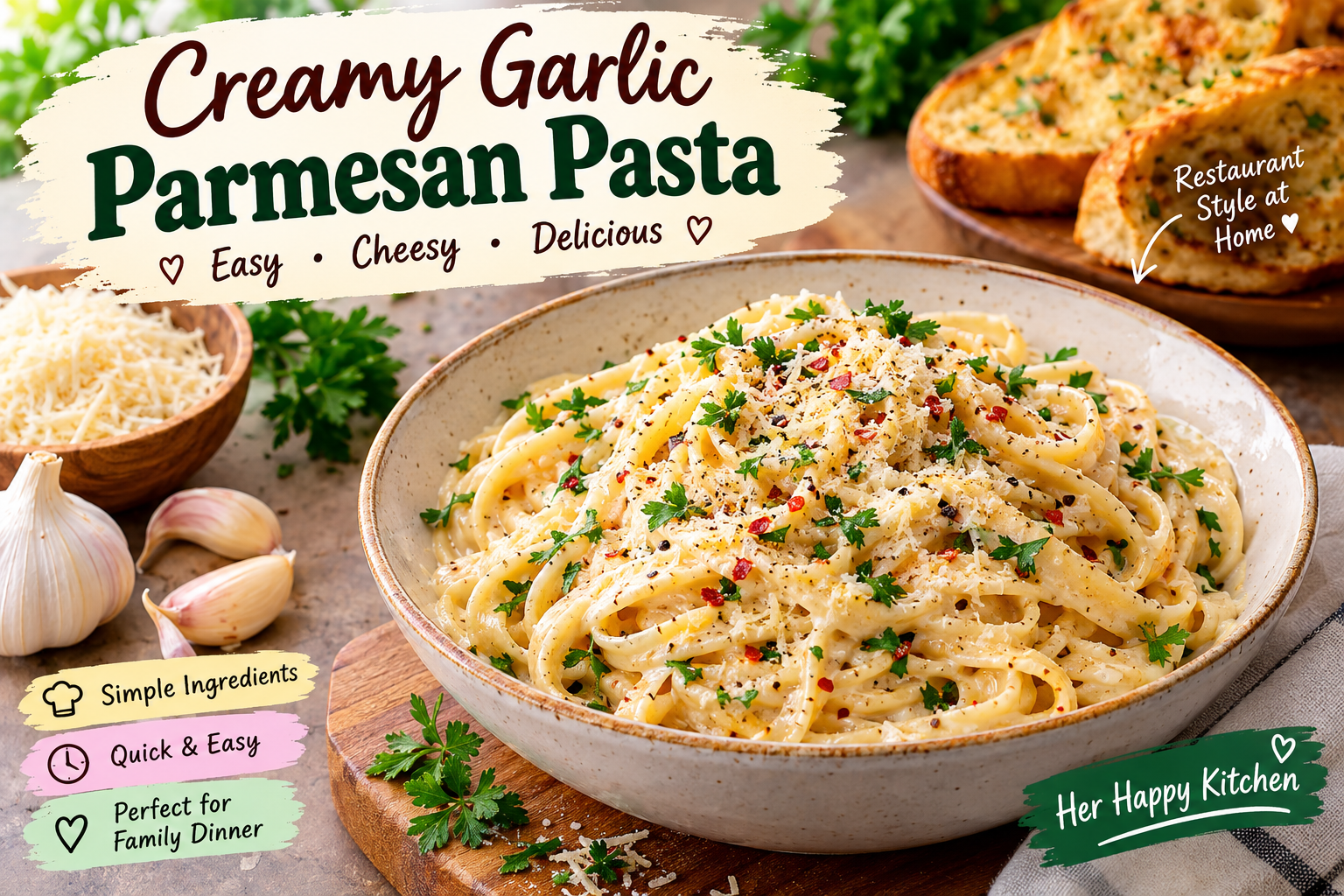
Introduction
Craving a comforting pasta dish that is creamy, cheesy, garlicky, and super easy to make? This Creamy Garlic Parmesan Pasta is the perfect recipe for a quick lunch or cozy family dinner. Made with simple ingredients like pasta, garlic, butter, cream, and Parmesan cheese, this dish comes together quickly and tastes wonderfully rich and satisfying.
The creamy sauce coats every strand of pasta, while garlic and Parmesan add plenty of flavor. You can enjoy it on its own or serve it with garlic bread, roasted vegetables, or a fresh salad.
Why You’ll Love This Recipe
- Quick and easy to prepare
- Simple everyday ingredients
- Creamy and cheesy
- Perfect for lunch or dinner
- Easy to customize
- Family-friendly comfort food
Ingredients
For the Pasta
- 8 oz pasta of your choice
- Water for boiling
- 1 teaspoon salt
For the Creamy Garlic Sauce
- 2 tablespoons butter
- 4–5 garlic cloves, minced
- 1 cup heavy cream
- ½ cup freshly grated Parmesan cheese
- ½ teaspoon Italian seasoning
- ¼ teaspoon black pepper
- Salt to taste
- 2–4 tablespoons reserved pasta water
- Fresh parsley for garnish
- Red pepper flakes, optional
How to Make Creamy Garlic Parmesan Pasta
1. Cook the Pasta
Bring a large pot of salted water to a boil. Add the pasta and cook according to the package instructions until tender but slightly firm.
Reserve a little pasta water before draining.
2. Prepare the Garlic Butter
Heat butter in a large skillet over medium-low heat. Add minced garlic and cook gently until fragrant. Avoid burning the garlic.
3. Make the Creamy Sauce
Pour the heavy cream into the skillet. Add Italian seasoning and black pepper. Simmer gently for a few minutes until the sauce begins to thicken.
4. Add Parmesan
Reduce the heat and gradually add the grated Parmesan cheese. Stir until the cheese melts and the sauce becomes smooth and creamy.
Add a little pasta water if the sauce is too thick.
5. Add the Pasta
Add the cooked pasta to the sauce and toss well until every piece is coated with the creamy garlic Parmesan sauce.
6. Garnish and Serve
Garnish with fresh parsley and optional red pepper flakes. Serve immediately while warm and creamy.
Tips for the Best Garlic Parmesan Pasta
Use freshly grated Parmesan for a smoother sauce.
Cook garlic gently to prevent it from becoming bitter.
Always reserve some pasta water because it helps loosen and smooth the sauce.
Serve the pasta immediately for the best creamy texture.
You can add mushrooms, spinach, broccoli, or cooked chicken for extra flavor.
Easy Variations
Vegetable Garlic Parmesan Pasta
Add sautéed mushrooms, spinach, broccoli, or bell peppers.
Spicy Garlic Parmesan Pasta
Add red pepper flakes for a delicious spicy kick.
Chicken Garlic Parmesan Pasta
Add cooked sliced chicken for a more filling meal.
Extra Cheesy Pasta
Add mozzarella along with Parmesan for an extra cheesy version.
What to Serve With Garlic Parmesan Pasta
Serve this creamy pasta with homemade garlic bread, a fresh green salad, roasted vegetables, or steamed broccoli.
Frequently Asked Questions
Can I use any type of pasta?
Yes! Spaghetti, fettuccine, penne, linguine, and rotini all work well.
Can I make it without heavy cream?
Yes. You can use whole milk, although the sauce will be lighter and less creamy.
How do I prevent the sauce from becoming too thick?
Add a small amount of reserved pasta water while tossing the pasta with the sauce.
Can I prepare it ahead of time?
It is best served fresh, but leftovers can be refrigerated and gently reheated with a splash of milk or cream.
Conclusion
This Creamy Garlic Parmesan Pasta is an easy and delicious homemade dinner that doesn’t require complicated ingredients or techniques. The combination of garlic, butter, cream, and Parmesan creates a rich and comforting sauce that coats every bite of pasta.
Save this recipe for your next easy pasta night and enjoy a delicious homemade meal with your family!
Pinterest Title
Creamy Garlic Parmesan Pasta Recipe – Easy, Cheesy & Delicious
Pinterest Description
Looking for an easy comfort-food dinner? Try this Creamy Garlic Parmesan Pasta made with buttery garlic, creamy sauce, and Parmesan cheese. Quick, delicious, and perfect for busy weeknights!
Tags
creamy garlic pasta, garlic parmesan pasta, easy pasta recipe, creamy pasta recipe, cheesy pasta, garlic pasta recipe, parmesan pasta, easy dinner recipe, quick pasta dinner, weeknight dinner, comfort food recipes, homemade pasta, Italian inspired recipes, easy family dinner, pasta lovers, Her Happy Kitchen
Creamy Garlic Parmesan Pasta: The Ultimate Comfort Food Guide
Creamy Garlic Parmesan Pasta is one of those recipes that proves a delicious homemade meal does not have to be complicated. With tender pasta, fragrant garlic, rich butter, creamy sauce, and freshly grated Parmesan cheese, this dish brings together simple ingredients to create a comforting dinner that feels special.
Whether you are cooking for your family, preparing a quick weeknight meal, or simply craving a warm bowl of creamy pasta, this recipe is an excellent choice. The sauce is smooth and flavorful, the garlic adds wonderful aroma, and Parmesan gives the dish its signature savory taste.
A Simple Pasta Dish Everyone Can Enjoy
Pasta is one of the easiest ingredients to turn into a satisfying meal. It cooks quickly, works with countless sauces, and can be customized according to your preferences. Creamy Garlic Parmesan Pasta is especially appealing because it uses ingredients that are commonly available in the kitchen.
The combination of garlic and butter creates the foundation of the sauce. Cream adds richness, while Parmesan cheese provides a salty, nutty, and savory flavor. Pasta water helps bring everything together and gives the sauce a silky consistency.
The result is a bowl of pasta that is creamy without being overly complicated.
Why Garlic and Parmesan Work So Well Together
Garlic and Parmesan are a classic combination because their flavors complement each other beautifully.
Garlic brings a warm, aromatic, slightly spicy flavor. When gently cooked in butter, garlic becomes fragrant and develops a softer, richer taste.
Parmesan cheese adds saltiness and a naturally savory character. When combined with cream and butter, it creates a luxurious sauce that coats pasta beautifully.
Together, these ingredients create layers of flavor without requiring a long list of spices.
Choosing the Right Pasta
Almost any pasta can work for this recipe, but some shapes hold creamy sauces particularly well.
Spaghetti
Spaghetti is a classic choice. The long strands become coated with the creamy sauce, creating a simple and satisfying dish.
Fettuccine
Fettuccine is especially good with creamy sauces because its wide, flat shape provides plenty of surface area for the sauce.
Linguine
Linguine offers a slightly flatter shape than spaghetti and works beautifully with garlic Parmesan sauce.
Penne
Penne is a great option if you prefer shorter pasta. The sauce can collect inside the tubes, making every bite flavorful.
Rotini
Rotini has twists and grooves that hold creamy sauce very well.
Bow-Tie Pasta
Bow-tie pasta adds a fun appearance and is particularly appealing when serving this recipe to children or at casual family dinners.
How to Choose Good Parmesan Cheese
For the best flavor, freshly grated Parmesan is highly recommended.
Pre-shredded cheese can sometimes contain anti-caking ingredients that affect how smoothly it melts. Freshly grated Parmesan generally melts more evenly into the warm sauce.
If possible, grate the Parmesan shortly before making the pasta.
You do not need an expensive variety. A good-quality Parmesan-style cheese can still create a delicious result.
The Importance of Pasta Water
One of the most useful techniques in pasta cooking is saving some of the water used to cook the pasta.
Pasta water contains starch released from the noodles during cooking. That starchy water can help loosen a thick sauce and encourage the sauce to cling to the pasta.
Instead of adding a large amount of plain water, add pasta water gradually, one spoonful at a time.
This gives you better control over the final consistency.
How to Cook Pasta Properly
Start by bringing a large pot of water to a rolling boil.
Add salt to the water before adding the pasta.
Once the water is boiling, add your pasta and stir during the first minute or two to prevent the pieces from sticking together.
Cook according to the package directions.
For the best texture, aim for pasta that is tender but still has a slight firmness when you bite into it.
Avoid overcooking because the pasta will continue to absorb some sauce after it is added to the skillet.
Before draining, reserve some pasta water.
Preparing the Garlic
Garlic is one of the main flavor ingredients in this recipe, so it deserves attention.
Fresh garlic cloves are ideal.
Peel the cloves and mince them finely. You can also use a garlic press if you prefer a very fine texture.
Heat the butter gently in a skillet.
Add the minced garlic and cook over medium-low heat.
The goal is to release the aroma without burning the garlic.
Garlic can burn quickly, especially when the heat is too high. Burnt garlic can taste bitter and overpower the creamy sauce.
As soon as the garlic becomes fragrant, move to the next step.
Creating the Creamy Sauce
Once the garlic is fragrant, add the cream.
Stir gently so the butter and cream combine.
Keep the heat moderate and allow the mixture to warm gradually.
You do not need a vigorous boil. A gentle simmer is enough.
Add black pepper and Italian seasoning if desired.
Allow the sauce to cook for a few minutes.
As it warms, the cream will begin to thicken slightly.
Adding Parmesan Without Making the Sauce Lumpy
Lower the heat before adding Parmesan.
Gradually sprinkle the cheese into the warm cream mixture while stirring continuously.
Adding the cheese slowly helps it incorporate smoothly.
Avoid adding all the Parmesan at once.
Once the cheese has melted, check the consistency.
If the sauce is too thick, add a small amount of reserved pasta water.
If it is too thin, allow it to warm gently for another minute or two.
Remember that the sauce will continue to thicken as it cools.
Combining Pasta and Sauce
Add the cooked pasta directly to the skillet.
Use tongs or a large spoon to toss everything together.
Make sure the sauce coats the pasta evenly.
If the pasta looks dry, add a little pasta water.
Continue tossing until the sauce becomes glossy and coats the noodles.
This step is important because the sauce should not simply sit at the bottom of the pan. It should cling to the pasta.
How to Make the Sauce Extra Creamy
There are several simple techniques that can improve the texture.
First, use freshly grated Parmesan.
Second, avoid overheating the sauce.
Third, reserve pasta water.
Fourth, toss the pasta directly in the sauce instead of simply pouring sauce over cooked pasta.
Finally, serve the dish while it is warm.
Creamy sauces naturally become thicker as they cool, so serving temperature makes a difference.
Adding Herbs
Fresh herbs can brighten the richness of the sauce.
Fresh parsley is an easy option.
Chopped basil can also work well and gives the pasta a fresh, aromatic flavor.
A small amount of dried Italian seasoning can be added while preparing the sauce.
Do not add too many herbs because the garlic and Parmesan should remain the main flavors.
Adding Black Pepper
Freshly ground black pepper provides a gentle warmth and balances the richness of the cream.
Start with a small amount and adjust according to taste.
If you enjoy a stronger pepper flavor, add a little more just before serving.
Adding Red Pepper Flakes
For those who enjoy a little heat, red pepper flakes are an excellent addition.
Sprinkle a small amount into the sauce or over the finished pasta.
You can easily leave them out if you prefer a mild dish.
Making Garlic Parmesan Pasta With Vegetables
One of the best things about this recipe is how easily vegetables can be incorporated.
Broccoli
Steam or sauté broccoli separately and add it to the pasta near the end.
The green color contrasts beautifully with the creamy sauce.
Spinach
Fresh spinach can be added directly to the warm sauce.
Allow it to wilt for a few minutes before adding the pasta.
Mushrooms
Sliced mushrooms can be sautéed in butter before making the sauce.
They add an earthy flavor and make the pasta more substantial.
Bell Peppers
Thinly sliced bell peppers add color and a mild sweetness.
Sauté them until slightly tender before combining them with the sauce.
Peas
Frozen peas are convenient and can be added toward the end of cooking.
They add a subtle sweetness and attractive color.
Creamy Garlic Parmesan Chicken Pasta
If you want to turn this recipe into a more filling meal, cooked chicken is a simple addition.
Use boneless, cooked chicken cut into strips or bite-sized pieces.
You can season the chicken lightly with salt, pepper, and Italian seasoning.
Cook the chicken separately until fully cooked.
Then slice it and add it to the finished pasta.
The creamy garlic Parmesan sauce pairs especially well with mild, seasoned chicken.
Creamy Garlic Parmesan Shrimp Pasta
Shrimp can also be added for a seafood-inspired variation.
Cook peeled and cleaned shrimp separately with a little butter and garlic.
Once the shrimp are fully cooked, add them to the creamy pasta.
A small amount of lemon juice can brighten the dish and balance the richness.
Vegetarian Garlic Parmesan Pasta
The basic recipe can easily be served as a vegetarian meal.
Simply use pasta, garlic, butter, cream, Parmesan, herbs, and vegetables of your choice.
Mushrooms, spinach, broccoli, peas, and bell peppers are all good options.
Making the Recipe More Flavorful
Flavor does not always require more ingredients.
Proper cooking technique makes a major difference.
Gently cooking garlic releases its aroma.
Fresh Parmesan improves the cheese flavor.
Properly salted pasta water seasons the noodles from the inside.
Using pasta water helps the sauce cling to the pasta.
Fresh herbs add brightness.
A final sprinkle of Parmesan gives the dish a beautiful finishing touch.
How to Avoid a Watery Sauce
A watery sauce can happen for several reasons.
Too much pasta water can dilute the sauce.
Adding a large amount of liquid at once makes it difficult to control consistency.
Instead, add pasta water gradually.
Also, make sure the cream has had enough time to warm and slightly reduce before adding the cheese.
Do not add excessive liquid after the Parmesan has been incorporated.
How to Avoid an Overly Thick Sauce
Creamy pasta sauce can become thick if it sits too long.
If this happens, add one or two tablespoons of warm pasta water.
Toss the pasta gently.
Continue adding small amounts until the desired consistency is reached.
Avoid adding too much liquid at once.
How to Prevent Parmesan From Clumping
Parmesan may clump when added to a sauce that is extremely hot.
The easiest solution is to lower the heat before adding the cheese.
Add the cheese gradually while stirring.
Freshly grated Parmesan generally incorporates better than large pre-shredded pieces.
How to Prevent Garlic From Burning
Garlic should be cooked over moderate or low heat.
Do not leave minced garlic unattended in a very hot pan.
Butter can also brown quickly, so keep an eye on the skillet.
Once the garlic becomes fragrant and lightly golden, move on to the cream.
You do not need deeply browned garlic for this recipe.
Making the Recipe Kid-Friendly
Creamy pasta is naturally appealing to many children because it is mild, smooth, and cheesy.
For a kid-friendly version:
- Use a mild cheese flavor.
- Skip red pepper flakes.
- Use small pasta shapes if preferred.
- Add peas or broccoli if your family enjoys vegetables.
- Serve with a simple side such as fruit or vegetables.
Allow the pasta to cool to a comfortable eating temperature before serving.
Making a Restaurant-Style Presentation
Presentation can make a simple homemade dish feel extra special.
Twirl long pasta gently with tongs and place it in the center of a plate.
Add a small sprinkle of Parmesan.
Top with chopped parsley.
Add a few red pepper flakes for color if desired.
A light drizzle of olive oil can also be used as a finishing touch.
Serve with warm garlic bread on the side.
Best Side Dishes
Creamy Garlic Parmesan Pasta pairs with many simple sides.
Garlic Bread
Garlic bread is one of the most popular choices.
The crisp bread provides a pleasant contrast to the creamy pasta.
Green Salad
A fresh green salad can add a crisp texture and refreshing flavor.
Roasted Vegetables
Roasted broccoli, carrots, zucchini, or bell peppers can make the meal more balanced.
Steamed Vegetables
Steamed vegetables are quick and easy when you need a simple side dish.
Tomato Salad
Fresh tomatoes provide acidity and freshness that can complement the creamy pasta.
Perfect Dinner for Busy Weeknights
This recipe is particularly useful on busy evenings.
Instead of preparing a complicated meal, you can cook pasta while preparing the sauce.
Both components can be ready within a relatively short amount of time.
Because the ingredients are simple, you do not need to spend a lot of time shopping for specialty items.
Keep pasta, garlic, butter, cream, and Parmesan available in your kitchen, and you have the foundation for an easy comfort-food dinner.
Meal Planning With Creamy Garlic Pasta
Creamy pasta can also be included in a weekly meal plan.
You can prepare the sauce ingredients in advance.
Vegetables can be washed and chopped ahead of time.
Cooked chicken can also be prepared in advance and stored properly.
When dinner time arrives, cooking the pasta and finishing the sauce becomes much easier.
For the best texture, however, creamy pasta is generally most enjoyable when freshly prepared.
Storing Leftover Pasta
If you have leftovers, allow the pasta to cool appropriately before transferring it to a suitable airtight container.
Store it in the refrigerator.
When reheating, creamy sauce may become thicker.
Add a small splash of milk, cream, or water before reheating.
Warm gently and stir occasionally.
Avoid overheating because excessive heat can cause the sauce to separate.
Reheating on the Stovetop
The stovetop is a good method for reheating creamy pasta.
Place the leftovers in a skillet.
Add a small splash of liquid.
Warm over low to medium-low heat.
Stir gently until the pasta is heated through.
Add a little more liquid if necessary.
Reheating in the Microwave
Place a serving of pasta in a microwave-safe bowl.
Add a small splash of milk or water.
Cover loosely.
Heat in short intervals, stirring between intervals.
Continue until warmed through.
The exact heating time will depend on the amount of pasta and the power of the microwave.
Freezing Creamy Pasta
Cream-based pasta dishes can change texture after freezing and thawing.
For the best quality, this recipe is generally better enjoyed fresh or refrigerated for later use.
If you do freeze it, expect that the sauce may not have exactly the same smooth texture after reheating.
Common Mistakes to Avoid
Using Too Much Garlic
Garlic is important, but too much can overpower the Parmesan and cream.
Start with a moderate amount.
Burning the Garlic
Burnt garlic can introduce bitterness.
Cook it gently.
Adding Parmesan Over High Heat
Very high heat can negatively affect the texture of cheese-based sauces.
Lower the heat before adding Parmesan.
Forgetting Pasta Water
Pasta water is useful for adjusting sauce consistency.
Always reserve some before draining.
Overcooking the Pasta
Overcooked pasta can become soft and lose its pleasant texture.
Cook according to package instructions.
Making the Sauce Too Early
Creamy sauce can thicken as it sits.
Ideally, coordinate the pasta and sauce so they finish around the same time.
How to Adjust the Recipe for a Larger Family
The recipe can easily be increased.
If you are cooking for more people, increase the pasta and sauce ingredients proportionally.
Use a larger skillet or pot so that everything can be mixed comfortably.
When increasing the amount of pasta, remember to use enough cooking water.
Also reserve additional pasta water because you may need more to achieve the right consistency.
How to Make a Smaller Portion
For one or two servings, simply reduce the ingredients.
Use a smaller amount of pasta, cream, butter, garlic, and Parmesan.
The cooking process remains essentially the same.
A smaller skillet may help prevent the sauce from spreading too thinly.
Flavor Variations
There are many ways to give this recipe a slightly different character.
Lemon Garlic Parmesan Pasta
Add a small amount of fresh lemon juice at the end.
The acidity can brighten the rich sauce.
Herb Garlic Parmesan Pasta
Add fresh parsley, basil, or a small amount of Italian herbs.
Spicy Garlic Parmesan Pasta
Add red pepper flakes.
Mushroom Garlic Parmesan Pasta
Sauté mushrooms before preparing the sauce.
Spinach Garlic Parmesan Pasta
Add fresh spinach to the warm sauce.
Broccoli Garlic Parmesan Pasta
Add cooked broccoli for texture and color.
Chicken Garlic Parmesan Pasta
Add sliced cooked chicken.
Why This Recipe Is Great for Beginners
Beginners often look for recipes that teach useful cooking techniques without being overwhelming.
This pasta recipe introduces several fundamental skills:
- Cooking pasta correctly
- Sautéing garlic
- Making a simple cream sauce
- Melting cheese into a sauce
- Adjusting consistency
- Combining pasta and sauce
- Garnishing a finished dish
Once you understand these techniques, you can use them in many other recipes.
Understanding Sauce Consistency
The ideal creamy Parmesan sauce should be smooth enough to coat the pasta but thick enough to remain attached to it.
If you lift a strand of pasta, you should see sauce covering it rather than dripping immediately into the plate.
If the sauce looks too thick, add a little pasta water.
If it looks too thin, let it warm gently for another short period.
Remember that the sauce will thicken slightly as it cools.
The Best Time to Serve the Pasta
Creamy pasta is best served immediately after cooking.
This is when the sauce is warm, smooth, and glossy.
As the pasta cools, it continues absorbing the sauce.
That is why a dish that looks perfectly saucy in the skillet may appear thicker a few minutes later.
If you are serving guests, try to finish the pasta close to serving time.
Creating a Cozy Pasta Dinner
A simple pasta dinner can become a complete experience with a few thoughtful additions.
Serve the pasta in warm bowls.
Add freshly grated Parmesan.
Place warm garlic bread on the table.
Serve a simple salad on the side.
For a cozy family meal, add sparkling water, lemonade, or another favorite non-alcoholic drink.
The goal is not complicated decoration. The goal is warm, inviting, homemade food.
Making This Recipe for a Dinner Party
Creamy Garlic Parmesan Pasta can also work for casual entertaining.
Prepare the ingredients ahead of time.
Grate the Parmesan.
Mince the garlic.
Wash and chop the herbs.
Prepare any vegetables or cooked chicken.
When your guests are ready to eat, cook the pasta and finish the sauce.
This approach allows you to spend less time preparing ingredients while everyone is waiting.
Pairing With Garlic Bread
Garlic bread and creamy pasta make an especially satisfying combination.
The pasta provides a creamy texture, while toasted garlic bread adds crispness.
You can make simple garlic bread using sliced bread, butter, garlic, herbs, and cheese.
Bake until the edges are golden and the cheese is melted.
Serve warm alongside the pasta.
Tips for Better Food Photography
If you are creating recipe content for a food blog, presentation matters.
Use a clean plate or shallow bowl.
Twirl the pasta carefully to create height.
Add Parmesan on top.
Use fresh parsley for a pop of color.
Place garlic bread beside the pasta.
Photograph the dish while it is still warm.
Natural window light can work beautifully for food photography.
A wooden board, neutral tablecloth, or simple kitchen background can create a cozy homemade atmosphere.
Frequently Asked Questions
Can I use milk instead of heavy cream?
Yes, but the final sauce will be lighter and less rich. If using milk, keep the heat gentle and adjust the consistency carefully.
Can I use pre-grated Parmesan?
You can, but freshly grated Parmesan is generally preferred because it tends to melt more smoothly.
Can I use garlic powder?
Fresh garlic provides a stronger and more aromatic flavor, but garlic powder can be used when fresh garlic is unavailable.
Can I make this recipe without butter?
You can use olive oil instead, although the flavor will be somewhat different.
Can I add mozzarella?
Yes. A small amount of mozzarella can create an extra-cheesy variation.
Can I add chicken?
Absolutely. Cooked chicken is an easy way to make the meal more filling.
Can I add vegetables?
Yes. Broccoli, spinach, mushrooms, peas, and bell peppers all work well.
Can I make it spicy?
Yes. Add red pepper flakes according to your preferred level of heat.
Why is my sauce too thick?
The pasta may have absorbed a lot of sauce, or the cream may have reduced too much. Add a little pasta water and toss gently.
Why is my sauce too thin?
Allow it to warm gently for a little longer, or add a little more Parmesan while stirring.
Why did my cheese become clumpy?
The sauce may have been too hot when the cheese was added. Lower the heat and add Parmesan gradually.
How much pasta water should I use?
Start with a tablespoon or two and add more only if needed. The exact amount depends on how thick the sauce is.
A Simple Timeline for Making the Recipe
A useful way to organize the cooking process is to prepare everything before turning on the stove.
First, gather the ingredients.
Grate the Parmesan.
Mince the garlic.
Chop the parsley.
Measure the cream and butter.
Bring the pasta water to a boil.
Cook the pasta.
While the pasta cooks, prepare the garlic butter sauce.
Add the cream.
Add seasonings.
Lower the heat.
Add Parmesan.
Reserve pasta water.
Drain the pasta.
Add pasta to the sauce.
Adjust consistency.
Garnish and serve.
This organized approach makes the recipe feel much easier.
Ingredient Preparation Tips
Preparation is especially useful when making quick recipes.
Garlic can be minced ahead of time.
Parmesan can be grated ahead of time.
Parsley can be chopped shortly before cooking.
Vegetables can be washed and prepared before starting.
Having everything ready allows you to focus on the sauce instead of searching for ingredients while cooking.
How to Make the Pasta More Filling
If you want a more substantial meal, consider adding:
- Chicken
- Shrimp
- Mushrooms
- Broccoli
- Spinach
- Peas
- Roasted vegetables
You can also serve the pasta with a side salad and garlic bread.
How to Keep the Recipe Simple
It can be tempting to add too many ingredients to a creamy pasta recipe.
However, simplicity is one of its strengths.
Garlic, butter, cream, Parmesan, pasta, and a few seasonings are enough to create a flavorful dish.
Additional ingredients should complement the sauce rather than overwhelm it.
Final Thoughts
Creamy Garlic Parmesan Pasta is an easy homemade recipe that combines comfort, flavor, and simplicity in one dish.
The tender pasta is coated in a smooth sauce made with butter, garlic, cream, and Parmesan. Fresh herbs add brightness, while black pepper and optional red pepper flakes provide additional flavor.
The recipe is flexible enough for busy weeknight dinners but delicious enough to serve when you want something a little more special.
You can keep it simple with just pasta and sauce, or customize it with chicken, shrimp, mushrooms, spinach, broccoli, or other favorite ingredients.
The most important techniques are simple: cook the pasta properly, avoid burning the garlic, keep the sauce at a gentle temperature, add Parmesan gradually, and use reserved pasta water to adjust the consistency.
Once you master these basic steps, you can create countless creamy pasta variations using the same method.
Serve the finished pasta warm with homemade garlic bread and a fresh salad for a comforting meal the whole family can enjoy.
Recipe Summary
Recipe Name: Creamy Garlic Parmesan Pasta
Cuisine: Italian-Inspired
Category: Dinner
Preparation Time: About 10 minutes
Cooking Time: About 15–20 minutes
Total Time: About 25–30 minutes
Difficulty: Easy
Servings: Approximately 3–4
Main Ingredients: Pasta, garlic, butter, cream, Parmesan cheese, herbs, and seasonings
Best Served: Warm and freshly prepared
Quick Recipe Card
Ingredients
8 oz pasta
2 tablespoons butter
4–5 garlic cloves
1 cup heavy cream
½ cup freshly grated Parmesan
½ teaspoon Italian seasoning
¼ teaspoon black pepper
Salt to taste
2–4 tablespoons reserved pasta water
Fresh parsley
Red pepper flakes, optional
Instructions
- Bring salted water to a boil and cook pasta according to package directions.
- Reserve some pasta water before draining.
- Melt butter in a skillet over medium-low heat.
- Add minced garlic and cook gently until fragrant.
- Pour in heavy cream.
- Add Italian seasoning and black pepper.
- Simmer gently for a few minutes.
- Reduce the heat.
- Gradually add freshly grated Parmesan while stirring.
- Add pasta water as needed to adjust the consistency.
- Add cooked pasta to the sauce.
- Toss until completely coated.
- Garnish with parsley and optional red pepper flakes.
- Serve immediately.
Storage Tips
Store leftover pasta in an airtight container in the refrigerator.
When reheating, add a small splash of milk, cream, or water.
Warm gently and stir frequently.
For the best texture, enjoy the pasta freshly prepared whenever possible.
Serving Suggestions
Serve with:
Garlic bread
Fresh green salad
Roasted broccoli
Steamed vegetables
Sautéed mushrooms
Fresh tomato salad
Herb bread
Final Recipe Tip
The secret to excellent Creamy Garlic Parmesan Pasta is not complicated ingredients. It is careful cooking.
Keep the garlic from burning.
Do not overheat the cream.
Add Parmesan gradually.
Save pasta water.
Toss the pasta directly with the sauce.
Serve immediately.
These small details can make a big difference in the final result.
Creamy, garlicky, cheesy, and comforting, this homemade pasta is a wonderful recipe to save for your next easy dinner night.
Creamy Garlic Parmesan Pasta: More Tips, Techniques & Delicious Variations
The Secret to a Silky Creamy Pasta Sauce
A truly delicious Creamy Garlic Parmesan Pasta is all about texture. The sauce should be creamy, smooth, and rich enough to coat every piece of pasta without feeling too heavy.
The key is to control the heat throughout the cooking process. Garlic should be gently cooked in butter, cream should be warmed slowly, and Parmesan should be added after lowering the heat.
One of the biggest mistakes is cooking the sauce over very high heat. High heat can cause dairy-based sauces to become grainy or separate.
Instead, keep the temperature moderate and stir frequently.
Choosing the Best Garlic
Fresh garlic is the best choice for this recipe because it provides a stronger aroma and more natural flavor.
Look for firm garlic cloves without soft spots or visible signs of spoilage.
For a stronger garlic flavor, mince the cloves finely.
For a milder flavor, slice the garlic thinly and cook it gently in butter.
You can adjust the amount of garlic depending on your personal preference.
Fresh Garlic vs Garlic Powder
Fresh garlic provides the most noticeable flavor and aroma.
Garlic powder is convenient and can be useful when fresh garlic is unavailable, but it will create a slightly different flavor profile.
If using garlic powder, add a small amount to the sauce along with the other seasonings.
For the best homemade result, fresh garlic remains the preferred option.
Choosing the Right Cream
Heavy cream creates a rich and luxurious sauce.
If you prefer a lighter sauce, you can experiment with lighter dairy options, although the consistency may change.
The amount of cream can also be adjusted according to how saucy you want your pasta to be.
If you love extra creamy pasta, use slightly more sauce.
If you prefer the pasta to be more lightly coated, use a little less.
Why Butter Matters
Butter provides richness and helps carry the garlic flavor throughout the sauce.
When garlic is gently cooked in butter, the kitchen quickly fills with a delicious aroma.
You can use salted or unsalted butter.
If using salted butter, taste the sauce before adding additional salt.
This helps prevent the finished dish from becoming too salty.
How Much Parmesan Should You Use?
Parmesan is one of the most important ingredients in this recipe.
Too little Parmesan may result in a sauce that tastes mostly like cream.
Too much can make the sauce overly thick or salty.
A moderate amount usually provides the best balance.
Freshly grated Parmesan is particularly useful because it melts more easily into the warm sauce.
The Role of Seasoning
The basic recipe does not require many spices.
Garlic and Parmesan already provide plenty of flavor.
Black pepper adds warmth.
Italian seasoning can add herbal notes.
Fresh parsley adds color and freshness.
Red pepper flakes can provide heat.
The goal is to enhance the main ingredients rather than hide their flavors.
Adding Fresh Herbs
Fresh herbs can make creamy pasta taste brighter.
Parsley is one of the easiest options.
Basil can give the dish a fresh Italian-inspired character.
A small amount of oregano can also work well.
Add delicate fresh herbs toward the end of cooking or use them as a garnish.
Adding Lemon for Freshness
A small amount of lemon juice can add brightness to a rich creamy sauce.
The acidity helps balance the richness of butter, cream, and cheese.
Add only a little at first and taste.
You can also use a small amount of lemon zest for a fresh citrus aroma.
Making a Garlic Parmesan Pasta Bake
The basic creamy pasta can also be transformed into a baked dish.
Prepare the pasta and sauce as usual.
Transfer everything into a baking dish.
Add a little extra Parmesan or mozzarella on top.
Bake until the cheese is melted and lightly golden.
This creates a comforting casserole-style pasta dish.
Adding Mozzarella
Mozzarella can be added when you want an extra-cheesy version.
For a creamy sauce, Parmesan should remain the main cheese because it provides the characteristic savory flavor.
Mozzarella can then be used as an additional cheese for meltiness.
A combination of Parmesan and mozzarella creates a delicious cheesy topping.
Garlic Parmesan Pasta With Mushrooms
Mushrooms are an excellent addition because their earthy flavor pairs naturally with garlic and Parmesan.
Clean and slice the mushrooms.
Heat a skillet with a little butter or oil.
Cook the mushrooms until tender and lightly browned.
Remove them temporarily if necessary.
Prepare the garlic Parmesan sauce.
Add the mushrooms back to the skillet along with the cooked pasta.
Toss everything together.
Finish with parsley and Parmesan.
Garlic Parmesan Pasta With Spinach
Spinach is one of the easiest vegetables to add.
Fresh spinach can be added directly to the warm sauce.
Stir gently until the leaves wilt.
The spinach adds color and a mild vegetable flavor.
It also makes the dish visually appealing.
Garlic Parmesan Pasta With Broccoli
Broccoli provides a nice contrast to the creamy sauce.
Steam or boil the broccoli until just tender.
Avoid overcooking because very soft broccoli can become mushy.
Add the cooked broccoli to the pasta during the final tossing stage.
A little black pepper and Parmesan on top complete the dish.
Garlic Parmesan Pasta With Sun-Dried Tomatoes
For a more intense flavor, add chopped sun-dried tomatoes.
Their slightly tangy and concentrated flavor contrasts nicely with the creamy sauce.
Add a small amount and toss it with the pasta.
Fresh basil can be used as a garnish.
Garlic Parmesan Pasta With Peas
Peas add sweetness and color.
Frozen peas are convenient because they require very little preparation.
Add them toward the end of cooking.
They can warm directly in the sauce.
This is an especially simple variation for busy weeknight dinners.
Garlic Parmesan Pasta With Roasted Vegetables
Roasted vegetables can add caramelized flavor and texture.
Try roasting:
Zucchini
Bell peppers
Broccoli
Cauliflower
Carrots
Cherry tomatoes
Toss the roasted vegetables with the finished pasta just before serving.
Making a Protein-Rich Variation
If you want to make the dish more substantial, add a protein source such as cooked chicken or shrimp.
The protein should be cooked separately and then incorporated into the finished pasta.
This allows you to control the cooking of both the protein and the sauce.
Chicken Preparation Tips
Season chicken simply with salt, black pepper, and Italian seasoning.
Cook it thoroughly.
Allow it to rest briefly before slicing.
Cut it into bite-sized pieces.
Add the chicken to the finished pasta.
The creamy garlic Parmesan sauce provides plenty of flavor, so the chicken does not need an overly complicated seasoning mixture.
Shrimp Preparation Tips
Shrimp cooks relatively quickly, so it is best prepared separately.
Season lightly.
Cook until fully cooked and opaque.
Avoid overcooking because shrimp can become tough.
Add the cooked shrimp to the pasta just before serving.
A little lemon zest or parsley makes a nice finishing touch.
Creating a Spicy Version
If you enjoy spicy food, there are several ways to increase the heat.
Red pepper flakes are the easiest option.
You can also add a small amount of freshly ground black pepper.
For a stronger spicy version, use a little chili powder.
Start with a small quantity and adjust gradually.
Creating a Mild Version
For a mild family-friendly version, skip the red pepper flakes.
Use a moderate amount of garlic.
Keep the seasoning simple.
Parmesan and butter will provide plenty of flavor.
How to Make It More Garlicky
If you love garlic, you can increase the amount slightly.
However, remember that garlic becomes stronger as it cooks.
For a balanced flavor, add fresh garlic gradually and taste the sauce before adding more.
You can also finish the pasta with a small amount of freshly minced parsley for contrast.
How to Make It More Cheesy
For extra cheesiness, add more freshly grated Parmesan.
You can also add a little mozzarella.
Another option is to sprinkle Parmesan over the finished dish immediately before serving.
Avoid adding an excessive amount of cheese because it can make the sauce too thick.
How to Make It Lighter
If you prefer a lighter pasta dish, reduce the amount of butter and cream.
Increase the amount of vegetables.
Use a smaller amount of cheese while still keeping enough Parmesan for flavor.
Serve the pasta with a fresh salad or steamed vegetables.
The result will still be creamy and flavorful while feeling lighter.
Turning It Into a Complete Meal
A complete meal does not need to be complicated.
Serve a moderate portion of creamy pasta with vegetables and a fresh salad.
Add garlic bread if desired.
For a heartier meal, include cooked chicken or shrimp.
This makes the pasta versatile enough for different occasions.
Perfect for Date-Night-Inspired Dinners
Creamy pasta can also be a great choice when you want a cozy homemade dinner.
The recipe is simple enough that you do not have to spend hours in the kitchen.
Serve the pasta in attractive bowls.
Add fresh herbs and Parmesan.
Place garlic bread on the side.
A simple table setting can make an ordinary dinner feel special.
Perfect for Family Dinner
Family meals often need to be easy, flexible, and satisfying.
This recipe checks all three boxes.
You can keep the basic pasta simple for picky eaters and add vegetables or protein to individual servings.
Everyone can customize their bowl according to their preferences.
Perfect for Meal Prep
Although creamy pasta tastes best fresh, some preparation can be done ahead.
You can:
Grate the Parmesan.
Mince the garlic.
Wash and chop vegetables.
Cook chicken.
Prepare herbs.
Measure the ingredients.
When it is time to cook, everything is ready.
This makes the recipe especially useful for busy schedules.
How to Make the Recipe More Budget-Friendly
You do not need expensive ingredients to make delicious creamy pasta.
Choose a pasta brand that fits your budget.
Use garlic that you already have.
Buy Parmesan in a quantity that you can use before it loses freshness.
Seasonings such as black pepper and Italian herbs can be used across many recipes.
Adding seasonal vegetables can also keep the meal affordable.
Making the Recipe for Guests
When serving guests, preparation is important.
Have all ingredients measured before cooking.
Keep the Parmesan grated and ready.
Prepare the vegetables or protein ahead of time.
Cook the pasta close to serving time.
Finish the sauce just before combining everything.
Serve immediately.
This helps ensure the pasta reaches the table warm and creamy.
How to Keep Pasta Warm
Creamy pasta can become thick when kept warm for too long.
If you need to hold it briefly, keep it covered and avoid excessive heat.
Before serving, add a small amount of warm liquid if needed.
Toss gently to restore a creamy consistency.
Plating Ideas
For a restaurant-inspired presentation, use a wide shallow bowl.
Place the pasta in the center.
Twirl long noodles gently.
Add freshly grated Parmesan.
Sprinkle chopped parsley.
Add a few red pepper flakes for color.
Place garlic bread on the side.
A clean presentation can make the meal look much more appetizing.
Food Blog Serving Ideas
If you are publishing this recipe on a food website, include several serving suggestions.
You can recommend:
Garlic bread
Fresh salad
Roasted vegetables
Steamed broccoli
Sautéed mushrooms
Tomato salad
Herb bread
These suggestions help readers turn one recipe into a complete meal.
Recipe Troubleshooting Guide
Problem: Sauce Is Grainy
The sauce may have been overheated or the cheese may have been added too quickly.
Next time, lower the heat and add Parmesan gradually.
Problem: Sauce Is Too Thick
Add a little reserved pasta water.
Stir gently until the desired consistency returns.
Problem: Sauce Is Too Thin
Allow the sauce to warm gently for a little longer.
You can also add a little more Parmesan.
Problem: Pasta Is Dry
The pasta may have absorbed too much sauce.
Add a splash of pasta water and toss.
Problem: Garlic Tastes Bitter
The garlic may have been cooked at too high a temperature.
Use lower heat next time and cook it gently.
Problem: Pasta Is Too Salty
Parmesan contains salt, so always taste before adding additional salt.
If possible, use unsalted butter and season gradually.
Building Your Own Garlic Parmesan Pasta
Once you understand the basic recipe, you can create your own version.
Start with pasta.
Add garlic and butter.
Create a creamy base.
Add Parmesan.
Choose vegetables or protein.
Finish with herbs.
This simple formula gives you countless possibilities.
You can change the ingredients depending on what you already have in your kitchen.
Seasonal Variations
Spring
Try peas, spinach, asparagus, and fresh herbs.
Summer
Use cherry tomatoes, basil, zucchini, and fresh vegetables.
Autumn
Add mushrooms, roasted vegetables, or spinach.
Winter
Make the pasta extra creamy and serve it with roasted vegetables and warm garlic bread.
Using Leftover Vegetables
This recipe is also a useful way to use small amounts of leftover cooked vegetables.
Instead of throwing away leftover broccoli, mushrooms, peas, or roasted vegetables, add them to your pasta.
Make sure leftovers have been stored safely and are still suitable for eating.
Then warm them thoroughly with the pasta.
Making It With Whole-Grain Pasta
Whole-grain pasta can be used if you prefer its flavor and texture.
It may have a nuttier taste than regular pasta.
Because different pasta varieties cook differently, follow the package cooking instructions.
The creamy garlic Parmesan sauce works well with both traditional and whole-grain pasta.
Gluten-Free Option
If you need a gluten-free version, use a gluten-free pasta that suits your dietary needs.
Prepare it according to the package instructions.
The sauce itself can be prepared separately.
Always check ingredient labels when cooking for someone with a gluten-related allergy or intolerance.
Dairy-Free Adaptation
A traditional creamy Parmesan pasta relies on dairy ingredients for its signature flavor and texture.
If you need a dairy-free version, you can experiment with suitable dairy-free alternatives for butter, cream, and Parmesan.
Keep in mind that the flavor and texture will differ from the classic recipe.
How to Make the Recipe Extra Aromatic
The aroma of this dish comes mainly from garlic, butter, herbs, and Parmesan.
Freshly minced garlic provides the strongest aroma.
Fresh parsley added at the end provides freshness.
A small amount of freshly ground black pepper adds warmth.
A little lemon zest can provide a bright finishing aroma.
The Importance of Timing
Good pasta cooking is largely about timing.
The sauce should be ready around the same time as the pasta.
If the sauce is finished too early, it may become thick.
If the pasta is finished too early, it may cool and stick together.
Try to coordinate both components.
This is easier once you have made the recipe a few times.
A Simple Cooking Strategy
Start by preparing all ingredients.
Bring the pasta water to a boil.
Cook the pasta.
While it cooks, prepare the garlic butter.
Add cream.
Season.
Lower the heat.
Add Parmesan.
Reserve pasta water.
Drain pasta.
Combine pasta and sauce.
Adjust consistency.
Garnish.
Serve.
This simple sequence keeps the cooking process organized.
Why Homemade Pasta Recipes Are Worth Making
Homemade meals allow you to control the ingredients and flavors.
You can decide how much garlic to use.
You can choose your favorite pasta shape.
You can add vegetables.
You can adjust the cheese.
You can control the seasoning.
You can make the dish mild or spicy.
That flexibility is one of the biggest advantages of cooking at home.
Final Serving Checklist
Before serving your Creamy Garlic Parmesan Pasta, check:
Is the pasta cooked properly?
Is the sauce creamy?
Is the garlic flavorful but not burnt?
Is the seasoning balanced?
Does the sauce coat the pasta?
Does it need a little pasta water?
Would fresh parsley improve the presentation?
Would freshly grated Parmesan make a nice finishing touch?
Once everything looks right, serve immediately.
Final Thoughts
Creamy Garlic Parmesan Pasta is much more than a quick pasta recipe. It is a flexible foundation that can be adapted for different tastes, seasons, occasions, and ingredients.
The classic combination of garlic, butter, cream, and Parmesan creates a rich and comforting sauce that works beautifully with many types of pasta.
You can keep the dish simple, add vegetables, include chicken or shrimp, make it spicy, turn it into a baked pasta dish, or create your own variation.
The most important thing is to focus on the fundamentals: cook the pasta properly, control the heat, protect the garlic from burning, add cheese gradually, and use pasta water to achieve the right consistency.
With these techniques, you can make a creamy pasta dish that feels homemade, comforting, and delicious every time.
Save this recipe for your next busy weeknight, cozy family dinner, or homemade pasta night.
Creamy, garlicky, cheesy, and satisfying — this is a recipe worth making again and again.
Creamy Garlic Parmesan Pasta: Complete Guide to Serving, Storing & Enjoying
The Perfect Finish for Creamy Garlic Parmesan Pasta
Once your pasta is coated with the creamy garlic Parmesan sauce, the final few steps can make a big difference.
Turn off the heat and give the pasta one final gentle toss.
Check the consistency. If the sauce feels too thick, add a small splash of reserved pasta water. If everything looks perfectly creamy, transfer the pasta to serving bowls immediately.
Finish with freshly grated Parmesan, chopped parsley, and a small pinch of black pepper.
For a little heat, add red pepper flakes.
The pasta is now ready to serve.
How to Tell When Your Pasta Is Perfect
Perfect creamy pasta should have several characteristics.
The pasta should be tender but not mushy.
The sauce should look smooth and creamy.
Every piece of pasta should have a light coating of sauce.
The garlic flavor should be noticeable without tasting burnt.
The Parmesan should add a savory and slightly salty flavor.
The finished dish should be warm and fragrant.
If all of these come together, you have a delicious homemade pasta dinner.
Best Way to Serve Creamy Garlic Parmesan Pasta
Serve the pasta immediately after preparing it.
Use warm bowls if possible.
Twirl long pasta gently before placing it in the bowl.
Add a little Parmesan on top.
Sprinkle fresh parsley for color.
Serve with warm garlic bread on the side.
A simple green salad can provide a fresh contrast to the creamy pasta.
Creating a Beautiful Dinner Plate
Food presentation does not have to be complicated.
Place the pasta in the center of a wide bowl.
Add a small amount of freshly grated Parmesan.
Sprinkle parsley over the top.
Add a few red pepper flakes if desired.
Place a piece of garlic bread beside the bowl.
This simple presentation makes the dish look inviting and homemade.
What Makes This Recipe Special
The beauty of Creamy Garlic Parmesan Pasta comes from its simplicity.
You do not need dozens of ingredients.
You do not need complicated cooking techniques.
You simply need good timing and careful preparation.
Butter creates richness.
Garlic provides aroma.
Cream creates the smooth base.
Parmesan brings savory flavor.
Pasta brings everything together.
Fresh herbs provide the finishing touch.
Making the Recipe Your Own
Recipes are meant to be adapted.
Once you understand the basic method, you can create your own version.
Add mushrooms for an earthy flavor.
Add spinach for color.
Add broccoli for texture.
Add chicken for a heartier meal.
Add shrimp for a seafood variation.
Add red pepper flakes for heat.
Add lemon for freshness.
Add mozzarella for extra cheesiness.
There are many possibilities.
A Simple Family Dinner Idea
For an easy family dinner, prepare the creamy pasta and serve it with:
Garlic bread
Fresh salad
Steamed broccoli
Roasted vegetables
Fresh fruit
This creates a simple meal without requiring complicated side dishes.
A Cozy Weekend Meal
On a relaxed weekend, you can make the recipe a little more special.
Prepare homemade garlic bread.
Add sautéed mushrooms or roasted vegetables.
Top the pasta with fresh herbs and Parmesan.
Serve everything while warm.
A simple homemade meal can be just as enjoyable as eating at a restaurant.
How to Serve Leftovers
Leftover creamy pasta can still be delicious when reheated correctly.
The sauce naturally thickens as it cools.
When reheating, add a small splash of milk, cream, or water.
Warm slowly.
Stir gently.
Do not use excessively high heat.
This helps restore some of the creamy texture.
How Long Does Creamy Pasta Last?
For food safety and quality, store leftovers promptly in a clean, airtight container and refrigerate them.
Use refrigerated leftovers within a safe timeframe recommended for cooked foods and your refrigerator conditions.
If the pasta develops an unusual smell, appearance, or texture, it is safer to discard it.
Reheating Without Drying the Pasta
The biggest challenge with reheating creamy pasta is preventing it from becoming dry.
The solution is simple.
Add a small amount of liquid before reheating.
Milk, cream, or water can work.
Warm gently.
Stir occasionally.
Once the pasta is hot, serve immediately.
Turning Leftovers Into a New Meal
Leftover pasta can sometimes be transformed into another dish.
You can add cooked vegetables and bake it with a little extra cheese.
You can add cooked chicken.
You can add spinach and mushrooms.
You can turn it into a pasta bake.
This helps create variety instead of eating exactly the same meal twice.
Creamy Garlic Parmesan Pasta for Special Occasions
Although this recipe is simple enough for a weeknight, it can also be served for special occasions.
Add beautifully roasted vegetables.
Use fresh herbs.
Serve with homemade garlic bread.
Prepare a simple salad.
Finish with freshly grated Parmesan.
Good presentation can make a simple recipe feel much more special.
Budget-Friendly Comfort Food
One reason this recipe is so useful is that it can be made with relatively simple ingredients.
Pasta is affordable and easy to store.
Garlic is inexpensive and adds significant flavor.
Butter and cream create richness.
Parmesan provides the signature cheesy flavor.
You can also use seasonal vegetables to stretch the meal further.
Tips for Cooking Pasta for a Crowd
When cooking for a larger group, use a sufficiently large pot.
Make sure there is enough water for the pasta to move freely.
Cook the pasta in batches if necessary.
Prepare enough sauce to coat the pasta without making it dry.
Reserve plenty of pasta water.
Combine everything shortly before serving.
Large quantities of pasta can absorb sauce quickly, so keeping some extra sauce or pasta water available is useful.
How to Keep the Sauce Creamy
The sauce should be handled gently.
Avoid boiling it aggressively.
Keep the heat moderate.
Add Parmesan gradually.
Stir continuously while incorporating the cheese.
Use pasta water to adjust the texture.
These small techniques help create a smoother sauce.
The Best Texture for the Pasta
Texture is just as important as flavor.
Pasta should have enough firmness to hold its shape.
Very soft pasta can become mushy when mixed with the sauce.
Slightly firm pasta provides a better contrast with the creamy sauce.
Always follow the package instructions and taste a piece before draining.
Balancing Richness
Creamy pasta naturally has a rich flavor.
To balance that richness, consider adding fresh herbs or a small amount of lemon.
A crisp salad can also provide contrast.
Roasted vegetables provide texture.
A little black pepper adds warmth.
You do not need to make the sauce overly heavy.
Adding Acidity
A small amount of lemon juice can brighten the finished dish.
Add it carefully because Parmesan already has a strong savory flavor.
A little lemon zest can also provide freshness without making the pasta taste strongly citrusy.
Fresh Garnishes That Work Well
Good garnish options include:
Fresh parsley
Fresh basil
Grated Parmesan
Black pepper
Red pepper flakes
Lemon zest
Choose one or two rather than using everything at once.
Simple garnishes often look better.
Making a Restaurant-Inspired Version at Home
Restaurant-style food often depends on technique rather than expensive ingredients.
For this pasta:
Cook the pasta properly.
Prepare the garlic carefully.
Create a smooth sauce.
Use good Parmesan.
Toss the pasta directly in the sauce.
Adjust the consistency.
Garnish just before serving.
These simple steps can make homemade pasta feel much more polished.
Common Questions About Creamy Garlic Parmesan Pasta
Can I use spaghetti?
Yes. Spaghetti works very well with creamy garlic Parmesan sauce.
Is fettuccine better?
Fettuccine is especially suitable because its wide shape holds creamy sauce well, but any preferred pasta can be used.
Can I use pre-shredded cheese?
Yes, although freshly grated Parmesan generally melts more smoothly.
Can I add vegetables?
Absolutely. Broccoli, spinach, mushrooms, peas, and bell peppers are excellent additions.
Can I make it spicy?
Yes. Add red pepper flakes according to your preference.
Can I add chicken?
Yes. Cooked chicken makes the pasta more substantial.
Can I add shrimp?
Yes. Cook shrimp separately and add it near the end.
Can I make it vegetarian?
The basic recipe can be served as a vegetarian meal. Check the cheese ingredients if you are preparing it for someone following a specific vegetarian diet.
Can I use another cheese?
You can experiment with cheeses such as mozzarella, although Parmesan gives the classic savory flavor.
Can I make it ahead?
You can prepare ingredients ahead, but the finished pasta is best when freshly made.
Why does my pasta absorb all the sauce?
Pasta naturally continues absorbing sauce after cooking. Add a little pasta water or additional sauce when reheating.
Easy Recipe Checklist
Before you begin, make sure you have:
Pasta
Fresh garlic
Butter
Cream
Parmesan
Salt
Black pepper
Italian seasoning
Fresh parsley
Pasta water
Optional red pepper flakes
Having everything ready makes the cooking process much easier.
Step-by-Step Quick Method
Cook the pasta in salted water.
Reserve pasta water.
Melt butter.
Add minced garlic.
Cook gently until fragrant.
Add cream.
Add seasoning.
Simmer gently.
Lower the heat.
Add Parmesan gradually.
Add pasta water if needed.
Add cooked pasta.
Toss thoroughly.
Taste and adjust seasoning.
Garnish.
Serve immediately.
Final Recipe Card
Creamy Garlic Parmesan Pasta
Prep Time: 10 minutes
Cook Time: 15–20 minutes
Total Time: Approximately 25–30 minutes
Servings: 3–4
Difficulty: Easy
Ingredients
8 oz pasta
2 tablespoons butter
4–5 garlic cloves
1 cup heavy cream
½ cup freshly grated Parmesan cheese
½ teaspoon Italian seasoning
¼ teaspoon black pepper
Salt to taste
2–4 tablespoons reserved pasta water
Fresh parsley
Red pepper flakes, optional
Directions
- Cook pasta in salted boiling water according to package directions.
- Reserve some pasta water before draining.
- Melt butter in a skillet over medium-low heat.
- Add minced garlic and cook gently until fragrant.
- Add heavy cream.
- Season with Italian seasoning and black pepper.
- Simmer gently.
- Reduce the heat.
- Add Parmesan gradually while stirring.
- Add pasta water as necessary.
- Add cooked pasta.
- Toss until evenly coated.
- Garnish with parsley and Parmesan.
- Serve warm.
Final Tips for Success
Use freshly grated Parmesan whenever possible.
Do not burn the garlic.
Keep the sauce at a gentle temperature.
Do not boil the cream aggressively.
Add Parmesan gradually.
Reserve pasta water.
Do not add too much liquid at once.
Toss pasta directly in the sauce.
Serve immediately.
These simple tips can make the difference between an average pasta dish and a creamy, flavorful homemade meal.
Final Conclusion
Creamy Garlic Parmesan Pasta is an easy recipe that brings together some of the most comforting flavors in one bowl.
The combination of tender pasta, fragrant garlic, buttery richness, creamy sauce, and Parmesan cheese creates a dish that is satisfying without requiring complicated preparation.
It is perfect for busy weeknights, family dinners, cozy weekends, and casual entertaining.
The recipe is also highly customizable. You can add vegetables, chicken, shrimp, mushrooms, spinach, herbs, or a little spice depending on your preferences.
The most important part is learning the basic technique. Cook the pasta properly, gently cook the garlic, control the heat, add Parmesan carefully, and use pasta water to achieve the right consistency.
Once you understand these simple steps, you can confidently create your own creamy pasta variations.
Save this recipe, share it with someone who loves pasta, and make it whenever you want a warm and comforting homemade meal.
Creamy, garlicky, cheesy, and delicious — this Creamy Garlic Parmesan Pasta deserves a place in your regular dinner rotation.
Her Happy Kitchen
For more easy homemade recipes, comforting dinner ideas, delicious desserts, simple baking recipes, and family-friendly meals, keep exploring Her Happy Kitchen.
Happy cooking! 🍝🧄🧀❤️