 Her Happy Kitchen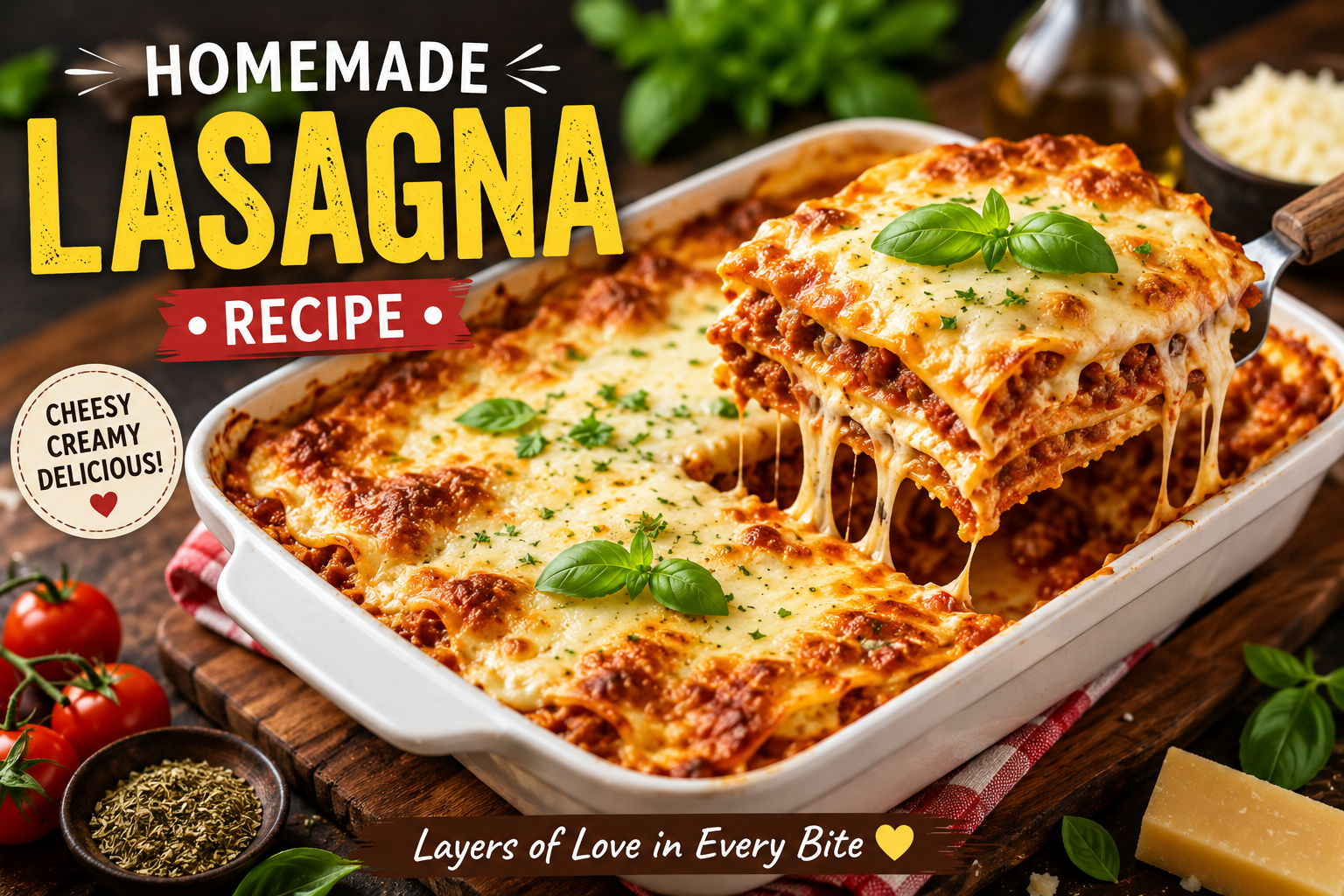
INTRODUCTION
Lasagna is one of those comforting dishes that can make an ordinary meal feel truly special. With layers of tender pasta, rich tomato sauce, creamy cheese, and a flavorful filling, homemade lasagna is a satisfying dish that brings warmth and comfort to the table.
There is something wonderful about preparing lasagna from scratch. Each layer adds a different texture and flavor, and when everything comes together in the oven, the result is a beautifully baked dish with bubbling cheese, a golden top, and delicious layers underneath.
Lasagna can be enjoyed for family dinners, weekend meals, gatherings, celebrations, or whenever you want to prepare something a little more special at home.
The great thing about homemade lasagna is that you can customize it according to your preferences. You can make a classic version with a savory filling and tomato sauce, create a vegetable-packed version, experiment with different cheeses, or adjust the herbs and seasonings to create your own favorite combination.
This recipe is designed to guide you through the process step by step, from preparing the filling and sauce to assembling the layers and baking the finished lasagna.
WHAT IS LASAGNA?
Lasagna is a layered pasta dish traditionally associated with Italian cuisine. Instead of using one continuous piece of pasta, lasagna is assembled using multiple pasta sheets layered with sauce, filling, and cheese.
The layers are then baked together until the pasta becomes tender and the cheese melts into a delicious golden topping.
The exact ingredients and preparation methods can vary from one recipe to another. Some versions use a meat-based filling, while others focus on vegetables. Some recipes use a creamy white sauce, while others rely mainly on tomato sauce and cheese.
This flexibility makes lasagna a wonderful dish for experimenting with flavors.
WHY HOMEMADE LASAGNA IS SO SPECIAL
Homemade lasagna has a special quality because every layer can be prepared according to your own taste.
You can decide how much sauce to use.
You can choose the type of cheese.
You can adjust the seasoning.
You can add vegetables.
You can make the filling mild or flavorful.
You can create thicker or thinner layers.
When you prepare the dish yourself, you have complete control over the ingredients and the final result.
Another reason homemade lasagna is so enjoyable is that it can feed several people, making it a practical choice for family meals and gatherings.
THE BASIC COMPONENTS OF LASAGNA
Although lasagna can look complicated at first, the basic structure is actually quite simple.
There are usually four important components.
The first is the pasta.
The second is the sauce.
The third is the filling.
The fourth is the cheese.
These components are layered together before baking.
The pasta provides structure.
The sauce keeps the layers flavorful and moist.
The filling adds substance and texture.
The cheese brings richness and creates the golden topping that makes baked lasagna so appealing.
Once you understand these components, the entire recipe becomes much easier to follow.
CHOOSING LASAGNA PASTA
Lasagna sheets are the foundation of the dish.
Depending on the type available, you may find traditional dried lasagna sheets, fresh pasta sheets, or varieties designed to cook directly in the oven.
Always check the package instructions for the specific pasta you are using.
Some lasagna sheets require boiling before assembly, while others can be layered directly into the dish with sufficient sauce.
The important thing is to make sure the pasta is prepared according to its instructions.
If the pasta is undercooked and there is not enough moisture in the dish, the finished lasagna may have firm or chewy areas.
If the pasta is prepared correctly and surrounded by enough sauce, it can become tender and delicious during baking.
PREPARING THE PASTA
If your lasagna sheets require pre-cooking, bring a suitable pot of water to a boil.
Cook the sheets according to the package directions.
Avoid overcooking them because they will continue cooking in the oven.
Once they are ready, carefully drain them.
If necessary, arrange the sheets separately so they do not stick together.
Handle them gently because cooked pasta sheets can tear.
If you are using oven-ready sheets, follow the instructions on the package and make sure the recipe provides enough sauce and moisture for them to cook properly.
MAKING THE TOMATO SAUCE
The tomato sauce is one of the most important parts of a flavorful lasagna.
A basic homemade sauce can be prepared using tomatoes, onion, garlic, herbs, salt, pepper, and suitable cooking oil.
Begin by heating a little oil in a pan.
Add finely chopped onion and cook until it becomes soft.
Add garlic and cook briefly while being careful not to burn it.
Add the tomato component and season according to taste.
Allow the sauce to cook gently so the flavors can develop.
The sauce should be flavorful but not excessively watery.
A sauce that is too thin can make the lasagna difficult to layer and may result in a softer final texture.
A sauce that is too thick may not provide enough moisture for the pasta.
The goal is a rich, spoonable sauce with a balanced consistency.
ADDING HERBS TO THE SAUCE
Herbs can make tomato sauce much more aromatic.
Oregano is a classic option.
Basil can provide a fresh herbal character.
Italian-style herb blends can also be used.
You do not need to use every herb at once.
Choose a combination that complements the rest of the ingredients.
Seasoning should be balanced because the cheese and filling will also contribute flavor.
BALANCING THE TOMATO FLAVOR
Tomatoes can naturally have different levels of acidity and sweetness.
If your sauce tastes too sharp, allowing it to simmer for a little longer can help develop the flavor.
Depending on the recipe and the ingredients used, a small amount of another balancing ingredient may also be appropriate.
Taste the sauce before assembling the lasagna.
This is one of the easiest ways to make sure the finished dish has a good flavor.
PREPARING THE FILLING
The filling can vary greatly depending on the style of lasagna you are making.
A classic version can include a savory cooked filling.
A vegetable version may include spinach, mushrooms, zucchini, carrots, bell peppers, or other suitable vegetables.
The filling should be flavorful but not excessively wet.
Excess moisture can affect the structure of the lasagna.
If you are using vegetables that release a lot of water during cooking, cook them first and allow excess moisture to evaporate.
This helps keep the layers more stable.
PREPARING A SAVORY FILLING
For a savory filling, begin by heating a suitable pan.
Add the ingredients and cook them thoroughly.
Season with salt, pepper, herbs, and other suitable seasonings.
Cook until the filling is properly prepared and excess liquid has reduced.
Allow the filling to cool slightly before assembling the lasagna.
This can make the layering process easier.
VEGETABLE LASAGNA
Vegetable lasagna is a delicious alternative for people who enjoy a more vegetable-focused meal.
You can use a combination of vegetables such as spinach, mushrooms, bell peppers, zucchini, carrots, and onions.
The vegetables should be cooked appropriately before being layered.
Season them lightly so that their natural flavors remain noticeable.
Vegetable lasagna can be colorful, hearty, and satisfying.
CREAMY CHEESE LAYER
A creamy cheese mixture can add richness to lasagna.
Depending on the recipe, you can use suitable soft cheese, ricotta-style cheese, cottage cheese, or another creamy ingredient.
The cheese mixture can be seasoned with herbs, salt, and pepper.
Some recipes also include an egg in the cheese mixture to help it set during baking.
If using eggs, handle and cook the mixture safely.
The creamy layer provides a soft contrast to the tomato sauce and pasta.
CHOOSING THE CHEESE
Cheese is one of the most recognizable parts of lasagna.
Mozzarella is popular because it melts well and creates a beautiful golden, stretchy topping.
Other cheeses can provide additional flavor.
Parmesan-style cheese can contribute a savory, nutty character.
A soft cheese mixture can provide creaminess between the pasta layers.
The best combination depends on your preferences and the recipe style you are following.
USING MOZZARELLA
Mozzarella works especially well on top of lasagna.
Spread it evenly over the final layer.
Avoid placing all the cheese in one thick pile.
An even layer helps the cheese melt consistently.
The top should become golden and bubbling while the inside remains moist and flavorful.
ADDING PARMESAN-STYLE CHEESE
A small amount of Parmesan-style cheese can be added to the top or incorporated into another layer.
Its stronger flavor means that a moderate amount can be enough.
Combining it with mozzarella can create a richer cheese topping.
SEASONING THE CHEESE LAYERS
Cheese already contains flavor, so it does not require excessive seasoning.
A small amount of black pepper, oregano, basil, or another suitable herb can be enough.
The goal is to enhance the cheese without overpowering the sauce and filling.
BUILDING THE FIRST LAYER
Once all the components are ready, you can begin assembling the lasagna.
Start with a thin layer of sauce at the bottom of the baking dish.
This helps prevent the pasta from sticking and provides moisture.
Place the first layer of lasagna sheets over the sauce.
Try to cover the surface evenly.
If the sheets do not perfectly fit the dish, they can usually be arranged carefully to cover most of the area.
ADDING THE FILLING
After the pasta layer, add some of the prepared filling.
Spread it evenly rather than creating a large pile in the center.
An even layer helps every serving contain a balanced combination of ingredients.
ADDING THE CHEESE
Next, add the appropriate cheese layer.
Spread it evenly across the filling.
Then add another layer of sauce.
This creates the foundation for the next pasta layer.
REPEATING THE LAYERS
Continue building the lasagna by repeating the basic pattern.
Pasta.
Sauce.
Filling.
Cheese.
Then repeat.
The exact number of layers depends on the size and depth of your baking dish.
Try to keep the layers reasonably even.
This helps the lasagna cook consistently.
WHY LAYERING MATTERS
Layering is what makes lasagna different from many other pasta dishes.
Each forkful can contain several components at once.
You may taste pasta, tomato sauce, filling, and cheese together.
This creates a complex but comforting combination.
If one layer is too thick, it can overpower the others.
Balanced layers usually produce a better result.
THE FINAL TOP LAYER
The final layer deserves special attention.
After placing the last pasta sheets, cover them with sauce.
Make sure the pasta is adequately coated.
Then add a generous but balanced layer of cheese.
This cheese will become the golden topping during baking.
If the top layer of pasta is left too exposed, it may become dry.
Adequate sauce and cheese help protect it.
CHOOSING THE RIGHT BAKING DISH
A suitable baking dish makes assembly and baking easier.
Choose a dish that is deep enough to hold several layers.
The size should match the amount of ingredients you are preparing.
If the dish is too small, the layers may overflow.
If it is too large, the lasagna may become very thin.
A medium-depth baking dish is often convenient for creating several balanced layers.
PREPARING THE OVEN
Preheat the oven according to the recipe instructions.
A properly preheated oven helps the lasagna bake evenly.
Do not place the dish into a cold oven unless the specific recipe calls for that method.
The baking temperature and time can vary depending on the type of pasta, filling, dish, and oven.
Always consider the instructions for the ingredients you are using.
COVERING THE LASAGNA
Some lasagna recipes benefit from being covered during part of the baking process.
Covering can help prevent the cheese on top from browning too quickly while the interior heats and cooks.
If using foil, avoid letting it press directly into the cheese if possible.
The lasagna can then be uncovered toward the end of baking to allow the top to brown.
The exact method depends on the recipe and oven.
BAKING THE LASAGNA
Place the assembled lasagna carefully into the preheated oven.
Bake according to the recipe instructions.
During baking, the sauce becomes hot, the cheese melts, and the layers begin to come together.
The pasta absorbs moisture from the surrounding sauce.
The top cheese develops a golden appearance.
The aroma of tomato sauce, herbs, pasta, and cheese gradually fills the kitchen.
This is one of the most enjoyable parts of making lasagna.
WATCHING THE TOP
Keep an eye on the top during the final stage of baking.
You want the cheese to become melted and lightly golden rather than excessively dark.
If it is browning too quickly, covering the dish for part of the baking process may help.
If the top remains pale near the end, the dish may need a little more uncovered baking time according to the recipe instructions.
HOW TO KNOW WHEN LASAGNA IS READY
A properly baked lasagna should be hot throughout.
The cheese should be melted.
The edges should be bubbling.
The pasta should be tender.
The filling should be fully cooked.
The top should have an appealing golden appearance.
If you are unsure, follow the recipe’s recommended cooking time and check the center carefully.
Allowing the dish to rest after baking is also important.
WHY RESTING LASAGNA MATTERS
Freshly baked lasagna is extremely hot and its layers are very soft.
If you cut into it immediately, the layers may slide apart.
Allowing the lasagna to rest for a short period gives the structure time to settle.
This makes it easier to cut neat portions.
It also helps the cheese and sauce become slightly more stable.
CUTTING THE LASAGNA
Use a suitable knife or spatula to cut the lasagna.
Try to make even portions.
A sharp utensil can make cutting easier.
Lift each portion carefully so the layers remain together.
Do not worry if the first slice is not perfectly neat.
Homemade lasagna can be delicious even when the layers are not perfectly uniform.
SERVING HOMEMADE LASAGNA
Lasagna is best served warm.
You can place each portion on a plate and add a little fresh herb garnish if desired.
A simple salad can be served alongside it.
Some people also enjoy bread or another suitable side.
Because lasagna is rich and filling, simple sides often work best.
THE FIRST BITE
A good bite of lasagna brings several flavors together.
The pasta is tender.
The sauce is rich and savory.
The filling adds substance.
The cheese provides creaminess.
The top provides a slightly golden texture.
This combination is what makes lasagna such a beloved comfort food.
MAKING LASAGNA FOR FAMILY
Lasagna is particularly useful when cooking for several people.
A single baking dish can provide multiple servings.
This makes it a convenient choice for family dinners.
You can prepare the dish ahead of time and bake it when needed, provided the ingredients are stored and handled safely.
This can make meal planning easier.
LASAGNA FOR WEEKEND DINNER
Weekend meals can be a great opportunity to prepare a homemade lasagna.
You have more time to prepare the sauce, filling, and layers without rushing.
The cooking process itself can become part of a relaxing weekend routine.
You can prepare a fresh salad while the lasagna bakes.
By the time the meal is ready, the kitchen is filled with the aroma of a comforting homemade dinner.
LASAGNA FOR GATHERINGS
Lasagna can also be served at gatherings.
Because it can be divided into several portions, it works well when feeding a group.
If you are preparing it for several people, make sure the baking dish is large enough and that all ingredients are prepared in sufficient quantities.
You can also make more than one dish with different fillings.
One can be a classic version.
Another can be a vegetable version.
This gives guests options.
MAKING LASAGNA AHEAD OF TIME
One advantage of lasagna is that many preparation steps can be completed before baking.
The sauce can be prepared in advance.
The filling can be cooked ahead.
The cheese mixture can be prepared earlier.
The pasta can be prepared according to its instructions.
Then the dish can be assembled when you are ready.
When preparing food ahead of time, use safe refrigeration and storage practices.
Do not leave perishable ingredients at room temperature for extended periods.
STORING LEFTOVER LASAGNA
If you have leftover lasagna, allow it to cool appropriately and store it safely in the refrigerator.
Use a suitable airtight container or cover the baking dish properly.
Keep track of when it was prepared so that leftovers are consumed within appropriate food-safety guidelines.
When reheating, make sure the portion is heated thoroughly.
REHEATING LASAGNA
Lasagna can be reheated in an oven, toaster oven, or microwave.
An oven can help maintain the texture of the top layer.
A microwave is convenient for individual portions.
If using an oven, cover the portion if necessary to prevent excessive drying.
Whatever method you use, make sure the lasagna is heated thoroughly before serving.
FREEZING LASAGNA
Depending on the specific recipe and ingredients, lasagna can also be prepared for freezing.
If you plan to freeze it, use appropriate freezer-safe containers or wrapping.
Label the container with the date and contents.
When reheating frozen lasagna, follow safe thawing and reheating practices.
Do not guess about food safety.
If you are unsure whether a stored dish is still safe to eat, it is better not to consume it.
COMMON LASAGNA MISTAKES
Even though lasagna is straightforward once you understand the process, a few common mistakes can affect the final result.
Using too much liquid can make the lasagna watery.
Using too little sauce can leave the pasta dry.
Overcooking the pasta before assembly can make the layers too soft.
Adding excessively thick layers of filling can make the dish unstable.
Cutting the lasagna immediately can cause the layers to slide apart.
Not allowing the oven to preheat properly can affect the cooking process.
Understanding these issues can help you prepare a better lasagna next time.
AVOIDING WATERY LASAGNA
A watery lasagna is often caused by excess moisture.
Vegetables can release water during cooking.
Some sauces may also contain a lot of liquid.
Cheese can contribute moisture as well.
Cook watery vegetables beforehand when appropriate.
Allow the sauce to reach a suitable consistency.
Avoid adding unnecessary liquid.
These steps can help create a more structured lasagna.
AVOIDING DRY LASAGNA
On the other hand, lasagna can also become dry if there is not enough sauce.
The pasta needs sufficient moisture during baking.
Make sure the pasta is adequately surrounded by sauce.
Do not leave large areas of pasta uncovered.
A balanced amount of sauce is one of the keys to a tender final result.
AVOIDING OVERCOOKED PASTA
If you are boiling lasagna sheets before assembly, avoid cooking them far beyond the package instructions.
Remember that they will continue cooking in the oven.
Overcooked pasta can become fragile and may break while assembling.
Slightly firm pasta can often work well because it will soften during baking.
BALANCING THE FILLING
The filling should be flavorful without becoming overwhelming.
If the filling is extremely thick, the layers may not hold together well.
Spread it evenly.
Use enough to provide flavor in every portion without creating an unstable stack.
This balance helps the lasagna remain attractive when sliced.
CHOOSING THE RIGHT AMOUNT OF CHEESE
Cheese is important, but too much can make the dish excessively heavy.
Use enough cheese to create creamy layers and a beautiful top.
Spread it evenly.
Different cheeses have different levels of moisture and salt, so adjust the quantity according to the specific ingredients you are using.
CREATING A GOLDEN TOP
The golden top is one of the most appealing parts of lasagna.
A mixture of mozzarella and a stronger cheese can help create both melting and browning.
Watch the top during the final stage.
You want an attractive golden finish rather than excessive browning.
ADDING FRESH HERBS
Fresh herbs can be used as a finishing touch.
A small amount of fresh basil or another suitable herb can add color and aroma.
Add delicate fresh herbs near the end rather than cooking them for a long time.
This helps maintain their fresh character.
SERVING WITH A SIMPLE SALAD
Because lasagna is rich, a fresh salad can be an excellent side.
Use crisp vegetables such as lettuce, cucumber, tomatoes, carrots, or other suitable ingredients.
A light dressing can add freshness.
The contrast between warm lasagna and crisp salad can make the meal feel more balanced.
LASAGNA AND GARLIC BREAD
Garlic bread is another popular side for pasta dishes.
A small serving can complement the tomato sauce and cheese.
However, because both lasagna and garlic bread can be filling, serve portions according to the meal and your preferences.
CREATING A COMPLETE DINNER
A simple lasagna dinner can include:
Homemade lasagna.
Fresh salad.
A small portion of bread.
A refreshing drink.
Fruit for dessert.
You do not need a large number of side dishes.
The lasagna itself can be the centerpiece of the meal.
THE COMFORT OF HOMEMADE LASAGNA
There is a reason lasagna is often associated with comfort food.
The warm pasta, rich sauce, creamy cheese, and
flavorful filling create a satisfying combination.
The dish is hearty without requiring complicated techniques.
Once you learn the basic method, you can prepare it repeatedly and adapt it to different occasions.
EXPERIMENTING WITH FLAVORS
One of the most enjoyable things about lasagna is experimentation.
You can change the herbs.
You can add vegetables.
You can change the cheese combination.
You can use a different filling.
You can make the tomato sauce more aromatic.
The basic layering technique remains the same.
This gives you a reliable foundation for creating new versions.
CLASSIC-STYLE LASAGNA
For a traditional-feeling version, keep the ingredients simple.
Use pasta sheets.
Prepare a rich tomato sauce.
Add a savory filling.
Use a creamy cheese layer.
Finish with mozzarella and another suitable cheese.
Bake until bubbling and golden.
This combination is comforting, familiar, and perfect for a family dinner.
VEGETABLE LASAGNA VARIATION
For a vegetable-focused version, use a selection of cooked vegetables.
Mushrooms can add an earthy flavor.
Spinach can provide a fresh green element.
Bell peppers can add sweetness and color.
Zucchini can provide a soft texture.
Onions can contribute savory depth.
Cook the vegetables properly and control excess moisture before layering.
CHEESY LASAGNA
If you enjoy a richer version, create several cheese layers.
Use a combination of melting cheese and a stronger-flavored cheese.
Keep the amount balanced.
The goal is a creamy lasagna where cheese complements the sauce and filling.
CREATING YOUR OWN SIGNATURE LASAGNA
After making lasagna several times, you may develop your own preferred version.
Maybe you prefer extra tomato sauce.
Maybe you enjoy a thick cheese layer.
Maybe you prefer more vegetables.
Maybe you like additional herbs.
Maybe you prefer a softer or firmer texture.
Your signature lasagna can develop naturally through practice.
The best homemade recipes often become personalized over time.
FINAL THOUGHTS
Lasagna may look like a complicated recipe because it contains several layers, but each individual step is manageable.
Prepare the pasta.
Prepare the sauce.
Prepare the filling.
Prepare the cheese mixture.
Assemble the layers.
Bake.
Rest.
Slice.
Serve.
When these steps are completed one at a time, the recipe becomes much easier to handle.
The most important thing is to give each stage enough attention.
Do not rush the sauce.
Do not overcook the pasta.
Do not make the filling too wet.
Do not overload the layers.
Give the finished lasagna time to rest.
These simple habits can make a big difference.
Homemade lasagna is more than just a pasta dish.
It can be a family dinner.
It can be a weekend project.
It can be a meal for guests.
It can be a comforting dish after a long day.
It can become a recipe that your family asks you to make again and again.
The beauty of lasagna is that it is both structured and flexible.
The layers provide a familiar format, while the ingredients allow plenty of room for creativity.
You can keep it classic or make it your own.
So gather your ingredients, prepare your sauce and filling, layer everything carefully, and let the oven bring all the flavors together.
When the cheese is bubbling and the top becomes beautifully golden, you will know that your homemade lasagna is almost ready.
Allow it to rest, slice it carefully, serve it warm, and enjoy the delicious combination of pasta, sauce, filling, and cheese.
Homemade Lasagna is the kind of recipe that rewards patience.
It may take a little time, but the final result can make the effort worthwhile.
And once you become comfortable with the recipe, you can continue experimenting with new ingredients and new combinations.
That is what makes homemade cooking so enjoyable.
You start with a basic recipe, learn the technique, and then make it your own.
Enjoy your homemade lasagna! 🍝❤️
THE ULTIMATE HOMEMADE LASAGNA RECIPE — CHEESY, CREAMY & IRRESISTIBLY DELICIOUS
Now that the basic ingredients and layering process are understood, it is time to explore more ways to make homemade lasagna flavorful, beautiful, and satisfying. The secret to a memorable lasagna is not simply adding more ingredients. It is about creating a good balance between pasta, sauce, filling, and cheese.
A successful lasagna should have layers that work together. The pasta should be tender, the sauce should be rich and flavorful, the filling should be well-seasoned, and the cheese should provide a creamy texture with a beautifully baked top.
The best part of homemade lasagna is that you can adjust almost every element according to your preference.
UNDERSTANDING THE PERFECT BALANCE
A great lasagna is all about balance.
If there is too much pasta and not enough sauce, the dish can feel dry.
If there is too much sauce, the layers may become watery.
If there is too much cheese, the flavors of the other ingredients may become difficult to notice.
If there is too little filling, the lasagna may feel incomplete.
The goal is to give every component enough space to contribute to the final dish.
When you cut into a properly assembled lasagna, you should be able to see distinct layers while still having them hold together when served.
PREPARING THE SAUCE WITH CARE
The tomato sauce is responsible for a large part of the flavor.
A homemade sauce can be prepared from tomatoes, onion, garlic, herbs, seasoning, and a suitable cooking oil.
Start by gently cooking the onion.
Allowing the onion to soften before adding other ingredients can create a deeper flavor.
Add garlic and cook it briefly.
Garlic can burn quickly, so it should not be left unattended over high heat.
Add the tomatoes and seasonings.
Allow the sauce to simmer gently until the flavors combine and the consistency becomes suitable for layering.
The sauce should be thick enough to sit between the layers but moist enough to help the pasta cook properly.
WHY SIMMERING MATTERS
Simmering gives the sauce time to develop.
The tomato flavor becomes richer.
The herbs become more noticeable.
The onion and garlic blend into the sauce.
Instead of tasting like separate ingredients, the sauce begins to taste like one complete mixture.
Avoid rushing this stage if your recipe allows enough cooking time.
A flavorful sauce can make even a simple lasagna filling taste much better.
ADDING GARLIC
Garlic is a popular ingredient in tomato sauce because it adds aroma and savory depth.
Use an amount that suits your taste.
Fresh garlic can provide a strong and aromatic flavor.
If you prefer a milder result, use less.
The important thing is to cook it carefully so that it does not become bitter from burning.
ADDING OREGANO
Oregano is one of the classic herbs associated with Italian-inspired dishes.
A small amount can give the sauce a familiar aroma.
Because dried oregano can have a concentrated flavor, it is usually better to start with a moderate amount and adjust if necessary.
ADDING BASIL
Basil can add a fresh and pleasant herbal note.
Dried basil can be added while the sauce cooks.
Fresh basil is often better suited as a finishing ingredient or can be added toward the end of cooking.
The combination of tomato, basil, and cheese is especially comforting.
PREPARING THE FILLING PROPERLY
The filling should be cooked before being added to the lasagna unless the recipe specifically calls for another method.
If using vegetables, cook them until they reach the desired texture.
If using a savory cooked filling, make sure it is thoroughly prepared.
Season the filling gradually.
It is easier to add more seasoning later than to correct an excessively salty mixture.
ALLOWING THE FILLING TO COOL
After cooking the filling, allowing it to cool slightly can make assembly easier.
Extremely hot filling can make the cheese mixture difficult to handle and can soften the pasta more quickly.
A slightly cooled filling is easier to spread evenly.
This also gives you time to organize the rest of the ingredients before assembly.
PREPARING A CREAMY CHEESE MIXTURE
A creamy cheese layer can transform the texture of lasagna.
Depending on the recipe, you can use ricotta-style cheese, cottage cheese, or another suitable soft cheese.
Mix the cheese with appropriate herbs and seasonings.
Some recipes use an egg to help the mixture set during baking.
If using an egg, make sure the final lasagna is thoroughly cooked.
The cheese mixture should be smooth enough to spread without tearing the pasta.
CREAMY TEXTURE WITHOUT EXCESS MOISTURE
The cheese mixture should not be excessively watery.
If the cheese contains a lot of moisture, drain it appropriately before using it.
This helps prevent the finished lasagna from becoming too wet.
A creamy but reasonably firm cheese layer provides a much better structure between the pasta sheets.
THE ROLE OF MOZZARELLA
Mozzarella is often used for its excellent melting qualities.
It creates the soft, creamy texture that many people expect from baked lasagna.
Shredded mozzarella can be distributed evenly over the layers.
It can also be used generously on top.
The exact amount depends on how cheesy you want your lasagna to be.
ADDING A STRONGER CHEESE
A stronger cheese can add additional flavor.
Parmesan-style cheese is a common choice.
A small amount sprinkled between layers or over the top can create a savory finish.
Because stronger cheeses can be salty, season the rest of the dish carefully.
ASSEMBLING WITH CONFIDENCE
Once all ingredients are prepared, assembly becomes straightforward.
Place a small amount of sauce at the bottom.
Add pasta.
Spread filling.
Add cheese.
Add sauce.
Repeat.
Continue until the ingredients are used.
Finish with sauce and cheese.
Try to make each layer relatively even.
This will help the finished lasagna look attractive when sliced.
KEEPING THE EDGES SAUCY
The edges of the lasagna can sometimes dry out during baking.
Make sure the pasta around the edges receives enough sauce.
This is particularly important when using pasta sheets that need moisture during cooking.
Do not leave large dry areas around the sides.
A little extra sauce around the edges can help keep them tender.
DO NOT OVERFILL EACH LAYER
It can be tempting to add a large amount of filling to every layer.
However, thick layers can make the lasagna difficult to cut.
They may also cause the dish to slide apart.
Moderate layers usually work better.
Think about creating several balanced layers rather than a few very thick ones.
MAKING EVEN LAYERS
When spreading sauce or filling, use the back of a spoon or a suitable spatula.
Move the mixture gently toward the edges.
Try to cover the surface without pressing too hard.
This keeps the layers neat and helps distribute ingredients evenly.
THE IMPORTANCE OF THE FINAL CHEESE LAYER
The final cheese layer is responsible for much of the visual appeal.
Once baked, it should become melted and golden.
Use enough cheese to cover the surface but avoid making the layer excessively thick.
A combination of mozzarella and a stronger cheese can provide both melting quality and flavor.
COVERING BEFORE BAKING
Depending on your recipe, the lasagna may be covered during the first portion of baking.
This can help prevent the top from becoming too dark before the center is fully heated.
The dish can then be uncovered toward the end.
This allows the cheese to brown.
Always follow the specific instructions for your ingredients and baking dish.
WHY OVEN TEMPERATURE MATTERS
The oven needs to be properly preheated.
A stable baking temperature helps the lasagna heat evenly.
If the oven is not hot enough, the cooking process may take longer.
If the temperature is too high, the cheese may brown too quickly while the center is still heating.
Every oven behaves slightly differently, so keep an eye on the dish during the final stage.
BAKING UNTIL BUBBLING
One of the easiest visual signs of a nearly finished lasagna is bubbling around the edges.
The sauce becomes hot and begins bubbling.
The cheese melts.
The top starts developing a golden appearance.
These signs indicate that the layers are heating together.
However, visual appearance should be combined with the recipe’s recommended baking time and proper food-safety practices.
LET IT REST BEFORE CUTTING
After removing the lasagna from the oven, resist the temptation to cut it immediately.
Allow it to rest for several minutes.
During this time, the layers become slightly more stable.
The cheese cools just enough to make slicing easier.
The sauce settles between the pasta sheets.
This small step can make a significant difference in presentation.
GETTING CLEAN SLICES
Use a sharp knife to cut the lasagna.
Cut straight down through the layers.
A wide spatula can then be used to lift the portion.
The first piece may not always come out perfectly.
That is normal.
Once a section has been removed, the remaining portions can often be lifted more easily.
WHY LASAGNA SOMETIMES FALLS APART
Lasagna can fall apart for several reasons.
It may have too much sauce.
The filling may be too wet.
The layers may be too thick.
The dish may have been cut immediately after baking.
The pasta may have been overcooked.
Keeping these factors balanced can help produce a more stable result.
HOW TO CREATE A MORE STRUCTURED LASAGNA
Use a sauce with a suitable consistency.
Control moisture in the vegetables and filling.
Do not make individual layers excessively thick.
Use enough pasta to provide structure.
Allow the finished dish to rest before slicing.
These simple techniques can help your lasagna hold together better.
ADDING VEGETABLES
Vegetables can make lasagna colorful and flavorful.
Mushrooms, spinach, bell peppers, onions, zucchini, carrots, and other suitable vegetables can be incorporated.
The key is to prepare them properly before layering.
Vegetables that contain a lot of water should be cooked so that excess moisture can evaporate.
MUSHROOM LASAGNA
Mushrooms can provide a rich, earthy flavor.
Slice them evenly.
Cook them until their moisture reduces and their texture becomes suitable for layering.
Season them lightly.
Mushrooms pair especially well with cheese and tomato sauce.
SPINACH LASAGNA
Spinach can provide color and a fresh vegetable flavor.
If using fresh spinach, cook it until it wilts and remove excess moisture.
If using frozen spinach, thaw and drain it thoroughly.
Excess water from spinach can make the lasagna watery.
Once properly prepared, spinach can be mixed into a creamy cheese layer or used as part of the filling.
BELL PEPPER LASAGNA
Bell peppers add color and mild sweetness.
Red, yellow, and green peppers can all be used.
Slice them into small pieces or thin strips.
Cook them before adding them to the layers if needed.
They can add a beautiful colorful contrast to the creamy cheese and red sauce.
ONION IN LASAGNA
Onion is a simple ingredient that can add significant flavor.
Cook it until soft and lightly golden if desired.
This can bring out its natural sweetness.
Onion works well in tomato sauce and many savory fillings.
BALANCING VEGETABLE FLAVORS
If you use several vegetables together, avoid adding too many strong flavors.
Choose combinations that complement each other.
For example, mushrooms and spinach can create an earthy combination.
Bell pepper and onion can create a sweeter, aromatic filling.
You can also combine several vegetables for a colorful layered lasagna.
MAKING A LIGHTER-TASTING LASAGNA
If you want a lighter-feeling version, use more vegetables and a moderate amount of cheese.
A fresh salad served alongside can also balance the meal.
The goal is not necessarily to remove flavor.
Instead, focus on using flavorful ingredients in balanced amounts.
MAKING A RICHER LASAGNA
For a richer version, you can emphasize creamy cheese layers and a generous topping.
A well-seasoned sauce can also add depth.
However, richness should still be balanced.
Too many heavy ingredients can make the dish overwhelming.
A balanced lasagna is usually more enjoyable than one that simply contains more of everything.
CREATING DIFFERENT FLAVOR PROFILES
The same basic lasagna method can create many different flavors.
A herb-focused version can use basil and oregano.
A vegetable version can include spinach and mushrooms.
A cheese-focused version can emphasize several melting cheeses.
A classic version can keep the ingredients simple and traditional.
This flexibility makes lasagna a useful recipe to learn.
LASAGNA FOR SPECIAL OCCASIONS
A beautifully baked lasagna can be an excellent centerpiece for a special meal.
The dish can be assembled in a clean baking dish.
The top can be finished with an attractive layer of cheese.
After baking, garnish it with fresh herbs.
Serve it with a simple salad.
The result can look impressive without requiring complicated decoration.
FAMILY-STYLE SERVING
Place the entire baking dish on the table carefully using appropriate heat protection.
Allow everyone to take a portion.
Family-style serving can create a warm and relaxed atmosphere.
Because lasagna is easy to portion, it works particularly well for shared meals.
LASAGNA AS A WEEKEND PROJECT
Making lasagna can be a relaxing weekend cooking activity.
You can prepare the sauce slowly.
You can organize the ingredients.
You can assemble the layers carefully.
Then you can enjoy the finished meal with family or friends.
The process may take time, but that is part of its charm.
COOKING WITH FAMILY
Lasagna can also be a fun recipe to prepare together.
One person can prepare the sauce.
Another can prepare the filling.
Someone else can organize the cheese and pasta.
Children should only participate in age-appropriate kitchen tasks with adult supervision, especially around hot cookware and ovens.
Working together can turn the recipe into a shared experience.
BUILDING A RECIPE COLLECTION
Once you become comfortable with classic lasagna, you can create your own collection of variations.
Keep notes about combinations you enjoy.
Write down which sauce consistency worked best.
Record your preferred cheese combination.
Note which vegetables produced the best texture.
Over time, you can develop a personalized lasagna recipe that suits your kitchen and preferences.
LEARNING FROM EACH BATCH
Not every lasagna will turn out exactly the same.
One batch may be softer.
Another may have a more golden top.
One may have more sauce.
Another may have a firmer structure.
Instead of seeing these differences as failures, use them as opportunities to learn.
Cooking improves through observation and practice.
WHAT MAKES A GREAT LASAGNA
A great lasagna does not have to be perfect in appearance.
It should be flavorful.
The pasta should be tender.
The sauce should be balanced.
The filling should be properly cooked.
The cheese should be melted.
The layers should have enough structure to be served.
Most importantly, it should be enjoyable to eat.
THE AROMA OF FRESHLY BAKED LASAGNA
One of the best parts of making lasagna is the aroma during baking.
The smell of tomato sauce, herbs, cheese, and pasta slowly fills the kitchen.
It creates anticipation before the first slice is even served.
This aroma is one of the simple pleasures of homemade cooking.
THE FINAL PRESENTATION
Presentation does not have to be complicated.
Place the slice carefully on a plate.
Add a little fresh herb garnish if desired.
Serve it with a simple salad.
Keep the plate clean and organized.
A beautifully layered slice can speak for itself.
ENJOYING THE FIRST SERVING
Once the lasagna has rested and been sliced, serve it warm.
Take your time and enjoy the combination of textures.
Notice the tender pasta.
Taste the tomato sauce.
Enjoy the creamy cheese.
Notice the flavor of the filling.
The combination is what makes lasagna so comforting.
LEFTOVER LASAGNA CAN BE DELICIOUS
One of the advantages of lasagna is that leftovers can remain enjoyable when stored properly.
The flavors can become even more blended after resting.
Store leftovers safely in the refrigerator.
Reheat only the portion you plan to eat.
Make sure the food is heated thoroughly before serving.
A slice reheated carefully can make an easy meal on a busy day.
USING LASAGNA FOR MEAL PLANNING
Lasagna can be useful for meal planning because it can provide several portions.
Prepare a larger dish when appropriate.
Divide the cooked portions after cooling safely.
Store them in suitable containers.
This can make future meals easier to manage.
Always follow safe storage and reheating practices for leftovers.
FINAL TIPS FOR A BETTER LASAGNA
Prepare every component before assembly.
Keep the sauce at a suitable consistency.
Cook vegetables enough to reduce excess moisture.
Do not overcook the pasta.
Spread the filling evenly.
Use enough sauce between layers.
Do not overload the cheese.
Cover the lasagna when appropriate.
Uncover it toward the end if browning is desired.
Allow it to rest before slicing.
Serve it warm.
These simple habits can help create a delicious and attractive homemade lasagna.
THE BEAUTY OF HOMEMADE COOKING
Lasagna represents everything enjoyable about homemade cooking.
It takes simple ingredients and turns them into something satisfying.
It gives you room to experiment.
It can be prepared for everyday meals or special occasions.
It can be shared with family.
It can become a personal signature recipe.
The more you prepare it, the more comfortable you become with the process.
You begin to understand how much sauce you like.
You learn how thick to make the layers.
You discover your favorite cheese combination.
You learn how your oven behaves.
Eventually, the recipe becomes less about following instructions and more about cooking with confidence.
A RECIPE WORTH REPEATING
A good lasagna recipe is worth keeping.
It can become a dependable option when you want something comforting.
You can prepare it for guests.
You can make it for a family weekend.
You can prepare a vegetable version.
You can create a cheesy version.
You can keep it classic.
The possibilities are endless.
FINAL CONCLUSION
Homemade lasagna is a dish that rewards patience, preparation, and creativity.
Every component has a role.
The pasta provides structure.
The sauce provides moisture and flavor.
The filling provides substance.
The cheese provides richness.
The oven brings everything together.
When these elements are balanced, the result is a warm and satisfying meal that can make any table feel special.
Do not worry if your first lasagna is not perfectly shaped.
Do not worry if one layer is slightly thicker than another.
Cooking is a process of learning.
Each time you prepare the recipe, you gain more confidence.
You learn what works in your kitchen.
You discover which flavors you enjoy.
You begin to create your own version.
That is the real beauty of homemade recipes.
A recipe gives you a starting point, but your personal touch makes it yours.
So prepare your sauce carefully.
Cook your filling properly.
Handle your pasta gently.
Build the layers evenly.
Cover the dish when needed.
Bake until the lasagna is hot, bubbling, and beautifully golden.
Then let it rest.
Slice it carefully.
Serve it warm.
And enjoy every delicious layer.
Homemade lasagna is not simply a meal.
It can be a family tradition.
It can be a weekend favorite.
It can be a celebration dish.
It can be a comforting dinner after a busy day.
Most importantly, it is a dish that gives you the opportunity to create something delicious with your own hands.
So gather your ingredients, turn on the oven, and enjoy the wonderful experience of making homemade lasagna.
With every layer you create, you are not only preparing food—you are creating a meal that can bring people together around the table.
And that is what makes homemade lasagna truly special. 🍝❤️