 Her Happy Kitchen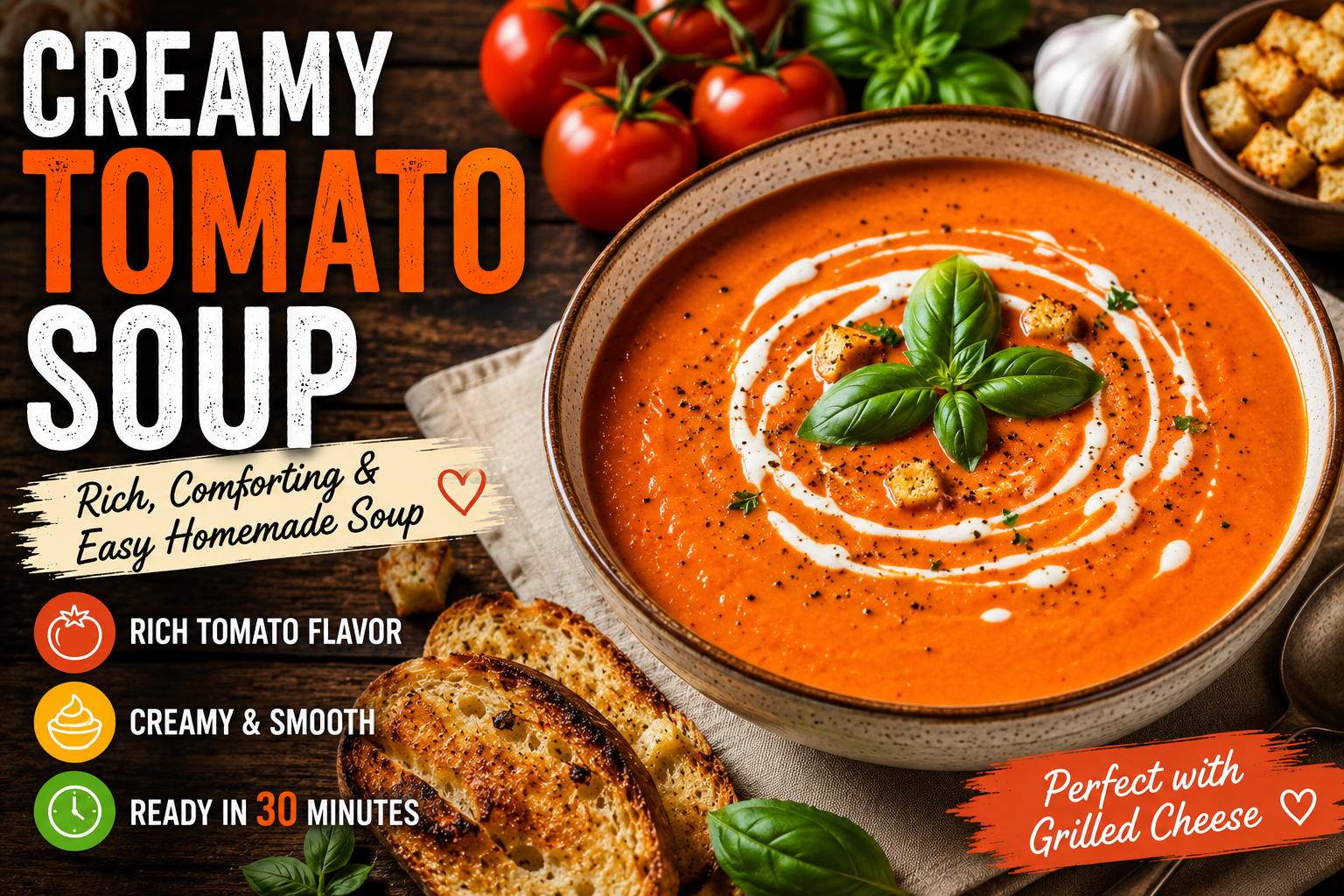
Introduction
There is something incredibly comforting about a warm bowl of homemade creamy tomato soup. Its smooth texture, rich tomato flavor, gentle herbs, and creamy finish make it a timeless favorite for cozy lunches, light dinners, and relaxing evenings at home.
This creamy tomato soup recipe is designed to be simple enough for a beginner while still delivering the deep, satisfying flavor of a restaurant-style soup. Made with ripe tomatoes or quality canned tomatoes, aromatic vegetables, garlic, herbs, broth, and cream, this recipe creates a silky and flavorful soup without requiring complicated cooking techniques.
One of the best things about homemade tomato soup is its versatility. You can enjoy it on its own, pair it with grilled cheese sandwiches, serve it alongside toasted bread, or turn it into part of a larger family meal. It can also be adjusted according to your taste. If you prefer a stronger garlic flavor, you can add more garlic. If you like a slightly sweeter soup, a small amount of sugar can balance the acidity of the tomatoes. If you enjoy herbs, fresh basil can make the soup even more aromatic.
This recipe is especially useful on busy days because most of the cooking happens in one pot. Once the vegetables and tomatoes have simmered together, the mixture is blended until smooth and finished with cream. The result is a beautiful, velvety soup that tastes much more special than the effort required to make it.
WHY YOU’LL LOVE THIS CREAMY TOMATO SOUP
There are many reasons to keep a good tomato soup recipe in your regular meal rotation.
First, it is incredibly easy to prepare. You do not need advanced cooking skills or complicated equipment. A large pot, a blender or immersion blender, and a few basic ingredients are enough.
Second, the ingredients are simple and familiar. Tomatoes, onion, garlic, broth, butter or olive oil, herbs, and cream come together to create a surprisingly rich flavor.
Third, the soup is wonderfully adaptable. You can make it thicker, thinner, creamier, more garlicky, more herby, or slightly spicy depending on your preference.
Fourth, homemade soup gives you control over the ingredients. You can adjust the salt, seasoning, cream, and herbs according to your taste.
Finally, creamy tomato soup pairs beautifully with many foods. A bowl of soup with crispy toast or a grilled cheese sandwich can become a complete and satisfying meal.
WHAT MAKES A GREAT CREAMY TOMATO SOUP?
A great tomato soup is all about balance.
Tomatoes provide the main flavor, but tomatoes can sometimes be naturally acidic. Aromatic vegetables such as onion and garlic help create depth. Broth adds savory flavor, while butter or olive oil contributes richness. Herbs provide freshness and fragrance. Finally, cream gives the soup its smooth and luxurious texture.
The goal is not simply to make the soup creamy. The goal is to make every ingredient support the tomato flavor.
A good creamy tomato soup should have:
- A rich tomato flavor
- A smooth, velvety texture
- Balanced acidity
- Gentle sweetness
- A savory background
- A pleasant garlic and herb aroma
- Enough creaminess without becoming overly heavy
- A warm, comforting finish
CHOOSING THE RIGHT TOMATOES
The tomatoes are the star of this recipe, so choosing good tomatoes can make a noticeable difference.
You can make creamy tomato soup with fresh tomatoes, canned tomatoes, or a combination of both.
Fresh tomatoes are wonderful when they are ripe, juicy, and naturally flavorful. During tomato season, fresh tomatoes can give the soup a bright and fresh character.
Canned tomatoes are convenient throughout the year and often provide a consistent flavor. High-quality canned tomatoes can be especially useful when fresh tomatoes are not at their best.
If using canned tomatoes, whole peeled tomatoes, crushed tomatoes, or diced tomatoes can all work. Whole tomatoes can be broken down during cooking and blended later.
For an especially rich soup, you can also use roasted tomatoes. Roasting concentrates the tomato flavor and adds a deeper, slightly caramelized character.
INGREDIENTS YOU’LL NEED
The ingredient list is simple, but each ingredient has a purpose.
Tomatoes
Use fresh ripe tomatoes or good-quality canned tomatoes. Tomatoes provide the primary flavor, color, acidity, and natural sweetness of the soup.
Onion
Onion creates a savory foundation. Cooking it slowly helps soften its sharpness and brings out a gentle sweetness.
Garlic
Garlic adds warmth and depth. Fresh garlic is ideal because it provides a stronger and more aromatic flavor.
Butter or Olive Oil
Butter adds richness and a smooth flavor, while olive oil gives the soup a lighter Mediterranean-style character. You can also use a combination of both.
Vegetable or Chicken Broth
Broth helps create the soup’s consistency and adds savory depth. Vegetable broth is a great choice for a vegetarian version.
Fresh Basil
Basil and tomatoes are a classic combination. Fresh basil adds a fragrant, slightly sweet herbal note.
Dried Italian Herbs
If fresh herbs are unavailable, dried Italian seasoning can add a convenient blend of herbs.
Heavy Cream
Heavy cream creates the creamy texture and softens the acidity of the tomatoes. Add it gradually so you can control the richness.
Salt
Salt brings all the flavors together. Add it gradually and taste as you cook.
Black Pepper
Freshly ground black pepper adds gentle warmth and complements the tomato flavor.
A Small Amount of Sugar
Sugar is optional. If your tomatoes are particularly acidic, a small amount can help balance the flavor. It should not make the soup taste sweet.
Optional Red Pepper Flakes
If you enjoy a little heat, a small pinch of red pepper flakes can give the soup a pleasant kick.
HOW TO PREPARE THE INGREDIENTS
Good preparation makes cooking much easier.
If using fresh tomatoes, wash them thoroughly and remove any unwanted stems. Depending on the type of tomato and your preferred texture, you can peel them or leave the skins on because everything will eventually be blended.
Peel and finely chop the onion.
Peel the garlic cloves and mince them or crush them with the side of a knife.
Wash and dry the basil leaves. Keep a few attractive leaves aside for garnish.
Measure the broth and cream before beginning the cooking process.
Having everything prepared means you can focus on the cooking rather than stopping to measure ingredients.
STARTING THE SOUP
Place a large heavy-bottomed pot over medium heat.
Add butter, olive oil, or a combination of both.
Once warm, add the chopped onion.
Cook the onion gently until it becomes soft and translucent. This step is important because properly softened onion creates a sweeter and more developed base.
Avoid rushing this stage. If the onion is cooked too quickly over very high heat, it may brown before becoming properly soft.
Once the onion is tender, add the minced garlic.
Cook the garlic briefly while stirring continuously. Garlic can burn quickly, so it should not be left unattended.
The kitchen should begin to smell fragrant and savory at this point.
ADDING THE TOMATOES
Add the tomatoes to the pot.
If using whole canned tomatoes, gently crush them with a wooden spoon.
Stir everything together so the tomatoes combine with the softened onion and garlic.
Add the broth and your chosen herbs.
Bring the mixture to a gentle simmer.
The soup does not need to boil aggressively. A gentle simmer allows the flavors to develop while keeping the cooking process controlled.
SIMMERING FOR BETTER FLAVOR
Allow the soup to simmer until the tomatoes and vegetables are completely tender.
This stage gives the ingredients time to come together.
As the tomatoes cook, their flavor becomes deeper and more rounded. The onion softens further, the garlic blends into the background, and the herbs release their aroma into the broth.
Stir the soup occasionally to make sure nothing is sticking to the bottom of the pot.
If the soup becomes thicker than you want, you can add a little more broth.
BLENDING THE SOUP
Once the vegetables are very soft, it is time to create the smooth texture.
An immersion blender is one of the easiest options because you can blend the soup directly in the pot.
Move the blender slowly through the soup until the mixture becomes smooth.
If using a countertop blender, allow the soup to cool slightly before transferring it. Hot liquids can create pressure inside a blender, so use appropriate caution and follow your blender’s instructions.
Blend in batches if necessary.
The final texture should be smooth and velvety.
If you prefer a rustic tomato soup, you can leave some small pieces of vegetables instead of blending completely.
MAKING THE SOUP CREAMY
After blending, return the soup to low heat if necessary.
Add the cream gradually while stirring.
Do not rush this step.
The cream should blend smoothly into the tomato base, creating a lighter orange-red color and a richer texture.
Taste the soup.
This is the perfect time to adjust the seasoning.
Add salt and black pepper as needed.
If the tomatoes taste particularly acidic, consider adding a very small amount of sugar.
Remember that the purpose of sugar is balance, not sweetness.
TASTING AND ADJUSTING THE FLAVOR
One of the most important cooking habits is tasting before serving.
Tomatoes can vary significantly in acidity and sweetness, so the exact amount of seasoning may change from one batch to another.
Taste the soup and ask yourself:
Does it need more salt?
Does it need more black pepper?
Is the tomato flavor strong enough?
Is it too acidic?
Does it need more herbs?
Is the texture creamy enough?
Would a little more broth improve the consistency?
Small adjustments can transform a good soup into a great one.
HOW TO MAKE THE SOUP EXTRA SMOOTH
If you want an exceptionally smooth restaurant-style texture, strain the blended soup through a fine-mesh sieve.
This step is optional.
Most home cooks can simply blend the soup thoroughly and serve it as it is.
However, straining removes remaining tomato seeds, skins, and tiny vegetable pieces.
Pour the blended soup through the sieve and use a spoon or ladle to gently press the mixture through.
The result is an especially silky soup.
HOW TO CONTROL THE THICKNESS
The ideal thickness depends on personal preference.
For a thicker soup, use slightly less broth or allow the soup to simmer a little longer before adding the cream.
For a thinner soup, add more broth gradually.
Avoid adding a large amount of liquid at once.
It is much easier to thin a thick soup than to fix a soup that has become excessively watery.
Remember that the soup may also thicken slightly as it cools.
CREAMY TOMATO SOUP WITHOUT HEAVY CREAM
If you want a lighter version, you have several options.
You can use half-and-half or milk instead of heavy cream.
You can also blend in a small amount of cooked potato for natural thickness.
Another option is to use unsweetened plant-based cream or another suitable dairy-free alternative.
Each option changes the final flavor and texture slightly, so choose according to your preference.
DAIRY-FREE CREAMY TOMATO SOUP
To make a dairy-free version, use olive oil instead of butter and choose a suitable dairy-free cream alternative.
Make sure the broth and any other packaged ingredients are compatible with your dietary needs.
The soup can still be rich, smooth, and satisfying without traditional dairy cream.
VEGETARIAN CREAMY TOMATO SOUP
For a vegetarian version, use vegetable broth and check that your other ingredients meet your dietary requirements.
The combination of tomatoes, garlic, onion, herbs, and vegetable broth creates plenty of flavor without requiring meat.
SERVING THE SOUP
Creamy tomato soup can be served in many different ways.
Pour the hot soup into bowls and garnish with fresh basil.
A small swirl of cream can make the presentation look beautiful.
You can also drizzle a little olive oil over the surface.
Freshly cracked black pepper adds a simple finishing touch.
For extra texture, add homemade croutons.
Toasted bread is another excellent option.
And of course, creamy tomato soup and grilled cheese are an iconic combination.
BEST SIDES TO SERVE WITH TOMATO SOUP
Grilled Cheese Sandwich
Crispy grilled cheese is one of the most popular companions for tomato soup. The crunchy bread and melted cheese contrast beautifully with the smooth soup.
Garlic Bread
Warm garlic bread is perfect for dipping into creamy tomato soup.
Crusty Bread
A rustic loaf with a crisp crust can make the meal feel simple and comforting.
Croutons
Homemade or store-bought croutons provide a crunchy contrast.
Simple Green Salad
A fresh salad can add brightness to the meal and balance the richness of the creamy soup.
Roasted Vegetables
Roasted vegetables can turn a bowl of tomato soup into a more complete meal.
HOW TO MAKE HOMEMADE CROUTONS
Cut bread into small cubes.
Place the cubes in a bowl and toss them with olive oil, garlic powder, dried herbs, salt, and black pepper.
Spread them on a baking tray.
Bake until golden and crisp, turning once if needed.
Allow them to cool slightly before adding them to the soup.
The crunchy texture makes the creamy soup even more enjoyable.
GRILLED CHEESE PAIRING
A classic grilled cheese sandwich can turn creamy tomato soup into an easy and satisfying meal.
Choose your favorite bread and cheese.
Butter the outside of the bread and cook the sandwich in a skillet over medium heat until golden and crisp on the outside and the cheese is melted inside.
Cut the sandwich into halves or strips and serve alongside the soup.
The combination of creamy soup and crispy toasted bread creates a wonderful contrast in texture.
TIPS FOR THE BEST CREAMY TOMATO SOUP
Use flavorful tomatoes.
Tomatoes are the main ingredient, so quality matters.
Do not burn the garlic.
Garlic only needs a short cooking time.
Cook the onion properly.
Softened onion adds natural sweetness and depth.
Use enough broth.
The broth helps create the correct consistency.
Blend thoroughly.
A good blend creates the signature smooth texture.
Add cream gradually.
This gives you more control over the richness.
Taste before serving.
Seasoning should always be adjusted according to the ingredients you are using.
Do not rely only on a fixed amount of salt.
Different tomatoes and broths can have different levels of salt and acidity.
Keep the heat gentle after adding cream.
Gentle heat helps maintain a smooth texture.
Garnish at the end.
Fresh basil, black pepper, cream, olive oil, or croutons can make the final bowl look much more appealing.
COMMON MISTAKES TO AVOID
Using poor-quality tomatoes
Because tomatoes are the main ingredient, bland tomatoes can result in bland soup.
Adding too much cream
Cream should complement the tomato flavor rather than completely cover it.
Adding too much sugar
Sugar should only balance acidity. Too much can make the soup taste sweet.
Burning the garlic
Burnt garlic can introduce a bitter flavor.
Not cooking the onion enough
Raw onion flavor can remain harsh if the onion is not softened properly.
Adding too much liquid
Excess broth can make the soup watery.
Over-seasoning before simmering
The flavor can change as the soup cooks, so seasoning gradually is usually better.
Skipping the tasting step
Always taste before serving and make final adjustments.
CREATIVE WAYS TO CUSTOMIZE CREAMY TOMATO SOUP
There are countless ways to make this classic soup your own.
For a spicy version, add red pepper flakes or a small amount of chili.
For a smoky version, add a little smoked paprika.
For a Mediterranean-inspired version, use olive oil, basil, oregano, and a touch of roasted garlic.
For a cheesy version, stir in a small amount of grated cheese after lowering the heat.
For a roasted tomato version, roast the tomatoes and garlic before adding them to the pot.
For an extra-herby version, add basil, oregano, and thyme.
For a richer version, use a little more cream.
For a lighter version, increase the broth and reduce the cream.
The beauty of homemade soup is that you can adjust it to your own kitchen and preferences.
MAKE-AHEAD FRIENDLY
Creamy tomato soup is excellent for preparing ahead.
You can cook the tomato base, blend it, and store it before adding cream.
When ready to serve, gently reheat the soup and add the cream.
This can be particularly useful when preparing meals for a family or planning a busy week.
STORING LEFTOVER SOUP
Allow leftover soup to cool appropriately before transferring it to a suitable airtight container.
Store it in the refrigerator and use it within a safe period recommended for cooked leftovers.
When reheating, use gentle heat and stir regularly.
Avoid overheating.
If the soup becomes too thick after refrigeration, add a small amount of broth or water while reheating to reach your preferred consistency.
FREEZING CREAMY TOMATO SOUP
Tomato soup can generally be frozen, although dairy-based cream can sometimes change texture after freezing and thawing.
For the best texture, consider freezing the tomato soup base before adding the cream.
Thaw the soup safely in the refrigerator, reheat gently, and then add fresh cream before serving.
This method can help preserve a smoother final texture.
FINAL THOUGHTS
Creamy tomato soup is one of those recipes that proves simple ingredients can create something incredibly satisfying.
With flavorful tomatoes, aromatic onion and garlic, savory broth, herbs, and a smooth creamy finish, this soup is comforting without requiring complicated techniques.
It works beautifully as a light lunch, cozy dinner, starter, or side dish. Pair it with grilled cheese, garlic bread, crusty bread, croutons, or a fresh salad to create a complete meal.
Once you learn the basic method, you can easily customize the recipe with roasted vegetables, extra herbs, spices, cheese, or different creamy ingredients.
The most important thing is to focus on balance. Let the tomatoes remain the star, build flavor gradually, blend until smooth, and adjust the seasoning at the end.
A warm bowl of homemade creamy tomato soup is simple, comforting, versatile, and perfect for almost any time you want a cozy homemade meal.
CREAMY TOMATO SOUP — COMPLETE RECIPE GUIDE, SERVING IDEAS, VARIATIONS, COOKING TIPS & MORE
THE SECRET TO DEEPER TOMATO FLAVOR
A truly memorable creamy tomato soup is not created by simply combining tomatoes with cream. The best flavor comes from building the soup gradually, allowing every ingredient to contribute something meaningful.
Tomatoes provide acidity, sweetness, and the recognizable flavor of the soup. Onion provides a savory foundation and natural sweetness. Garlic contributes warmth and aroma. Herbs add freshness, while broth creates depth. Butter or olive oil gives the base richness, and cream brings everything together with a smooth finish.
One of the easiest ways to improve the flavor is to give the onions enough time to soften properly. You do not necessarily need to caramelize them deeply, but they should become tender and fragrant before the tomatoes are added.
The same applies to garlic. Fresh garlic should be cooked gently for a short period. This releases its aroma without allowing it to become bitter.
Another useful technique is allowing the tomato mixture to simmer long enough for the flavors to blend. The goal is not simply to cook the tomatoes but to create a unified flavor profile.
ROASTED TOMATO CREAMY SOUP
Roasting the tomatoes before making the soup is one of the easiest ways to create a deeper and more concentrated tomato flavor.
Start by cutting fresh tomatoes into halves or quarters, depending on their size.
Arrange them on a baking tray.
Add garlic cloves and onion pieces.
Drizzle everything lightly with olive oil.
Season with salt, black pepper, and herbs.
Roast until the tomatoes become soft and slightly caramelized around the edges.
Transfer the roasted ingredients into a pot.
Add vegetable or chicken broth and simmer for several minutes.
Blend until smooth.
Add cream gradually and adjust the seasoning.
Roasted tomato soup has a slightly sweeter and deeper flavor compared with a basic stovetop version.
The roasting process removes some moisture from the tomatoes and concentrates their natural flavor.
ROASTED GARLIC TOMATO SOUP
If you love garlic, roasted garlic is an excellent addition.
Roasted garlic becomes softer and milder than raw garlic while developing a rich, almost buttery character.
You can roast whole garlic bulbs until the cloves become soft.
Once cooled enough to handle, squeeze the roasted garlic from the bulb and add it to the soup.
Blend it together with the tomatoes.
The result is a smooth tomato soup with a gentle roasted garlic flavor.
This version pairs especially well with toasted bread and grilled cheese.
BASIL TOMATO SOUP
Fresh basil is one of the most natural partners for tomatoes.
You can add basil during the final stages of cooking or use fresh basil as a garnish.
For a stronger basil flavor, blend a small handful of fresh basil into the soup after cooking.
Avoid adding too much at once because basil has a strong aroma.
A few fresh leaves placed on top just before serving can make the soup look fresh and colorful.
Add a small drizzle of cream or olive oil around the basil for a restaurant-style presentation.
SPICY CREAMY TOMATO SOUP
For people who enjoy a little heat, creamy tomato soup can easily be transformed into a spicy version.
Add red pepper flakes while cooking the onions and garlic.
You can also use a small amount of chili powder or smoked paprika.
Another option is adding freshly chopped chili.
Start with a small amount because it is easier to increase the heat later than to reduce it.
The cream will soften some of the heat, creating a balanced spicy and creamy flavor.
SMOKY TOMATO SOUP
Smoked paprika can give creamy tomato soup a warm, smoky character.
Add a small amount while cooking the tomato mixture.
You can combine smoked paprika with garlic, black pepper, and a little dried oregano.
This version is especially good with toasted sourdough or a grilled cheese sandwich.
CHEESY CREAMY TOMATO SOUP
Cheese can make tomato soup even richer.
Parmesan is a popular choice because its salty and savory flavor complements tomatoes.
You can grate a small amount into the soup after reducing the heat.
Stir until melted.
Avoid adding too much cheese because it can overpower the tomato flavor and make the soup excessively thick.
For serving, you can also sprinkle freshly grated Parmesan over each bowl.
CREAM CHEESE TOMATO SOUP
Cream cheese can create an especially creamy texture.
Add a small amount after the tomato mixture has been blended.
Keep the heat low and stir until the cream cheese dissolves completely.
This creates a thicker, richer soup with a slightly tangy flavor.
If the soup becomes too thick, add broth gradually until the desired consistency is reached.
TOMATO SOUP WITH PARMESAN
Parmesan can be used in two ways.
You can add a small amount directly into the soup.
Or you can use freshly grated Parmesan as a garnish.
For an elegant presentation, place the soup in a bowl, add a small swirl of cream, sprinkle Parmesan around the center, and finish with fresh basil.
TOMATO SOUP WITH CROUTONS
Crunchy croutons are one of the easiest ways to add texture.
Creamy soup is smooth, so crunchy toppings create an enjoyable contrast.
You can make garlic croutons, herb croutons, Parmesan croutons, or simple salted croutons.
Add them immediately before serving so they remain crisp.
If they sit in the soup for too long, they will absorb liquid and become soft.
GARLIC BUTTER CROUTONS
Cut bread into small cubes.
Melt butter in a skillet.
Add minced garlic and cook briefly.
Add the bread cubes.
Toss until coated.
Cook until golden and crisp.
Season with dried herbs and black pepper.
Allow them to cool slightly before placing them over the soup.
These croutons can also be used with salads and other soups.
CREAMY TOMATO SOUP WITH PASTA
Small pasta shapes can turn tomato soup into a more filling meal.
Small shells, elbows, orzo, and other small pasta varieties can work well.
Cook the pasta separately if you want maximum control over the texture.
Add the cooked pasta to the soup just before serving.
This creates a creamy tomato pasta soup that is comforting and filling.
You can finish it with Parmesan and fresh basil.
TOMATO SOUP WITH RICE
Rice is another simple addition.
Cook rice separately and add it to the finished soup.
This works particularly well if you want a more substantial bowl.
White rice, brown rice, or wild rice can provide different textures.
If using cooked rice, avoid simmering it for too long in the soup because it can absorb too much liquid.
CREAMY TOMATO AND VEGETABLE SOUP
You can add vegetables to create a more substantial soup.
Carrots, celery, bell peppers, zucchini, spinach, and potatoes can all work depending on the style you want.
Carrots add natural sweetness.
Celery contributes a savory aroma.
Bell peppers add sweetness and color.
Zucchini provides a mild vegetable flavor.
Spinach can be stirred in toward the end.
Potatoes can help thicken the soup naturally.
The vegetables can be blended completely or partially, depending on your preferred texture.
TOMATO CARROT SOUP
Tomato and carrot make a naturally pleasant combination.
The sweetness of carrots can help balance the acidity of tomatoes.
Sauté chopped carrots with onion and garlic before adding the tomatoes.
Simmer until the carrots become completely tender.
Blend everything until smooth.
Finish with cream, salt, black pepper, and herbs.
This version can have a naturally smooth and slightly sweet flavor.
TOMATO BASIL SOUP WITH PARMESAN
This combination is classic for a reason.
Tomatoes, basil, and Parmesan complement one another beautifully.
Prepare the soup using your preferred method.
Add fresh basil near the end.
Finish each serving with Parmesan.
A small drizzle of extra virgin olive oil can provide a beautiful finishing touch.
Serve with warm bread.
CREAMY TOMATO SOUP FOR LUNCH
Creamy tomato soup is an excellent lunch option when you want something warm and comforting.
A simple bowl can be served with toasted bread.
For a more complete lunch, pair it with grilled cheese, a fresh salad, roasted vegetables, or a small sandwich.
Because the soup can be prepared ahead of time, it is also convenient for busy days.
Prepare a larger batch and store individual portions appropriately.
When ready to eat, reheat gently and adjust the consistency with a little broth if necessary.
CREAMY TOMATO SOUP FOR DINNER
For dinner, tomato soup can serve as either a starter or the main dish.
As a starter, serve a smaller bowl before pasta, roasted vegetables, sandwiches, or another main course.
As a main dish, serve a larger portion with grilled cheese, garlic bread, croutons, or a hearty salad.
You can also add pasta, rice, beans, or other ingredients to make the soup more substantial.
SERVING FOR A FAMILY
This recipe is convenient for family meals because the base can be adjusted to different preferences.
Keep the main soup mild.
Serve chili flakes, hot sauce, grated cheese, fresh herbs, and croutons separately.
This allows everyone to customize their own bowl.
For children who prefer mild flavors, serve the soup with plain toasted bread or a simple grilled cheese sandwich.
For adults who enjoy stronger flavors, add black pepper, chili flakes, Parmesan, or fresh basil.
CREAMY TOMATO SOUP FOR GUESTS
Tomato soup can also be served as an elegant starter when guests visit.
Use smooth bowls and garnish carefully.
A small swirl of cream can make the surface look attractive.
Add a few basil leaves.
Place a small amount of finely grated Parmesan in the center.
Serve with warm crusty bread.
The presentation does not need to be complicated. Clean plating and simple garnishes can make homemade soup look special.
HOW TO CREATE A RESTAURANT-STYLE PRESENTATION
Start with a clean bowl.
Pour the soup into the center.
Do not overfill the bowl.
Add a small swirl of cream.
Use a toothpick or the back of a spoon to create a simple pattern if desired.
Place one or two basil leaves in the center.
Add a few freshly ground black pepper specks.
Finish with a tiny drizzle of olive oil.
Serve immediately.
The contrast between the red-orange soup, white cream, and green basil creates a beautiful presentation.
WHAT TO SERVE WITH CREAMY TOMATO SOUP
There are many excellent pairings.
Grilled cheese sandwiches
Garlic bread
Sourdough bread
Crusty French bread
Herb toast
Cheese toast
Roasted vegetables
Fresh green salad
Caesar-style salad
Pasta
Rice
Croutons
Baked potatoes
Stuffed sandwiches
The best pairing depends on whether you want a light meal or something more filling.
GRILLED CHEESE VARIATIONS
Classic cheese
Use a simple mild cheese for a traditional pairing.
Cheddar
Sharp cheddar adds stronger flavor.
Mozzarella
Mozzarella provides a stretchy and mild texture.
Cheddar and mozzarella
Combining cheeses can create a balanced grilled cheese.
Herb grilled cheese
Add dried herbs to the butter before grilling.
Garlic grilled cheese
Add a small amount of garlic powder or roasted garlic.
Tomato basil grilled cheese
Add basil and thin tomato slices inside the sandwich.
These variations can make a simple soup-and-sandwich meal feel completely different each time.
HOW TO MAKE TOMATO SOUP LESS ACIDIC
Some tomatoes naturally have stronger acidity.
Several techniques can help balance the flavor.
Cook the tomatoes thoroughly.
Add naturally sweet vegetables such as carrots.
Use a small amount of sugar if needed.
Add cream.
Use roasted tomatoes.
Add a small amount of butter or olive oil.
The key is balance.
Do not try to eliminate the natural acidity completely because some acidity is part of what makes tomato soup taste fresh.
HOW TO MAKE TOMATO SOUP MORE FLAVORFUL
If the soup tastes flat, it may simply need better seasoning or more depth.
Try adding:
More garlic
Fresh basil
Dried oregano
Black pepper
Smoked paprika
A little Parmesan
A splash of broth
A small amount of olive oil
A tiny amount of sugar if the tomatoes are very acidic
Taste after each adjustment.
Avoid adding many ingredients at once because it becomes difficult to identify what changed the flavor.
HOW TO MAKE TOMATO SOUP THICKER WITHOUT EXTRA CREAM
You do not always need more cream to make the soup thick.
You can reduce the amount of broth.
Simmer the soup uncovered for a little longer.
Add cooked potato.
Add cooked carrots.
Blend the vegetables thoroughly.
Add a small amount of tomato paste.
Tomato paste is particularly useful because it intensifies tomato flavor while also contributing body.
HOW TO MAKE TOMATO SOUP THINNER
If the soup is too thick, add broth gradually.
Warm the broth before adding it if possible.
Stir thoroughly and taste again.
Continue until the soup reaches your preferred consistency.
Avoid adding too much water because it can dilute the flavor.
Broth is generally a better choice when thinning the soup because it adds liquid without removing as much flavor.
USING TOMATO PASTE
Tomato paste can intensify the tomato flavor.
Add a small amount while cooking the onions and garlic.
Allow it to cook briefly before adding the tomatoes.
This helps develop a deeper flavor.
Be careful not to use too much because tomato paste is concentrated.
A little can go a long way.
USING FRESH HERBS
Fresh herbs can make a noticeable difference.
Basil is the classic choice.
Parsley can provide a fresh finish.
Thyme adds a subtle earthy aroma.
Oregano creates a more Mediterranean character.
You can use one herb or a combination.
Fresh herbs are generally best added toward the end so their aroma remains noticeable.
DRIED HERBS VS FRESH HERBS
Dried herbs are convenient and often stronger per teaspoon because their flavor is concentrated.
Fresh herbs provide brighter and more delicate aromas.
If substituting dried herbs for fresh herbs, remember that the quantities are not necessarily identical.
Start with a small amount and adjust according to taste.
CREAM SUBSTITUTIONS
Heavy cream creates a rich and luxurious texture, but it is not the only option.
Half-and-half can create a lighter creamy soup.
Milk can provide creaminess with a lighter body.
Evaporated milk can provide richness.
A suitable plant-based cream can be used for a dairy-free version.
Coconut milk can also be used, although it will introduce a noticeable coconut flavor.
Choose the option that matches the flavor profile you want.
VEGAN CREAMY TOMATO SOUP
A plant-based tomato soup can still be creamy and delicious.
Use olive oil instead of butter.
Use vegetable broth.
Replace dairy cream with a suitable unsweetened plant-based alternative.
Blend thoroughly.
Fresh basil, roasted garlic, and good tomatoes can provide plenty of flavor.
Always check packaged ingredients according to your dietary requirements.
GLUTEN-FREE TOMATO SOUP
The basic ingredients in tomato soup can naturally be gluten-free, but packaged broth, seasonings, and other processed ingredients should be checked carefully.
Serve with gluten-free bread or another suitable side if needed.
Always verify ingredient labels when preparing food for someone with a medical dietary restriction.
TOMATO SOUP WITH ROASTED RED PEPPERS
Roasted red peppers can add sweetness and a beautiful color.
Roast the peppers until softened and lightly charred.
Remove the seeds and blend the peppers with the cooked tomato mixture.
The result is a slightly sweeter, richer soup with a gentle roasted flavor.
You can finish it with basil, cream, black pepper, and olive oil.
TOMATO SOUP WITH CORN
Sweet corn can provide an interesting contrast to the acidity of tomatoes.
Add cooked corn after blending rather than blending everything together.
This creates a creamy soup with small sweet pieces throughout.
You can also use roasted corn for a deeper flavor.
TOMATO SOUP WITH WHITE BEANS
White beans can add body and make the soup more filling.
Blend a small amount into the soup for creaminess.
Keep some beans whole if you want texture.
This is an excellent way to create a more substantial bowl without relying entirely on cream.
TOMATO SOUP WITH LENTILS
Cooked lentils can be incorporated into tomato soup.
They add a hearty texture and savory character.
For a smooth soup, blend them completely.
For a rustic soup, leave some lentils whole.
Season with garlic, onion, black pepper, and herbs.
TOMATO SOUP WITH POTATO
Potato is a useful ingredient when you want a naturally thicker soup.
Peel and chop a potato.
Cook it with the tomatoes and broth until completely tender.
Blend everything together.
The potato creates body without requiring a large amount of cream.
This technique can also be useful when making a lighter version.
HOW TO PREVENT THE SOUP FROM BECOMING TOO HEAVY
Creamy soup should be rich but still pleasant to eat.
Use cream gradually.
Keep the tomato flavor prominent.
Avoid adding too much butter and cream simultaneously.
Use fresh herbs to add brightness.
A small amount of lemon juice can sometimes brighten the flavor, but add it carefully and taste as you go.
Serve with a fresh salad or lightly toasted bread rather than several very rich sides.
BALANCING RICHNESS
If your soup feels too rich, adding a small amount of acidity can brighten it.
A tiny splash of lemon juice may help.
You can also add more tomato.
Fresh basil can provide freshness.
A little extra broth can reduce heaviness.
Again, make adjustments gradually.
THE IMPORTANCE OF TEMPERATURE
Creamy tomato soup is best served warm.
It should be hot enough to be comforting but not so aggressively hot that you cannot taste the flavors properly.
After cooking, allow the soup to settle briefly before serving.
If reheating, use gentle heat and stir regularly.
Avoid repeatedly boiling the soup.
HOW TO REHEAT CREAMY TOMATO SOUP
Place the desired amount in a saucepan.
Warm over low to medium-low heat.
Stir occasionally.
If the soup has thickened in the refrigerator, add a small amount of broth.
Taste before serving.
Adjust seasoning if necessary.
If the soup contains dairy cream, avoid aggressive boiling.
Reheating gently helps maintain a smooth texture.
MICROWAVE REHEATING
If using a microwave, place the soup in a microwave-safe bowl.
Heat in short intervals.
Stir between intervals.
Continue until warmed through.
Be careful because soup can become very hot unevenly.
Allow it to sit briefly before eating.
MEAL PREP IDEAS
Creamy tomato soup can fit easily into a meal-prep routine.
Prepare a large batch.
Allow it to cool appropriately.
Store portions in suitable airtight containers.
Keep toppings separate.
Store croutons separately so they remain crunchy.
Store fresh basil separately and add it immediately before serving.
If freezing, consider freezing the tomato base before adding dairy cream.
This makes it easier to preserve the final texture.
PORTIONING THE SOUP
Individual containers can make reheating easier.
Fill containers with the amount you expect to eat.
Do not overfill storage containers.
Leave appropriate space if freezing because liquids expand as they freeze.
Label containers with the preparation date so you can keep track of freshness.
FREEZER-FRIENDLY TOMATO SOUP BASE
If you want to make tomato soup in advance, prepare the tomato base first.
Cook the tomatoes, onion, garlic, herbs, and broth.
Blend until smooth.
Allow it to cool appropriately.
Store in freezer-safe containers.
When ready to serve, thaw safely, reheat gently, and add cream.
This method can make future meals much faster.
TOMATO SOUP FOR BUSY WEEKDAYS
On busy days, you do not need to make the soup complicated.
Use canned tomatoes.
Use pre-chopped onion if available.
Use dried herbs.
Use prepared broth.
Use an immersion blender.
The goal is to create a flavorful homemade meal without unnecessary steps.
Even a simple version can taste excellent when the ingredients are balanced properly.
HOW TO MAKE A QUICKER VERSION
Heat olive oil or butter.
Add onion.
Cook until softened.
Add garlic.
Add tomatoes.
Add broth.
Add herbs.
Simmer until tender.
Blend.
Add cream.
Season.
Serve.
The basic technique is simple enough to become a regular weeknight recipe.
HOW TO MAKE A MORE GOURMET VERSION
For a more elevated presentation, focus on ingredients and finishing touches.
Use high-quality tomatoes.
Roast the tomatoes and garlic.
Use homemade or high-quality broth.
Blend until extremely smooth.
Strain if desired.
Add cream gradually.
Finish with fresh basil.
Add Parmesan.
Drizzle with olive oil.
Serve with artisan-style toasted bread.
Small details can make a familiar recipe feel more sophisticated.
LEFTOVER TOMATO SOUP IDEAS
Leftover tomato soup does not have to be eaten exactly the same way.
Use it as a sauce for pasta.
Use it as a base for a rice dish.
Add cooked vegetables.
Add beans.
Add pasta.
Use a small amount as a dipping sauce for grilled cheese.
Serve it alongside a toasted sandwich.
The soup can become the starting point for another meal.
CREAMY TOMATO PASTA USING LEFTOVER SOUP
Cook pasta until al dente.
Warm leftover tomato soup in a skillet.
Reduce it slightly.
Add cooked pasta.
Toss until coated.
Add Parmesan and fresh basil.
If needed, loosen the sauce with a small amount of pasta water.
This creates an easy creamy tomato pasta without preparing a separate sauce from scratch.
TOMATO SOUP AS A PIZZA SAUCE
A very thick tomato soup base can sometimes be adapted into a pizza-inspired sauce, provided it is reduced enough.
Cook it until it becomes thick.
Season with oregano and garlic.
Allow it to cool.
Use a small amount as a base for homemade pizza.
Avoid using a watery soup directly because it can make the crust soggy.
TOMATO SOUP AS A DIPPING SAUCE
A thicker tomato soup can work as a dipping companion for toasted bread, grilled cheese, or savory snacks.
Reduce the soup until it reaches a thicker consistency.
Serve warm in a small bowl.
Garnish with Parmesan or basil.
This creates a simple alternative to traditional dipping sauces.
FAMILY-FRIENDLY FLAVOR
If serving the soup to a family with different preferences, keep the base simple.
Avoid making the main pot excessively spicy.
Allow people to add their own toppings.
Possible toppings include:
Fresh basil
Parmesan
Croutons
Black pepper
Cream
Olive oil
Chili flakes
Toasted seeds
This makes one soup suitable for different tastes.
HOW TO MAKE THE SOUP MORE HERBY
For an herb-forward soup, combine basil with oregano and thyme.
Add dried herbs earlier during cooking.
Add fresh basil near the end.
This creates layers of herbal flavor.
Avoid using too many herbs because the tomato flavor should remain noticeable.
GARLIC LOVERS’ VERSION
For stronger garlic flavor, use both fresh garlic and roasted garlic.
Cook minced fresh garlic with the onion.
Add roasted garlic during blending.
This gives the soup both aromatic and mellow garlic notes.
Finish with garlic butter croutons for an especially flavorful meal.
LEMON-FINISHED TOMATO SOUP
A tiny amount of lemon juice can brighten a rich creamy tomato soup.
Add only a small amount after cooking.
Stir and taste.
If the soup already has plenty of acidity, you may not need lemon.
This is a finishing technique rather than a main ingredient.
BLACK PEPPER TOMATO SOUP
Freshly cracked black pepper can add warmth without overwhelming the soup.
Add some during cooking.
Finish with a little more just before serving.
Freshly ground pepper generally provides a stronger aroma than pre-ground pepper.
SMOKED CHEESE TOMATO SOUP
For a smoky and cheesy variation, use a small amount of smoked cheese as a garnish.
Grate it over the hot soup.
Allow the heat to soften it.
You can also serve the soup with a smoked-cheese grilled sandwich.
This creates a rich and comforting flavor combination.
TOMATO SOUP WITH HERB OIL
A simple herb oil can create an attractive garnish.
Blend or finely chop fresh herbs with olive oil.
Drizzle a small amount over the soup just before serving.
The green herbs against the red-orange soup create beautiful visual contrast.
Do not use excessive oil because a little is enough.
CREAM SWIRL TECHNIQUE
Place a small amount of cream in a spoon or squeeze bottle.
Add a thin spiral over the surface of the soup.
Use a toothpick to gently pull through the spiral.
This creates a simple decorative pattern.
Keep the design minimal.
The food itself should remain the main focus.
BEST BREAD FOR TOMATO SOUP
Sourdough
Its slightly tangy flavor pairs well with tomatoes.
French bread
The crisp crust and soft interior are excellent for dipping.
Ciabatta
Its airy texture makes it ideal for soaking up soup.
Garlic bread
Adds extra garlic flavor.
Whole-grain bread
Provides a more hearty character.
Dinner rolls
Soft rolls are simple and family-friendly.
TOASTED BREAD WITH TOMATO SOUP
Slice bread.
Brush lightly with olive oil or butter.
Add garlic and herbs if desired.
Toast until golden.
Serve immediately alongside the soup.
The crisp surface becomes slightly soft when dipped into the soup while maintaining enough structure to be satisfying.
SOUP BAR FOR GUESTS
If serving tomato soup to several people, create a small topping station.
Place bowls of:
Croutons
Grated Parmesan
Fresh basil
Black pepper
Chili flakes
Cream
Olive oil
Toasted bread
This allows guests to customize their own bowls.
It also makes a simple soup meal feel more interactive.
SEASONAL TOMATO SOUP
During summer, fresh ripe tomatoes can create a bright and fresh soup.
During colder months, canned tomatoes can be extremely convenient.
You can also roast fresh tomatoes when they are available and freeze the cooked tomato base for later.
This makes it possible to enjoy tomato soup throughout the year.
SUMMER VERSION
Use fresh tomatoes.
Add fresh basil.
Use olive oil.
Finish with lemon and black pepper.
Serve with a light salad.
The result is bright and fresh.
WINTER VERSION
Use canned or roasted tomatoes.
Add garlic.
Use richer broth.
Add cream.
Serve with grilled cheese or garlic bread.
The result is warm, rich, and comforting.
AUTUMN VERSION
Add roasted garlic and carrots.
Use thyme.
Add a little smoked paprika.
Serve with toasted bread.
This version has a deeper, earthy flavor.
SPRING VERSION
Use fresh herbs.
Add spinach near the end.
Serve with a fresh green salad.
Keep the soup lighter and bright.
HOW TO SERVE SMALL PORTIONS AS AN APPETIZER
If the soup is being served before a larger meal, use small bowls or cups.
Garnish simply with basil and a tiny cream swirl.
Serve with a small piece of toasted bread.
A smaller serving allows guests to enjoy the flavor without becoming too full before the main course.
TOMATO SOUP FOR A COZY EVENING
Few meals are easier to make comforting than soup with warm bread.
Prepare the soup.
Toast some bread.
Prepare a simple side salad.
Serve everything warm.
The combination of creamy texture, tomato flavor, herbs, and crisp bread creates a simple meal that feels homemade and comforting.
CREAMY TOMATO SOUP FOR BEGINNER COOKS
This recipe is also a useful starting point for someone learning to cook.
It teaches several important kitchen skills:
How to soften onions.
How to cook garlic without burning it.
How to build flavor.
How to simmer vegetables.
How to blend soup.
How to adjust consistency.
How to balance acidity.
How to season gradually.
How to taste food before serving.
Once these skills become familiar, they can be applied to many other recipes.
HOW TO DEVELOP YOUR OWN VERSION
Start with the basic tomato soup.
Once you are comfortable with it, change one element at a time.
Try roasted tomatoes.
Then try roasted garlic.
Then add basil.
Then try chili.
Then add Parmesan.
Then experiment with vegetables.
Changing one element at a time makes it easier to understand how each ingredient affects the final dish.
CREAMY TOMATO SOUP RECIPE CHECKLIST
Before cooking:
Choose tomatoes.
Prepare onion.
Prepare garlic.
Measure broth.
Prepare herbs.
Measure cream.
Prepare seasonings.
During cooking:
Soften onion.
Cook garlic gently.
Add tomatoes.
Add broth.
Add herbs.
Simmer until tender.
Blend thoroughly.
Add cream.
Adjust seasoning.
Before serving:
Check consistency.
Taste for salt.
Balance acidity.
Add garnish.
Prepare bread or desired side.
Serve warm.
FINAL RECIPE PHILOSOPHY
The best homemade creamy tomato soup does not need an enormous ingredient list.
The foundation is simple:
Good tomatoes.
Aromatic onion.
Fresh garlic.
Flavorful broth.
Cream or a suitable alternative.
Herbs.
Balanced seasoning.
What matters most is how these ingredients are treated.
Cook the aromatics gently.
Allow the tomatoes to develop flavor.
Blend thoroughly.
Add cream carefully.
Taste and adjust.
Finish with fresh ingredients.
This approach creates a soup that is smooth, rich, comforting, and full of tomato flavor.
Creamy tomato soup is also a recipe that can evolve with your kitchen. Once you understand the basic technique, you can make it your own with roasted vegetables, different herbs, spices, cheeses, grains, beans, pasta, or creative toppings.
Whether served with grilled cheese on a busy weekday, presented as a starter for guests, or enjoyed with warm crusty bread on a quiet evening, this soup remains one of the most versatile comfort-food recipes.
A bowl of homemade creamy tomato soup is more than just a simple meal. It is a flexible recipe that can adapt to different seasons, occasions, ingredients, and preferences.
The key is to keep the tomato flavor at the center while using cream, herbs, garlic, broth, and toppings to create balance.
Once you make this recipe a few times, you will naturally learn how much garlic you like, how creamy you want the soup, how thick the texture should be, and which herbs work best for your taste.
That flexibility is what makes homemade creamy tomato soup so useful.
Keep the basic method in your recipe collection, then customize it whenever you want something different.
Serve it simply.
Serve it with grilled cheese.
Add crunchy croutons.
Turn it into tomato pasta.
Make it spicy.
Roast the tomatoes.
Add fresh basil.
Finish it with Parmesan.
There are countless possibilities, but the heart of the recipe remains the same: flavorful tomatoes transformed into a smooth, warm, creamy soup that is easy to prepare and enjoyable to share.