 Her Happy Kitchen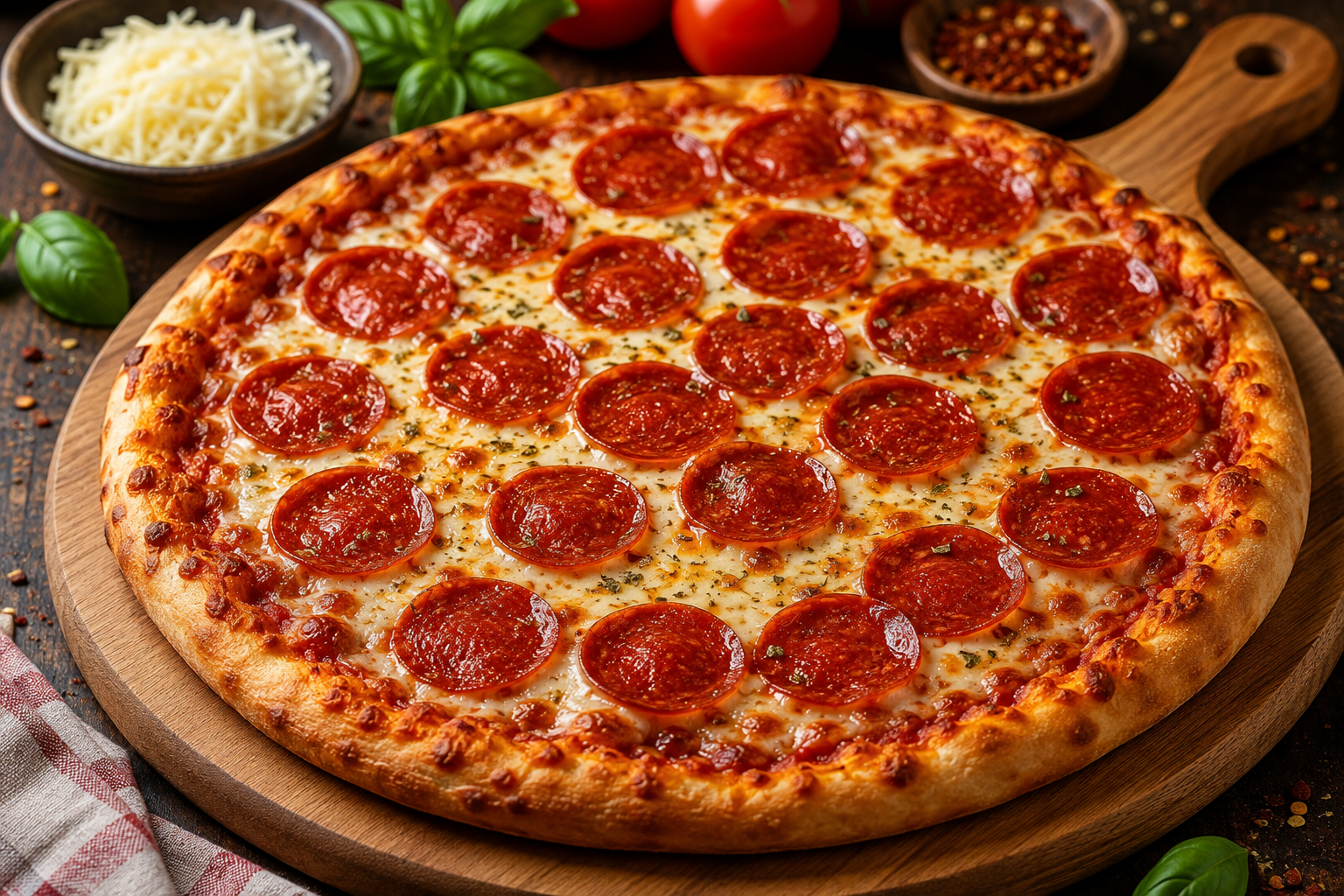
𝗜𝗻𝘁𝗿𝗼𝗱𝘂𝗰𝘁𝗶𝗼𝗻
There is something incredibly satisfying about making a pizza from scratch. The aroma of freshly baked dough, bubbling cheese, rich tomato sauce, and savory pepperoni filling the kitchen can turn an ordinary meal into something special.
While ordering pizza is convenient, homemade pizza gives you complete control over the crust, sauce, cheese, toppings, and baking time. With a few simple ingredients and the right techniques, you can create a delicious pizza right in your own kitchen.
This Homemade Pepperoni Pizza recipe features a soft and flavorful center, crispy edges, rich tomato sauce, plenty of melted mozzarella cheese, and savory pepperoni slices. It is perfect for family dinners, weekend meals, gatherings, or whenever you are craving a comforting homemade pizza.
Why Make Pepperoni Pizza at Home?
Homemade pizza has several advantages.
- You control the ingredients.
- You can customize the crust.
- Freshly baked pizza tastes delicious.
- You can adjust the toppings according to your preference.
- Making pizza at home is fun and satisfying.
Ingredients You’ll Need
For the Pizza Dough
- 3 cups all-purpose flour
- 1 teaspoon instant yeast
- 1 teaspoon sugar
- 1 teaspoon salt
- 1 tablespoon olive oil
- 1 cup warm water, approximately
- Extra flour for kneading
The exact amount of water can vary depending on the flour, so add it gradually.
For the Pizza Sauce
- 1 cup crushed tomatoes
- 1 tablespoon tomato paste
- 1 teaspoon dried oregano
- 1 teaspoon dried basil
- ½ teaspoon garlic powder
- ¼ teaspoon black pepper
- ½ teaspoon salt
- 1 teaspoon olive oil
- A small pinch of sugar, if needed
For the Toppings
- Pepperoni slices
- 2 cups shredded mozzarella cheese
- ¼ cup grated Parmesan cheese, optional
- Dried oregano
- Red pepper flakes, optional
- Fresh basil, optional
- A small amount of olive oil
How to Make Homemade Pizza Dough
The foundation of a great pizza is good dough. Even the best toppings cannot completely improve a crust that is too tough, dry, or undercooked.
Step 1: Prepare the Yeast
If using active dry yeast, combine the warm water with sugar and yeast. Let the mixture sit for approximately 5–10 minutes until it becomes slightly foamy.
If using instant yeast, it can generally be mixed directly with the flour.
The water should be warm rather than very hot because excessive heat can damage the yeast.
Step 2: Mix the Dry Ingredients
Add the flour, salt, yeast, and sugar to a large mixing bowl.
Mix everything together until evenly combined.
Step 3: Add Water and Olive Oil
Slowly add the warm water while mixing.
Add the olive oil and continue mixing until the ingredients form a rough dough.
If the dough is extremely sticky, add a little flour. If it is too dry, add a small amount of water.
Kneading the Dough
Transfer the dough onto a lightly floured surface.
Knead it for approximately 8–10 minutes.
Push the dough forward with the heel of your hand, fold it back, rotate it slightly, and repeat.
The finished dough should feel smooth, soft, and elastic.
Let the Dough Rise
Place the dough in a lightly oiled bowl.
Cover it with a clean kitchen towel or suitable covering.
Leave it in a warm place until it becomes noticeably larger.
Depending on the temperature and yeast, this can take approximately 1–2 hours.
A slower rise can also help develop more flavor.
Making the Pizza Sauce
While the dough is rising, prepare the sauce.
Add crushed tomatoes to a small saucepan.
Stir in tomato paste, oregano, basil, garlic powder, salt, black pepper, and olive oil.
Cook gently for several minutes.
Taste the sauce and adjust the seasoning if needed.
If the tomatoes are particularly acidic, add a tiny pinch of sugar.
The finished sauce should be flavorful and spreadable rather than watery.
Allow the sauce to cool before using it.
Choosing the Right Cheese
Mozzarella is the classic cheese for pepperoni pizza because it melts beautifully and creates a delicious stretchy texture.
Freshly shredded mozzarella works especially well.
You can also add a small amount of Parmesan for extra savory flavor.
Avoid using an excessive amount of cheese because too much can make the pizza heavy and interfere with proper baking.
Preparing the Dough
Once the dough has risen, gently press it down to release excess air.
Transfer it to a lightly floured surface.
Shape it into a round ball and allow it to rest for approximately 10–15 minutes.
This resting period makes the dough easier to stretch.
Preheating the Oven
A very hot oven is one of the most important secrets to excellent homemade pizza.
Preheat your oven to the highest suitable pizza-baking temperature according to your oven’s instructions.
If you have a pizza stone or pizza steel, place it inside the oven while it preheats.
A hot baking surface helps the bottom of the pizza cook quickly and become crisp.
If you do not have a pizza stone, a heavy baking sheet can also work.
Shaping the Pizza
Place the dough on a lightly floured surface.
Use your fingertips to gently press the dough outward.
Leave a slightly thicker border around the edge to create a beautiful crust.
Continue stretching the dough until it reaches your desired size and thickness.
Avoid pressing the dough too aggressively because you want to retain some of the air created during fermentation.
Adding the Sauce
Transfer the shaped dough onto parchment paper or a suitable pizza peel if you are using one.
Spread a thin, even layer of pizza sauce over the dough.
Leave a small border around the edge without sauce.
Using too much sauce can make the pizza soggy, so a moderate layer is best.
Adding Cheese and Pepperoni
Sprinkle mozzarella evenly over the sauce.
Arrange pepperoni slices across the surface.
Try not to overcrowd the pizza.
Add a little Parmesan if desired.
Finish with a small sprinkle of oregano or red pepper flakes.
Baking the Pizza
Carefully transfer the pizza into the fully preheated oven.
Bake until the crust becomes golden and the cheese is melted and bubbling.
The exact baking time depends on your oven temperature, dough thickness, and baking surface, so watch the pizza closely toward the end.
Once the crust is beautifully browned and the cheese is melted, carefully remove the pizza from the oven.
Resting Before Slicing
Let the pizza rest for a few minutes before cutting.
This allows the melted cheese to settle slightly and makes slicing easier.
Use a sharp pizza cutter or knife to divide the pizza into slices.
Serve while warm.
Final Tips for Perfect Homemade Pepperoni Pizza
- Use fresh yeast and good-quality flour.
- Do not make the dough too dry.
- Give the dough enough time to rise.
- Preheat the oven thoroughly.
- Do not use too much sauce.
- Spread the cheese evenly.
- Avoid overcrowding the toppings.
- Bake the pizza on a very hot surface when possible.
- Let the pizza rest briefly before slicing.
- Serve it fresh for the best texture and flavor.
Homemade pepperoni pizza is much easier than it may seem. Once you understand the basic process of preparing the dough, sauce, cheese, and toppings, you can customize the recipe to create your own favorite version.
The combination of a flavorful tomato sauce, melted mozzarella, savory pepperoni, and freshly baked crust makes this pizza a comforting meal that is perfect for almost any occasion.
🍕 Homemade Pepperoni Pizza: The Ultimate Crispy, Cheesy & Delicious Pizza Recipe
There is something special about a freshly baked homemade pizza. The moment the warm aroma of tomato sauce, melted mozzarella, herbs, and pepperoni fills the kitchen, an ordinary meal suddenly feels like a celebration. Pizza is one of those foods that can be simple enough for a casual family dinner while still being exciting enough for a weekend gathering.
Homemade pepperoni pizza is especially satisfying because every part can be prepared according to your preference. You can make the crust thin and crisp, keep it soft and chewy, add more or less sauce, choose your favorite cheese, and arrange the pepperoni exactly the way you like.
This recipe takes you through the complete process of making homemade pepperoni pizza, from preparing the dough and sauce to shaping, topping, baking, slicing, storing, and reheating the finished pizza.
Why Homemade Pepperoni Pizza Is Worth Making
Making pizza at home may seem like a long process at first, but once you understand the basic steps, it becomes surprisingly simple.
One of the biggest advantages is freshness. Homemade pizza can go from your oven to your plate in just a few minutes. The crust can be served warm and crisp, the cheese can still be bubbling, and the pepperoni can have beautifully browned edges.
Another advantage is customization. Everyone has a slightly different idea of the perfect pizza. Some people prefer a thin crust, while others love a thicker and softer base. Some want extra cheese, while others prefer more toppings. When you make pizza yourself, you do not have to compromise.
Homemade pizza can also be a fun cooking project. Preparing the dough, spreading the sauce, sprinkling cheese, and arranging toppings are all simple steps that can make cooking more enjoyable.
Ingredients for the Pizza Dough
The dough requires only a few basic ingredients.
- 3 cups all-purpose flour
- 1 teaspoon instant yeast
- 1 teaspoon sugar
- 1 teaspoon salt
- 1 tablespoon olive oil
- About 1 cup warm water
- Extra flour for kneading
The amount of water may vary slightly depending on the flour and weather conditions. Add the water gradually so that you can control the consistency.
The finished dough should be soft and flexible rather than stiff.
Choosing the Right Flour
All-purpose flour works very well for homemade pizza and is convenient because it is widely available.
If you have bread flour, you can also use it. Bread flour generally contains more protein, which can help create a chewier crust.
The most important thing is not to add too much flour during kneading. A dough that is overloaded with flour can become dense and tough.
Choosing the Yeast
Instant yeast is convenient because it can be mixed directly into the dry ingredients.
Active dry yeast can also be used. If you use active dry yeast, dissolve it in warm water with sugar and let it sit for several minutes before adding it to the flour.
Always check the yeast before using it, especially if it has been stored for a long time.
Preparing the Dough
Add the flour to a large mixing bowl.
Add the instant yeast, sugar, and salt.
Mix the dry ingredients thoroughly.
Slowly add warm water while mixing.
Add olive oil and continue mixing until a rough dough forms.
The dough may look slightly uneven at first. That is completely normal.
Transfer it to a lightly floured surface and begin kneading.
Kneading the Dough Properly
Kneading helps develop the structure of the dough.
Use the heel of your hand to push the dough forward. Fold it back toward yourself, rotate it slightly, and repeat.
Continue kneading for approximately 8–10 minutes.
The dough should gradually become smoother and more elastic.
If it sticks excessively to your hands, add a very small amount of flour.
Avoid adding large amounts of flour at once.
A slightly soft dough generally produces a more pleasant pizza crust than a very stiff dough.
The First Rise
Place the kneaded dough into a lightly oiled bowl.
Turn the dough once so that its surface has a thin coating of oil.
Cover the bowl with a clean kitchen towel or suitable food-safe covering.
Place the bowl somewhere comfortably warm.
Allow the dough to rise until it becomes noticeably larger.
This may take approximately 1–2 hours depending on the temperature and yeast.
Do not rely only on the clock. The appearance and texture of the dough are more useful indicators.
Why Dough Needs Time to Rise
The rising process gives yeast time to ferment the dough.
As the yeast works, it produces gas that becomes trapped within the dough structure.
This helps create a lighter texture.
The resting period also allows flavors to develop.
If you rush the dough, the final crust may not have the texture you want.
For an even more flavorful crust, you can use a slower fermentation method by allowing the dough to rest for longer under suitable refrigerated conditions.
Making Homemade Pizza Sauce
While the dough rises, prepare the sauce.
You will need:
- 1 cup crushed tomatoes
- 1 tablespoon tomato paste
- 1 teaspoon dried oregano
- 1 teaspoon dried basil
- ½ teaspoon garlic powder
- ¼ teaspoon black pepper
- ½ teaspoon salt
- 1 teaspoon olive oil
- A small pinch of sugar if required
Add the crushed tomatoes to a small saucepan.
Stir in the tomato paste, oregano, basil, garlic powder, black pepper, and salt.
Add olive oil.
Cook the sauce gently for several minutes.
The goal is to create a rich and flavorful sauce that is thick enough to spread over the pizza without making the crust wet.
Taste the sauce before using it.
If it tastes too acidic, a tiny pinch of sugar can balance the flavor.
Allow the sauce to cool before spreading it over the dough.
How Much Sauce Should You Use?
Using too much sauce is one of the easiest ways to make homemade pizza soggy.
You want enough sauce to provide tomato flavor without creating a thick wet layer.
For a medium-sized pizza, a thin and even coating is usually enough.
Spread the sauce almost to the edge but leave a small border for the crust.
Choosing Mozzarella Cheese
Mozzarella is the classic cheese for pepperoni pizza.
It melts beautifully and provides the stretchy texture associated with traditional pizza.
Freshly shredded mozzarella can work especially well.
You can also combine mozzarella with a small amount of Parmesan for additional savory flavor.
Avoid using an excessive amount of cheese. More cheese does not always mean better pizza.
Too much cheese can make the pizza heavy and can release additional moisture during baking.
Choosing Pepperoni
Pepperoni is the signature topping of this pizza.
Arrange the slices evenly across the cheese.
Do not completely cover the surface with pepperoni because leaving some space allows the cheese and sauce to remain visible.
As the pizza bakes, the pepperoni can become slightly crisp around the edges and release flavorful oils onto the cheese.
The exact amount depends on your preference.
Optional Seasonings
You can add extra flavor with simple seasonings.
Try:
- Dried oregano
- Red pepper flakes
- Garlic powder
- Fresh basil
- Grated Parmesan
- A small drizzle of olive oil
Use seasonings moderately so they enhance rather than overpower the tomato, cheese, and pepperoni.
Preparing the Oven
A properly preheated oven is essential.
Pizza dough benefits from strong heat because the crust needs to cook quickly.
Preheat your oven according to its highest suitable pizza-baking temperature and follow your oven manufacturer’s instructions.
If you own a pizza stone or pizza steel, place it in the oven while the oven preheats.
Allow the baking surface enough time to become thoroughly hot.
A heavy baking tray can also be used if you do not have specialized pizza equipment.
Preparing the Work Surface
Lightly flour your work surface.
Once the dough has finished its first rise, gently press it down.
Do not aggressively squeeze all the air out of it.
Divide the dough if you are making multiple pizzas.
Shape the portion into a smooth ball.
Let it rest for approximately 10–15 minutes.
This short rest makes the dough easier to stretch.
Stretching the Pizza Dough
Place the dough on the floured surface.
Use your fingertips to gently press from the center outward.
Try to keep a slightly thicker border around the edge.
Continue stretching until you have reached the desired size.
If the dough keeps shrinking back, stop and let it rest for a few minutes before continuing.
This usually means the gluten needs additional time to relax.
Avoid using excessive force because rough handling can tear the dough.
Creating the Pizza Crust
The outer border is one of the most enjoyable parts of homemade pizza.
A slightly thicker edge can become golden and crisp on the outside while remaining soft inside.
You can create the border by avoiding heavy pressure around the outermost section of the dough while shaping.
If you prefer a thin-crust pizza, stretch the dough more evenly.
If you prefer a thicker crust, keep more thickness around the edges and avoid stretching the dough too thin.
Transferring the Dough
Once shaped, transfer the dough to parchment paper or a lightly prepared pizza peel if you are using one.
Work fairly quickly once the dough has been shaped.
If you are using a pizza stone or steel, make sure your transfer method is safe and controlled.
Avoid touching extremely hot surfaces.
Adding the Pizza Sauce
Spread the cooled sauce over the dough.
Use the back of a spoon to create a thin, even layer.
Leave a small border around the edge.
Do not press heavily into the dough while spreading the sauce.
The surface should remain reasonably light and airy.
Adding the Cheese
Sprinkle mozzarella evenly over the sauce.
Try to distribute the cheese from the center toward the edges.
Leave enough space around the crust.
If using Parmesan, add a light amount over the mozzarella.
The goal is a balanced layer rather than a mountain of cheese.
Adding Pepperoni
Arrange pepperoni slices evenly over the cheese.
You can place them close together if you love pepperoni, but avoid creating an extremely thick layer.
Leave some spaces between slices so that the heat can reach the cheese and toppings.
If you like crispier pepperoni, slightly overlapping slices can develop beautifully browned edges during baking.
Baking the Pizza
Carefully place the prepared pizza into the fully preheated oven.
Bake until the crust is golden brown and the cheese has completely melted.
The exact baking time will depend on your oven, temperature, crust thickness, and baking surface.
Start checking the pizza toward the end of the expected baking period.
The edges should look cooked and lightly browned.
The bottom should have enough structure to hold the toppings without bending excessively.
Signs That Your Pizza Is Done
Look for several signs rather than depending only on time.
The crust should be golden.
The cheese should be fully melted.
The pepperoni should look cooked and slightly browned.
The bottom should have a firm, baked texture.
If the cheese is melting quickly but the bottom remains pale, the baking surface or oven may not have been hot enough.
Letting the Pizza Rest
Once the pizza is finished, remove it carefully from the oven.
Allow it to rest for several minutes.
This gives the cheese time to settle and makes slicing easier.
Do not leave it sitting for too long because pizza is best enjoyed while warm.
Slicing the Pizza
Use a pizza cutter or sharp knife.
Cut the pizza into wedges of your preferred size.
For family-style serving, eight slices are usually convenient for a large pizza.
For children or smaller servings, you can cut smaller pieces.
Serving Suggestions
Homemade pepperoni pizza can be served on its own or alongside simple sides.
Good options include:
- Fresh green salad
- Roasted vegetables
- Garlic bread
- Tomato salad
- Corn
- Potato wedges
- Fresh fruit
A light salad can provide a refreshing contrast to the rich cheese and pepperoni.
Common Mistakes to Avoid
Using Too Much Flour
Too much flour can create a tough crust.
Add only enough flour to make the dough manageable.
Using Too Much Sauce
Excess sauce can make the center wet.
Use a thin layer.
Adding Too Many Toppings
A heavily loaded pizza can be difficult to bake evenly.
Keep toppings balanced.
Skipping the Preheat
Putting pizza into a cold or insufficiently heated oven can result in a pale or undercooked crust.
Cutting Immediately
Allowing the pizza to rest briefly makes it easier to slice.
Making the Dough Too Thick
If you prefer crisp pizza, avoid leaving the entire base excessively thick.
How to Make a Crispier Crust
For a crispier crust, make sure the oven is fully preheated.
Use a hot pizza stone, steel, or heavy baking tray if available.
Do not overload the pizza with sauce or toppings.
Stretch the dough slightly thinner.
A small amount of olive oil around the outer crust can also encourage browning.
How to Make a Softer Crust
If you prefer a softer pizza, keep the dough slightly thicker.
Avoid stretching it too thin.
Do not overbake it.
A slightly shorter bake at a properly high temperature can help retain moisture inside the crust.
How to Make a Chewier Crust
Bread flour can help create a chewier texture.
Knead the dough properly and give it sufficient fermentation time.
Avoid adding excessive flour.
Longer fermentation can also contribute to a more developed flavor and texture.
Homemade Pepperoni Pizza for Family Dinner
Pizza is an excellent family dinner because everyone can customize their portion.
You can prepare one classic pepperoni pizza while making another pizza with vegetables or other preferred toppings.
Set out the prepared ingredients and allow everyone to choose what they want.
This can make dinner more interactive and enjoyable.
Making Pizza for a Gathering
If you are serving several people, prepare the dough in advance.
Divide it into individual portions.
Prepare the sauce and toppings ahead of time.
When guests arrive, you can shape and bake the pizzas one after another.
This is often easier than trying to prepare everything at the last minute.
Make-Ahead Pizza Dough
Pizza dough can be prepared ahead of time.
After kneading, place the dough into a covered container and refrigerate it under suitable food-storage conditions.
When you are ready to use it, allow the dough enough time to become easier to stretch.
Cold dough is usually more difficult to shape immediately.
Planning ahead can also help develop deeper flavor.
Freezing Pizza Dough
Pizza dough can also be frozen for later use.
Divide the dough into suitable portions before freezing.
Wrap each portion well and place it in a freezer-safe container or bag.
When you want to use it, thaw it safely in the refrigerator and allow it to come toward room temperature before shaping.
Storing Leftover Pizza
If you have leftover pizza, allow it to cool appropriately before placing it in the refrigerator.
Store it in a covered container or wrap the slices properly.
For best quality, use refrigerated leftovers within a few days.
Always follow safe food-storage practices.
Reheating Leftover Pizza
An oven or toaster oven can help restore some crispness to the crust.
A covered pan on the stovetop can also work well.
Microwaving is quick, but it may make the crust softer.
For the best texture, reheat until the cheese is hot and the crust has regained some crispness.
Can You Customize the Pizza?
Absolutely.
Although pepperoni is the main topping, you can add other ingredients according to your preference.
Popular additions include:
- Bell peppers
- Onions
- Mushrooms
- Olives
- Jalapeños
- Tomatoes
- Spinach
- Extra cheese
Add toppings in moderation so the pizza remains balanced.
Final Thoughts
Homemade pepperoni pizza is one of those recipes that becomes easier and more enjoyable every time you make it.
The process starts with a simple dough and develops into a complete meal through careful preparation, flavorful sauce, melted mozzarella, savory pepperoni, and high-temperature baking.
The most important lessons are simple: give your dough enough time, avoid excessive flour, keep the sauce layer moderate, preheat the oven properly, and do not overload the pizza.
Once you master the basic method, you can experiment with different crust styles, cheeses, sauces, and toppings to create a pizza that suits your own taste.
A warm slice of homemade pepperoni pizza, with golden crust, melted cheese, flavorful tomato sauce, and perfectly baked pepperoni, is a simple comfort food that can make any dinner feel special.
🍕 Homemade Pepperoni Pizza: Expert Tips, Variations, Serving Ideas & FAQs
Making homemade pepperoni pizza is not only about following a recipe. Once you understand how the dough, sauce, cheese, toppings, and oven work together, you can adjust the recipe to create different styles of pizza at home.
In this section, we will explore more useful techniques, variations, troubleshooting tips, serving ideas, storage methods, and frequently asked questions so you can make homemade pepperoni pizza with confidence.
The Secret to Better Homemade Pizza
The secret to great pizza is balance.
A delicious pizza should have a crust that supports the toppings without becoming too heavy. The sauce should provide tomato flavor without making the center soggy. The cheese should melt evenly, while the pepperoni should add a savory, slightly spicy flavor without completely covering the other ingredients.
When these elements work together, every bite becomes more enjoyable.
How to Improve Your Pizza Dough
If your first pizza does not turn out exactly as expected, do not worry.
Pizza dough can take a little practice.
The most common improvement is learning how the dough should feel.
A good dough should be soft and elastic. It should not feel extremely dry or hard.
If the dough tears easily while stretching, it may need more resting time.
If it feels extremely sticky, a small amount of flour can help.
Avoid making dramatic changes to the recipe all at once. Small adjustments are easier to understand.
The Importance of Dough Temperature
Temperature affects how quickly yeast works.
A warmer environment generally allows dough to rise faster, while a cooler environment slows fermentation.
This is why the same recipe can require different rising times on different days.
Instead of focusing only on the clock, watch the dough.
When it has expanded noticeably and feels airy, it is usually ready for the next step.
Why Resting the Dough Matters
Resting allows the gluten structure to relax.
If you try to stretch dough immediately after aggressive kneading, it may resist and shrink back.
A short rest makes shaping easier.
If the dough keeps shrinking, cover it and let it rest for another few minutes.
Then try again.
Creating a Beautiful Pizza Edge
The crust edge does not have to be perfectly uniform.
A slightly rustic appearance can make homemade pizza look even more appealing.
While shaping, avoid flattening the outer edge completely.
This gives the border room to expand during baking.
A high oven temperature can help create attractive browning.
Avoiding a Soggy Pizza Center
A soggy center is one of the most common problems with homemade pizza.
Several things can cause it.
Too much sauce is one possibility.
Too many wet toppings are another.
A cold oven can also contribute.
To reduce the risk:
- Use a moderate amount of sauce.
- Drain very wet toppings.
- Avoid overloading the pizza.
- Preheat the oven thoroughly.
- Use a hot baking surface when possible.
Preparing Wet Toppings
Vegetables such as mushrooms and tomatoes can release moisture during baking.
If you use a lot of them, the pizza may become wetter than expected.
Slice wet vegetables relatively thinly.
For ingredients that contain a lot of moisture, consider briefly cooking or draining them before placing them on the pizza.
This helps the crust bake more effectively.
How to Get Better Cheese Browning
If you enjoy golden spots on melted cheese, make sure the cheese is spread evenly.
Do not bury the cheese under too many toppings.
A properly hot oven helps the cheese melt and brown.
You can also finish the pizza with a brief period of additional heat if your oven allows it, but always monitor the pizza carefully to prevent burning.
Pepperoni Placement Matters
Pepperoni can be placed directly over the cheese.
During baking, the slices may curl slightly and develop browned edges.
If you prefer more evenly distributed pepperoni flavor, spread the slices across the pizza instead of concentrating them in one area.
You can also reserve a few slices for the top if you want a more attractive presentation.
How Much Pepperoni Should You Use?
There is no single perfect amount.
For a medium pizza, a moderate layer of pepperoni is usually enough.
Using too much can make the pizza greasy and heavy.
If you love pepperoni, add more, but keep the slices reasonably spaced.
Balance is more important than simply adding a large quantity.
Adding Fresh Herbs
Fresh basil can be added after baking.
The fresh leaves provide a bright aroma that contrasts nicely with rich cheese and pepperoni.
Dried oregano can be added before baking.
A combination of dried herbs during baking and fresh herbs after baking can provide a more complex flavor.
Adding Red Pepper Flakes
If you enjoy a little heat, sprinkle red pepper flakes over the finished pizza.
Start with a small amount.
It is easier to add more spice after serving than to fix a pizza that has become too spicy.
Garlic Flavor
Garlic is another excellent addition.
Garlic powder can be mixed into the sauce.
You can also lightly brush the crust with garlic-infused olive oil after baking.
This creates a fragrant finish without overwhelming the pizza.
Parmesan Finishing Touch
A small amount of Parmesan can add a salty, savory flavor.
Sprinkle it lightly over the finished pizza.
Because Parmesan has a stronger flavor than mozzarella, you generally do not need a large amount.
Different Crust Styles
One of the best things about homemade pizza is that you can experiment with the crust.
Thin Crust
Stretch the dough relatively thin and avoid adding excessive toppings.
The result is a crisp and light pizza.
Classic Crust
Keep the dough moderately thick.
This provides a balance between crisp edges and a soft center.
Thick Crust
Use a thicker layer of dough and allow sufficient rising time.
This creates a softer and more substantial crust.
Personal Mini Pizzas
Divide the dough into smaller portions.
Each person can shape and top their own pizza.
This is especially convenient when serving a family with different preferences.
Making a Spicy Pepperoni Pizza
For a spicy version, add:
- Red pepper flakes
- Jalapeño slices
- Spicy pepperoni
- A little extra seasoning
Keep the sauce balanced so the heat does not overpower the tomato flavor.
Making a Vegetable Pepperoni Pizza
For additional texture and flavor, add vegetables such as:
- Bell peppers
- Mushrooms
- Onions
- Olives
- Spinach
Use moderate quantities to avoid making the pizza too heavy.
Making a Cheesy Pepperoni Pizza
For an extra-cheesy variation, combine mozzarella with another suitable melting cheese.
A small amount of Parmesan can be added for stronger flavor.
Remember that increasing cheese also increases moisture and richness, so adjust the quantity of toppings accordingly.
Breakfast-Inspired Pizza
Pizza does not have to be limited to dinner.
You can create a breakfast-inspired pizza by using a suitable combination of breakfast ingredients and cheese.
However, cook all ingredients safely and thoroughly before serving.
Family Pizza Night
Homemade pizza can become a fun family tradition.
Prepare several bowls containing:
- Pizza sauce
- Shredded cheese
- Pepperoni
- Vegetables
- Herbs
- Other preferred toppings
Everyone can customize their own pizza.
This turns a regular meal into an interactive cooking experience.
Pizza for Kids
For younger family members, smaller pizzas are convenient.
Allow them to choose from simple toppings.
Avoid making the pizza excessively spicy.
Always ensure that the pizza is cooled to a safe eating temperature before serving.
Pizza for Parties
For a party, prepare multiple dough portions in advance.
Prepare toppings before guests arrive.
Bake smaller pizzas rather than one enormous pizza if you need to serve many people.
Smaller pizzas can be easier to portion and may cook more evenly.
How to Keep Pizza Warm
If you are serving several pizzas, place finished pizzas on a suitable warm surface for a short period.
Avoid leaving food at unsafe temperatures for extended periods.
For the best quality, serve pizza relatively soon after baking.
How to Cut Pizza for Serving
Traditional triangular slices work well for large pizzas.
For smaller personal pizzas, four or six slices may be enough.
A sharp pizza cutter makes the job easier.
If the crust is particularly crisp, use firm downward pressure rather than repeatedly sawing through the pizza.
Storing Leftover Pizza Safely
If you have leftovers, refrigerate them promptly in a suitable covered container.
Do not leave cooked pizza at room temperature for an extended period.
Proper storage helps preserve quality and reduces food-safety risks.
Reheating in an Oven
An oven is one of the best options for restoring crispness.
Place the pizza on a suitable baking surface.
Heat until the cheese is warm and the crust becomes crisp again.
Avoid overheating because this can make the crust dry.
Reheating in a Pan
A covered skillet can also work well.
Place the slice in a pan over moderate heat.
Cover it briefly so the cheese warms while the bottom becomes crisp.
Monitor the slice carefully.
Reheating in a Microwave
The microwave is the fastest option.
However, microwave heating can soften the crust.
If speed is your priority, it is still convenient.
You can use a short heating period and check the pizza before heating it further.
Freezing Baked Pizza
Pizza can be frozen for longer storage.
Allow the slices to cool appropriately.
Wrap individual slices securely and place them in a freezer-safe container or bag.
Label the container with the date.
Reheat thoroughly when ready to eat.
Freezing Homemade Dough
Dough can also be frozen before baking.
Divide it into individual portions.
Wrap each portion well.
Place them in a freezer-safe container.
Thaw under safe refrigerated conditions and allow the dough to become workable before shaping.
Preparing Pizza Dough the Night Before
One convenient approach is to prepare the dough in advance.
Mix and knead the dough.
Allow it to begin fermenting, then refrigerate it in a covered container.
The next day, bring it out with enough time to relax before shaping.
This can make pizza preparation much easier on busy days.
How to Make Pizza Without a Pizza Stone
A pizza stone is helpful but not essential.
A heavy baking tray can work.
Preheat the tray in the oven if it is designed for high heat.
Then transfer the prepared pizza carefully onto the hot surface.
Always use oven-safe equipment and follow the manufacturer’s temperature guidelines.
Can You Make Pizza in a Small Oven?
Yes.
If your oven is small, make smaller pizzas.
Avoid putting too many toppings on the dough.
Make sure there is enough space for hot air to circulate.
You may need to adjust the baking time according to your oven.
Troubleshooting: Dough Is Too Sticky
If the dough is sticking excessively to your hands and work surface, sprinkle a small amount of flour over it.
Knead briefly.
Repeat only if necessary.
Adding too much flour can make the crust dense.
Troubleshooting: Dough Is Too Dry
If the dough feels hard and crumbly, it may need additional moisture.
Add a small amount of water gradually while kneading.
Do not pour in a large quantity at once.
Troubleshooting: Dough Does Not Rise
Several factors can cause slow rising.
The yeast may be old.
The environment may be too cold.
The water may have been unsuitable for the yeast.
Give the dough additional time in a comfortably warm environment.
If there is still no activity, the yeast may not be working properly.
Troubleshooting: Pizza Is Too Pale
A pale crust may indicate insufficient oven heat or baking time.
Make sure the oven has been fully preheated.
A suitable hot baking surface can also improve browning.
Troubleshooting: Pizza Is Too Greasy
Pepperoni naturally releases fat as it cooks.
Using excessive pepperoni or cheese can make the pizza greasy.
Use moderate quantities.
You can also allow the finished pizza to rest briefly before serving.
Troubleshooting: Cheese Burns Before Crust Is Done
If the cheese browns too quickly while the crust remains undercooked, the baking conditions may need adjustment.
Consider checking your oven temperature and rack position.
The goal is to cook the crust and toppings at a similar rate.
Troubleshooting: Crust Is Too Hard
A very hard crust may result from excessive flour, overbaking, or insufficient moisture.
Measure ingredients carefully.
Avoid adding unnecessary flour.
Watch the pizza closely near the end of baking.
Troubleshooting: Crust Is Too Soft
A soft crust can be caused by excessive moisture, too many toppings, or insufficient baking.
Use a moderate amount of sauce.
Avoid overloading the pizza.
Make sure the oven and baking surface are properly heated.
Making the Pizza More Flavorful
Flavor can be developed at every stage.
The dough can be fermented properly.
The sauce can be seasoned carefully.
The cheese can be balanced with Parmesan.
The pepperoni can be distributed evenly.
Fresh herbs can be added after baking.
Small improvements at each stage can make a noticeable difference.
Pizza Sauce Variations
You can experiment with your sauce.
For a garlic-forward sauce, add more garlic seasoning.
For a herb-rich sauce, increase oregano and basil slightly.
For a spicy sauce, add red pepper flakes.
For a creamy variation, you can use a different sauce altogether, although that will create a pizza different from the traditional tomato-based version.
Cheese Variations
Mozzarella is the classic option, but different cheese combinations can create interesting results.
You can use mozzarella with small amounts of Parmesan or another suitable melting cheese.
The important thing is to choose cheeses that melt appropriately and complement the pepperoni.
Topping Combinations
Pepperoni pairs well with many ingredients.
Try pepperoni with:
- Mushrooms and onions
- Bell peppers and olives
- Jalapeños and extra cheese
- Fresh basil and Parmesan
- Tomatoes and herbs
Keep the toppings balanced so the crust remains crisp.
Making a Restaurant-Style Pizza at Home
Restaurant-style pizza is often associated with high heat, carefully fermented dough, balanced toppings, and a well-preheated baking surface.
You can recreate some of these qualities at home by paying attention to:
- Dough fermentation
- Oven preheating
- Topping quantities
- Sauce thickness
- Crust thickness
- Baking time
You do not need professional equipment to make a delicious pizza.
Technique matters more than having every specialized tool.
Presentation Ideas
Presentation can make homemade pizza look even more appetizing.
Place the pizza on a clean wooden board or serving plate.
Add a few fresh basil leaves after baking.
Sprinkle a small amount of Parmesan.
Cut the pizza into neat slices.
Serve while warm.
The contrast between golden crust, red sauce, melted cheese, and pepperoni naturally creates an appealing presentation.
What to Serve With Pepperoni Pizza
A simple green salad is an excellent option.
You can also serve:
- Garlic bread
- Roasted vegetables
- Potato wedges
- Fresh fruit
- Tomato salad
Choose lighter sides if the pizza itself is particularly rich.
Beverage Pairing
Pizza can be served with a variety of non-alcoholic beverages.
Try:
- Lemon water
- Sparkling water
- Fresh fruit drinks
- Iced tea
- Homemade lemonade
A refreshing drink can balance the richness of cheese and pepperoni.
Frequently Asked Questions
Can I use store-bought pizza dough?
Yes. Store-bought dough can save time.
However, homemade dough allows greater control over texture and flavor.
Can I use prepared pizza sauce?
Absolutely.
A good prepared sauce can make the recipe quicker.
Check the consistency before using it and avoid applying too much.
Can I make the dough without olive oil?
Yes.
Olive oil adds flavor and helps with dough texture, but you can adjust the recipe if necessary.
Can I use another cheese?
Yes.
Mozzarella is traditional, but suitable melting cheese can be combined with it.
Can I add vegetables?
Yes.
Bell peppers, onions, mushrooms, olives, and other vegetables can work beautifully.
Why is my pizza soggy in the middle?
Possible causes include too much sauce, wet toppings, too many toppings, or insufficient oven heat.
Reduce moisture and make sure the oven is properly preheated.
How do I make the bottom crisp?
Use a fully preheated oven and, if possible, a hot pizza stone, steel, or heavy baking surface.
Avoid excessive sauce and toppings.
Can I make mini pizzas?
Yes.
Divide the dough into smaller portions and create individual pizzas.
Can pizza dough be prepared ahead?
Yes.
You can refrigerate properly covered dough for later use.
Can I freeze pizza?
Yes.
Both baked pizza slices and prepared dough can be frozen using suitable food-storage methods.
Final Recipe Summary
Homemade pepperoni pizza begins with a simple dough made from flour, yeast, salt, sugar, water, and olive oil.
After kneading, allow the dough to rise until noticeably larger.
Prepare a flavorful tomato sauce while the dough rises.
Shape the dough into your preferred thickness.
Spread a moderate amount of sauce over the surface.
Add mozzarella cheese and arrange pepperoni slices evenly.
Bake in a thoroughly preheated oven until the crust is golden and the cheese is melted.
Allow the pizza to rest briefly before slicing.
Finish with oregano, Parmesan, fresh basil, or red pepper flakes if desired.
Final Thoughts
Homemade pepperoni pizza is a recipe worth learning because the basic technique can be used again and again.
Once you become comfortable with the dough, you can experiment with different crust thicknesses, sauces, cheeses, and toppings.
The most important principles are simple: use balanced ingredients, give the dough enough time, avoid excessive toppings, and bake the pizza in a properly heated oven.
With practice, homemade pizza can become one of the easiest and most enjoyable meals in your kitchen.
The combination of a crisp or chewy crust, rich tomato sauce, melted mozzarella, and flavorful pepperoni makes this classic pizza a timeless favorite.
Whether you prepare it for a family dinner, weekend gathering, movie night, or a simple homemade meal, a freshly baked pepperoni pizza is always a delicious choice.
The best part is that every pizza you make teaches you something new. You learn how your oven behaves, how your dough responds to different temperatures, how much sauce works best, and which toppings you enjoy most.
Soon, you will be able to create your own signature homemade pepperoni pizza with confidence.
🍕 Homemade Pepperoni Pizza: Tips, Variations, Troubleshooting & FAQs
Homemade pizza becomes even more enjoyable once you learn how to adjust the recipe to your own kitchen, oven, and preferences. The basic combination of dough, sauce, cheese, and pepperoni is simple, but small changes can make a big difference in the final result.
How to Make Your Pizza Dough More Flavorful
One of the easiest ways to improve homemade pizza is to give the dough enough time to develop flavor.
A quick dough can still make a tasty pizza, but a slower fermentation often produces a more developed taste and a pleasant texture.
You can prepare the dough earlier in the day or, when suitable for your recipe and storage conditions, refrigerate it for a longer fermentation.
The important thing is to keep the dough properly covered so that it does not dry out.
Understanding Dough Hydration
Hydration simply refers to the amount of water compared with the amount of flour.
A dough with more water can produce a lighter and airier crust, but it can also be more difficult to handle.
A dough with less water is easier to shape but may become denser.
For beginners, a moderately hydrated dough is usually easier to work with.
Do not worry about achieving perfect measurements immediately. As you make pizza more often, you will learn to recognize the ideal dough consistency by touch.
Why You Should Not Add Too Much Flour
When dough feels sticky, adding flour seems like the easiest solution.
However, adding too much flour can change the texture significantly.
The dough can become stiff, and the finished crust may turn out hard rather than soft and chewy.
Instead, lightly flour your hands and work surface and add flour gradually only when necessary.
How to Stretch Dough Without Tearing It
Start by gently pressing the center of the dough with your fingertips.
Move outward while leaving a small border untouched.
Turn the dough as you work.
If the dough becomes difficult to stretch, let it rest.
Do not force it.
Resting allows the gluten to relax, making the dough easier to shape.
Why Pizza Dough Shrinks Back
If your dough repeatedly shrinks after stretching, the gluten may still be tight.
This is not necessarily a problem with the recipe.
Simply cover the dough and allow it to rest for several minutes.
Try stretching again afterward.
Patience is often more effective than adding extra flour.
How to Get Airy Crust Edges
If you want a crust with a lighter interior, avoid completely flattening the outer border.
The dough contains air pockets created during fermentation.
Gentle handling helps preserve some of that structure.
When baked at high heat, these areas can expand and create a pleasant crust.
How to Prevent Burnt Crust
A very hot oven is useful for pizza, but excessive heat combined with a long baking time can burn the crust.
Every oven behaves differently.
The first time you make the recipe, watch the pizza carefully.
If the edges brown much faster than the center cooks, you may need to adjust the rack position or baking conditions.
Finding the Best Oven Rack Position
For many home ovens, a relatively high rack can help the toppings receive strong heat.
However, the ideal position depends on your oven.
If the bottom is burning before the cheese melts, move the pizza higher.
If the top is browning too quickly while the bottom remains pale, the baking conditions may need adjustment.
Use your first few pizzas as a learning process.
Why Preheating Matters So Much
Pizza needs strong initial heat.
A fully preheated oven allows the dough to begin cooking immediately.
If the oven is not hot enough, the dough can spend too much time heating slowly, which may produce a softer and less developed crust.
Allow the oven to reach the desired temperature before putting the pizza inside.
Using a Pizza Stone
A pizza stone stores heat and transfers it to the dough.
This can help produce a crisp bottom.
If using a stone, preheat it according to the manufacturer’s instructions.
Always handle it carefully because it becomes extremely hot.
Never place a cold stone into an oven or expose a very hot stone to sudden temperature changes unless the manufacturer specifically allows it.
Using a Pizza Steel
A pizza steel also provides a hot baking surface.
It can transfer heat efficiently to the bottom of the dough.
Like a stone, it should be preheated properly and handled carefully.
You do not need one to make good pizza, but it can be a useful addition for people who make pizza regularly.
Using a Baking Sheet
A regular heavy baking sheet can still produce excellent homemade pizza.
Place it in the oven during preheating if it is suitable for high temperatures.
Carefully transfer the prepared pizza onto the hot tray.
The hot surface can help the crust begin cooking immediately.
Pizza Peel Tips
If you have a pizza peel, lightly flour or prepare it according to the type of peel you own.
Do not leave raw dough sitting on the peel for a long time because it can stick.
Prepare your toppings before shaping the dough so that you can assemble the pizza efficiently.
Preventing Dough From Sticking
Use a light dusting of flour on the work surface.
Avoid excessive flour.
If the dough still sticks, gently lift and loosen it rather than pulling aggressively.
Parchment paper can also make transferring the pizza easier, especially for beginners, provided it is suitable for the baking temperature and used according to the manufacturer’s instructions.
The Right Amount of Cheese
Cheese should complement the pizza rather than overwhelm it.
A moderate layer of mozzarella gives good coverage while allowing the sauce and pepperoni to remain noticeable.
If you use a very large amount of cheese, the pizza can become heavy and greasy.
Start with a moderate amount and increase it in future batches if you prefer.
How to Make the Cheese Stretchy
Freshly shredded mozzarella can melt beautifully.
Avoid packing the cheese into one thick pile.
Distribute it evenly across the sauce.
Proper oven heat is also important because the cheese needs enough heat to melt before the crust becomes overcooked.
How to Make Pepperoni Crispy
If you enjoy crisp pepperoni edges, arrange the slices so that they are exposed to the oven’s heat rather than completely buried beneath a thick layer of cheese.
A hot oven helps the edges brown.
Keep an eye on the pizza because pepperoni can become overcooked if left too long.
Preventing Excess Grease
Pepperoni naturally contains fat.
A very large amount of pepperoni can make the pizza greasy.
Use a balanced quantity.
If the finished pizza has a noticeable amount of excess oil on the surface, you can carefully blot some of it with a paper towel before serving.
Adding Onions
Thinly sliced onions can add sweetness and texture.
Red, yellow, or white onions can all work.
Slice them relatively thinly so they cook during the same time as the pizza.
If you prefer very soft onions, cook them briefly before adding them.
Adding Mushrooms
Mushrooms are a popular pizza topping.
Because mushrooms contain water, large quantities can release moisture during baking.
Slice them thinly and avoid overloading the pizza.
For an especially crisp pizza, briefly cooking the mushrooms beforehand can reduce excess moisture.
Adding Bell Peppers
Bell peppers provide sweetness, color, and crunch.
Thin slices generally work well.
Red, yellow, orange, and green peppers can all be used.
Use moderate quantities so the pizza does not become overloaded.
Adding Olives
Olives provide a salty and savory flavor that pairs nicely with pepperoni.
Drain them properly before adding them to the pizza.
Slice them if desired.
Because olives can be salty, adjust the amount of additional salt accordingly.
Adding Jalapeños
Jalapeños can give pepperoni pizza a spicy kick.
Fresh jalapeños provide a brighter flavor, while pickled jalapeños offer acidity and heat.
Use a small amount first if you are unsure how spicy you want the pizza.
Making a Meat-Lover-Style Pizza
Pepperoni can be combined with other suitable cooked meat toppings.
However, avoid adding too many toppings.
A heavily loaded pizza can become difficult to bake evenly.
Always ensure that any meat used as a topping is properly cooked and handled safely.
Making a Vegetarian Version
If you want to skip pepperoni, you can turn the recipe into a vegetable pizza.
Use combinations such as:
- Mushrooms
- Bell peppers
- Onions
- Olives
- Tomatoes
- Spinach
The same dough and sauce can be used.
Making a White Pizza
A white pizza generally uses a cheese-based topping rather than traditional tomato sauce.
This creates a completely different flavor profile.
You can use mozzarella and suitable additional cheeses with herbs and vegetables.
Because this is different from classic pepperoni pizza, keep the toppings simple.
Making a Garlic Pizza
Garlic lovers can add garlic to the sauce or use a small amount of garlic-infused oil.
A light garlic finish around the crust can be especially delicious.
Avoid using too much raw garlic because it can become overpowering.
Making a Herb-Rich Pizza
Dried oregano and basil can be incorporated into the sauce.
Fresh basil can be added after baking.
A small amount of Italian-style herb seasoning can also be sprinkled over the finished pizza.
Making a Spicy Pizza
For extra heat, try:
- Red pepper flakes
- Jalapeños
- Spicy pepperoni
- Hot peppers
Add heat gradually.
The tomato sauce, cheese, and pepperoni should remain recognizable flavors.
Making a Mild Pizza
For a mild version, use regular pepperoni and skip spicy peppers.
A generous but balanced amount of mozzarella can create a creamy and comforting flavor.
Fresh basil can add freshness without adding heat.
Making Individual Pizzas
Divide the dough into several smaller portions.
Shape each portion individually.
Prepare bowls of toppings and allow everyone to create a personal pizza.
This works especially well for family meals.
Pizza for Movie Night
Homemade pizza is a great choice for a casual movie night.
Prepare smaller slices and serve them with simple sides.
You can prepare the dough earlier and assemble the pizza shortly before eating.
This keeps the cooking process organized and relaxed.
Pizza for Weekend Dinner
A weekend pizza dinner can be made more special by preparing everything from scratch.
Make the dough earlier in the day.
Prepare the sauce.
Shred the cheese.
Arrange the toppings.
When dinner time arrives, shaping and baking becomes much faster.
Pizza for a Family Gathering
For larger groups, consider making several medium pizzas instead of one enormous pizza.
Different pizzas can have different topping combinations.
One can be classic pepperoni, another can include vegetables, and another can have extra cheese.
This gives everyone more choices.
How to Make Your Pizza Look Professional
Presentation begins before baking.
Spread sauce evenly.
Distribute cheese consistently.
Arrange pepperoni rather than randomly throwing it onto the pizza.
After baking, add a few fresh herbs.
Cut clean slices.
Serve immediately.
These small details can make homemade pizza look much more polished.
Taking Better Food Photos
If you are preparing pizza for a food blog or social media post, photograph it while the cheese is still warm.
Use natural light when possible.
Take one photo of the whole pizza and another showing individual slices.
A close-up of the crust and toppings can highlight texture.
Keep the background simple so the pizza remains the main focus.
How to Write About Homemade Pizza on a Food Blog
A good food article should explain more than just the ingredient list.
Readers often want to know:
- Why the recipe works
- How long the dough needs
- How to avoid common mistakes
- How to store leftovers
- How to customize toppings
- How to achieve the desired crust
- What to serve with the pizza
Including practical information makes the recipe more useful.
Recipe Preparation Timeline
A simple timeline can make the process easier.
First, prepare the dough.
While it rises, make the sauce and prepare toppings.
Once the dough is ready, preheat the oven thoroughly.
Shape the dough.
Add sauce, cheese, and pepperoni.
Bake.
Rest briefly.
Slice and serve.
Preparing ingredients in advance keeps the process organized.
Kitchen Tools You May Need
You do not need expensive equipment.
Useful tools include:
- Large mixing bowl
- Measuring cups and spoons
- Wooden spoon
- Kitchen towel
- Rolling pin, optional
- Pizza cutter
- Baking sheet
- Oven mitts
- Grater
- Small saucepan
A pizza stone or steel is optional.
Do You Need a Rolling Pin?
No.
Many pizza makers prefer stretching dough by hand.
However, a rolling pin can be useful if you want a very even thin crust.
If using a rolling pin, avoid flattening the outer edge too aggressively if you want a thicker crust border.
Measuring Ingredients Accurately
Accurate measurements help produce consistent results.
For flour, spooning it into a measuring cup and leveling it can be more reliable than packing it tightly.
If you have a kitchen scale, weighing ingredients can provide even more consistency.
Adjusting the Recipe for Different Pizza Sizes
For a smaller pizza, use a smaller portion of dough.
For a larger pizza, increase the dough and toppings proportionally.
Do not stretch a fixed amount of dough too far because it can become extremely thin and difficult to handle.
Making a Crispy Thin Pizza
Use a smaller amount of dough per pizza.
Stretch it thin.
Use a moderate amount of sauce and toppings.
Bake on a hot surface.
The result should be lighter and crispier than a thick-crust pizza.
Making a Soft Thick Pizza
Use a thicker layer of dough.
Give it enough time to rise.
Do not stretch it too thin.
Use a balanced amount of sauce and cheese.
Bake until the center is fully cooked.
Why Pizza Sometimes Becomes Too Dense
A dense crust can happen when the dough does not rise sufficiently or when too much flour is added.
Old yeast can also cause poor fermentation.
Make sure your yeast is active and give the dough adequate time to develop.
Why the Pizza Can Taste Bland
Bland pizza may be caused by under-seasoned sauce, insufficient salt, or a lack of herbs.
Taste the sauce before using it.
Remember that cheese and pepperoni already contain salt, so season thoughtfully.
Why the Crust Has No Flavor
Crust flavor depends on flour, fermentation, salt, oil, and baking.
Allowing dough enough time to ferment can improve its flavor.
Do not skip salt.
Use a suitable baking temperature.
Why the Bottom Is Undercooked
An undercooked bottom can result from insufficient oven heat, excessive toppings, or a baking surface that was not properly heated.
Reduce the topping load and make sure the oven is fully preheated.
Why the Pizza Is Too Dry
Overbaking can dry out the crust.
Using too much flour can also produce a dry texture.
Use the correct amount of moisture and watch the pizza carefully during the final stage of baking.
How to Balance Sauce, Cheese, and Toppings
Think of the pizza as layers.
The dough provides structure.
The sauce provides acidity and tomato flavor.
The cheese provides richness.
The pepperoni provides savory flavor.
Herbs provide aroma.
No single component should completely dominate.
Making Pizza More Convenient
Prepare components ahead of time.
The dough can be prepared earlier.
The sauce can be refrigerated appropriately.
Cheese can be shredded ahead.
Vegetables can be washed and prepared.
When everything is ready, pizza assembly becomes quick.
Cleaning Up After Pizza Making
Pizza preparation can create flour and sauce spills.
Clean the work surface soon after cooking.
Allow baking equipment to cool completely before cleaning.
Do not pour grease down the kitchen drain.
Proper cleanup keeps your kitchen safe and ready for the next meal.
A Simple Homemade Pizza Checklist
Before starting, make sure you have:
- Flour
- Yeast
- Salt
- Sugar
- Olive oil
- Tomatoes
- Herbs
- Mozzarella
- Pepperoni
- Baking equipment
- A fully functioning oven
Preparing everything beforehand makes cooking much easier.
Frequently Asked Questions
How long does homemade pizza take?
The active preparation is fairly simple, but the dough needs time to rise.
The total time depends on the fermentation method and oven.
Can I make pizza without yeast?
Yes, there are alternative no-yeast dough recipes, but the texture will be different from traditional yeast-based pizza.
Can I use whole wheat flour?
Yes, but whole wheat flour can produce a denser texture.
You may want to combine it with all-purpose flour rather than replacing all the flour immediately.
Can I make the sauce without cooking?
Yes.
A simple tomato sauce can sometimes be used directly if it has the desired flavor and consistency.
Can I use fresh tomatoes?
Yes, but fresh tomatoes contain more moisture.
Cook or drain them appropriately if necessary.
Can I use pre-shredded cheese?
Yes.
However, freshly shredded cheese often melts differently because packaged shredded cheese may contain anti-caking ingredients.
Can I make pizza without a pizza stone?
Absolutely.
A suitable baking sheet can work very well.
How do I prevent toppings from falling off?
Use a moderate amount of sauce and cheese.
Avoid overloading the pizza.
Should pepperoni go under or over the cheese?
Either approach can work.
Putting pepperoni on top allows it to brown more visibly.
Can I add fresh basil before baking?
You can, but fresh basil may lose some of its fresh flavor and can darken in high heat.
Adding it after baking often preserves its aroma.
Final Thoughts
Homemade pepperoni pizza is more than a simple recipe. It is a flexible cooking method that can be adapted to different tastes, occasions, and kitchens.
Once you learn how to prepare a soft and elastic dough, make a balanced sauce, distribute cheese properly, and bake at the right temperature, you have the foundation for countless homemade pizza variations.
The classic combination of tomato sauce, mozzarella, and pepperoni remains one of the most comforting choices.
With a crisp golden crust, melted cheese, flavorful sauce, and savory pepperoni, homemade pizza can turn a simple evening into a memorable meal.
The key is practice.
Your first pizza may not look exactly like a restaurant pizza, and that is completely fine. Every batch teaches you something about dough, temperature, toppings, and timing.
Keep experimenting with crust thickness, sauce quantity, cheese, herbs, and toppings.
Soon you will understand exactly how to make pizza the way you enjoy it most.
Homemade Pepperoni Pizza Recipe at a Glance
Prep the dough.
Let it rise.
Prepare the sauce.
Preheat the oven thoroughly.
Shape the dough.
Spread a moderate layer of sauce.
Add mozzarella.
Arrange pepperoni.
Bake until the crust is golden and the cheese is melted.
Rest briefly.
Slice.
Serve warm.
Enjoy your homemade pepperoni pizza!
A homemade pizza made with patience and simple ingredients can be one of the most satisfying meals to prepare. Whether you prefer a thin crispy crust or a soft chewy base, this recipe gives you a strong starting point for creating your own perfect pizza at home.
Advanced Tips for Making Better Homemade Pepperoni Pizza
Making homemade pepperoni pizza becomes much easier once you understand how each ingredient affects the final result. A crispy crust, flavorful sauce, stretchy cheese, and perfectly cooked pepperoni all depend on small details. The good news is that you do not need professional pizza equipment to make an excellent pizza at home.
How to Improve the Pizza Dough
The dough is the foundation of the entire pizza. If the dough is too dry, the crust can become hard. If it is too wet, it may be difficult to shape and can become soggy in the center.
For a balanced dough, measure the flour carefully and add water gradually. The dough should feel soft and slightly tacky but should not be extremely sticky.
Allowing the dough to rest is also important. During resting, the flour absorbs the water and the gluten structure develops. This makes the dough easier to stretch and gives the finished crust a better texture.
Room-Temperature Dough
If you are making pizza on the same day, let the dough rise in a warm area until it becomes noticeably larger and airy. Avoid placing it somewhere extremely hot because excessive heat can affect the yeast.
Before shaping, allow the dough to sit at room temperature for a little while. Cold dough is harder to stretch and may shrink back.
Overnight Dough Method
For deeper flavor, prepare the dough in advance and let it ferment slowly in the refrigerator.
Place the prepared dough in a covered container and refrigerate it. The slower fermentation allows the flavors to develop gradually.
When you are ready to make pizza, remove the dough from the refrigerator and let it come closer to room temperature before shaping.
This method is especially useful when preparing pizza for a weekend dinner or family gathering.
Choosing the Right Pepperoni
Pepperoni is the star topping of this pizza, so choosing a good-quality variety makes a noticeable difference.
Thin pepperoni slices usually become crisp around the edges while releasing flavorful oils onto the cheese. Thicker slices stay softer and meatier.
You can also slightly overlap the slices if you want a more generous pepperoni flavor.
For a balanced pizza, avoid covering every inch of the surface with pepperoni. Leaving small spaces between slices allows the cheese and sauce to remain visible and helps the toppings cook evenly.
How to Get Crispy Pepperoni
If you enjoy crispy pepperoni edges, arrange the slices directly on top of the cheese. As the pizza bakes, the edges curl slightly and become golden.
For an even crispier result, use a hot oven and avoid adding excessive sauce or cheese.
Too many wet toppings can create steam and prevent the pepperoni from becoming crisp.
The Best Cheese Combination
Mozzarella is the classic choice for pepperoni pizza because it melts smoothly and provides a stretchy texture.
However, combining cheeses can create a more complex flavor.
A simple combination can include:
- Low-moisture mozzarella
- A small amount of cheddar
- Parmesan for finishing
- Provolone for extra flavor
Use mozzarella as the main cheese and treat stronger cheeses as supporting ingredients.
Too much strong cheese can overpower the pepperoni and tomato sauce.
How Much Sauce Should You Use?
One of the most common homemade pizza mistakes is adding too much sauce.
Pizza sauce should create a flavorful base without soaking the dough.
Spread a thin, even layer over the dough and leave a small border around the edge for the crust.
If you prefer a saucier pizza, add a little more, but make sure the center of the pizza does not become excessively wet.
Homemade Pizza Sauce
A simple homemade sauce can be prepared with canned tomatoes, tomato paste, garlic, dried oregano, basil, salt, black pepper, and a small amount of olive oil.
You can blend the ingredients for a smooth sauce or crush the tomatoes by hand for a rustic texture.
The sauce does not need to be complicated. Fresh, balanced ingredients usually create the best result.
Spicy Pizza Sauce
For a slightly spicy pizza, add a small pinch of red pepper flakes.
You can also add a little smoked paprika for a deeper flavor.
Garlic Pizza Sauce
If you love garlic, add finely minced garlic to the tomato sauce.
Garlic should complement the other ingredients rather than dominate them, so start with a small amount.
Preparing the Pizza Pan
A pizza pan, baking sheet, cast-iron skillet, or pizza stone can all work.
If you are using a baking sheet, lightly grease it or dust it with flour or cornmeal depending on the texture you want.
A pizza stone or steel can help create a crispier base because they retain intense heat.
If you do not have specialized pizza equipment, do not worry. A regular baking tray and a properly preheated oven can still produce delicious pizza.
Why Preheating Matters
A properly preheated oven is one of the most important steps in homemade pizza making.
Pizza dough needs strong heat to rise quickly and develop a golden crust.
Place your baking surface inside the oven while it preheats if your equipment is designed for that purpose.
Allow enough time for the oven to become fully hot rather than placing the pizza inside immediately after turning the oven on.
Shaping the Dough
Place the rested dough on a lightly floured surface.
Gently press from the center outward using your fingertips.
Try to avoid completely flattening the outer edge if you want a slightly raised crust.
Once the dough has expanded, carefully stretch it into your desired shape.
Do not worry if the pizza is not perfectly round. Homemade pizza can have a rustic shape and still taste fantastic.
Avoid Using a Rolling Pin
A rolling pin can flatten the dough and remove some of the air that developed during fermentation.
For a more airy crust, shape the dough gently with your hands.
However, if you are making a thin and crispy pizza, using a rolling pin can be a practical option.
The method depends on the style of pizza you prefer.
Building the Pizza
Once the dough is shaped, build the pizza in layers.
Start with:
- Pizza sauce
- Mozzarella cheese
- Pepperoni
- Optional herbs
- Optional Parmesan
Keep the toppings evenly distributed.
Avoid creating a huge pile in the center because the middle may remain undercooked while the edges become overdone.
Adding Fresh Herbs
Fresh basil can be added after baking for a fresh aroma and bright flavor.
Dried oregano can be added before baking.
A small amount of Italian seasoning can also work well.
Fresh herbs are particularly useful if the pizza feels rich because they add freshness without changing the basic recipe.
Adding Vegetables
Although classic pepperoni pizza is simple, vegetables can add texture and flavor.
Good choices include:
- Bell peppers
- Mushrooms
- Onions
- Olives
- Jalapeños
- Tomatoes
- Spinach
Use vegetables in moderate amounts because vegetables contain water.
For mushrooms, you can cook them briefly before adding them to the pizza if you want to reduce excess moisture.
Adding Onions
Thinly sliced onions become sweet and slightly caramelized during baking.
Red onions are particularly good with pepperoni.
For a milder flavor, use a smaller amount and slice them very thinly.
Adding Jalapeños
Jalapeños pair especially well with pepperoni.
Use fresh or pickled jalapeños depending on the flavor you want.
Pickled jalapeños provide acidity that can balance the richness of cheese and pepperoni.
Making a Family-Style Pizza Night
Homemade pizza can be turned into a fun family meal.
Prepare the dough and toppings in separate bowls.
Everyone can add their preferred toppings to a portion of dough.
This works especially well when different people like different levels of cheese, vegetables, or spice.
It also makes homemade pizza feel more interactive and enjoyable.
Pizza for a Small Gathering
If you are preparing pizza for several people, prepare the dough ahead of time.
Make multiple dough portions and keep them covered.
Prepare the sauce and toppings before guests arrive.
Then shape and bake pizzas one at a time.
This keeps the crust fresh and makes serving easier.
How to Make Mini Pepperoni Pizzas
Divide the dough into several smaller portions.
Shape each piece into a small round.
Add a little sauce, cheese, and pepperoni.
Bake until the crust is golden and the cheese is melted.
Mini pizzas are convenient for parties, family dinners, and casual gatherings.
How to Make a Thin-Crust Version
For a thin crust, divide the dough into smaller portions and stretch each one more thinly.
Use a moderate amount of sauce and toppings.
Bake at high heat until the edges become crisp.
Thin crust pizza generally requires less baking time than a thick crust, so keep an eye on it during the final stage.
How to Make a Thicker Crust
For a thicker crust, keep the dough slightly thicker when shaping.
Allow it enough time to rise.
Do not overload the center with toppings.
A thicker pizza benefits from careful baking because the dough needs enough time to cook through.
Cast-Iron Skillet Pepperoni Pizza
A cast-iron skillet can produce a beautifully crisp bottom.
Lightly grease the skillet and place the dough inside.
Let the dough settle naturally.
Add sauce, cheese, and pepperoni.
Bake until the crust is cooked and the cheese is bubbling.
The heavy skillet retains heat and helps the bottom become nicely browned.
Sheet-Pan Pepperoni Pizza
For a larger family-style pizza, press the dough into a baking sheet.
Spread sauce over the surface and add cheese and pepperoni.
This method is convenient when serving several people.
The crust can be made thin or moderately thick depending on how much dough you use.
Preventing a Soggy Pizza
A soggy pizza is usually caused by one or more of the following:
- Too much sauce
- Too many wet toppings
- Low oven temperature
- Insufficient preheating
- Excessive cheese
- Dough that is too thick
- Placing the pizza on a cold surface
Keeping the toppings balanced and baking at a properly preheated temperature solves many of these problems.
Let the Pizza Rest After Baking
When the pizza comes out of the oven, resist cutting it immediately.
Allow it to rest briefly.
This gives the melted cheese a chance to settle and makes slicing easier.
A short resting period also reduces the chance of all the toppings sliding when you cut the pizza.
Cutting Homemade Pizza
A pizza cutter is convenient, but a sharp kitchen knife can also work.
Cut the pizza into equal slices.
For a family meal, smaller slices can make serving easier because everyone can take the amount they prefer.
Best Dipping Sauces
Pepperoni pizza is delicious on its own, but dipping sauces can add variety.
Popular options include:
- Garlic butter
- Marinara sauce
- Ranch-style dip
- Spicy tomato sauce
- Herb dip
A simple garlic-herb dip can be made by combining softened butter or another suitable base with garlic and dried herbs.
Garlic Butter Crust
One of the easiest ways to make the crust more flavorful is brushing the edge with garlic butter after baking.
Combine melted butter with minced garlic and dried Italian herbs.
Brush a small amount over the warm crust.
For a cheesy finish, add a light sprinkle of Parmesan.
Making Pizza Extra Cheesy
If you love cheese, add a little mozzarella beneath the pepperoni and another small layer over the toppings.
However, avoid using so much cheese that it completely covers the crust.
A balanced cheese layer melts more evenly and allows the pepperoni to cook properly.
Crispy Bottom Without a Pizza Stone
If you do not own a pizza stone, use a sturdy baking sheet.
Preheat the sheet in the oven if it is safe for your equipment.
Carefully transfer the prepared pizza onto the hot surface.
The sudden contact with the hot pan can help the dough begin cooking quickly.
Using Parchment Paper
Parchment paper can make transferring and cleaning easier.
Place the shaped dough on parchment and add your toppings.
Then transfer the pizza to the baking surface.
Always check that your parchment paper is suitable for the baking temperature recommended by its manufacturer.
Using Cornmeal
A small amount of cornmeal under the dough can add a pleasant texture and help reduce sticking.
Do not use excessive cornmeal because it can burn and create a bitter taste.
Pizza Baking Timeline
A simple schedule can make the process easier.
Earlier in the Day
Prepare the dough and let it rise.
Before Dinner
Prepare the sauce and toppings.
Preheat the oven.
Allow the dough to become easy to stretch.
Shortly Before Baking
Shape the dough.
Add sauce, cheese, and pepperoni.
Transfer the pizza to the oven.
After Baking
Let it rest briefly.
Add fresh basil or Parmesan if desired.
Slice and serve.
This organized approach reduces stress and makes homemade pizza much easier.
Troubleshooting Dough That Keeps Shrinking
If the dough repeatedly shrinks after stretching, it may need more rest.
Cover it and let it relax for several minutes.
Then try stretching again.
Avoid aggressively pulling the dough because this can make shaping more difficult.
Troubleshooting Dough That Tears
If the dough tears easily, it may have been stretched too thin or may not have developed enough strength.
Handle it gently.
Allowing the dough to rest can help.
You can also keep the center slightly thicker rather than trying to stretch it extremely thin.
Troubleshooting Pale Crust
A pale crust may indicate that the oven or baking surface was not hot enough.
Make sure the oven is fully preheated.
Also check that the pizza is positioned appropriately in the oven according to your equipment and recipe.
Troubleshooting Burnt Cheese
If the cheese browns too quickly while the crust is still cooking, the pizza may be positioned too close to the strongest heat source.
Move it to a more suitable oven position during baking.
Also avoid adding excessive amounts of cheese.
Troubleshooting Burnt Bottom
A dark bottom can happen when the baking surface is extremely hot or the pizza remains on it for too long.
Monitor the crust during the final minutes.
If your oven runs hotter than expected, you may need to adjust the baking temperature according to your appliance.
How to Store Leftover Pizza
Allow leftover pizza to cool appropriately before storing it.
Place slices in an airtight container or wrap them securely.
Refrigerate promptly.
For best quality, use refrigerated leftovers within a few days.
Reheating Pizza in an Oven
The oven is one of the best methods for reheating pizza.
Place the slices on a baking sheet and heat until the cheese is warm and the crust has regained some crispness.
Avoid overheating because the crust can become dry.
Reheating Pizza in a Skillet
A skillet can also create a crispy bottom.
Place a slice in the skillet and warm it gently.
Covering the skillet briefly can help the cheese warm while the bottom becomes crisp.
Reheating Pizza in an Air Fryer
An air fryer can reheat individual slices quickly.
Use a moderate temperature and check the pizza frequently.
Because air fryers vary in power, the exact timing can differ.
Freezing Homemade Pizza
Pizza can also be frozen for longer storage.
Allow the baked slices to cool completely.
Wrap individual slices securely and place them in a freezer-safe container or bag.
Label the container with the date.
When ready to eat, reheat the pizza thoroughly.
Freezing Pizza Dough
Unbaked dough can also be frozen.
After the dough has been prepared and portioned, wrap each portion securely.
When you want to use it, thaw it in the refrigerator and then allow it to come closer to room temperature before shaping.
Making Pizza Ahead of Time
If you are hosting a meal, several components can be prepared ahead.
The sauce can be prepared in advance.
Cheese can be grated ahead of time.
Toppings can be portioned and refrigerated.
The dough can also be prepared earlier.
This means the final assembly becomes quick and simple.
Flavor Variations
Classic pepperoni is delicious, but you can easily create different versions.
Spicy Pepperoni Pizza
Add jalapeños and red pepper flakes.
Garlic Herb Pepperoni Pizza
Add garlic, oregano, basil, and Parmesan.
Mushroom Pepperoni Pizza
Add thinly sliced mushrooms for an earthy flavor.
Pepperoni and Bell Pepper Pizza
Add thin strips of colorful bell peppers.
Pepperoni and Olive Pizza
Add sliced olives for a salty, savory flavor.
Extra-Cheese Pepperoni Pizza
Use mozzarella with a small amount of Parmesan and provolone.
Making a Vegetarian Version
If you are cooking for people who do not eat pepperoni, make a separate vegetarian pizza using mushrooms, onions, bell peppers, olives, tomatoes, spinach, or other preferred vegetables.
Keep the toppings balanced so the crust remains crisp.
Kid-Friendly Pizza
For a family meal, children can help with simple preparation tasks appropriate for their age, such as sprinkling cheese or arranging toppings.
Adults should handle the oven, hot pans, and other hot equipment.
Making individual pizzas can turn dinner preparation into a fun family activity.
Serving Suggestions
Homemade pepperoni pizza pairs well with simple side dishes.
Try serving it with:
- Green salad
- Roasted vegetables
- Garlic bread
- Tomato salad
- Fresh fruit
- Simple soup
A light side can balance the richness of the pizza without taking attention away from the main dish.
Perfect Pizza Night Menu
For a complete casual dinner, serve:
Main: Homemade Pepperoni Pizza
Side: Fresh green salad
Extra: Garlic bread
Dip: Marinara or garlic-herb sauce
Dessert: Fresh fruit or a simple homemade dessert
This creates an easy meal suitable for family dinners or weekend gatherings.
Frequently Asked Questions
Can I make pepperoni pizza without a pizza stone?
Yes. A regular baking sheet can work very well when the oven is properly preheated.
Can I use store-bought pizza dough?
Absolutely. Store-bought dough is a convenient option when you want homemade pizza without preparing dough from scratch.
Can I use pasta sauce instead of pizza sauce?
Yes, although pasta sauce may have a different texture and seasoning. Use a relatively thick sauce and avoid adding too much.
Why is my pizza watery?
Excess moisture usually comes from too much sauce, cheese, or wet toppings. Use moderate quantities and consider pre-cooking moisture-heavy vegetables.
How do I make the crust crispy?
Use a properly preheated oven, avoid excessive toppings, and bake the pizza on a hot baking surface when appropriate.
Can I prepare the dough the day before?
Yes. Refrigerated dough can develop additional flavor through slow fermentation.
What mozzarella is best?
Low-moisture mozzarella is convenient for home pizza because it melts well without adding too much water.
Can I add fresh basil?
Yes. Fresh basil is usually best added after baking or toward the end so its fresh flavor remains noticeable.
Can I make the pizza without yeast?
Yes, yeast-free pizza dough recipes exist, but the crust will have a different texture from traditional yeast-based pizza.
Can I make this pizza spicy?
Yes. Add jalapeños, chili flakes, or a small amount of spicy sauce according to your preference.
Final Homemade Pepperoni Pizza Recipe Card
Ingredients
For the Dough
- All-purpose flour or bread flour
- Warm water
- Active dry yeast or instant yeast
- Olive oil
- Salt
- A small amount of sugar, if desired
For the Sauce
- Crushed tomatoes
- Tomato paste
- Garlic
- Dried oregano
- Dried basil
- Salt
- Black pepper
- Olive oil
For the Toppings
- Low-moisture mozzarella
- Pepperoni slices
- Parmesan
- Optional fresh basil
- Optional chili flakes
- Optional vegetables
Method
- Prepare the dough by combining the flour, yeast, salt, water, and olive oil.
- Knead until the dough becomes smooth and elastic.
- Cover and allow it to rise.
- Prepare the pizza sauce by combining the tomatoes with seasonings.
- Preheat the oven thoroughly.
- Allow the dough to relax before shaping.
- Stretch the dough into a round or rectangular shape.
- Spread a thin layer of pizza sauce over the surface.
- Add mozzarella evenly.
- Arrange pepperoni slices over the cheese.
- Add optional herbs or vegetables.
- Bake until the crust is golden and the cheese is melted and bubbling.
- Remove carefully from the oven.
- Allow the pizza to rest briefly.
- Finish with fresh basil or Parmesan if desired.
- Slice and serve warm.
Why This Homemade Pepperoni Pizza Works
This recipe succeeds because every component has a purpose.
The dough provides the structure.
The tomato sauce adds acidity and flavor.
Mozzarella creates the creamy melted cheese layer.
Pepperoni adds a savory, slightly spicy flavor and crisp edges.
Fresh herbs provide a final burst of freshness.
The result is a homemade pizza that feels special while still being simple enough for a regular family dinner.
Final Tips for Perfect Results
Always preheat the oven properly.
Do not overload the pizza.
Use a moderate amount of sauce.
Allow the dough enough time to rest and rise.
Use good-quality cheese.
Spread the toppings evenly.
Bake until the crust is golden and the cheese is fully melted.
Let the pizza rest briefly before cutting.
Most importantly, do not worry if your first homemade pizza is not perfectly shaped. Pizza making is a skill that becomes easier with practice.
Every time you make it, you learn more about your oven, dough, toppings, and preferred texture.
Conclusion
Homemade pepperoni pizza is one of the most satisfying meals you can prepare in your own kitchen. With a simple dough, flavorful tomato sauce, stretchy mozzarella, and savory pepperoni, you can create a pizza that tastes fresh, comforting, and delicious.
The recipe is flexible enough to customize for different preferences. You can make the crust thin and crisp, soft and airy, or slightly thicker and chewy. You can add vegetables, extra cheese, herbs, or a little spice.
Once you become comfortable with the basic method, homemade pizza can become a regular favorite for family dinners, weekends, celebrations, and casual gatherings.
The secret is not complicated ingredients. It is proper preparation, good heat, balanced toppings, and a little patience.
So prepare your dough, make your sauce, add your favorite cheese and pepperoni, and enjoy the simple pleasure of a freshly baked homemade pizza straight from your kitchen. 🍕