 Her Happy Kitchen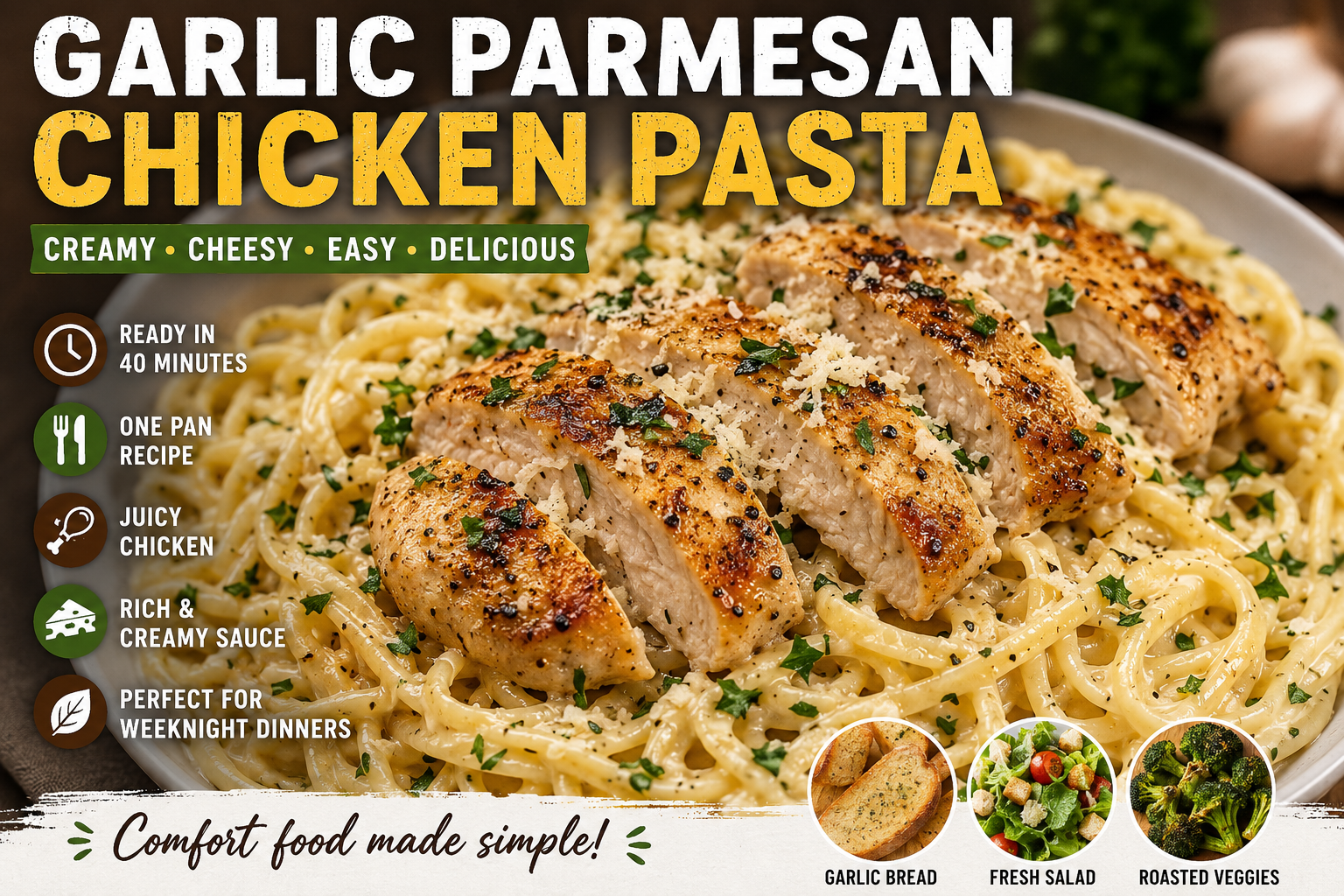
Introduction
Garlic Parmesan Chicken Pasta is one of the most loved comfort food recipes in the United States, and for good reason. It combines tender, juicy chicken, perfectly cooked pasta, aromatic garlic, creamy sauce, and freshly grated Parmesan cheese into one rich and satisfying meal. Whether you’re cooking for a busy weeknight dinner, preparing a family meal, celebrating a special occasion, or simply craving restaurant-style pasta at home, this recipe never disappoints.
What makes this dish truly special is its perfect balance of flavors. Garlic provides a bold and savory aroma, Parmesan cheese adds a rich and nutty taste, butter creates a smooth base, and cream transforms everything into a silky sauce that coats every piece of pasta beautifully. Add seasoned chicken cooked until golden brown, and you have a complete meal that feels luxurious without requiring complicated cooking techniques.
Unlike many restaurant pasta dishes, Garlic Parmesan Chicken Pasta can be prepared at home using simple ingredients that are available in most grocery stores. You don’t need expensive equipment or professional cooking skills. With a little patience and the right techniques, anyone can create a delicious homemade pasta that rivals their favorite restaurant.
One of the reasons this recipe has become so popular is its incredible versatility. While the classic version features chicken breast and pasta in a creamy garlic Parmesan sauce, there are countless ways to customize it according to your taste. Some people enjoy adding broccoli for extra nutrition, while others prefer mushrooms, spinach, bell peppers, asparagus, or sun-dried tomatoes. If you love spicy food, crushed red pepper flakes can add a gentle heat that perfectly complements the creamy sauce. Bacon bits, grilled shrimp, or Italian sausage can also be included to create exciting variations.
Another reason people love this recipe is that it works with almost every type of pasta. Penne, fettuccine, spaghetti, linguine, rotini, rigatoni, bow-tie pasta, and even shells all pair beautifully with the creamy garlic Parmesan sauce. Every pasta shape offers a slightly different eating experience, making this recipe feel new each time you prepare it.
Garlic Parmesan Chicken Pasta is also an excellent choice for beginner cooks because the cooking process is straightforward. The chicken is seasoned and pan-seared until golden, the pasta is boiled until perfectly tender, and the creamy sauce comes together in just a few simple steps. Once everything is combined, the result is a comforting meal that looks impressive while being surprisingly easy to prepare.
The flavor of freshly minced garlic is one of the highlights of this recipe. When garlic is gently cooked in butter, it releases an irresistible aroma that fills the entire kitchen. Combined with freshly grated Parmesan cheese and heavy cream, it creates a smooth, velvety sauce that clings to every strand or piece of pasta. Every bite delivers the perfect combination of creamy, cheesy, buttery, and savory flavors.
Chicken is an equally important ingredient because it adds protein and makes the dish hearty enough to serve as a complete meal. Boneless, skinless chicken breasts are commonly used because they cook quickly and remain tender when prepared correctly. Chicken thighs are another excellent option for those who prefer darker meat with extra juiciness. Proper seasoning and careful cooking ensure that the chicken stays moist instead of becoming dry.
One of the biggest advantages of Garlic Parmesan Chicken Pasta is that it can fit into many different occasions. Families often prepare it as a comforting dinner after a long day, while couples enjoy it for cozy date nights at home. It’s also popular for potlucks, holiday gatherings, birthday dinners, and meal prep because it reheats well and continues to taste delicious the next day.
Many people think creamy pasta recipes are difficult to master, but this is far from the truth. Once you understand a few basic cooking techniques—such as cooking the garlic gently, using freshly grated Parmesan cheese, reserving some pasta water, and avoiding overheating the cream—you’ll consistently produce a smooth and flavorful sauce. Small details make a big difference in achieving restaurant-quality results.
Another reason this recipe stands out is its balance between indulgence and practicality. It feels rich enough for a special dinner yet simple enough to prepare on a weekday. Most of the ingredients are pantry staples, meaning you may already have many of them at home. Butter, garlic, Parmesan cheese, cream, pasta, olive oil, and basic seasonings combine to create an unforgettable meal without requiring an expensive shopping trip.
Presentation also plays a significant role in making this dish appealing. A generous sprinkle of freshly grated Parmesan, chopped parsley, cracked black pepper, and a touch of garlic butter can instantly transform homemade pasta into a restaurant-style masterpiece. Served alongside warm garlic bread, a crisp Caesar salad, or roasted vegetables, Garlic Parmesan Chicken Pasta becomes a complete dining experience.
Meal prep enthusiasts also appreciate this recipe because it stores well in the refrigerator. Leftovers can be reheated for lunch or dinner without losing much of their flavor. With proper storage, the creamy sauce remains smooth, making it an excellent option for preparing meals in advance.
Another reason this pasta has gained worldwide popularity is the growing love for American comfort food. Across social media, food blogs, and cooking videos, creamy chicken pasta recipes consistently attract millions of views because they are visually appealing, easy to prepare, and universally loved. The combination of golden chicken, creamy white sauce, and perfectly cooked pasta creates a meal that is both comforting and satisfying.
Throughout this comprehensive guide, you’ll learn everything needed to master Garlic Parmesan Chicken Pasta from start to finish. We’ll cover ingredient selection, kitchen tools, preparation techniques, step-by-step cooking instructions, common mistakes to avoid, helpful tips, storage methods, reheating instructions, serving ideas, nutritional information, recipe variations, and answers to frequently asked questions. Each section is designed to help beginners and experienced home cooks achieve excellent results.
By the end of this guide, you’ll have the confidence to prepare a creamy Garlic Parmesan Chicken Pasta that’s rich, flavorful, beautifully presented, and worthy of being added to your regular meal rotation. Whether you’re making it for yourself, your family, or guests, this recipe is sure to become one of your favorite homemade comfort foods.
Ingredients & Kitchen Tools
The secret to making the best Garlic Parmesan Chicken Pasta begins long before you start cooking. Great ingredients and the right kitchen tools can make the difference between an ordinary pasta dish and one that tastes like it came from your favorite Italian-American restaurant. While this recipe uses simple ingredients, choosing high-quality products and preparing them correctly will improve the flavor, texture, and overall presentation.
One of the best things about this recipe is that most of the ingredients are pantry staples or easy to find in any grocery store. Fresh garlic, real Parmesan cheese, tender chicken, butter, cream, and your favorite pasta come together to create a rich and comforting meal that everyone will enjoy.
Main Ingredients
1. Chicken
Chicken is the star protein in this recipe. Boneless, skinless chicken breasts are the most popular choice because they cook quickly and slice beautifully over the pasta. They are lean, high in protein, and absorb seasonings very well.
If you prefer darker meat with extra flavor, boneless chicken thighs are another excellent option. They stay juicy even if cooked a little longer than chicken breasts.
You’ll need about:
- 2 large boneless chicken breasts (or 4 small ones)
- Around 500 grams (1 pound) of chicken
2. Pasta
The pasta provides the foundation of the dish. Different pasta shapes hold the creamy sauce differently, so choose one based on your preference.
Excellent choices include:
- Penne
- Fettuccine
- Rigatoni
- Rotini
- Linguine
- Spaghetti
- Farfalle (Bow Tie)
- Shell Pasta
Fettuccine is often considered the best option because the creamy sauce coats every strand perfectly. Penne and rigatoni are also fantastic because the sauce fills the hollow centers.
Use about:
- 12 ounces (340 grams) pasta
3. Fresh Garlic
Garlic is the heart of this recipe.
Fresh garlic creates a stronger aroma and richer flavor than garlic powder. While garlic powder can be used in emergencies, freshly minced garlic delivers the authentic restaurant-quality taste.
You’ll need:
- 6–8 fresh garlic cloves
- Finely minced
If you’re a garlic lover, feel free to add even more.
4. Parmesan Cheese
This ingredient makes the sauce rich, creamy, and full of flavor.
Always buy a block of Parmesan and grate it yourself.
Freshly grated Parmesan melts smoothly, while pre-shredded cheese often contains anti-caking agents that can make the sauce grainy.
Use:
- 1½ to 2 cups freshly grated Parmesan cheese
5. Heavy Cream
Heavy cream gives the sauce its luxurious texture.
Avoid using low-fat milk if possible because it won’t produce the same rich consistency.
Options include:
- Heavy Cream
- Heavy Whipping Cream
Use approximately:
- 2 cups
6. Butter
Butter creates the base of the garlic sauce.
Unsalted butter is preferred because it allows you to control the salt level.
Use:
- 4 tablespoons butter
7. Olive Oil
Olive oil prevents the butter from burning while adding another layer of flavor.
Use:
- 2 tablespoons extra virgin olive oil
8. Chicken Broth
Chicken broth adds depth and keeps the sauce from becoming overly heavy.
Use:
- 1 cup chicken broth
Low-sodium broth is recommended.
Seasonings
Seasoning the chicken properly makes a huge difference.
You’ll need:
- Salt
- Black Pepper
- Italian Seasoning
- Garlic Powder
- Onion Powder
- Paprika
- Crushed Red Pepper Flakes (optional)
These seasonings create layers of flavor without overpowering the creamy sauce.
Fresh Herbs
Fresh herbs brighten the finished dish.
Popular choices include:
- Fresh Parsley
- Fresh Basil
- Chives
Parsley is the most common garnish because it adds freshness and beautiful color.
Optional Vegetables
Want to make your pasta healthier?
Add vegetables like:
- Spinach
- Mushrooms
- Broccoli
- Bell Peppers
- Asparagus
- Cherry Tomatoes
- Sun-Dried Tomatoes
These ingredients increase nutrition while adding color and texture.
Optional Add-ins
Customize the recipe with:
- Crispy Bacon
- Shrimp
- Grilled Sausage
- Mozzarella Cheese
- Cream Cheese
- Roasted Garlic
- Caramelized Onions
Each variation creates a unique version of Garlic Parmesan Chicken Pasta.
Pantry Staples
Keep these ingredients nearby:
- Salt
- Black Pepper
- Olive Oil
- Butter
- Flour (optional for thicker sauce)
- Cornstarch (optional)
- Lemon Juice
- Freshly Ground Pepper
Best Cheese Choices
Although Parmesan is the primary cheese, you can combine it with:
- Romano Cheese
- Asiago Cheese
- Pecorino Romano
- Mozzarella
- White Cheddar
Avoid processed cheese because it doesn’t melt as smoothly.
Kitchen Tools You’ll Need
Having the right equipment makes cooking easier.
Large Pot
A large stockpot allows pasta to cook evenly without sticking together.
Large Skillet
Use a heavy-bottomed skillet or sauté pan for cooking the chicken and preparing the sauce.
A non-stick or stainless steel pan both work well.
Sharp Chef’s Knife
A sharp knife helps slice chicken evenly and mince garlic quickly.
Cutting Board
Use separate cutting boards for raw chicken and vegetables to maintain food safety.
Measuring Cups & Spoons
Accurate measurements help create a balanced sauce every time.
Cheese Grater
Freshly grated Parmesan melts much better than packaged cheese.
A fine grater or microplane works best.
Wooden Spoon
Wooden spoons are gentle on cookware and perfect for stirring creamy sauces.
Tongs
Kitchen tongs make tossing pasta in the sauce much easier than using a spoon.
Colander
Drain the pasta quickly while reserving some pasta water before discarding the rest.
Instant-Read Thermometer
For perfectly cooked chicken, use a thermometer.
Chicken is safely cooked when the thickest part reaches 165°F (74°C).
Ingredient Preparation Tips
Before turning on the stove, prepare everything first.
- Dice or slice the chicken evenly.
- Mince the garlic.
- Grate the Parmesan cheese.
- Measure the cream.
- Measure the broth.
- Chop the parsley.
- Boil water for the pasta.
Professional chefs call this “mise en place,” meaning “everything in its place.” Preparing ingredients ahead of time keeps the cooking process smooth and prevents overcooking.
Final Thoughts
High-quality ingredients don’t have to be expensive. Fresh garlic, real Parmesan cheese, heavy cream, and properly seasoned chicken are the foundation of this recipe. Combined with the right cookware and a little preparation, these simple ingredients come together to create a rich, creamy, and satisfying Garlic Parmesan Chicken Pasta that’s worthy of any restaurant menu.
In the next section, we’ll focus on preparing and seasoning the chicken, including how to marinate it, achieve a golden crust, and keep it perfectly juicy every time.
Preparing and Cooking the Perfect Chicken
Chicken is one of the most important ingredients in Garlic Parmesan Chicken Pasta. While the creamy garlic Parmesan sauce often gets the most attention, perfectly cooked chicken is what transforms this dish into a complete, satisfying meal. Tender, juicy, and flavorful chicken adds texture, protein, and richness that perfectly complements the creamy pasta.
Many home cooks accidentally overcook chicken, making it dry and chewy. Fortunately, with a few simple techniques, you can consistently prepare chicken that is moist, flavorful, and beautifully golden on the outside. In this section, you’ll learn everything from selecting the right cut of chicken to seasoning, marinating, cooking, slicing, and storing it properly.
Choosing the Best Chicken
The first step is selecting good-quality chicken. Fresh chicken generally has the best flavor and texture, but frozen chicken also works well if it is completely thawed before cooking.
The most common options are:
Boneless Skinless Chicken Breast
- Lean and high in protein
- Cooks quickly
- Easy to slice
- Perfect for creamy pasta recipes
Boneless Skinless Chicken Thighs
- Naturally juicier
- Richer flavor
- Less likely to dry out
- Great for people who prefer dark meat
Both cuts work wonderfully. Chicken breast gives the dish a lighter feel, while chicken thighs provide extra richness.
Preparing the Chicken
Before seasoning, prepare the chicken properly.
Remove any excess fat or connective tissue using a sharp knife. Pat the chicken dry with paper towels. This step is important because dry chicken browns much better than wet chicken.
If the chicken breasts are very thick, slice them horizontally to create thinner cutlets or gently pound them to an even thickness. Uniform thickness ensures even cooking and prevents one end from drying out while the other remains undercooked.
Basic Chicken Seasoning
Simple seasonings create the best flavor because they don’t overpower the creamy Parmesan sauce.
You’ll need:
- 1 teaspoon salt
- 1 teaspoon black pepper
- 1 teaspoon garlic powder
- 1 teaspoon onion powder
- 1 teaspoon paprika
- 1 teaspoon Italian seasoning
- ½ teaspoon dried oregano (optional)
Mix all the spices together and coat both sides of the chicken evenly.
Allow the seasoned chicken to rest for about 15 to 20 minutes before cooking. This gives the spices time to absorb into the meat.
Optional Marinade
If you have extra time, marinating the chicken makes it even more flavorful.
A simple marinade includes:
- 2 tablespoons olive oil
- 1 tablespoon lemon juice
- 3 minced garlic cloves
- Italian seasoning
- Salt
- Pepper
- Paprika
Mix everything together and coat the chicken well. Cover and refrigerate for at least 30 minutes. For even better flavor, marinate for 2 to 4 hours. Avoid marinating for more than 24 hours, especially if using lemon juice, as the acid can change the texture of the chicken.
Bringing Chicken to Room Temperature
Before cooking, let the chicken sit at room temperature for about 15 minutes.
Cold chicken placed directly into a hot pan cooks unevenly. Allowing it to warm slightly helps it cook more evenly and develop a better golden crust.
Choosing the Right Pan
A heavy-bottomed skillet works best because it distributes heat evenly.
Good choices include:
- Stainless steel skillet
- Cast iron skillet
- Heavy non-stick pan
Avoid overcrowding the pan. If necessary, cook the chicken in batches.
Heating the Pan
Heat the skillet over medium-high heat.
Add:
- 2 tablespoons olive oil
- 1 tablespoon butter
The olive oil prevents the butter from burning while the butter adds extra flavor.
Wait until the butter melts and begins to foam before adding the chicken.
Cooking the Chicken
Place the chicken into the hot pan without moving it immediately.
Let it cook undisturbed for about 5 to 7 minutes, depending on thickness.
Moving the chicken too early prevents a beautiful golden crust from forming.
Once golden brown, flip the chicken and cook the other side for another 5 to 7 minutes.
Cooking time depends on thickness, but avoid constantly flipping the meat.
Checking for Doneness
The safest way to check chicken is with an instant-read thermometer.
The internal temperature should reach:
165°F (74°C)
If you don’t have a thermometer:
- Juices should run clear.
- The center should be white, not pink.
- The chicken should feel firm but still juicy.
Avoid overcooking, as chicken continues cooking slightly after being removed from the pan.
Resting the Chicken
This step is often overlooked but is extremely important.
Transfer the cooked chicken to a plate and let it rest for 5 to 10 minutes before slicing.
Resting allows the juices to redistribute throughout the meat. Cutting it immediately causes those juices to run out, resulting in drier chicken.
Slicing the Chicken
Use a sharp knife and slice the chicken against the grain.
Cutting against the grain shortens the muscle fibers, making every bite more tender.
You can slice it into:
- Thin strips
- Bite-sized cubes
- Thick slices
All three styles work beautifully for Garlic Parmesan Chicken Pasta.
Saving the Flavorful Pan Drippings
Don’t wash the skillet after removing the chicken.
The browned bits left in the pan—often called “fond”—are packed with flavor. They become the base of the garlic Parmesan sauce, adding depth and richness that you can’t get from butter alone.
Common Mistakes to Avoid
Here are a few mistakes that can affect the final result:
- Skipping seasoning
- Cooking chicken straight from the refrigerator
- Overcrowding the pan
- Using very high heat, which burns the outside before the inside cooks
- Flipping the chicken too often
- Cutting it immediately after cooking
- Overcooking beyond 165°F (74°C)
Avoiding these mistakes will help you achieve juicy, flavorful chicken every time.
Delicious Flavor Variations
You can customize the chicken with different seasoning blends to match your taste.
Spicy Version Add cayenne pepper or extra crushed red pepper flakes.
Smoky Version Increase the paprika and use smoked paprika instead of regular paprika.
Herb Version Add fresh thyme, rosemary, or basil.
Garlic Lovers Version Double the amount of fresh garlic and garlic powder.
Can You Grill the Chicken?
Absolutely.
Grilled chicken adds a smoky flavor that pairs wonderfully with the creamy Parmesan sauce.
Cook over medium-high heat until the internal temperature reaches 165°F (74°C), then let it rest before slicing.
Can You Bake the Chicken?
Yes.
Preheat the oven to 400°F (200°C) and bake seasoned chicken breasts for about 20 to 25 minutes, depending on thickness.
Finish under the broiler for 1 to 2 minutes if you want a lightly browned surface.
Can You Air Fry the Chicken?
Air frying is another excellent option.
Cook at 375°F (190°C) for approximately 16 to 20 minutes, flipping halfway through. Always verify that the internal temperature reaches 165°F (74°C).
Final Thoughts
Perfectly cooked chicken is one of the secrets to unforgettable Garlic Parmesan Chicken Pasta. Choosing quality chicken, seasoning it generously, cooking it carefully, allowing it to rest, and slicing it properly all contribute to a dish that’s juicy, flavorful, and satisfying. Combined with the creamy garlic Parmesan sauce you’ll make in the next section, the chicken becomes the highlight of every bite.
How to Make the Perfect Creamy Garlic Parmesan Sauce
The heart of Garlic Parmesan Chicken Pasta is undoubtedly its rich, creamy Garlic Parmesan sauce. While tender chicken and perfectly cooked pasta are essential, the sauce is what brings every ingredient together into one comforting and flavorful dish. A well-made sauce should be smooth, velvety, cheesy, and packed with the savory aroma of fresh garlic without being overly thick or too thin.
Many people believe that making a creamy pasta sauce is difficult, but with the right ingredients and a few simple techniques, anyone can create a restaurant-quality sauce at home. In this section, you’ll learn every step of the process, from preparing the pan to melting the cheese properly and achieving the perfect consistency.
Why This Sauce Is So Popular
Garlic Parmesan sauce has become a favorite in American home kitchens and restaurants because it offers the perfect combination of creamy texture and bold flavor. Fresh garlic provides a deep, aromatic taste, butter adds richness, heavy cream creates a silky base, and Parmesan cheese delivers a nutty, salty finish. When these ingredients come together, they create a sauce that clings beautifully to every piece of pasta.
Unlike tomato-based sauces, this creamy sauce has a luxurious texture that makes every bite feel comforting and satisfying. It’s versatile enough to pair not only with chicken but also with shrimp, salmon, vegetables, or even grilled steak.
Preparing the Pan
After removing the cooked chicken from the skillet, do not wash the pan. The browned bits left behind from cooking the chicken are full of flavor and will enhance the sauce.
Reduce the heat to medium-low. If the pan appears dry, add:
- 2 tablespoons unsalted butter
- 1 tablespoon olive oil (optional)
Allow the butter to melt slowly. Avoid high heat because butter can burn quickly, giving the sauce a bitter taste.
Cooking the Garlic
Fresh garlic is one of the defining ingredients in this recipe.
Add:
- 6–8 cloves of freshly minced garlic
Stir continuously for about 30–60 seconds.
The goal is to soften the garlic and release its aroma, not brown it. Burnt garlic tastes bitter and can ruin the entire sauce.
As soon as the kitchen fills with a rich garlic fragrance, move to the next step.
Adding Chicken Broth
Pour in:
- 1 cup low-sodium chicken broth
Use a wooden spoon to gently scrape the bottom of the skillet. This process, called deglazing, lifts the flavorful browned bits from the pan and blends them into the sauce.
Allow the broth to simmer for about 2–3 minutes until it reduces slightly.
This creates a deeper, more complex flavor.
Pouring in the Heavy Cream
Now slowly add:
- 2 cups heavy cream
Pour gradually while stirring continuously.
Reduce the heat to low.
Heavy cream should never be boiled rapidly because excessive heat may cause it to separate or curdle. Instead, allow it to warm gently until small bubbles begin to appear around the edges of the pan.
Seasoning the Sauce
Season the cream carefully.
Add:
- ½ teaspoon black pepper
- ½ teaspoon garlic powder
- ½ teaspoon onion powder
- 1 teaspoon Italian seasoning
- A small pinch of salt
Remember that Parmesan cheese is naturally salty, so avoid adding too much salt at this stage. You can always adjust the seasoning later.
For a spicy version, add:
- ¼ teaspoon crushed red pepper flakes
Adding Parmesan Cheese
This is the most important step.
Always use freshly grated Parmesan cheese.
Avoid packaged pre-shredded cheese because it often contains anti-caking agents that prevent smooth melting.
Gradually add:
- 1½ to 2 cups freshly grated Parmesan
Add one handful at a time while whisking gently.
Never dump all the cheese into the pan at once.
Adding it slowly helps create a silky, lump-free sauce.
Within a few minutes, the cheese melts into the cream, producing a smooth, glossy texture.
Achieving the Perfect Consistency
Every cook prefers a slightly different sauce consistency.
If the sauce becomes too thick:
- Add reserved pasta water one tablespoon at a time.
- Stir until smooth.
If the sauce seems too thin:
Continue simmering over low heat for a few more minutes until it naturally thickens.
Avoid adding excessive flour because the sauce should remain creamy rather than heavy.
The Secret Ingredient: Pasta Water
Professional chefs rarely throw away all the pasta water.
Reserve about:
- 1 cup pasta cooking water
The starch in the water helps the sauce cling beautifully to the pasta while creating a silky texture.
Even one or two tablespoons can completely transform the consistency.
Optional Flavor Boosters
Want to make the sauce even more delicious?
Consider adding:
- Cream cheese
- Roasted garlic
- White cheddar
- Romano cheese
- Asiago cheese
- Mozzarella
- A splash of white cooking wine
- Fresh basil
- Fresh thyme
- Lemon zest
- Fresh parsley
Each ingredient adds its own unique character while maintaining the creamy base.
Common Mistakes to Avoid
Many beginner cooks accidentally make these mistakes:
Using High Heat
Cream sauces should cook slowly.
High temperatures can separate the dairy and create an oily texture.
Burning the Garlic
Garlic cooks very quickly.
Even one extra minute over high heat can produce bitterness.
Adding Cold Cheese
Allow the grated Parmesan to reach room temperature before adding it.
Cold cheese melts less evenly.
Using Powdered Parmesan
Freshly grated cheese produces a much smoother sauce.
Skipping the Stirring
Constant gentle stirring prevents sticking and ensures the cheese melts evenly.
Can You Make the Sauce Ahead?
Yes.
The sauce can be prepared one day in advance.
Store it in an airtight container in the refrigerator.
When reheating, warm it slowly over low heat while adding a splash of milk or cream to restore its silky consistency.
Making a Lighter Version
If you want a slightly lighter sauce, you can replace part of the heavy cream with:
- Whole milk
- Half-and-half
Keep in mind that the sauce won’t be quite as rich as the classic version.
Making the Sauce Extra Creamy
For an even richer texture, stir in:
- 2 tablespoons cream cheese
- Extra Parmesan cheese
- A small piece of butter just before serving
This technique creates an exceptionally smooth finish.
Adding Fresh Herbs
Fresh herbs should be added near the end of cooking.
Popular choices include:
- Chopped parsley
- Fresh basil
- Chives
- Thyme
These herbs brighten the rich flavors and add beautiful color.
Taste Before Serving
Always taste the sauce before combining it with the pasta.
Check for:
- Salt
- Pepper
- Garlic flavor
- Creaminess
- Thickness
Small adjustments at this stage make a noticeable difference in the final dish.
Final Thoughts
A perfectly prepared Garlic Parmesan sauce is smooth, creamy, flavorful, and well-balanced. By using fresh garlic, real Parmesan cheese, heavy cream, gentle heat, and patient stirring, you can create a luxurious sauce that rivals any restaurant version. The rich aroma, velvety texture, and savory taste make this sauce the true centerpiece of Garlic Parmesan Chicken Pasta.
Step-by-Step Cooking Instructions: Bringing Everything Together
Now that you’ve prepared the juicy chicken and creamy Garlic Parmesan sauce, it’s time to combine everything into one delicious dish. This is where all the individual components come together to create a rich, flavorful, and satisfying meal. Although the recipe is simple, following each step carefully ensures that every bite is coated with creamy sauce and packed with flavor.
Professional chefs often say that timing is the key to making great pasta. Freshly cooked pasta, hot sauce, and warm chicken should all come together at the right moment. This allows the sauce to coat the pasta perfectly and creates a dish that looks and tastes like it came straight from a restaurant.
Step 1: Boil the Pasta
Start by filling a large pot with water. Use enough water so the pasta has plenty of room to cook evenly.
For every pound (450 grams) of pasta, use about 4–5 liters of water.
Bring the water to a rolling boil before adding anything.
Once the water is boiling, add a generous amount of salt.
A good rule is:
- 1 tablespoon salt for every 4 liters of water.
The salted water seasons the pasta from the inside, improving its overall flavor.
Add your chosen pasta and stir immediately to prevent sticking.
Step 2: Cook Until Al Dente
Always follow the cooking time printed on the pasta package, but begin checking it about two minutes before the recommended time.
The pasta should be al dente, meaning it is tender but still slightly firm when bitten.
Overcooked pasta becomes soft and may fall apart after being mixed with the creamy sauce.
Step 3: Reserve Pasta Water
Before draining the pasta, scoop out about one cup of the cooking water.
This starchy water is one of the most valuable ingredients in the recipe.
It helps:
- Thin thick sauces
- Improve texture
- Help the sauce cling to the pasta
- Add extra creaminess
Many home cooks skip this step, but professional chefs rarely do.
Step 4: Drain the Pasta
Drain the pasta using a colander.
Do not rinse it with cold water.
Rinsing removes the starch that helps the sauce stick to the pasta.
Instead, let it drain for a minute while the sauce finishes cooking.
Step 5: Return to the Sauce
Place the cooked Garlic Parmesan sauce over low heat.
If it has thickened too much while sitting, add a few tablespoons of reserved pasta water and stir until smooth.
The sauce should be silky, glossy, and easy to coat the pasta.
Step 6: Add the Pasta
Transfer the hot cooked pasta directly into the skillet with the sauce.
Using tongs or a large spoon, gently toss everything together.
Continue mixing until every piece of pasta is completely coated.
Take your time during this step.
Even coating creates better flavor in every bite.
Step 7: Add the Chicken
Slice the cooked chicken into strips or bite-sized pieces.
Add it to the pasta.
Gently fold the chicken into the sauce rather than stirring aggressively.
This keeps the chicken tender and prevents it from breaking apart.
Step 8: Adjust the Sauce
After combining everything, evaluate the consistency.
If the sauce feels too thick:
- Add reserved pasta water one tablespoon at a time.
If it seems too thin:
Allow everything to simmer gently for another one or two minutes.
The sauce will naturally thicken as it cooks.
Step 9: Taste and Season
Before serving, taste the finished pasta.
Adjust if necessary by adding:
- Salt
- Freshly ground black pepper
- Extra Parmesan cheese
- Garlic powder
- Italian seasoning
Small adjustments at the end make a big difference.
Step 10: Garnish
A beautiful garnish improves both appearance and flavor.
Popular toppings include:
- Fresh chopped parsley
- Fresh basil
- Extra grated Parmesan
- Cracked black pepper
- Red pepper flakes
- A drizzle of garlic butter
- Lemon zest
These finishing touches give the dish a restaurant-quality presentation.
Professional Cooking Tips
Professional chefs rely on small techniques that greatly improve the final dish.
Keep Everything Warm
Cold pasta cools the sauce quickly.
Try to finish the sauce just as the pasta finishes cooking.
Stir Gently
Cream sauces are delicate.
Gentle tossing keeps the sauce smooth and evenly distributed.
Use Fresh Cheese
Freshly grated Parmesan melts better than packaged cheese.
It also provides a richer, fresher flavor.
Don’t Rush
Low heat creates smoother sauces.
High heat can cause the cream to separate.
Serving Suggestions
Garlic Parmesan Chicken Pasta is delicious on its own but becomes even more enjoyable when served with complementary side dishes.
Popular choices include:
- Garlic Bread
- Caesar Salad
- Garden Salad
- Roasted Broccoli
- Steamed Green Beans
- Grilled Asparagus
- Roasted Brussels Sprouts
These sides balance the richness of the creamy sauce.
Perfect Drinks
Many beverages pair well with this meal.
Try:
- Sparkling Water
- Lemonade
- Iced Tea
- Apple Juice
- Fresh Orange Juice
These refreshing drinks contrast nicely with the creamy pasta.
Family Dinner Ideas
This recipe is perfect for:
- Weeknight dinners
- Birthday celebrations
- Holiday meals
- Potlucks
- Weekend gatherings
- Date nights
- Family lunches
Because it serves several people, it’s ideal for sharing.
Making It Kid-Friendly
Children usually love creamy pasta.
For younger eaters:
- Reduce black pepper.
- Skip red pepper flakes.
- Cut chicken into smaller pieces.
- Use fun pasta shapes like bow ties or shells.
Presentation Tips
Presentation matters.
Serve the pasta in warm bowls.
Arrange sliced chicken neatly on top.
Sprinkle freshly grated Parmesan over the center.
Finish with parsley and freshly cracked black pepper.
The result looks elegant without requiring extra effort.
Restaurant Secrets
Many restaurants use these simple tricks:
- Finish with a small piece of butter.
- Add Parmesan just before serving.
- Toss the pasta in the sauce rather than pouring sauce over it.
- Garnish generously with fresh herbs.
These techniques produce richer flavor and better texture.
Meal Prep Tips
If preparing meals ahead:
Store the pasta and sauce together in airtight containers.
Leave a little extra sauce because pasta absorbs moisture during storage.
When reheating, add a splash of milk or cream to restore the original creamy consistency.
Scaling the Recipe
Cooking for more people?
Double all ingredients while using a larger skillet.
Avoid overcrowding the pan when cooking chicken.
Cook in batches if necessary.
Final Quality Check
Before serving, make sure:
- The chicken is juicy.
- The pasta is al dente.
- The sauce is creamy.
- The Parmesan is fully melted.
- Every piece of pasta is evenly coated.
- The seasoning is balanced.
- The dish is served hot.
When all these elements come together, you’ll have a homemade Garlic Parmesan Chicken Pasta that’s every bit as delicious as one from your favorite restaurant.
Expert Tips, Delicious Variations, Substitutions & Common Mistakes to Avoid
Once you’ve mastered the basic Garlic Parmesan Chicken Pasta recipe, the next step is learning how to customize it and improve it like a professional chef. Small changes in ingredients, cooking methods, and seasoning can completely transform the dish while keeping its rich, creamy flavor. In this section, you’ll discover expert cooking tips, creative variations, ingredient substitutions, and the most common mistakes that home cooks make.
Expert Tip #1: Use Freshly Grated Parmesan
One of the biggest differences between homemade pasta and restaurant-quality pasta is the cheese.
Always choose a block of Parmesan cheese and grate it yourself just before cooking.
Freshly grated Parmesan:
- Melts smoothly
- Creates a silky sauce
- Has a stronger flavor
- Doesn’t make the sauce grainy
Packaged grated or shredded Parmesan often contains anti-caking agents that prevent it from melting properly.
Expert Tip #2: Fresh Garlic Is Always Better
Garlic powder can add flavor, but fresh garlic provides the authentic aroma that makes this recipe unforgettable.
For the best results:
- Use fresh garlic cloves.
- Mince them finely.
- Cook them gently in butter.
- Never let them burn.
Burnt garlic creates bitterness that affects the entire sauce.
Expert Tip #3: Don’t Overcook the Pasta
The pasta continues cooking slightly after it’s mixed with the hot sauce.
That’s why it should be cooked only until al dente.
Soft, overcooked pasta becomes mushy after mixing.
Perfect pasta should feel slightly firm when bitten.
Expert Tip #4: Reserve Pasta Water
Many beginners pour all the pasta water down the sink.
Professional chefs always save some.
The starch in pasta water:
- Helps sauces stick
- Makes sauces silkier
- Improves texture
- Prevents dryness
Even two or three tablespoons can make a huge difference.
Expert Tip #5: Let the Chicken Rest
Never slice chicken immediately after cooking.
Allow it to rest for about 5–10 minutes.
Resting keeps the juices inside the meat, making every bite more tender and flavorful.
Delicious Recipe Variations
One reason Garlic Parmesan Chicken Pasta is so popular is its versatility.
Here are several delicious variations you can try.
1. Broccoli Garlic Parmesan Chicken Pasta
Add steamed broccoli during the final mixing stage.
Broccoli adds:
- Color
- Nutrition
- Crunch
- Fiber
It’s one of the most popular additions.
2. Spinach Version
Fresh spinach wilts beautifully in the warm sauce.
Simply stir it into the sauce just before adding the pasta.
This version adds vitamins while maintaining the creamy texture.
3. Mushroom Version
Sauté sliced mushrooms in butter before adding the garlic.
Mushrooms contribute:
- Earthy flavor
- Rich aroma
- Meaty texture
Cremini mushrooms work especially well.
4. Spicy Version
Love spicy food?
Add:
- Crushed red pepper flakes
- Cayenne pepper
- Hot paprika
These ingredients provide gentle heat without overpowering the creamy sauce.
5. Shrimp Version
Replace chicken with shrimp.
Season and cook shrimp for about:
- 2–3 minutes per side
Avoid overcooking because shrimp become rubbery quickly.
6. Bacon Version
Cook crispy bacon first.
Remove it from the pan.
Use a little bacon fat while preparing the garlic sauce.
Mix chopped bacon into the finished pasta.
The smoky flavor pairs wonderfully with Parmesan cheese.
7. Extra Cheesy Version
Cheese lovers can add:
- Mozzarella
- Romano
- Asiago
- White Cheddar
These cheeses increase creaminess while adding unique flavors.
8. Vegetable Lovers Version
Add vegetables like:
- Bell peppers
- Zucchini
- Asparagus
- Green peas
- Cherry tomatoes
These ingredients make the meal more colorful and nutritious.
Ingredient Substitutions
Sometimes you may not have every ingredient available.
Here are some excellent substitutes.
Heavy Cream
Replace with:
- Half-and-half
- Whole milk (less creamy)
- Cooking cream
Parmesan Cheese
Replace with:
- Romano
- Pecorino Romano
- Asiago
Each creates a slightly different flavor profile.
Butter
Unsalted butter is recommended.
Salted butter also works, but reduce the additional salt in the recipe.
Chicken
Instead of chicken, use:
- Turkey
- Shrimp
- Salmon
- Grilled vegetables
Each option creates a delicious variation.
Pasta
Almost every pasta shape works.
Popular choices include:
- Penne
- Rigatoni
- Rotini
- Linguine
- Fettuccine
- Spaghetti
- Shells
- Bow Ties
Common Mistakes to Avoid
Avoid these mistakes for perfect results every time.
Mistake 1: Burning the Garlic
Garlic cooks extremely fast.
Always cook it over low or medium-low heat.
Burnt garlic makes the sauce bitter.
Mistake 2: Overheating the Cream
Boiling cream can cause it to separate.
Instead, allow it to simmer gently.
Mistake 3: Using Cold Cheese
Cold cheese melts slowly.
Bring Parmesan closer to room temperature before adding it.
Mistake 4: Skipping Seasoning
Season every layer:
- Chicken
- Sauce
- Pasta
This creates balanced flavor throughout the dish.
Mistake 5: Washing the Pasta
Never rinse cooked pasta.
The starch helps the creamy sauce cling to every piece.
Mistake 6: Adding Cheese Too Quickly
Add Parmesan gradually.
One handful at a time creates a smooth sauce.
Dumping it all in at once may create lumps.
Mistake 7: Cooking Everything on High Heat
Low heat is the secret to silky cream sauces.
Patience always produces better results.
How to Make the Recipe Healthier
Want a lighter version?
Try these ideas:
- Use whole wheat pasta.
- Add extra vegetables.
- Reduce the butter slightly.
- Replace part of the cream with milk.
- Use grilled chicken instead of fried.
You’ll still enjoy plenty of flavor while reducing calories.
Making the Recipe for Guests
If serving guests:
Prepare the chicken and sauce ahead of time.
Cook the pasta fresh just before serving.
Combine everything a few minutes before dinner.
This ensures the pasta stays perfectly textured.
Final Thoughts
Garlic Parmesan Chicken Pasta is a recipe that rewards attention to detail. Using fresh ingredients, cooking over gentle heat, seasoning each layer, and avoiding common mistakes will help you create a creamy, flavorful dish every single time. Once you’ve mastered the classic version, don’t hesitate to experiment with vegetables, cheeses, proteins, and herbs to make the recipe your own.
Storage, Reheating, Freezing & Meal Prep Guide
One of the biggest advantages of Garlic Parmesan Chicken Pasta is that it stores well, making it an excellent choice for meal prep, leftovers, and busy weekdays. When stored and reheated properly, the creamy sauce remains smooth, the chicken stays tender, and the pasta retains its delicious flavor. In this section, you’ll learn the best ways to store, refrigerate, freeze, thaw, and reheat your pasta while maintaining its restaurant-quality taste and texture.
Why Proper Storage Matters
Cream-based pasta recipes require a little more care than tomato-based dishes. Dairy ingredients like heavy cream, butter, and Parmesan cheese can change texture if stored incorrectly or reheated over high heat. Fortunately, a few simple storage techniques will help preserve the creamy consistency and rich flavor of your Garlic Parmesan Chicken Pasta.
Proper storage helps:
- Maintain freshness
- Prevent food waste
- Save cooking time
- Keep the sauce creamy
- Preserve the chicken’s tenderness
- Make meal planning easier
How Long Can Garlic Parmesan Chicken Pasta Stay at Room Temperature?
After cooking, avoid leaving the pasta at room temperature for more than 2 hours.
If the room temperature is very hot (above 90°F or 32°C), refrigerate it within 1 hour.
Leaving dairy-based dishes out for too long increases the risk of bacterial growth and reduces food quality.
Refrigerating Leftovers
Once the pasta has cooled slightly, transfer it to an airtight container.
Store it in the refrigerator for up to 3–4 days.
To keep the pasta tasting fresh:
- Use clean, airtight containers.
- Let the food cool slightly before sealing.
- Avoid opening the container repeatedly.
- Store it on a refrigerator shelf rather than the door, where temperatures fluctuate more.
Should You Store Pasta and Sauce Separately?
If you know you’ll have leftovers, storing the pasta and sauce separately is the best option.
Benefits include:
- The pasta won’t absorb all the sauce.
- The sauce stays creamier.
- Reheating is easier.
- The texture remains closer to freshly cooked pasta.
However, if they’re already mixed, that’s perfectly fine—just add a splash of milk or cream when reheating.
Best Containers for Storage
Good-quality food storage containers help preserve freshness.
The best options are:
- Glass containers with airtight lids
- BPA-free plastic containers
- Stainless steel lunch boxes with secure lids
Choose containers that are just large enough to hold the food. Too much empty space can reduce freshness.
Freezing Garlic Parmesan Chicken Pasta
Yes, you can freeze this dish, but keep in mind that cream-based sauces may change texture slightly after thawing.
For best results:
- Let the pasta cool completely.
- Divide it into individual portions.
- Place each portion in a freezer-safe container or heavy-duty freezer bag.
- Remove as much air as possible.
- Label the container with the date.
The pasta can be frozen for up to 2 months.
How to Thaw Frozen Pasta
The safest method is to transfer the frozen pasta to the refrigerator and let it thaw overnight.
If you’re short on time, use the microwave’s defrost setting before reheating.
Avoid thawing at room temperature, as this can encourage bacterial growth.
Reheating on the Stovetop
The stovetop is one of the best methods because it allows you to control the heat.
Steps:
- Place the pasta in a skillet.
- Add a splash of milk, cream, or chicken broth.
- Heat over low to medium-low heat.
- Stir gently until warmed through.
This method helps restore the sauce’s creamy texture.
Reheating in the Microwave
The microwave is quick and convenient.
Follow these steps:
- Place the pasta in a microwave-safe bowl.
- Add 1–2 tablespoons of milk or cream.
- Cover loosely with a microwave-safe lid or plate.
- Heat in 30-second intervals.
- Stir after each interval until evenly heated.
Avoid overheating, as it can cause the sauce to separate.
Can You Reheat It More Than Once?
It’s best to reheat only the portion you plan to eat.
Repeated reheating can:
- Dry out the chicken
- Break the sauce
- Affect the flavor
- Reduce food quality
Meal Prep Tips
Garlic Parmesan Chicken Pasta is perfect for weekly meal prep.
To make meal prep easier:
- Cook a large batch of chicken.
- Prepare the sauce separately.
- Store cooked pasta separately if possible.
- Portion everything into individual containers.
When it’s time to eat, simply combine and reheat.
Keeping the Sauce Creamy
Cream sauces naturally thicken in the refrigerator.
To restore their smooth consistency:
- Add a splash of milk, cream, or chicken broth.
- Heat slowly.
- Stir continuously.
Avoid boiling the sauce during reheating.
Can You Freeze the Sauce Alone?
Yes.
The Garlic Parmesan sauce can be frozen separately for up to 2 months.
Store it in a freezer-safe container and thaw overnight in the refrigerator before reheating gently.
Whisk well while reheating to restore a smooth texture.
Packing for Lunch
This recipe is an excellent lunch option.
Pack the pasta in an insulated lunch container and keep it chilled until reheating.
For added freshness, pack chopped parsley and extra Parmesan separately, then sprinkle them on just before serving.
Signs the Pasta Should Be Discarded
Do not eat the pasta if you notice:
- A sour or unpleasant smell
- Mold
- Slimy texture
- Unusual discoloration
- Bubbling in the sauce after storage
When in doubt, it’s safer to discard it.
Tips for Maintaining Fresh Flavor
To keep leftovers tasting as close to freshly made as possible:
- Store in airtight containers.
- Reheat gently.
- Add fresh Parmesan before serving.
- Garnish with freshly chopped parsley.
- Finish with a little cracked black pepper.
These small touches can make reheated pasta taste much fresher.
Frequently Asked Storage Questions
Can I prepare the chicken a day ahead? Yes. Cook the chicken, cool it, and refrigerate it. Slice it just before serving.
Can I make the sauce ahead of time? Absolutely. Store it in the refrigerator and reheat slowly with a little cream or milk.
Can I use leftover rotisserie chicken? Yes. Simply shred or slice it and add it to the sauce during the final few minutes of cooking.
Final Thoughts
Garlic Parmesan Chicken Pasta is not only delicious when freshly prepared but also an excellent make-ahead meal. With proper storage, careful reheating, and a few simple meal-prep strategies, you can enjoy this creamy comfort food throughout the week without sacrificing flavor or texture. Whether you’re cooking for a family, preparing lunches, or freezing extra portions, these techniques ensure every serving remains rich, creamy, and satisfying.
Best Side Dishes, Serving Ideas, Beverage Pairings & Frequently Asked Questions
Garlic Parmesan Chicken Pasta is a rich and satisfying meal on its own, but pairing it with the right side dishes, beverages, and garnishes can elevate the entire dining experience. Whether you’re preparing a casual family dinner, hosting a holiday gathering, or serving guests at a special occasion, thoughtful presentation and complementary sides make the meal even more memorable.
This section also answers some of the most frequently asked questions about Garlic Parmesan Chicken Pasta, helping you troubleshoot common concerns and customize the recipe to suit your preferences.
Why Side Dishes Matter
Because Garlic Parmesan Chicken Pasta is creamy and rich, pairing it with lighter, fresher foods creates a balanced meal. Crisp vegetables, fresh salads, and warm bread provide contrasting textures and flavors that complement the pasta without overpowering it.
Best Bread to Serve
Fresh bread is one of the most popular accompaniments to creamy pasta.
Garlic Bread
Classic garlic bread is the perfect partner for this dish. The crispy exterior and buttery garlic flavor pair beautifully with the creamy Parmesan sauce.
Cheese Bread
Bread topped with mozzarella and Parmesan offers extra richness for cheese lovers.
French Bread
Warm slices of French bread are ideal for soaking up the extra creamy sauce left on the plate.
Dinner Rolls
Soft dinner rolls brushed with melted butter provide a simple yet delicious addition.
Fresh Salads
A crisp salad balances the richness of the creamy sauce.
Popular options include:
- Caesar Salad
- Garden Salad
- Greek Salad
- Cucumber Salad
- Spinach Salad
- Mixed Green Salad
A light vinaigrette dressing often works better than a heavy creamy dressing.
Vegetable Side Dishes
Adding vegetables makes the meal more nutritious and colorful.
Excellent choices include:
- Roasted Broccoli
- Grilled Asparagus
- Green Beans
- Roasted Brussels Sprouts
- Steamed Carrots
- Zucchini
- Cauliflower
- Bell Peppers
Roasted vegetables develop a sweet, caramelized flavor that complements the garlic sauce.
Soup Pairings
For a more elaborate meal, begin with a light soup.
Great options include:
- Tomato Soup
- Vegetable Soup
- Chicken Soup
- Minestrone
- Roasted Red Pepper Soup
Avoid overly creamy soups, as the pasta is already rich.
Beverage Pairings
Refreshing drinks help balance the creamy flavors.
Popular non-alcoholic choices include:
- Fresh Lemonade
- Sparkling Water
- Iced Tea
- Apple Juice
- Cranberry Juice
- Orange Juice
- Lime Soda
- Fruit Punch
A slice of lemon or fresh mint adds an extra refreshing touch.
Garnishing Ideas
Beautiful presentation makes homemade food look restaurant-quality.
Top the finished pasta with:
- Freshly grated Parmesan cheese
- Chopped parsley
- Fresh basil
- Cracked black pepper
- Red pepper flakes
- Lemon zest
- A drizzle of garlic butter
Even a simple garnish can make the dish more inviting.
Serving for Different Occasions
Family Dinner
Serve the pasta in a large serving bowl with garlic bread and a fresh salad in the center of the table.
Date Night
Plate the pasta individually.
Arrange sliced chicken neatly on top and garnish generously with Parmesan and parsley for an elegant presentation.
Holiday Meals
Garlic Parmesan Chicken Pasta works well alongside roasted vegetables and warm bread as part of a festive buffet.
Potluck Gatherings
Keep the pasta warm in a slow cooker on the “Warm” setting.
Stir occasionally and add a splash of cream if needed.
Kids’ Meals
Children often enjoy creamy pasta.
For younger eaters:
- Use fun pasta shapes like bow ties or shells.
- Cut the chicken into bite-sized pieces.
- Reduce black pepper and omit red pepper flakes.
Frequently Asked Questions
Can I Use Pre-Cooked Chicken?
Yes.
Rotisserie chicken, grilled chicken, or leftover roasted chicken all work well.
Simply slice or shred it and stir it into the sauce before serving.
Can I Make This Recipe Ahead of Time?
Yes.
Prepare the chicken and sauce in advance.
Cook the pasta fresh just before serving for the best texture.
Which Pasta Shape Is Best?
The most popular choices are:
- Fettuccine
- Penne
- Rigatoni
- Rotini
- Linguine
Each shape holds the creamy sauce beautifully.
Can I Make It Spicier?
Absolutely.
Add:
- Crushed red pepper flakes
- Cayenne pepper
- Hot paprika
Adjust the amount according to your preferred spice level.
Can I Add More Vegetables?
Yes.
Some excellent choices include:
- Broccoli
- Mushrooms
- Spinach
- Bell peppers
- Asparagus
- Peas
- Cherry tomatoes
These vegetables increase nutrition without changing the creamy character of the dish.
Can I Use Milk Instead of Heavy Cream?
You can, but the sauce will be thinner and less rich.
Whole milk or half-and-half produces better results than low-fat milk.
Can I Freeze the Leftovers?
Yes.
Store the pasta in freezer-safe containers for up to two months.
Reheat gently while adding a little milk or cream to restore the sauce’s consistency.
Why Did My Sauce Become Grainy?
This usually happens because:
- The heat was too high.
- Pre-shredded cheese was used.
- The cheese was added too quickly.
Using freshly grated Parmesan and low heat helps prevent this problem.
Why Is My Sauce Too Thick?
Simply add:
- Reserved pasta water
- Chicken broth
- Milk
- Heavy cream
Add small amounts while stirring until the desired consistency is reached.
Can I Double the Recipe?
Yes.
Double all ingredients and use a larger pot and skillet.
Cook the chicken in batches to ensure even browning.
Final Serving Tips
Before bringing the dish to the table:
- Sprinkle extra Parmesan on top.
- Add freshly chopped parsley.
- Grind black pepper over each serving.
- Serve immediately while the sauce is hot and creamy.
- Pair with warm bread and a crisp salad.
These finishing touches make the meal look and taste like something from a high-end restaurant.
Final Thoughts
Garlic Parmesan Chicken Pasta is a versatile recipe that suits almost any occasion. Whether you’re serving it for a cozy family dinner, entertaining guests, or preparing meals for the week, the right side dishes, beverages, and garnishes can transform it into a complete dining experience. With the tips and answers in this section, you’ll be able to serve the dish with confidence and customize it to match any taste or event.
Nutrition Information, Health Benefits & Expert Cooking Tips
Garlic Parmesan Chicken Pasta is known as a comforting and indulgent meal, but it also provides several important nutrients when prepared with fresh, high-quality ingredients. Chicken offers lean protein, garlic contains natural plant compounds, Parmesan cheese supplies calcium, and pasta provides carbohydrates that fuel the body with energy. While this dish is rich because of its creamy sauce, it can still fit into a balanced diet when enjoyed in appropriate portions and paired with vegetables or a fresh salad.
In this section, you’ll learn about the nutritional value of the recipe, the health benefits of its main ingredients, ways to make it healthier, and professional cooking tips that will help you achieve perfect results every time.
Estimated Nutrition Per Serving
The following values are approximate and may vary depending on the ingredients and portion size.
Serving Size: 1 plate (about 1/6 of the recipe)
- Calories: 680–760 kcal
- Protein: 38–42 g
- Carbohydrates: 48–55 g
- Fat: 35–42 g
- Saturated Fat: 18–22 g
- Fiber: 2–4 g
- Sugar: 3–5 g
- Calcium: 25–35% Daily Value
- Iron: 10–15% Daily Value
- Sodium: 700–900 mg
These values are only estimates. The exact nutrition depends on the type of pasta, cream, cheese, and chicken used.
Health Benefits of Chicken
Chicken is one of the healthiest protein sources used in everyday cooking.
Rich in Protein
Protein helps:
- Build muscles
- Repair body tissues
- Support healthy skin
- Keep you feeling full longer
A serving of chicken provides a generous amount of high-quality protein.
Low in Carbohydrates
Chicken contains almost no carbohydrates, making it an excellent protein choice for many eating styles.
Rich in Vitamins
Chicken provides nutrients such as:
- Vitamin B6
- Vitamin B12
- Niacin
- Phosphorus
- Selenium
These nutrients support energy production and overall health.
Health Benefits of Garlic
Garlic is much more than a flavoring ingredient.
Fresh garlic contains natural compounds such as allicin, which has been studied for its potential health-supporting properties.
Garlic may:
- Support immune function
- Add natural antioxidants
- Enhance flavor without adding calories
- Complement a balanced diet
Using fresh garlic also eliminates the need for excessive salt or artificial flavorings.
Benefits of Parmesan Cheese
Parmesan cheese adds more than just flavor.
It provides:
- Calcium
- Protein
- Phosphorus
- Vitamin A
Because Parmesan has a naturally bold flavor, a relatively small amount goes a long way.
Freshly grated Parmesan also melts better than processed cheese.
Benefits of Pasta
Pasta is often misunderstood.
When eaten in moderate portions, it provides:
- Complex carbohydrates
- Energy
- B vitamins
- Iron
Whole wheat pasta offers additional fiber and nutrients.
Benefits of Fresh Herbs
Parsley and basil are common garnishes for this recipe.
They contribute:
- Fresh flavor
- Vitamins
- Natural color
- Antioxidants
Fresh herbs also make the finished dish look more appealing.
Making the Recipe Healthier
If you’d like a lighter version, try these simple adjustments.
Use Whole Wheat Pasta
Whole wheat pasta contains:
- More fiber
- Additional vitamins
- Longer-lasting fullness
Add More Vegetables
Increase nutrition by adding:
- Broccoli
- Spinach
- Mushrooms
- Bell peppers
- Zucchini
- Green peas
Vegetables also add beautiful color.
Reduce the Butter
Using slightly less butter lowers the fat content while maintaining good flavor.
Use Less Cream
Replace part of the heavy cream with:
- Whole milk
- Half-and-half
The sauce will still be creamy, though slightly lighter.
Control Portion Sizes
Serve moderate portions alongside a salad or roasted vegetables for a more balanced meal.
Expert Cooking Tips
Professional chefs rely on simple habits that consistently improve their dishes.
Tip 1: Taste as You Cook
Always taste the sauce before serving.
Adjust:
- Salt
- Pepper
- Parmesan
- Garlic
Small adjustments create balanced flavor.
Tip 2: Fresh Ingredients Matter
Fresh garlic, real Parmesan cheese, and quality chicken produce noticeably better results than processed alternatives.
Tip 3: Cook with Patience
Cream sauces should never be rushed.
Low heat helps maintain a smooth, silky consistency.
Tip 4: Keep Everything Ready
Before cooking, prepare all ingredients.
Professional kitchens call this mise en place, which means everything is measured, chopped, and ready before cooking begins.
This prevents mistakes and keeps the process organized.
Tip 5: Use a Large Pan
A spacious skillet allows the pasta to mix evenly with the sauce.
Crowded pans make stirring more difficult.
Tip 6: Finish with Fresh Parmesan
Always add one final sprinkle of freshly grated Parmesan just before serving.
It enhances both flavor and presentation.
Common Questions
Is Garlic Parmesan Chicken Pasta Good for Meal Prep?
Yes.
It stores well for several days and reheats nicely when warmed slowly with a splash of milk or cream.
Can Beginners Make This Recipe?
Absolutely.
The recipe requires only basic cooking skills and simple ingredients.
Following the step-by-step instructions makes it suitable for cooks of all experience levels.
Can I Make It Gluten-Free?
Yes.
Simply replace regular pasta with your favorite gluten-free pasta.
The sauce and chicken remain the same.
Can I Make It Vegetarian?
Yes.
Replace the chicken with:
- Mushrooms
- Tofu
- Broccoli
- Cauliflower
- Chickpeas
The creamy garlic Parmesan sauce pairs well with many vegetables.
Pro Presentation Tips
Want your pasta to look like it came from a restaurant?
Try these finishing touches:
- Serve in warm bowls.
- Arrange sliced chicken neatly on top.
- Sprinkle fresh parsley.
- Add extra Parmesan.
- Finish with cracked black pepper.
- Garnish with a small lemon wedge if desired.
Simple presentation makes homemade meals look elegant.
Final Thoughts
Garlic Parmesan Chicken Pasta is more than just a delicious comfort food—it’s a versatile recipe that combines satisfying flavors with nourishing ingredients. By using fresh chicken, real Parmesan cheese, aromatic garlic, and quality pasta, you can create a homemade meal that’s rich, flavorful, and enjoyable for family dinners, special occasions, or meal prep. With the nutrition tips and professional advice in this guide, you’ll be able to customize the recipe to match your preferences while consistently achieving excellent results.
Final Tips, Recipe Summary & Conclusion
Congratulations! You’ve reached the final part of this complete Garlic Parmesan Chicken Pasta guide. By now, you’ve learned everything from choosing the best ingredients and cooking juicy chicken to preparing a rich Garlic Parmesan sauce, combining the pasta perfectly, storing leftovers, and even customizing the recipe with your favorite ingredients. Whether you’re a beginner or an experienced home cook, you now have all the knowledge needed to create a delicious restaurant-style meal in your own kitchen.
One of the reasons this recipe remains a favorite around the world is its simplicity. It doesn’t require complicated techniques or expensive ingredients. Fresh garlic, Parmesan cheese, butter, cream, pasta, and well-seasoned chicken come together to create a comforting meal that’s perfect for almost any occasion.
Quick Recipe Summary
Here’s a quick overview of the cooking process:
- Gather and prepare all ingredients.
- Season the chicken with spices.
- Cook the chicken until golden brown and fully cooked.
- Remove the chicken and let it rest.
- Boil the pasta until al dente.
- Reserve one cup of pasta water.
- Prepare the creamy Garlic Parmesan sauce.
- Add freshly grated Parmesan cheese.
- Toss the cooked pasta in the sauce.
- Add sliced chicken.
- Adjust the consistency with reserved pasta water if needed.
- Garnish with parsley and extra Parmesan before serving.
Following these simple steps will help you achieve consistent, delicious results every time.
Why You’ll Love This Recipe
There are many reasons why Garlic Parmesan Chicken Pasta has become a household favorite:
- Rich and creamy flavor
- Easy to prepare
- Beginner-friendly
- Family-approved
- Restaurant-quality taste
- Perfect for meal prep
- Ready in about an hour
- Easily customizable
- Great for special occasions or weeknight dinners
- Uses simple, easy-to-find ingredients
It’s a recipe you’ll return to again and again.
Best Occasions to Serve
This dish is suitable for nearly every occasion, including:
- Family dinners
- Birthday celebrations
- Weekend lunches
- Holiday meals
- Potluck parties
- Date nights
- Dinner with friends
- Meal prep for the week
No matter the occasion, this comforting pasta is sure to impress.
Creative Ways to Customize
After mastering the classic recipe, try experimenting with different ingredients.
Popular additions include:
- Broccoli
- Mushrooms
- Spinach
- Bell peppers
- Sun-dried tomatoes
- Shrimp
- Bacon
- Grilled salmon
- Italian sausage
You can also try different cheeses such as Romano, Asiago, or mozzarella for new flavor combinations.
Cooking Success Checklist
Before serving, make sure you’ve completed the following:
✅ Chicken is fully cooked and juicy.
✅ Pasta is cooked al dente.
✅ Garlic is fragrant but not burned.
✅ Sauce is smooth and creamy.
✅ Parmesan cheese has melted completely.
✅ Every piece of pasta is evenly coated.
✅ Seasoning is balanced.
✅ Fresh herbs have been added.
✅ The dish is served hot.
This checklist helps ensure perfect results every time.
Helpful Reminders
Keep these simple tips in mind whenever you prepare this recipe:
- Always use freshly grated Parmesan.
- Fresh garlic provides the best flavor.
- Cook over medium or low heat.
- Save some pasta water.
- Don’t overcook the chicken.
- Let the chicken rest before slicing.
- Taste the sauce before serving.
- Garnish generously.
These small habits make a big difference.
Frequently Forgotten Tips
Many home cooks overlook these important details:
- Pat the chicken dry before seasoning.
- Don’t rinse cooked pasta.
- Add cheese gradually.
- Stir gently after combining the pasta and sauce.
- Reheat leftovers slowly with a splash of milk or cream.
Remembering these tips will help you avoid common mistakes.
Final Serving Ideas
Serve your Garlic Parmesan Chicken Pasta with:
- Warm garlic bread
- Caesar salad
- Roasted broccoli
- Steamed asparagus
- Fresh lemonade
- Sparkling water
- Iced tea
Finish each serving with:
- Extra Parmesan cheese
- Fresh parsley
- Fresh basil
- Cracked black pepper
The result is a meal that’s both comforting and elegant.
Final Thoughts
Garlic Parmesan Chicken Pasta is a timeless comfort food that combines creamy sauce, tender chicken, and perfectly cooked pasta into one unforgettable dish. It’s easy enough for beginners yet impressive enough to serve to guests. By following the techniques and tips in this guide, you can consistently prepare a flavorful, restaurant-quality meal using simple ingredients found in almost any kitchen.
Cooking at home isn’t just about preparing food—it’s about sharing moments with family and friends, trying new flavors, and creating meals that bring people together. This recipe is a wonderful example of how a few everyday ingredients can become something truly special with a little care and attention.
Whether you’re making this dish for a cozy family dinner, a celebration, or simply because you’re craving creamy pasta, we hope this guide helps you cook with confidence and enjoy every bite.
Thank you for taking the time to read this complete Garlic Parmesan Chicken Pasta guide. We hope you found the tips, techniques, and step-by-step instructions helpful. If you try this recipe, we’d love to hear how it turned out. Feel free to share your experience, leave a comment, and let us know your favorite variation. Happy cooking, and enjoy your delicious homemade Garlic Parmesan Chicken Pasta!