 Her Happy Kitchen
INTRODUCTION
There is something incredibly satisfying about biting into a perfectly crispy chicken tender. The outside is golden, crunchy, and full of flavor, while the inside remains tender and juicy. Crispy Chicken Tenders are a comforting homemade meal that can be enjoyed by the whole family and can easily become a favorite recipe for lunch, dinner, parties, or casual weekend meals.
Homemade chicken tenders are especially enjoyable because you can prepare them with simple ingredients and customize the seasoning according to your taste. You can make them mildly seasoned, extra flavorful, herby, cheesy, or slightly spicy depending on what you enjoy.
The secret to delicious chicken tenders is creating a good balance between the chicken and the crispy coating. The chicken should be properly prepared and seasoned, while the coating should be crunchy enough to provide that satisfying texture with every bite.
Making chicken tenders at home also gives you control over the ingredients and cooking method. Instead of relying on restaurant-style versions, you can prepare your own batch in the kitchen and serve it fresh with your favorite dipping sauce and side dishes.
This recipe focuses on creating crispy, flavorful chicken tenders while keeping the preparation straightforward and easy to understand.
WHAT ARE CHICKEN TENDERS?
Chicken tenders are strips of chicken that are coated and cooked until the exterior becomes crisp and golden.
They are often made from chicken breast or tenderloin pieces and can be prepared in several different ways.
The chicken can be coated with seasoned flour, breadcrumbs, crushed cereal, or other suitable crispy coatings.
Depending on the cooking method, chicken tenders can be fried, baked, or prepared in an air fryer.
Each method can produce a slightly different texture, but the goal remains the same: flavorful chicken with a deliciously crisp exterior.
WHY HOMEMADE CHICKEN TENDERS ARE SO GOOD
Homemade chicken tenders have several advantages.
You can choose the quality of the chicken.
You can control the seasoning.
You can decide how thick the coating should be.
You can select the cooking method.
You can prepare your favorite dipping sauce.
You can adjust the recipe according to the people you are serving.
Most importantly, homemade cooking allows you to enjoy the food fresh from the kitchen.
Freshly cooked chicken tenders have an especially appealing texture because the coating is at its crispiest soon after cooking.
THE IMPORTANCE OF USING FRESH INGREDIENTS
Good ingredients can make a noticeable difference in the final result.
Fresh chicken should be handled and stored safely.
The coating ingredients should be fresh and dry.
Seasonings should have a pleasant aroma.
Oil, if using a frying method, should be suitable for the cooking temperature.
Fresh ingredients help create better flavor and texture.
CHOOSING THE CHICKEN
Chicken breast is a popular choice for homemade tenders because it can be cut into convenient strips.
Chicken tenderloin pieces can also be used.
Try to cut the chicken into pieces of reasonably similar thickness.
This helps them cook more evenly.
Very thick pieces may require more cooking time, while extremely thin pieces can cook quickly.
Uniform pieces make the cooking process easier to manage.
CUTTING THE CHICKEN
Place the chicken on a clean cutting board.
Using a suitable kitchen knife, cut it into strips.
Try to keep the pieces similar in size.
The strips should be comfortable to hold and easy to coat.
Avoid making them excessively thick.
At the same time, extremely thin strips can become dry if overcooked.
A moderate size works well for a crispy chicken tender recipe.
SEASONING THE CHICKEN
Seasoning is an important part of the recipe.
Salt and black pepper provide a basic foundation.
You can also use suitable spices such as paprika, garlic powder, onion powder, dried herbs, or other seasonings according to your preference.
The seasoning should complement the coating rather than overpower it.
Season both the chicken and the coating carefully so the final result has flavor throughout.
WHY MARINATING CAN HELP
Marinating the chicken can add flavor and moisture.
Depending on the recipe, a marinade may contain ingredients such as buttermilk or another suitable dairy-based mixture along with herbs and seasonings.
The chicken can be left in the marinade for an appropriate amount of time under refrigeration.
This allows the flavor to develop and can help the chicken remain tender when cooked properly.
Always keep raw chicken refrigerated during marinating.
Do not leave raw chicken sitting at room temperature for extended periods.
THE ROLE OF BUTTERMILK
Buttermilk is commonly used in chicken recipes because it can provide a tangy flavor and a tender texture.
The acidity in buttermilk can help affect the texture of the chicken during marination.
Seasonings can also blend easily into the marinade.
If you do not have buttermilk, a suitable alternative can be prepared depending on the recipe.
The important thing is to use a safe and appropriate marinade.
KEEPING THE CHICKEN JUICY
One of the biggest goals when making chicken tenders is avoiding dryness.
Chicken can become dry when it is cooked for too long or at an unsuitable temperature.
Cutting pieces to a similar thickness helps.
Using an appropriate marinade can help.
Most importantly, cook the chicken thoroughly while avoiding unnecessary overcooking.
The safest approach is to use a food thermometer to verify that the chicken has reached a safe internal temperature.
CREATING THE CRISPY COATING
The coating is what gives chicken tenders their signature crunch.
A basic coating can include flour, seasonings, and breadcrumbs.
Some recipes use several coating stages.
For example, chicken can be dipped into a wet mixture, coated with seasoned flour, dipped again, and finished with breadcrumbs.
This can create a thicker and crunchier exterior.
The exact coating can be adjusted according to your preferred texture.
USING SEASONED FLOUR
Flour provides the first layer of the crispy coating.
Season the flour with ingredients such as salt, pepper, paprika, garlic powder, onion powder, and herbs if desired.
Mix everything thoroughly.
This ensures the seasoning is distributed throughout the coating.
Do not add too much seasoning at once.
It is better to build the flavor gradually.
USING BREADCRUMBS
Breadcrumbs can add additional crunch.
Regular breadcrumbs can create a fine coating.
Panko-style breadcrumbs can create a more textured and crispy exterior.
You can choose based on the texture you prefer.
For especially crunchy tenders, a combination of seasoned flour and coarse breadcrumbs can work well.
THE THREE-STAGE COATING METHOD
A classic coating process can follow three stages.
First, the chicken is coated in flour.
Second, it is dipped into a wet mixture.
Third, it is coated with breadcrumbs or another crispy mixture.
The wet layer helps the final coating adhere to the chicken.
The flour provides a base.
The breadcrumbs create the texture.
When applied carefully, these layers can produce a beautifully crisp exterior.
COATING THE CHICKEN EVENLY
Place each chicken strip into the flour mixture.
Coat all sides.
Shake off excess flour.
Dip the chicken into the wet mixture.
Allow excess liquid to drip away.
Then place it into the breadcrumb mixture.
Press the coating gently onto the surface.
Avoid pressing so aggressively that the coating becomes dense.
The goal is an even layer that remains light and crisp during cooking.
WHY EXCESS COATING CAN BE A PROBLEM
A very thick coating can sometimes separate from the chicken during cooking.
It can also make the tenders feel heavy.
A balanced coating is usually better.
Make sure the chicken is completely covered but remove excessive loose flour and crumbs before cooking.
This can help the coating stay attached.
PREPARING A CRISPY COATING MIXTURE
The coating mixture can be customized.
Paprika can add color and mild flavor.
Garlic powder can provide savory depth.
Onion powder can add additional aroma.
Black pepper can add a little warmth.
Dried herbs can create an aromatic touch.
You can experiment with different combinations while keeping the overall flavor balanced.
ADDING A LITTLE SPICE
If you enjoy spicy chicken, you can add a suitable amount of chili powder or chili flakes.
Another option is to serve the finished tenders with a spicy dipping sauce.
For a family-friendly version, keep the coating mild and offer spicy sauce separately.
This allows everyone to choose their preferred level of heat.
CREATING A HERB-FLAVORED VERSION
Dried herbs can add a pleasant aroma.
Oregano, parsley, thyme, or another suitable herb can be used depending on your preference.
Herbs should complement the chicken rather than dominate the dish.
A small amount can be enough to create a noticeable difference.
CHEESY CRISPY CHICKEN TENDERS
For a cheesy variation, a little grated hard cheese can be mixed into the breadcrumb coating.
The cheese can add savory flavor and help create a richer crust.
Use a moderate amount so the coating remains crisp.
The final texture can be especially appealing when served warm.
PREPARING THE COATING STATION
Before coating the chicken, organize your workspace.
Place the seasoned flour in one bowl.
Place the wet mixture in another.
Place the breadcrumbs in a third.
Keep a clean plate or tray nearby for the coated chicken.
This arrangement makes the process easier and helps prevent unnecessary mess.
USING SEPARATE HANDS
When coating chicken, one hand can be used for the wet mixture and the other for the dry ingredients.
This can reduce the amount of coating that sticks to your fingers.
Alternatively, use suitable kitchen tools.
The important thing is to keep raw chicken preparation separate from ready-to-eat foods.
CROSS-CONTAMINATION SAFETY
Raw chicken needs careful handling.
Use a clean cutting board and utensils.
Wash your hands thoroughly after handling raw chicken.
Keep raw chicken away from foods that will not be cooked.
Clean surfaces properly after preparation.
Do not place cooked chicken on the same plate that held raw chicken unless the plate has been thoroughly cleaned.
Food safety is just as important as flavor.
CHOOSING THE COOKING METHOD
There are several ways to cook chicken tenders.
You can fry them.
You can bake them.
You can use an air fryer.
Each method has advantages.
Frying can create a very crisp coating.
Baking can provide a convenient option with less oil.
An air fryer can create a crispy exterior with relatively little added oil.
Choose the method that works best for your kitchen and recipe.
FRYING CHICKEN TENDERS
If you choose to fry the tenders, use a suitable cooking oil and an appropriate pan or fryer.
The oil needs to be heated properly before cooking.
Avoid overcrowding the pan.
Adding too many pieces at once can lower the oil temperature and affect the crispiness.
Cook the tenders in batches if necessary.
Because hot oil can cause serious burns, frying should be done carefully and with appropriate adult supervision where needed.
BAKING CHICKEN TENDERS
Baking can be a convenient alternative to frying.
Arrange the coated chicken pieces on a suitable baking tray.
Leave enough space between the pieces so hot air can circulate.
A lightly oiled surface or suitable baking paper can help with handling.
Bake in a properly preheated oven according to the recipe instructions.
Turn the pieces when appropriate so they can brown evenly.
AIR FRYER CHICKEN TENDERS
An air fryer can produce a crispy exterior with less oil than traditional frying.
Place the coated chicken pieces in the basket without overcrowding.
Cook according to the air fryer’s instructions and the recipe’s recommended temperature and time.
Turn the pieces if needed.
Check that the chicken is fully cooked before serving.
THE SECRET TO CRISPINESS
Crispiness depends on several factors.
The coating should be reasonably dry before cooking.
The cooking temperature should be appropriate.
The pieces should not be overcrowded.
Excess moisture should be controlled.
The chicken should not sit in the coating for an unnecessarily long time before cooking.
These details can help create a better crust.
WHY OVERCROWDING IS A PROBLEM
Whether you are frying, baking, or air frying, overcrowding can affect the final texture.
When too many pieces are placed together, moisture and heat cannot circulate properly.
In frying, the oil temperature can drop.
In an oven or air fryer, airflow can be reduced.
The result may be a coating that is less crisp.
Cook in batches when necessary.
THE PERFECT GOLDEN COLOR
A beautiful golden-brown coating is one of the most appealing features of chicken tenders.
The exact color depends on the coating ingredients and cooking method.
Watch the tenders carefully toward the end of cooking.
You want the coating to become crisp and golden without burning.
The appearance should always be combined with proper cooking checks to ensure the chicken is safely cooked.
CHECKING THE CHICKEN
Chicken should be thoroughly cooked before serving.
The safest method is to check the thickest part of the chicken with a food thermometer.
The internal temperature should reach the recommended safe temperature for poultry.
Do not rely only on the outside color.
A beautifully golden coating does not automatically mean the inside is cooked.
WHY RESTING CAN HELP
Once the chicken tenders are cooked, allow them to rest briefly before serving.
This gives the juices a little time to settle.
It also allows the coating to firm slightly.
Avoid covering freshly cooked crispy tenders tightly because trapped steam can soften the crust.
SERVING CRISPY CHICKEN TENDERS
Chicken tenders are extremely versatile.
They can be served with dipping sauces.
They can be placed inside wraps.
They can be added to salads.
They can be served with vegetables.
They can be paired with potatoes or another favorite side.
They can even be sliced and used as a topping for other dishes.
The possibilities are almost endless.
POPULAR DIPPING SAUCES
A good dipping sauce can make crispy chicken tenders even more enjoyable.
Classic ketchup is simple and familiar.
Mayonnaise-based sauces can provide creaminess.
Honey-style sauces can add sweetness.
Barbecue sauce can provide smoky flavor.
A yogurt-based herb sauce can provide freshness.
A mildly spicy sauce can add heat.
Serve sauces separately so everyone can choose their favorite.
CREAMY DIPPING SAUCE
A simple creamy sauce can be prepared using a suitable mayonnaise or yogurt base combined with seasonings.
Garlic powder, herbs, black pepper, or a small amount of lemon juice can add flavor.
Mix everything until smooth.
Keep the sauce refrigerated if it contains perishable ingredients.
HONEY-STYLE SAUCE
A sweet dipping sauce can provide a pleasant contrast to savory chicken.
A small amount of honey combined with another suitable sauce can create a sweet and tangy flavor.
Keep the balance moderate so the sweetness does not overpower the chicken.
BARBECUE SAUCE
Barbecue sauce is a classic companion for crispy chicken.
Its smoky and slightly sweet flavor works well with a crunchy coating.
You can use a ready-made sauce or prepare your own suitable version.
SPICY SAUCE
For those who enjoy heat, a spicy dipping sauce can be served alongside the tenders.
This is especially useful when cooking for a group with different preferences.
Instead of making the entire batch spicy, keep the chicken seasoning moderate and allow people to add sauce individually.
SERVING WITH FRESH VEGETABLES
Fresh vegetables can add color and freshness to the meal.
Cucumber, tomatoes, carrots, lettuce, and other suitable vegetables can be served as a simple side.
A light salad can balance the richness of crispy chicken.
SERVING WITH POTATOES
Potatoes are another popular side.
You can serve chicken tenders with baked potato wedges, mashed potatoes, roasted potatoes, or another suitable preparation.
Choose a side that matches your preferred meal style.
CHICKEN TENDER WRAPS
Crispy chicken tenders can be sliced and placed inside a tortilla or flatbread.
Add lettuce, tomato, cucumber, cheese, and a suitable sauce.
Roll everything together for a simple homemade wrap.
This can turn leftover tenders into another meal.
CHICKEN TENDER SALAD
Slice cooked chicken tenders into smaller pieces and place them over a fresh salad.
Add lettuce, cucumber, tomatoes, carrots, and a suitable dressing.
The crispy chicken adds texture to the fresh vegetables.
This is an easy way to create a different meal using the same basic recipe.
MAKING CHICKEN TENDERS FOR A FAMILY
Chicken tenders are convenient when serving several people.
Prepare enough chicken strips for the group.
Set up several dipping sauces.
Add a few simple side dishes.
Serve everything together.
This can create a fun and relaxed family meal.
A RECIPE FOR WEEKEND MEALS
Weekends can be a great time to prepare homemade crispy chicken tenders.
You can take your time preparing the coating.
You can make several sauces.
You can add different sides.
The cooking process can become part of a relaxed meal with family.
A RECIPE FOR CASUAL GATHERINGS
Chicken tenders can also work well as a casual party food.
Cut the chicken into smaller pieces if appropriate.
Serve several dipping sauces.
Arrange the tenders on a large serving plate.
Add fresh vegetables or other suitable sides.
Make sure cooked food is kept at a safe temperature and served appropriately.
KEEPING THE COATING CRISPY
One of the biggest challenges with crispy chicken is keeping the coating crisp after cooking.
Avoid placing freshly cooked tenders in a sealed container while they are still steaming hot.
Steam can soften the coating.
Instead, allow them to rest briefly in a suitable manner.
If storing leftovers, use proper food-safe storage and refrigerate them promptly.
REHEATING CHICKEN TENDERS
Reheating in an oven or air fryer can help restore some crispiness.
A microwave can heat the chicken quickly, but it may soften the coating.
Whichever method you choose, make sure the chicken is heated thoroughly before serving.
Do not repeatedly reheat the same portion.
STORING LEFTOVERS SAFELY
If you have leftover chicken tenders, refrigerate them promptly in a suitable airtight container.
Keep track of when they were prepared.
Follow safe food-storage guidelines.
When reheating, make sure the chicken is heated thoroughly.
If the food has an unusual smell, appearance, or texture, do not consume it.
FOOD SAFETY FIRST
Chicken is a perishable food, so proper handling is essential.
Keep raw chicken refrigerated.
Wash hands after handling it.
Clean utensils and surfaces.
Avoid cross-contamination.
Cook chicken thoroughly.
Store leftovers promptly.
Reheat them properly.
These simple habits help make homemade chicken tenders safer to enjoy.
COMMON MISTAKE: WET COATING
If the coating becomes too wet before cooking, it may not become properly crisp.
Make sure excess wet mixture is allowed to drip away before applying the dry coating.
Do not leave coated chicken sitting in a large amount of wet mixture.
Coat the chicken shortly before cooking when possible.
COMMON MISTAKE: TOO MUCH FLOUR
Excess flour can create a thick, powdery layer.
Shake off extra flour before dipping the chicken into the wet mixture.
After the final coating, remove loose crumbs.
This helps create a cleaner, more even crust.
COMMON MISTAKE: UNEVEN CHICKEN PIECES
Pieces with very different thicknesses can cook at different rates.
Try to cut the chicken into similar-sized strips.
This makes it easier to achieve consistent results.
COMMON MISTAKE: COOKING AT THE WRONG TEMPERATURE
If the cooking temperature is too low, the coating may absorb excess oil or become less crisp.
If it is too high, the coating may brown too quickly while the chicken inside is still cooking.
Use the recommended temperature for your chosen cooking method.
COMMON MISTAKE: OVERCROWDING
Overcrowding can reduce crispiness.
Give each piece enough space.
Cook in batches if necessary.
This is especially important when frying or using an air fryer.
CREATING EXTRA-CRISPY TENDERS
For an extra-crispy texture, use a textured breadcrumb such as panko-style crumbs.
You can also create a slightly thicker coating by repeating the wet and dry coating steps carefully.
Avoid making the coating excessively thick.
The ideal crust should be crunchy without becoming difficult to bite.
ADDING CRUNCH WITH SEASONED CRUMBS
Breadcrumbs can be seasoned before coating.
Add paprika, garlic powder, onion powder, black pepper, and herbs.
Mix thoroughly.
This ensures the crust itself has plenty of flavor.
THE PERFECT BITE
The ideal chicken tender has several characteristics.
The outside should be crisp.
The coating should remain attached.
The inside should be tender.
The chicken should be properly cooked.
The seasoning should be balanced.
The dipping sauce should complement the flavor.
When these elements come together, even a simple chicken tender can become a memorable homemade meal.
FINAL THOUGHTS
Crispy Chicken Tenders are a recipe that combines simple ingredients with a satisfying cooking process.
From preparing the chicken to seasoning the coating, every stage contributes to the final result.
The most important things are proper preparation, balanced seasoning, careful cooking, and food safety.
You do not need complicated ingredients to make delicious chicken tenders.
With good-quality chicken, a flavorful coating, and the right cooking technique, you can create a meal that feels special without being unnecessarily complicated.
The recipe can also be adapted to suit different tastes.
You can make the coating mild.
You can add herbs.
You can introduce a little spice.
You can create a cheesy crust.
You can bake the tenders.
You can air fry them.
You can serve them with several different sauces.
This flexibility makes chicken tenders a wonderful recipe to keep in your homemade cooking collection.
Whether you prepare them for a family dinner, weekend meal, casual gathering, or simple lunch, crispy chicken tenders can bring plenty of flavor and texture to the table.
The key is not simply making the coating crispy.
It is creating a complete dish where the chicken, coating, seasoning, sauce, and side dishes work together.
Prepare the chicken carefully.
Season it well.
Create an even coating.
Choose your preferred cooking method.
Cook the chicken thoroughly.
Allow it to rest briefly.
Serve it with your favorite dipping sauce.
And enjoy every crunchy, flavorful bite.
Homemade Crispy Chicken Tenders are simple enough to prepare at home and versatile enough to become a regular family favorite.
With practice, you can develop your own signature version and experiment with new seasonings, sauces, and serving ideas.
The best part of homemade cooking is that you can make a recipe your own.
So gather your ingredients, prepare your coating, and get ready to enjoy a delicious plate of homemade Crispy Chicken Tenders. 🍗✨
🍗 CRISPY CHICKEN TENDERS — THE ULTIMATE GUIDE TO MAKING GOLDEN, CRUNCHY & JUICY HOMEMADE CHICKEN
After understanding the basic preparation of Crispy Chicken Tenders, it is time to explore the recipe in greater detail. The beauty of chicken tenders is that a simple preparation can be transformed into many different flavors, textures, and serving styles.
A great chicken tender begins with properly prepared chicken, but the final result depends on much more than the chicken itself. The marinade, seasoning, coating, cooking method, temperature, resting time, and dipping sauce all play an important role.
When these elements are handled carefully, homemade chicken tenders can have a deliciously crisp exterior and a tender, flavorful center.
UNDERSTANDING THE TEXTURE
Texture is one of the most important parts of a good chicken tender.
The outside should provide a satisfying crunch.
The inside should remain tender and moist.
The coating should stay attached to the chicken.
The chicken should not feel excessively dry.
The crust should not become so hard that it overwhelms the meat.
Achieving this balance requires attention to preparation and cooking.
A crispy coating is created when moisture is controlled and the exterior is exposed to the right cooking conditions.
At the same time, the chicken needs to retain enough moisture to remain tender.
This is why the preparation stage matters so much.
CHOOSING THE RIGHT CUT
Chicken breast is one of the easiest choices for making tenders because it can be cut into long strips.
Chicken tenderloins are another convenient option because their natural shape already resembles a tender.
When using chicken breast, remove any unwanted pieces and cut the meat into strips of similar thickness.
Uniformity is useful because pieces that are approximately the same size are more likely to finish cooking at a similar time.
This makes the cooking process easier to control.
If one piece is very thick while another is extremely thin, the thin piece may become dry before the thick piece is fully cooked.
CUTTING AGAINST THE GRAIN
When cutting chicken, paying attention to the direction of the muscle fibers can affect the eating texture.
Cutting across the grain can help create a more tender bite.
Use a sharp kitchen knife and work carefully.
Keep the cutting board stable.
Always clean the knife and board properly after handling raw chicken.
PREPARING THE CHICKEN BEFORE MARINATING
Before marinating, gently pat the chicken dry with clean paper towels if needed.
This can remove excess surface moisture.
Do not wash raw chicken.
Washing raw poultry can spread bacteria around the kitchen through splashes.
Instead, handle it carefully and cook it thoroughly.
Once prepared, place the chicken in a suitable food-safe container for marinating.
THE PURPOSE OF MARINATION
Marination can add flavor and help create a pleasant texture.
A simple marinade can include a suitable dairy-based ingredient, salt, pepper, garlic powder, paprika, and herbs.
The chicken absorbs some of the flavor from the marinade.
The wet surface also helps the dry coating adhere.
Marinating should always be done under refrigeration.
Do not leave raw chicken in marinade at room temperature for long periods.
CREATING A FLAVORFUL MARINADE
A good marinade does not need dozens of ingredients.
A simple combination can be very effective.
A creamy or tangy base can provide moisture.
Salt can enhance the overall flavor.
Garlic powder can add savory depth.
Paprika can provide color and mild flavor.
Black pepper can add warmth.
Herbs can provide aroma.
The exact combination can be adjusted according to personal preference.
MILD MARINADE
For a mild family-friendly version, keep the marinade simple.
Use a suitable dairy-based ingredient with salt, black pepper, garlic powder, and a little paprika.
This creates a flavorful base without making the chicken overly spicy.
The finished tenders can then be served with different sauces so everyone can choose their preferred flavor.
HERB MARINADE
For a more aromatic version, add dried herbs to the marinade.
Oregano, parsley, thyme, or another suitable herb can be used.
The herbs should complement the chicken rather than dominate it.
A moderate amount is usually enough.
SPICY MARINADE
For a spicy version, add an appropriate amount of chili powder or another suitable spice.
You can also use a mild marinade and serve a spicy sauce separately.
This gives more flexibility when cooking for different people.
CREAMY MARINADE
A creamy marinade can help create a rich flavor.
A suitable dairy-based ingredient can be combined with herbs and seasonings.
Make sure the chicken remains refrigerated while marinating.
Do not reuse marinade that has been in contact with raw chicken unless it is thoroughly cooked as part of a safe recipe.
PREPARING THE COATING
The coating is where the crispy texture begins.
There are many possible combinations.
Flour can provide the foundation.
Breadcrumbs can add crunch.
Panko-style crumbs can create a more textured crust.
Seasonings can add flavor.
A wet mixture helps everything adhere.
The ideal coating depends on the texture you want.
CLASSIC FLOUR COATING
A seasoned flour mixture is one of the simplest options.
Combine flour with salt, black pepper, paprika, garlic powder, onion powder, and other suitable seasonings.
Mix everything evenly.
This creates a flavorful outer layer.
For a lighter crust, use a thinner coating.
For a thicker crust, use a more layered method.
DOUBLE COATING
A double coating can create extra crunch.
After the first coating, dip the chicken into the wet mixture again and then coat it with the dry mixture once more.
This creates additional texture.
However, make sure the coating does not become excessively thick.
A balanced crust is easier to cook evenly.
ADDING PANKO
Panko-style breadcrumbs have a larger, lighter texture than many regular breadcrumbs.
They can create a particularly crunchy coating.
Mix them with seasonings before coating the chicken.
You can also combine them with regular breadcrumbs for a slightly different texture.
SEASONING THE BREADCRUMBS
The breadcrumbs themselves should have flavor.
Paprika can provide color.
Garlic powder adds savory flavor.
Onion powder provides aroma.
Black pepper gives a mild kick.
Dried herbs can add freshness.
A little grated hard cheese can create a richer flavor.
Mix the ingredients thoroughly so the seasoning is evenly distributed.
CREATING A CRUNCHY CRUST
For a crunchy crust, avoid making the coating overly wet.
After dipping the chicken into the wet mixture, allow excess liquid to drip away.
Then coat it thoroughly with the dry mixture.
Press the crumbs gently onto the chicken.
Do not crush the coating too firmly.
You want the crumbs to remain textured.
RESTING THE COATED CHICKEN
After coating, the chicken can rest briefly before cooking.
This gives the coating time to adhere.
However, do not leave raw coated chicken at room temperature for an extended period.
If there is a delay before cooking, use safe refrigeration practices.
FRYING FOR MAXIMUM CRUNCH
Traditional frying can produce an especially crisp coating.
If using this method, select an appropriate cooking oil and a suitable deep pan.
Heat the oil according to the recipe instructions.
The temperature should be appropriate for the coating and chicken.
If the oil is too cool, the coating can absorb excess oil.
If it is too hot, the outside may brown too quickly.
Always handle hot oil carefully.
Do not leave it unattended.
Keep water away from hot oil.
Use appropriate kitchen equipment and adult supervision where needed.
COOKING IN BATCHES
One of the most important tips when frying chicken tenders is to avoid overcrowding.
If too many pieces are added at once, the oil temperature can drop.
The coating may become less crisp.
The chicken can also cook unevenly.
Cook a manageable number of pieces at a time.
Allow the oil to return to the appropriate temperature between batches.
DRAINING FRIED TENDERS
After frying, remove the tenders carefully using suitable kitchen tools.
Place them on a rack or a suitable paper-lined surface to allow excess oil to drain.
A rack can help prevent the bottom from becoming soggy because air can circulate around the cooked chicken.
Avoid stacking hot tenders immediately on top of one another.
Steam can soften the coating.
BAKING THE TENDERS
Baking is a convenient alternative to frying.
Preheat the oven according to the recipe.
Arrange the coated chicken pieces on a suitable baking tray.
Leave space between them.
A small amount of oil can be brushed or sprayed onto the coating if appropriate.
This can help improve browning.
Bake according to the recipe instructions.
Turn the tenders if necessary so both sides cook evenly.
USING A WIRE RACK
When baking, placing the chicken on a suitable oven-safe rack over a tray can improve airflow around the pieces.
This can help the underside become crisp instead of sitting directly against a moist surface.
Make sure the rack is clean and suitable for oven use.
AIR FRYING
An air fryer is another convenient method.
Arrange the chicken pieces in a single layer.
Avoid overcrowding.
Cook according to the manufacturer’s instructions and the recipe’s recommended temperature.
Turn the pieces if required.
Air circulation can help create a crispy exterior.
The exact cooking time depends on the size of the chicken pieces and the appliance.
CHECKING DONENESS
Regardless of the cooking method, chicken must be cooked thoroughly.
The most reliable method is to use a food thermometer.
Check the thickest part of the chicken.
The internal temperature should reach the safe temperature recommended for poultry.
Do not rely only on the color of the coating.
The exterior can become golden before the inside is fully cooked.
CRISPY DOES NOT MEAN BURNT
A very dark coating is not necessarily a crispier coating.
The goal is a golden and crunchy exterior.
If the coating becomes excessively dark, the cooking temperature may be too high or the chicken may have been cooked too long.
Keep an eye on the tenders during the final stage.
ALLOWING THE TENDERS TO REST
Once the chicken is cooked, allow it to rest briefly.
This can help the internal juices settle.
It also allows the coating to firm slightly.
Do not cover the tenders tightly while they are still very hot because trapped steam can soften the crust.
CREATING A PERFECT DIPPING SAUCE
The right sauce can transform the entire chicken tender experience.
A crispy tender has a savory flavor, while a dipping sauce can add sweetness, tanginess, creaminess, or heat.
You can prepare one sauce or offer several options.
This is especially useful when serving a group.
CLASSIC KETCHUP
Ketchup is one of the easiest options.
Its sweet and tangy flavor pairs naturally with crispy chicken.
It requires no complicated preparation.
Simply serve it in a small bowl alongside the tenders.
CREAMY GARLIC SAUCE
A creamy garlic sauce can provide a rich contrast to the crunchy coating.
Use a suitable mayonnaise or yogurt base.
Add garlic powder or finely prepared garlic, black pepper, herbs, and a small amount of lemon juice if desired.
Mix until smooth.
Keep the sauce refrigerated when necessary.
HONEY MUSTARD-STYLE SAUCE
A sweet and tangy sauce can be created by combining mustard with a suitable amount of honey.
Adjust the balance according to taste.
The sweetness can complement the savory chicken while the mustard provides tanginess.
BARBECUE SAUCE
Barbecue sauce is another classic pairing.
Its smoky, sweet, and tangy flavor works well with crispy chicken.
You can use a prepared sauce or make a homemade version.
SPICY MAYO-STYLE SAUCE
For a mildly spicy dip, combine a suitable creamy base with an appropriate amount of chili sauce or seasoning.
Adjust the spice level gradually.
Serve it separately so people can control how much they use.
HERB YOGURT DIP
A yogurt-based dip can provide a fresh contrast.
Combine plain yogurt with herbs, black pepper, garlic, and a little lemon juice if desired.
Keep it chilled until serving.
This can be particularly refreshing alongside hot crispy chicken.
SERVING THE TENDERS
Presentation can make a simple meal feel more special.
Arrange the tenders on a serving plate.
Place dipping sauces in small bowls.
Add fresh vegetables or salad on the side.
You can also include potato wedges or another suitable side dish.
Keep the arrangement simple and inviting.
FAMILY DINNER IDEA
A complete family-style meal can include crispy chicken tenders, potato wedges, fresh salad, and two or three dipping sauces.
Everyone can choose their preferred combination.
This makes the meal interactive and enjoyable.
LUNCH BOX IDEA
Depending on food-safety requirements and storage conditions, chicken tenders can also be incorporated into a packed meal.
Make sure cooked chicken is stored and transported at a safe temperature.
For longer periods outside refrigeration, use appropriate food-safe methods.
Do not leave cooked poultry at room temperature for extended periods.
WRAP IDEA
Crispy chicken tenders can be transformed into a delicious wrap.
Place a cooked tender inside a suitable tortilla.
Add lettuce, cucumber, tomato, cheese, and a sauce.
Fold the tortilla securely.
Slice it in half if desired.
The crunchy chicken creates a great contrast with the soft wrap and fresh vegetables.
SALAD IDEA
Chicken tenders can also be served over a fresh salad.
Slice the cooked chicken into smaller pieces.
Add lettuce, cucumber, tomato, carrots, and other vegetables.
Finish with a suitable dressing.
The crispy chicken adds texture and makes the salad more substantial.
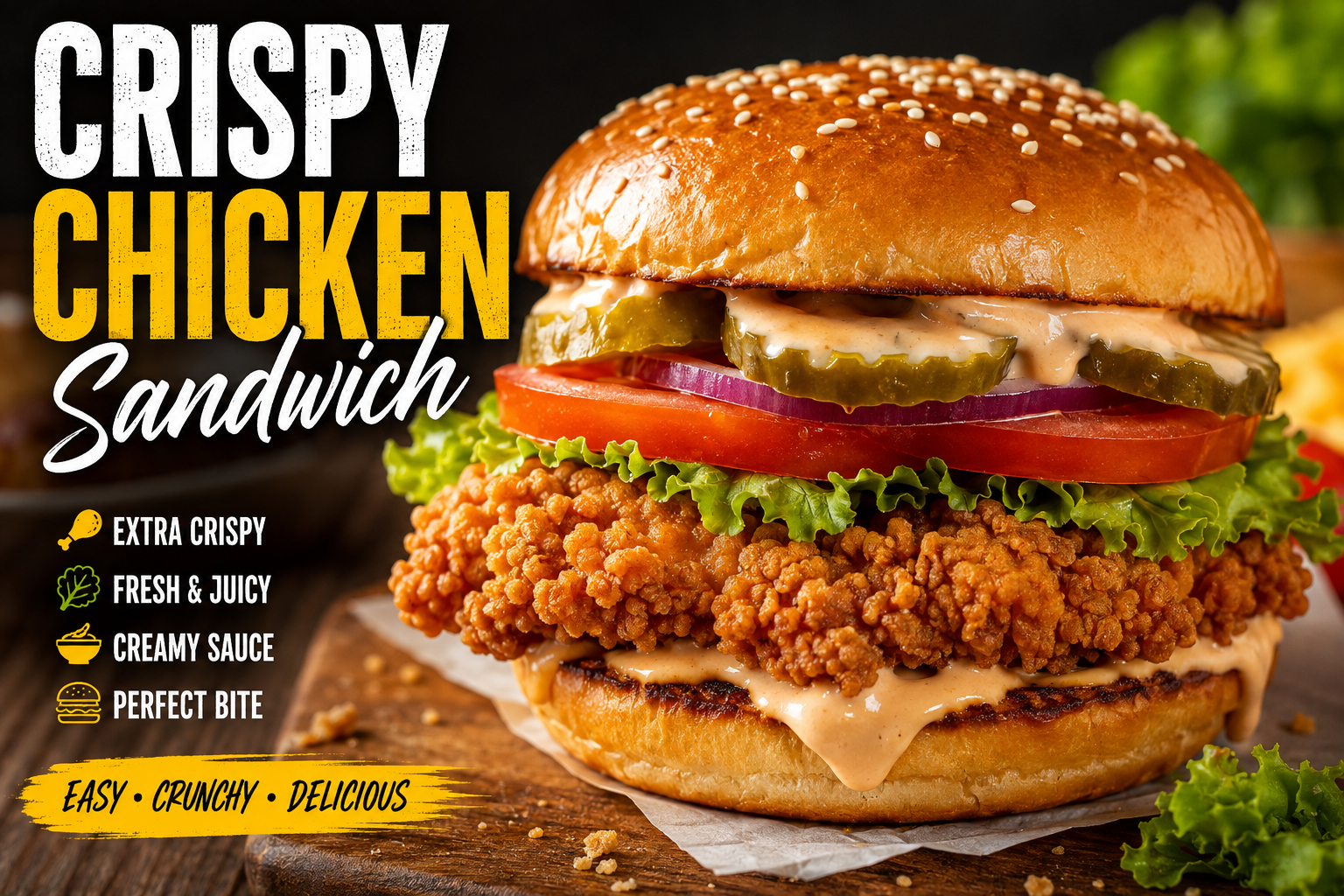
CHICKEN TENDER SANDWICH
A chicken tender sandwich can be made using a soft bun.
Add one or two cooked tenders.
Include lettuce and tomato.
Add cheese if desired.
Finish with barbecue sauce, mayonnaise-style sauce, or another favorite condiment.
Serve immediately for the best texture.
CREATING A FAMILY CHICKEN TENDER NIGHT
You can turn chicken tenders into a fun meal by preparing several sauces and sides.
For example:
Crispy chicken tenders.
Barbecue sauce.
Honey mustard-style sauce.
Creamy garlic dip.
Fresh salad.
Potato wedges.
This allows everyone to build their own plate.
MAKING THE RECIPE KID-FRIENDLY
For a mild version, avoid adding strong spices to the chicken.
Keep the seasoning simple.
Serve sauces separately.
This allows people to choose the flavors they enjoy.
Children should be involved only in age-appropriate kitchen tasks and should have adult supervision around knives, hot oil, ovens, and other hot equipment.
MAKING THE RECIPE FOR GUESTS
When serving guests, prepare the chicken in batches.
Keep cooked tenders warm using appropriate food-safe methods.
Do not stack them tightly.
Provide several sauces.
Add fresh vegetables and simple side dishes.
This creates a welcoming spread without requiring complicated decoration.
MAKING EXTRA-CRISPY TENDERS
If your goal is maximum crunch, pay attention to moisture.
The chicken should not be dripping wet before coating.
Excess wet mixture should be allowed to drip away.
The dry coating should be applied thoroughly.
The cooking temperature should be appropriate.
The pieces should not be overcrowded.
After cooking, avoid trapping steam around the tenders.
All of these small details work together.
WHY PANKO CAN CREATE MORE CRUNCH
Panko-style breadcrumbs have an open texture.
Their larger flakes can create more surface texture than fine breadcrumbs.
When cooked properly, they can become crisp and light.
They can be used alone or mixed with regular breadcrumbs.
ADDING CORN-BASED CRUNCH
Some recipes use a suitable corn-based cereal or crushed cornflakes as part of the coating.
This can create a very textured crust.
If using this style, crush the cereal into medium-sized pieces rather than turning it completely into powder.
Large pieces can provide extra crunch.
However, make sure the coating remains attached to the chicken.
CHEESE CRUST VARIATION
A small amount of grated hard cheese can be mixed into breadcrumbs.
This can add savory flavor.
The cheese may also brown during cooking.
Use moderation because cheese can increase browning and saltiness.
GARLIC-HERB CRUST
For a more aromatic coating, combine breadcrumbs with garlic powder, oregano, parsley, and black pepper.
This creates a flavorful crust without needing a complicated marinade.
SPICY CRUNCHY COATING
A spicy version can include a suitable amount of chili powder, paprika, or another spice.
Start with a moderate amount.
You can always increase the heat in the dipping sauce instead.
LEMON-HERB FLAVOR
A little lemon zest can add brightness to the seasoning.
Use it in moderation.
Lemon juice can add moisture, so it is generally better suited to a marinade or dipping sauce rather than directly into a dry coating.
SERVING WITH LEMON
A small lemon wedge can be served alongside chicken tenders.
A little fresh lemon juice can add acidity and brighten the savory flavor.
Do not add too much because excessive moisture can soften the crispy coating.
CREATING A RESTAURANT-STYLE PLATE
You can make the presentation look restaurant-inspired without making it complicated.
Arrange the tenders neatly.
Place sauces in small bowls.
Add a small salad.
Include potato wedges.
Finish with a little fresh herb garnish.
Keep the plate uncluttered.
The golden chicken should remain the main focus.
UNDERSTANDING WHY COATING FALLS OFF
Sometimes the coating may separate from the chicken during cooking.
This can happen if the surface is excessively wet.
It can also happen if the coating is not pressed gently enough onto the chicken.
Another reason may be overcrowding during cooking.
Handle coated pieces carefully.
Avoid moving them unnecessarily during the early stage of cooking.
WHY THE COATING BECOMES SOGGY
Sogginess can occur because of excess moisture.
It can also happen if hot chicken is covered tightly.
Steam becomes trapped and softens the crust.
Overcrowding can also reduce airflow.
Allow freshly cooked tenders to remain exposed to air briefly before serving.
WHY THE CHICKEN BECOMES DRY
Dry chicken is often caused by overcooking.
Chicken strips are relatively small, so they can cook faster than large pieces of chicken.
Use similar-sized pieces.
Monitor cooking carefully.
Use a thermometer to confirm safe internal temperature.
Once the chicken reaches the appropriate temperature, avoid unnecessary additional cooking.
WHY THE CRUST BECOMES TOO DARK
If the crust becomes dark before the chicken is ready, the cooking temperature may be too high.
Lower the temperature according to the recipe and cooking method.
For baking, you can also cover the dish appropriately if the top is browning too quickly.
For frying, control the oil temperature carefully.
BALANCING CRUNCH AND TENDERNESS
The perfect chicken tender is not simply about making the crust as crunchy as possible.
The inside matters just as much.
The chicken should remain tender and flavorful.
This requires careful cooking.
A slightly lighter crust with juicy chicken is often more enjoyable than an extremely dark crust with dry meat.
THE IMPORTANCE OF CONSISTENCY
Try to keep your process consistent.
Use similar-sized chicken strips.
Measure seasonings when developing the recipe.
Use a consistent coating method.
Keep the cooking temperature steady.
Cook similar quantities in each batch.
Consistency makes it easier to understand what produces the best results.
DEVELOPING YOUR OWN SIGNATURE RECIPE
Once you have made chicken tenders several times, you can begin creating your own version.
Maybe you prefer extra garlic.
Maybe you enjoy more herbs.
Maybe you like a spicy coating.
Maybe you prefer panko.
Maybe you prefer a creamy dipping sauce.
Write down the combinations you like.
Over time, your homemade chicken tenders can become a signature family recipe.
CREATING DIFFERENT COATING STYLES
You can create several versions from the same chicken.
Classic seasoned flour.
Panko-style coating.
Herb and garlic coating.
Cheesy breadcrumb coating.
Spicy coating.
Each version can have a completely different character.
This makes the recipe versatile.
MAKING A CLASSIC VERSION
Keep the seasoning simple.
Use salt, pepper, paprika, garlic powder, and onion powder.
Coat the chicken evenly.
Cook until golden and thoroughly done.
Serve with ketchup or barbecue sauce.
This is a dependable version for a simple family meal.
MAKING A GARLIC-PARMESAN STYLE VERSION
Mix a suitable amount of grated hard cheese into the breadcrumb mixture.
Add garlic powder and dried herbs.
Coat the chicken.
Cook carefully because the cheese can brown quickly.
Serve with a creamy herb dip.
MAKING A SPICY VERSION
Add paprika and an appropriate amount of chili seasoning to the coating.
Keep the spice level moderate.
Serve with a cooling yogurt-based dip.
The contrast between spicy chicken and creamy sauce can be delicious.
MAKING A HERB VERSION
Use oregano, parsley, thyme, or another suitable combination.
Keep the herbs balanced.
Serve with a fresh yogurt-based sauce.
MAKING A CRUNCHY PANKO VERSION
Use panko-style breadcrumbs as the main dry coating.
Season them well.
Press them gently onto the chicken.
Cook using your preferred method.
This can create a particularly textured exterior.
PAIRING WITH POTATOES
Potatoes are a natural companion for chicken tenders.
You can serve baked wedges, roasted potatoes, mashed potatoes, or another suitable preparation.
If the chicken is heavily seasoned, keep the potatoes simpler.
This helps balance the meal.
PAIRING WITH SALAD
A fresh salad can provide a refreshing contrast.
Use crisp vegetables.
Keep the dressing light if desired.
The fresh texture can balance the crunchy chicken.
PAIRING WITH VEGETABLES
Roasted or steamed vegetables can also be served alongside the tenders.
Broccoli, carrots, green beans, corn, or other suitable vegetables can work well.
Choose vegetables according to preference.
MAKING A SIMPLE DINNER PLATTER
A simple platter can contain:
Crispy chicken tenders.
Potato wedges.
Fresh salad.
Two dipping sauces.
A small garnish.
This can create a complete and attractive meal.
KEEPING THE MEAL BALANCED
Chicken tenders are the main source of savory flavor and protein in the meal.
Adding vegetables or salad can provide freshness and variety.
Potatoes or another side can make the meal more filling.
Sauces can provide additional flavor.
There is no need to make every component rich.
Balance is what makes the meal enjoyable.
PREPARING THE RECIPE AHEAD OF TIME
Some preparation can be done in advance.
The chicken can be cut ahead of time and stored safely under refrigeration.
The dry coating can be mixed in advance.
Sauces can be prepared ahead and refrigerated when appropriate.
Vegetables can be washed and prepared.
However, raw chicken should always be stored safely and kept refrigerated.
COATING JUST BEFORE COOKING
For the best coating texture, it is often useful to coat the chicken relatively close to cooking time.
This helps prevent the coating from absorbing too much moisture before it reaches the pan, oven, or air fryer.
If the recipe requires resting, keep the chicken refrigerated when necessary.
SAFE STORAGE OF RAW CHICKEN
Raw chicken should remain refrigerated until you are ready to prepare it.
Use separate containers and utensils where appropriate.
Keep raw chicken away from ready-to-eat foods.
Clean surfaces after preparation.
Wash your hands thoroughly with soap and water.
These habits are essential when preparing poultry.
SAFE STORAGE OF COOKED CHICKEN
Once cooked, chicken tenders should be stored promptly if they will not be eaten soon.
Use a clean, airtight food-safe container.
Refrigerate according to food-safety recommendations.
When reheating, heat thoroughly.
Do not repeatedly reheat the same portion.
FREEZING COOKED TENDERS
Cooked chicken tenders can be suitable for freezing when stored properly.
Allow them to cool appropriately.
Place them in freezer-safe packaging.
Label the container with the date.
When ready to use them, thaw and reheat safely.
A suitable oven or air fryer can help restore some of the crisp texture.
REHEATING FOR BETTER CRUNCH
An oven or air fryer is generally more suitable for restoring crispiness than a microwave.
Place the tenders in a single layer.
Heat until thoroughly warmed.
Avoid overheating because this can dry out the chicken.
The goal is to warm the center while bringing some crispness back to the coating.
USING LEFTOVERS CREATIVELY
Leftover chicken tenders do not have to be served in exactly the same way.
Slice them into a wrap.
Add them to a salad.
Place them into a sandwich.
Cut them into smaller pieces for a bowl meal.
This can make leftovers feel like a new dish.
CREATING A CHICKEN TENDER BOWL
Place cooked rice, salad vegetables, or another suitable base in a bowl.
Add sliced chicken tenders.
Add a sauce.
Top with herbs or vegetables.
This creates a simple and customizable meal.
CHICKEN TENDER RICE BOWL
A rice bowl can include cooked rice, crispy chicken pieces, vegetables, and a suitable sauce.
Keep the chicken separate until serving if you want to maintain maximum crispiness.
Add the sauce just before eating.
CHICKEN TENDER WRAP BOWL
Use lettuce as the base.
Add sliced chicken.
Include tomatoes, cucumber, carrots, and a creamy dressing.
This provides a combination of crunchy chicken and fresh vegetables.
CREATING A PARTY PLATTER
For a larger gathering, arrange chicken tenders on a large serving tray.
Place several dipping sauces around them.
Add vegetable sticks.
Include potato wedges or another suitable side.
Keep the arrangement easy for guests to serve themselves.
SERVING TEMPERATURE
Chicken tenders are best when served warm.
The coating is generally at its crispest shortly after cooking.
If serving a larger group, use appropriate food-safe methods to keep cooked food at a safe temperature.
Avoid leaving cooked chicken at room temperature for extended periods.
THE BEST TIME TO ADD SAUCE
If you want maximum crispiness, serve the sauce separately.
Pouring sauce directly over the chicken can soften the coating.
A dipping sauce allows the crust to remain crisp until the moment you take a bite.
If you prefer saucy chicken, coat the tenders just before serving.
FINAL TIPS FOR CRISPY CHICKEN TENDERS
Choose similar-sized chicken pieces.
Season the chicken properly.
Use a flavorful marinade if desired.
Keep raw chicken refrigerated.
Prepare a balanced coating.
Shake off excess flour.
Allow excess wet mixture to drip away.
Press the dry coating gently onto the chicken.
Avoid overcrowding.
Use the correct cooking temperature.
Cook chicken thoroughly.
Check the internal temperature with a thermometer.
Allow the cooked chicken to rest briefly.
Keep sauces separate for maximum crunch.
Serve warm.
These simple steps can make a noticeable difference.
THE EXPERIENCE OF HOMEMADE CHICKEN TENDERS
Homemade Crispy Chicken Tenders are more than just a quick meal.
They can become a fun cooking project.
You can experiment with seasonings.
You can create different sauces.
You can try several cooking methods.
You can prepare them for family dinners.
You can make them for casual gatherings.
You can turn leftovers into wraps and salads.
The recipe gives you plenty of opportunities to be creative.
WHY THIS RECIPE IS WORTH LEARNING
Once you understand the basic technique, you can apply it to many other dishes.
The same principles of seasoning, coating, controlling moisture, and cooking safely can be useful in many homemade recipes.
You learn how different coatings behave.
You learn how temperature affects texture.
You learn how sauces change the final experience.
These are valuable cooking skills.
PRACTICE MAKES THE RECIPE EASIER
Your first batch may not be perfect.
Maybe the coating will be too thick.
Maybe the chicken will cook faster than expected.
Maybe the crust will not be as crunchy as you wanted.
That is part of learning.
Make a small adjustment next time.
Change the coating.
Adjust the seasoning.
Change the cooking method.
Pay attention to moisture.
Over time, you will understand exactly how to prepare the version you enjoy.
CREATING A RECIPE FOR YOUR FAMILY
Every family has different preferences.
Some people prefer mild flavors.
Some enjoy spicy food.
Some like extra crunch.
Some prefer creamy sauces.
Some enjoy vegetables on the side.
Homemade chicken tenders are flexible enough to satisfy different preferences.
You can keep the basic chicken mild and provide several sauces.
This allows everyone to customize their meal.
THE PERFECT HOMEMADE CHICKEN TENDER
The perfect tender does not need to look exactly like one from a restaurant.
It simply needs to meet your preferences.
The chicken should be safely cooked.
The coating should be crisp.
The seasoning should be balanced.
The texture should be enjoyable.
The sauce should complement the chicken.
The meal should leave you satisfied.
FINAL CONCLUSION
Crispy Chicken Tenders are a wonderful homemade recipe because they combine simple preparation with endless possibilities.
The foundation is straightforward.
Prepare the chicken.
Season it.
Create a coating.
Cook it properly.
Serve it with sauce.
But within that simple structure, there is a huge amount of room for creativity.
You can change the seasoning.
You can change the coating.
You can change the cooking method.
You can change the dipping sauce.
You can change the side dishes.
You can even turn the leftovers into wraps, sandwiches, salads, or bowls.
The key to excellent chicken tenders is balance.
The chicken should be tender.
The coating should be crisp.
The seasoning should be flavorful.
The sauce should complement the chicken.
The cooking process should be safe and controlled.
Do not rush the preparation.
Take time to organize your ingredients.
Prepare the coating carefully.
Avoid excess moisture.
Keep the chicken pieces similar in size.
Do not overcrowd the cooking surface.
Monitor the temperature.
Cook the chicken thoroughly.
Allow it to rest briefly.
Then serve it while warm.
For a classic meal, pair the tenders with ketchup and potato wedges.
For something fresher, serve them with salad and a yogurt-based herb dip.
For a spicy experience, add a flavorful chili sauce.
For a richer version, try a cheesy or garlic-herb coating.
For a quick lunch, turn the tenders into a wrap.
For a lighter meal, slice them over a fresh salad.
For a family gathering, create a platter with several sauces.
There is no single way to enjoy homemade chicken tenders.
That is what makes them so versatile.
A good recipe should not only tell you what to cook.
It should also give you the confidence to experiment.
Once you understand the basic technique, you can start making small changes.
Maybe you discover that you love extra garlic.
Maybe you prefer a stronger herb flavor.
Maybe panko gives you the perfect crunch.
Maybe baking works better for your kitchen.
Maybe the air fryer becomes your favorite method.
Maybe your family loves one particular dipping sauce.
Those discoveries are part of the cooking experience.
Homemade food becomes special when you begin to make it according to your own preferences.
Crispy Chicken Tenders are also a great example of how small details matter.
The way you cut the chicken matters.
The amount of moisture matters.
The seasoning matters.
The coating matters.
The cooking temperature matters.
The amount of space between pieces matters.
Even the way you serve the finished chicken can affect the experience.
When all these details come together, the result can be incredibly satisfying.
The first bite should give you the contrast that makes the recipe so enjoyable.
A crunchy exterior.
A tender center.
Savory seasoning.
A delicious sauce.
And a warm, comforting meal.
That combination is why chicken tenders have become such a popular favorite.
But homemade chicken tenders offer something extra.
You get to prepare them yourself.
You can choose your ingredients.
You can adjust the flavors.
You can experiment.
You can share the finished meal with your family.
And you can improve the recipe every time you make it.
So the next time you are looking for a comforting homemade meal, consider preparing Crispy Chicken Tenders.
Start with good-quality chicken.
Prepare the marinade if desired.
Mix your coating.
Organize your cooking station.
Coat each piece carefully.
Choose your preferred cooking method.
Cook until golden and thoroughly done.
Let the chicken rest briefly.
Prepare your favorite sauces.
Add a few simple sides.
And serve everything while warm.
Most importantly, enjoy the process.
Cooking does not have to be perfect.
It is about learning, experimenting, and creating something you enjoy.
With practice, you can develop a version of Crispy Chicken Tenders that becomes a favorite in your kitchen.
You may eventually have your own special seasoning blend.
You may have a signature dipping sauce.
You may discover the perfect coating combination.
You may even create your own family tradition around chicken tender night.
That is the beauty of homemade recipes.
They can start as a simple idea and become something personal.
Crispy Chicken Tenders can be crunchy, flavorful, comforting, and versatile.
They can be served at lunch.
They can be served at dinner.
They can be included in a casual gathering.
They can become part of a weekend meal.
They can be transformed into wraps and salads.
They can be customized for different tastes.
And they can be enjoyed with countless dipping sauces.
So keep experimenting.
Keep learning.
Keep improving.
And keep enjoying the wonderful process of homemade cooking.
A plate of golden Crispy Chicken Tenders, served with your favorite sauce and simple sides, can turn an ordinary meal into something special.
The recipe may begin with a few basic ingredients, but careful preparation can transform them into a delicious homemade dish.
That is the magic of cooking.
Simple ingredients.
Thoughtful preparation.
Good technique.
And a meal made with care.
Enjoy your homemade Crispy Chicken Tenders! 🍗✨❤️