 Her Happy Kitchen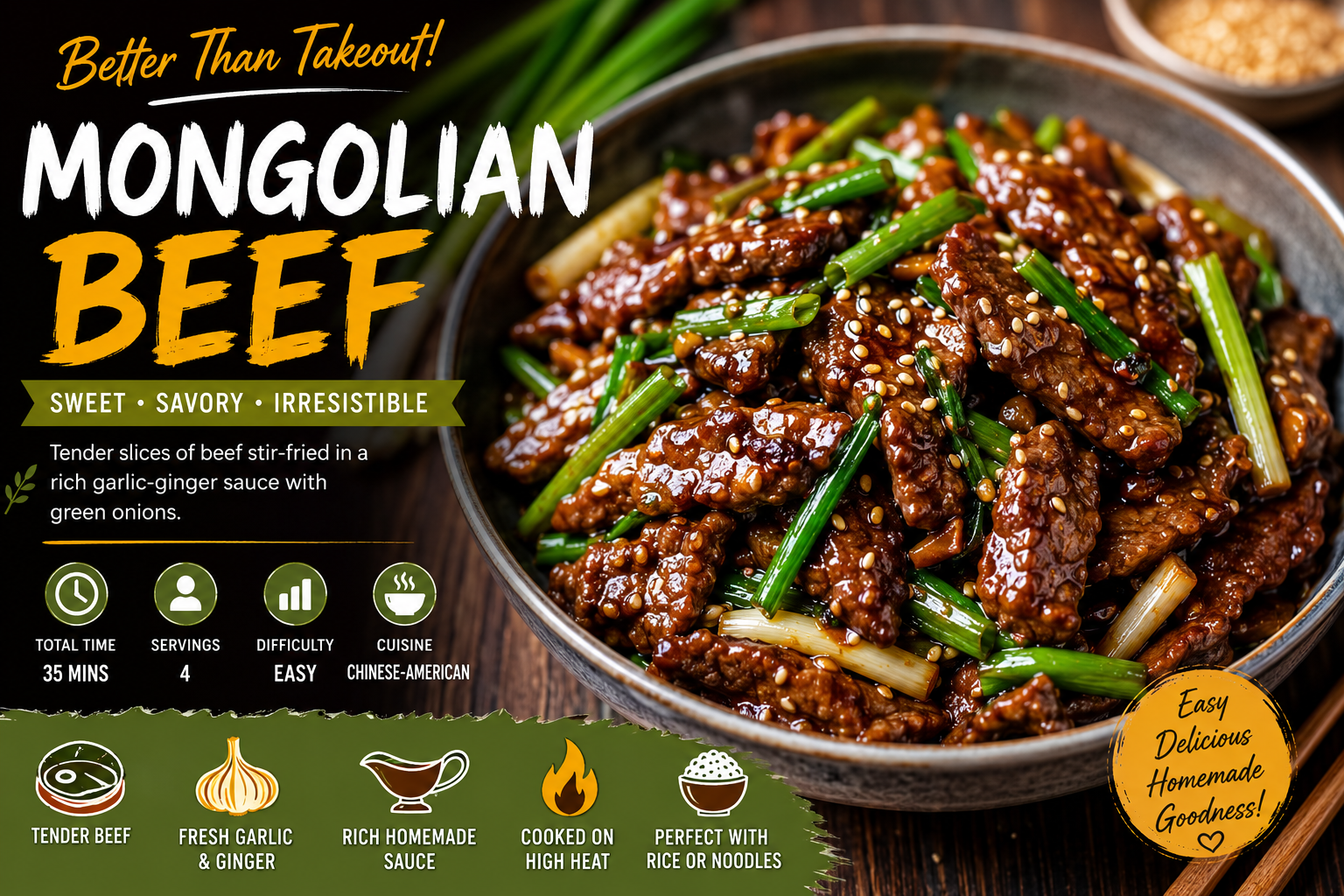
Introduction
If you’re looking for a quick, flavorful, and restaurant-quality dinner that you can easily prepare at home, this Mongolian Beef Recipe is exactly what you need. Made with tender slices of beef, a rich garlic-ginger soy sauce, and finished with fresh green onions, Mongolian Beef is one of the most popular Chinese-American dishes. It’s known for its glossy sauce, perfectly cooked beef, and delicious balance of sweet and savory flavors.
Despite its name, Mongolian Beef isn’t a traditional Mongolian dish. Instead, it became popular in Chinese-American restaurants and quickly earned a reputation as one of the best takeout meals. The secret lies in thinly sliced beef that’s lightly coated in cornstarch, quickly fried until crisp, and then tossed in a rich sauce made with soy sauce, brown sugar, garlic, ginger, and a touch of sesame oil.
One of the best things about this recipe is how quickly it comes together. Once all the ingredients are prepared, the entire dish cooks in less than 30 minutes, making it perfect for busy weeknights. Pair it with steamed jasmine rice, fried rice, noodles, or stir-fried vegetables for a complete restaurant-style meal.
The homemade sauce is what truly makes this dish stand out. Unlike many store-bought sauces, this version is made from simple pantry ingredients and delivers the perfect balance of sweetness, saltiness, and rich umami flavor. Fresh garlic and ginger provide incredible aroma, while green onions add freshness and color.
Another reason to love Mongolian Beef is its versatility. You can customize it by adding broccoli, bell peppers, mushrooms, snap peas, carrots, or even spicy chili flakes. Whether you prefer a mild version or one with extra heat, this recipe can easily be adjusted to match your taste.
In this complete recipe guide, you’ll learn everything you need to know about making authentic homemade Mongolian Beef. From choosing the best cut of beef and preparing the perfect sauce to stir-frying techniques, serving ideas, storage tips, recipe variations, and expert cooking advice, every step is explained in detail.
Whether you’re cooking for your family, preparing a special dinner, or simply craving your favorite takeout at home, this Mongolian Beef recipe is guaranteed to impress. With tender beef, a glossy homemade sauce, and simple ingredients, you’ll enjoy restaurant-quality flavor in every bite.
Why You’ll Love This Recipe
There are many reasons why this Mongolian Beef recipe deserves a place in your weekly meal plan.
- Ready in about 30 minutes.
- Better than takeout.
- Rich homemade sauce.
- Tender and juicy beef.
- Easy one-pan recipe.
- Beginner-friendly.
- Perfect with rice or noodles.
- Family-friendly.
- Easy to customize with vegetables.
- Restaurant-quality flavor at home.
Every bite is packed with sweet, savory, garlicky goodness.
What Is Mongolian Beef?
Mongolian Beef is a Chinese-American stir-fry dish made with thinly sliced beef that’s lightly coated in cornstarch, quickly cooked over high heat, and tossed in a glossy sauce made from soy sauce, brown sugar, garlic, ginger, and green onions.
The cornstarch coating creates a light crust on the beef while also helping the sauce cling to every piece.
Ingredients You’ll Need
For the Beef
- 1½ pounds flank steak or sirloin steak
- ¼ cup cornstarch
- Salt
- Black pepper
- 2 tablespoons vegetable oil
For the Sauce
- ½ cup low-sodium soy sauce
- ⅓ cup brown sugar
- 3 cloves garlic, minced
- 1 tablespoon fresh ginger, grated
- 1 teaspoon sesame oil
- ½ cup water
- 1 tablespoon cornstarch mixed with 2 tablespoons water (slurry)
For Garnish
- 4 green onions, sliced
- Sesame seeds (optional)
Choosing the Best Beef
The best cuts for Mongolian Beef include:
- Flank steak
- Sirloin steak
- Skirt steak
Always slice the beef against the grain into very thin strips.
For easier slicing, place the beef in the freezer for 20–30 minutes before cutting.
Essential Kitchen Equipment
You’ll need:
- Large wok or skillet
- Sharp knife
- Cutting board
- Mixing bowls
- Measuring cups
- Tongs
- Wooden spoon
A wok works best because it retains high heat and cooks the beef quickly.
Preparation Tips Before Cooking
Before turning on the stove:
- Slice the beef thinly.
- Mince the garlic.
- Grate the ginger.
- Slice the green onions.
- Mix the sauce ingredients.
- Prepare the cornstarch slurry.
Since stir-frying happens quickly, having everything ready beforehand is essential.
Step-by-Step Cooking Instructions
Step 1: Prepare the Beef
Pat the beef dry using paper towels.
Slice it into very thin strips against the grain.
Place the sliced beef into a mixing bowl.
Season lightly with:
- Salt
- Black pepper
Sprinkle the cornstarch over the beef.
Toss until every piece is evenly coated.
Let it rest for 10–15 minutes.
The cornstarch creates a light coating that helps the beef become tender while allowing the sauce to cling beautifully.
Step 2: Prepare the Sauce
In a bowl combine:
- Soy sauce
- Brown sugar
- Water
- Sesame oil
- Minced garlic
- Fresh grated ginger
Whisk until the brown sugar dissolves completely.
In a separate small bowl mix:
- 1 tablespoon cornstarch
- 2 tablespoons water
This slurry will thicken the sauce later.
Set both bowls aside.
Step 3: Heat the Wok
Place a large wok or heavy skillet over high heat.
Add:
- 2 tablespoons vegetable oil
Allow the oil to become very hot before adding the beef.
High heat is essential for proper stir-frying.
Step 4: Cook the Beef
Add the coated beef in a single layer.
Do not overcrowd the pan.
Cook for 2–3 minutes, stirring occasionally.
The beef should develop lightly crispy edges while remaining tender inside.
If necessary, cook the beef in two batches.
Transfer the cooked beef to a plate.
Step 5: Cook the Aromatics
Without washing the wok, reduce the heat slightly.
If needed, add another teaspoon of oil.
Add:
- Garlic
- Ginger
Cook for 30–40 seconds until fragrant.
Be careful not to burn the garlic.
Step 6: Make the Sauce
Pour the prepared sauce into the wok.
Bring it to a gentle simmer.
Stir continuously.
Slowly pour in the cornstarch slurry.
Continue stirring for 2–3 minutes until the sauce becomes glossy and slightly thick.
Step 7: Combine the Beef
Return the cooked beef to the wok.
Toss everything together until every piece is completely coated with the rich sauce.
Cook for another 2 minutes.
The beef will absorb the sweet and savory flavors while remaining juicy.
Step 8: Add Green Onions
Stir in the sliced green onions.
Cook for about 30 seconds.
The onions should stay bright green while adding freshness and mild flavor.
Step 9: Garnish
Remove the wok from the heat.
Garnish with:
- Sesame seeds
- Extra sliced green onions
- Red chili flakes (optional)
These finishing touches enhance both flavor and presentation.
Step 10: Serve Immediately
Serve the Mongolian Beef while it’s hot.
It pairs perfectly with:
- Steamed jasmine rice
- Fried rice
- Lo mein noodles
- Chow mein
- Stir-fried vegetables
- Egg fried rice
Spoon extra sauce over the rice for maximum flavor.
Expert Cooking Tips
For the best homemade Mongolian Beef:
- Slice the beef very thin.
- Always cook over high heat.
- Do not overcrowd the wok.
- Use fresh garlic and ginger.
- Add the green onions at the end.
- Serve immediately while the sauce is glossy.
Following these simple techniques will give you tender beef coated in a rich, sweet, savory sauce that’s every bit as delicious as your favorite restaurant version.
Recipe Variations, Best Vegetables, Sauce Secrets, and Ingredient Guide
One of the reasons Mongolian Beef remains a favorite takeout dish is its versatility. While the classic version features tender beef coated in a sweet and savory soy-based sauce, you can easily customize the recipe with different vegetables, spice levels, and proteins to create your own signature version.
In this section, you’ll learn how to choose the best ingredients, make an even better homemade sauce, discover delicious recipe variations, and use professional cooking techniques that will take your Mongolian Beef to the next level.
The Secret to Authentic Mongolian Beef Sauce
The rich glossy sauce is what makes this dish unforgettable.
A perfect Mongolian sauce should be:
- Sweet
- Savory
- Slightly smoky
- Rich in umami
- Thick enough to coat every piece of beef
Essential ingredients include:
- Soy sauce
- Brown sugar
- Fresh garlic
- Fresh ginger
- Sesame oil
- Water
- Cornstarch slurry
Allow the sauce to simmer gently until it becomes smooth and glossy.
Fresh Garlic and Ginger Make a Difference
Never skip fresh garlic and ginger.
Fresh ingredients provide:
- Stronger aroma
- Better flavor
- Restaurant-quality taste
Powdered versions work in emergencies but won’t produce the same depth of flavor.
Choosing the Best Beef
Several cuts work well.
Excellent choices include:
- Flank steak
- Sirloin steak
- Skirt steak
- Top sirloin
Always slice the beef thinly against the grain.
This shortens the muscle fibers and keeps the meat tender.
Best Vegetables to Add
Although classic Mongolian Beef uses mostly green onions, many home cooks enjoy adding vegetables.
Popular choices include:
- Broccoli
- Bell peppers
- Mushrooms
- Snap peas
- Carrots
- Baby corn
- Bok choy
Cook the vegetables until just tender so they remain slightly crisp.
Spicy Mongolian Beef
Love spicy food?
Add:
- Red chili flakes
- Fresh sliced chilies
- Chili garlic sauce
- Sriracha
These ingredients increase the heat without overpowering the sweet soy sauce.
Healthy Mongolian Beef
For a lighter version:
- Use lean sirloin steak.
- Reduce the brown sugar.
- Use low-sodium soy sauce.
- Add extra vegetables.
- Serve with brown rice.
These changes create a healthier meal while maintaining excellent flavor.
Chicken Mongolian
Don’t eat beef?
Replace the steak with:
- Chicken breast
- Chicken thighs
Cook using the exact same method.
The sauce pairs beautifully with chicken.
Best Side Dishes
Mongolian Beef pairs perfectly with:
- Steamed jasmine rice
- Fried rice
- Lo mein noodles
- Chow mein
- Garlic noodles
- Stir-fried vegetables
- Egg rolls
- Spring rolls
These sides complete the meal beautifully.
Professional Chef Tips
Restaurant chefs recommend:
- Cook over very high heat.
- Slice beef paper-thin.
- Stir-fry quickly.
- Never overcook the beef.
- Add green onions last.
- Serve immediately.
These simple techniques create tender beef and a glossy restaurant-style sauce.
Common Mistakes to Avoid
Avoid these common mistakes:
- Slicing beef too thick.
- Cooking over low heat.
- Overcrowding the wok.
- Using too much cornstarch.
- Overcooking the sauce.
- Adding vegetables too early.
Correcting these mistakes will noticeably improve both texture and flavor.
Why Homemade Mongolian Beef Is Better
Making Mongolian Beef at home allows you to:
- Use premium-quality beef.
- Control the sweetness.
- Reduce sodium.
- Add fresh vegetables.
- Customize the spice level.
- Save money.
The result is a fresher, healthier, and more flavorful meal than many takeout versions.
Best Side Dishes, Serving Ideas, Storage Tips, and Meal Prep Guide
A homemade Mongolian Beef is delicious on its own, but pairing it with the right side dishes transforms it into a complete restaurant-style meal. Whether you’re preparing dinner for your family, entertaining guests, or meal-prepping for the week, choosing the right accompaniments makes every bite even more satisfying.
This section covers the best side dishes, drinks, storage methods, reheating techniques, and meal-prep ideas so you can enjoy Mongolian Beef anytime.
Best Side Dishes
The sweet and savory flavors of Mongolian Beef pair wonderfully with simple side dishes.
Popular choices include:
- Steamed jasmine rice
- Egg fried rice
- Brown rice
- Lo mein noodles
- Chow mein noodles
- Garlic noodles
- Stir-fried vegetables
- Vegetable fried rice
- Cauliflower rice
- Steamed broccoli
These sides soak up the rich sauce and complete the meal.
Best Vegetables
Fresh vegetables balance the richness of the beef.
Excellent options include:
- Broccoli
- Bell peppers
- Snap peas
- Mushrooms
- Bok choy
- Carrots
- Baby corn
- Green beans
Lightly stir-fry the vegetables so they remain crisp and colorful.
Appetizers to Serve
Complete your meal with appetizers such as:
- Spring rolls
- Egg rolls
- Crab Rangoon
- Dumplings
- Vegetable wontons
- Hot and sour soup
These dishes pair perfectly with Mongolian Beef.
Perfect Drinks
Refreshing drinks balance the rich soy-based sauce.
Popular beverages include:
- Iced tea
- Sparkling water
- Lemonade
- Green tea
- Jasmine tea
- Apple juice
These drinks refresh the palate between bites.
How to Store Leftovers
Allow the Mongolian Beef to cool completely.
Transfer it to an airtight container.
Store in the refrigerator for:
Up to 4 days
Store cooked rice separately for the best texture.
Can You Freeze Mongolian Beef?
Yes.
The cooked beef freezes very well.
To freeze:
- Cool completely.
- Divide into meal-sized portions.
- Store in freezer-safe containers or bags.
- Label with the date.
Freeze for:
Up to 3 months
Thaw overnight in the refrigerator before reheating.
Best Reheating Methods
Stovetop
Heat a skillet over medium heat.
Add the beef with a splash of water if needed.
Cook for 3–5 minutes, stirring occasionally.
This method keeps the sauce smooth and the beef tender.
Microwave
Place the beef into a microwave-safe bowl.
Cover loosely.
Heat for:
- 1 minute
Stir.
Continue heating in 30-second intervals until hot.
Wok
For the freshest taste, quickly reheat the beef in a hot wok for 2–3 minutes.
This restores the original texture and flavor.
Meal Prep Tips
Mongolian Beef is excellent for meal prep.
Prepare in advance:
- Slice the beef.
- Mix the sauce.
- Chop the vegetables.
- Cook fresh rice.
Store everything separately until ready to cook.
This saves time on busy weeknights.
Serving Ideas for Parties
Hosting guests?
Serve Mongolian Beef buffet-style with:
- Steamed rice
- Fried rice
- Noodles
- Stir-fried vegetables
- Spring rolls
- Extra sauce
Guests can build their own perfect plate.
Restaurant Presentation Tips
Serve Mongolian Beef in a shallow serving bowl.
Garnish with:
- Sliced green onions
- Toasted sesame seeds
- Red chili flakes (optional)
Serve alongside fluffy jasmine rice for a beautiful restaurant-style presentation.
Expert Serving Tips
For the best dining experience:
- Serve immediately while hot.
- Spoon extra sauce over the rice.
- Garnish just before serving.
- Warm the serving plates.
- Offer chopsticks and forks for convenience.
With the right side dishes, proper storage methods, and simple serving techniques, your homemade Mongolian Beef will taste just as delicious the next day and impress everyone at the table.
Nutrition Facts, Health Benefits, Frequently Asked Questions, and Expert Tips
Homemade Mongolian Beef is a delicious combination of tender beef, fresh aromatics, and a rich soy-based sauce. When prepared with fresh ingredients and served with vegetables or steamed rice, it can be a satisfying and balanced meal. Making it at home also allows you to control the amount of sugar, sodium, and oil used, making it healthier than many restaurant takeout versions.
In this section, you’ll learn about the nutritional value of Mongolian Beef, its health benefits, answers to the most frequently asked questions, and professional chef tips for consistently delicious results.
Nutritional Information
The nutritional values below are approximate for one serving.
- Calories: 420–550 kcal
- Protein: 28–35 grams
- Carbohydrates: 20–30 grams
- Fat: 18–25 grams
- Fiber: 1–3 grams
- Sugar: 10–15 grams
- Sodium: 700–1000 mg
The exact values depend on the amount of sauce, oil, and sugar used.
Health Benefits
Although Mongolian Beef is known as a comfort-food favorite, it also provides several important nutrients.
Excellent Source of Protein
Beef is naturally rich in high-quality protein.
Protein helps:
- Build muscle
- Repair body tissues
- Support healthy metabolism
- Keep you feeling full longer
Rich in Iron
Beef contains iron, an important mineral that helps produce healthy red blood cells and supports oxygen transport throughout the body.
Provides Vitamin B12
Beef is an excellent source of Vitamin B12, which supports:
- Brain function
- Healthy nerves
- Red blood cell production
Fresh Garlic and Ginger
Garlic and ginger not only enhance flavor but also provide natural antioxidants and beneficial plant compounds.
How to Make It Healthier
For a lighter version:
- Use lean sirloin steak.
- Reduce the brown sugar.
- Choose low-sodium soy sauce.
- Add more vegetables.
- Serve with brown rice.
- Use less cooking oil.
These simple changes reduce calories while maintaining great flavor.
Frequently Asked Questions
Can I use another cut of beef?
Yes.
Good alternatives include:
- Sirloin
- Skirt steak
- Top round
- Flank steak
Always slice the meat thinly against the grain.
Can I make Mongolian Beef ahead of time?
Yes.
Cook the beef and sauce separately if possible.
Combine and reheat just before serving for the best texture.
Can I freeze Mongolian Beef?
Absolutely.
Store cooled Mongolian Beef in airtight containers.
Freeze for up to 3 months.
Thaw overnight in the refrigerator before reheating.
Can I add vegetables?
Yes.
Popular additions include:
- Broccoli
- Bell peppers
- Mushrooms
- Snap peas
- Carrots
- Bok choy
These vegetables make the meal even more nutritious.
Is Mongolian Beef spicy?
Traditional Mongolian Beef is usually mild.
If you prefer extra heat, simply add:
- Red chili flakes
- Fresh chilies
- Sriracha
- Chili garlic sauce
Can I use chicken instead of beef?
Yes.
Chicken breast or chicken thighs work wonderfully with the same sauce.
The cooking method remains almost identical.
Professional Chef Tips
Restaurant chefs recommend:
- Slice the beef while it’s slightly frozen.
- Cook over very high heat.
- Never overcrowd the wok.
- Add the sauce only after the beef is cooked.
- Stir continuously while thickening the sauce.
- Serve immediately for the best texture.
These small techniques make a huge difference in the final dish.
Final Thoughts
Mongolian Beef is one of the easiest and most satisfying Chinese-American dishes you can prepare at home. Tender slices of beef coated in a rich, glossy garlic-ginger sauce create a meal that’s flavorful, comforting, and better than takeout. Whether served with steamed rice, noodles, or stir-fried vegetables, it’s a recipe that’s sure to become a regular favorite in your kitchen.
With simple ingredients, quick cooking, and endless customization options, this homemade Mongolian Beef recipe is perfect for busy weeknights, family dinners, meal prep, and special occasions. Once you’ve mastered the sauce and high-heat stir-frying technique, you’ll enjoy restaurant-quality results every single time.
Recipe Variations, Creative Serving Ideas, Common Mistakes, and Restaurant Secrets
One of the biggest reasons Mongolian Beef has remained a favorite Chinese-American dish is its versatility. Once you’ve mastered the classic recipe, you can easily create exciting variations using different proteins, vegetables, sauces, and spice levels. Whether you’re preparing a quick weeknight dinner or a special meal for guests, there are countless ways to customize this recipe.
In this section, you’ll discover delicious recipe variations, creative serving ideas, common cooking mistakes to avoid, and professional chef secrets that will help you make restaurant-quality Mongolian Beef every time.
Classic Mongolian Beef
The traditional version includes:
- Thinly sliced beef
- Garlic
- Fresh ginger
- Soy sauce
- Brown sugar
- Green onions
This simple combination creates the rich, glossy sauce that makes Mongolian Beef so popular.
Spicy Mongolian Beef
Love spicy food?
Add:
- Fresh red chilies
- Chili garlic sauce
- Sriracha
- Crushed red pepper flakes
- Chili oil
The added heat perfectly balances the sweetness of the sauce.
Broccoli Mongolian Beef
For extra nutrition, stir in:
- Fresh broccoli florets
Cook the broccoli until tender-crisp before adding the sauce.
This version is one of the most popular restaurant variations.
Mongolian Chicken
Replace the beef with:
- Chicken breast
- Chicken thighs
The homemade sauce pairs beautifully with chicken while keeping the same sweet and savory flavor.
Mongolian Shrimp
Seafood lovers can substitute beef with:
- Large shrimp
Cook the shrimp for only 2–3 minutes to keep them tender and juicy.
Healthy Mongolian Beef
For a lighter version:
- Use lean sirloin steak.
- Reduce the brown sugar.
- Choose low-sodium soy sauce.
- Add extra vegetables.
- Serve with brown rice.
This version offers excellent flavor while lowering calories and sodium.
Creative Serving Ideas
Mongolian Beef doesn’t have to be served only with rice.
Try serving it with:
- Lo mein noodles
- Chow mein
- Fried rice
- Rice bowls
- Lettuce wraps
- Steamed vegetables
- Cauliflower rice
- Baked potatoes
These creative serving options keep the recipe exciting.
Common Mistakes to Avoid
Avoid these common mistakes:
- Slicing the beef too thick.
- Overcooking the meat.
- Cooking over low heat.
- Using too much cornstarch.
- Adding the sauce too early.
- Overcrowding the wok.
- Overcooking the green onions.
Correcting these mistakes instantly improves flavor and texture.
Professional Chef Secrets
Restaurant chefs use several techniques to create authentic Mongolian Beef.
They always:
- Slice beef very thin.
- Cook in small batches.
- Use very high heat.
- Prepare the sauce before cooking.
- Add the sauce only after the beef is cooked.
- Toss everything together quickly before serving.
These methods create tender beef with a glossy restaurant-style finish.
Why Homemade Is Better Than Takeout
Preparing Mongolian Beef at home allows you to:
- Choose premium-quality beef.
- Control sugar and sodium.
- Add fresh vegetables.
- Adjust the spice level.
- Avoid unnecessary preservatives.
- Save money.
The result is a fresher, healthier, and more flavorful meal than most takeout versions.
Final Thoughts
Mongolian Beef is one of the easiest stir-fry recipes to master. Its tender slices of beef, rich garlic-ginger sauce, and quick cooking time make it ideal for busy weeknights while still being impressive enough for entertaining guests.
Whether you stick with the classic recipe or experiment with vegetables, chicken, shrimp, or spicy variations, this versatile dish is sure to become a regular favorite in your kitchen. Once you’ve learned the simple stir-fry techniques and perfected the homemade sauce, you’ll enjoy restaurant-quality Mongolian Beef whenever you want—fresh, flavorful, and made exactly the way you like it.
Best Ingredients, Sauce Secrets, Cooking Techniques, and Professional Tips
Making an unforgettable Mongolian Beef isn’t just about following a recipe—it’s about choosing the right ingredients and using proper cooking techniques. From selecting the best cut of beef to creating a perfectly balanced sauce, every small detail contributes to the rich flavor and tender texture that make this dish so popular.
In this section, you’ll learn how to choose the best ingredients, avoid common mistakes, and use restaurant-style techniques to create authentic homemade Mongolian Beef.
Choosing the Best Beef
The quality of the beef has the biggest impact on the final dish.
The best cuts include:
- Flank steak
- Sirloin steak
- Skirt steak
- Top sirloin
These cuts remain tender when sliced thinly and cooked quickly.
Always slice the beef against the grain into thin strips.
Placing the beef in the freezer for 20–30 minutes before slicing makes the job much easier.
Why Cornstarch Is Important
Cornstarch is one of the key ingredients in Mongolian Beef.
It helps:
- Create a light crispy coating.
- Lock moisture inside the beef.
- Thicken the sauce.
- Help the sauce stick to the meat.
Avoid using too much cornstarch, as it can make the coating heavy.
Fresh Garlic and Ginger
Fresh garlic and ginger are essential.
They provide:
- Rich aroma
- Fresh flavor
- Authentic restaurant taste
Fresh ingredients always produce better results than powdered alternatives.
The Secret to Perfect Mongolian Sauce
A great Mongolian sauce should be:
- Rich
- Glossy
- Sweet
- Savory
- Slightly thick
The essential ingredients are:
- Soy sauce
- Brown sugar
- Garlic
- Ginger
- Sesame oil
- Water
- Cornstarch slurry
Allow the sauce to simmer gently until it reaches a silky consistency.
Why High Heat Matters
Professional chefs always cook Mongolian Beef over very high heat.
High heat:
- Sears the beef quickly.
- Prevents overcooking.
- Creates better texture.
- Preserves the meat’s juices.
A hot wok or cast-iron skillet produces the best results.
Best Oil for Stir-Frying
Choose oils with a high smoke point.
Recommended options include:
- Vegetable oil
- Canola oil
- Peanut oil
- Avocado oil
Avoid butter because it burns quickly over high heat.
Best Garnishes
Finish the dish with:
- Sliced green onions
- Sesame seeds
- Red chili flakes
- Fresh cilantro (optional)
These garnishes improve both appearance and flavor.
Restaurant Cooking Secrets
Professional chefs follow a few simple rules:
- Prepare every ingredient before heating the wok.
- Cook the beef in small batches.
- Never overcrowd the pan.
- Add the sauce only after the beef is cooked.
- Toss quickly before serving.
- Serve immediately while hot.
These small techniques create authentic restaurant-quality Mongolian Beef.
Mistakes That Reduce Flavor
Avoid these common mistakes:
- Cutting thick slices of beef.
- Cooking over low heat.
- Burning the garlic.
- Overcooking the beef.
- Using stale ginger.
- Adding too much soy sauce.
- Thickening the sauce too much.
Correcting these mistakes dramatically improves the final dish.
Why Homemade Mongolian Beef Is Better
Making Mongolian Beef at home allows you to:
- Choose premium-quality ingredients.
- Control sweetness and sodium.
- Adjust the spice level.
- Add fresh vegetables.
- Avoid preservatives.
- Save money compared to takeout.
The result is a healthier, fresher, and more flavorful meal.
Final Professional Tips
Before serving, remember these simple techniques:
- Slice the beef very thin.
- Heat the wok until very hot.
- Stir-fry quickly.
- Keep the sauce glossy.
- Garnish just before serving.
- Serve immediately with hot rice or noodles.
By following these professional techniques, you’ll create tender, juicy Mongolian Beef coated in a rich homemade sauce that’s every bit as delicious as your favorite restaurant version.
Recipe Summary, Nutrition Facts, Final FAQs, Meal Ideas, and Conclusion
After learning how to prepare tender beef, make a rich homemade Mongolian sauce, stir-fry like a professional chef, and customize the recipe with different vegetables and proteins, you now have everything you need to create authentic Mongolian Beef at home.
This final section summarizes the recipe, provides nutritional information, answers a few more frequently asked questions, offers additional meal ideas, and concludes with final cooking advice.
Recipe Summary
Recipe Name: Mongolian Beef
Cuisine: Chinese-American
Course: Main Course
Preparation Time: 20 minutes
Cooking Time: 15 minutes
Total Time: About 35 minutes
Servings: 4
Difficulty Level: Easy
Nutrition Facts (Per Serving)
Approximate nutritional values:
- Calories: 420–550 kcal
- Protein: 28–35 g
- Carbohydrates: 20–30 g
- Fat: 18–25 g
- Fiber: 2–4 g
- Sugar: 10–15 g
- Sodium: 700–1000 mg
The nutritional values vary depending on the ingredients and portion size.
More Frequently Asked Questions
Can I make Mongolian Beef without cornstarch?
Yes.
However, the beef will not have the same light coating, and the sauce may not cling as well.
Arrowroot powder can be used as an alternative.
Can I prepare the sauce ahead of time?
Absolutely.
Mix the sauce ingredients and store them in the refrigerator for up to 3 days.
Shake or stir well before using.
Can I double the recipe?
Yes.
Cook the beef in multiple batches instead of overcrowding the wok.
This keeps the beef tender and properly seared.
Can I use frozen beef?
Yes.
Completely thaw the beef in the refrigerator before slicing and cooking.
Pat it dry to remove excess moisture.
What vegetables pair best with Mongolian Beef?
Some excellent choices include:
- Broccoli
- Bell peppers
- Mushrooms
- Snap peas
- Carrots
- Bok choy
- Green beans
These vegetables complement the sweet and savory sauce perfectly.
Meal Ideas
Leftover Mongolian Beef can be transformed into:
- Rice bowls
- Noodle bowls
- Lettuce wraps
- Fried rice
- Stir-fried noodles
- Stuffed baked potatoes
- Wraps
This makes it an excellent recipe for meal prep.
Expert Final Tips
For restaurant-quality Mongolian Beef:
- Use fresh ingredients.
- Slice the beef thinly.
- Cook over high heat.
- Stir-fry quickly.
- Keep the sauce glossy.
- Serve immediately.
These simple techniques guarantee tender beef and bold flavor.
Final Thoughts
Mongolian Beef is one of the easiest and most rewarding stir-fry recipes you can make at home. Its combination of tender beef, fresh garlic, ginger, green onions, and a rich sweet-savory sauce creates a comforting meal that’s both quick and satisfying.
Whether you’re preparing a weeknight dinner, entertaining guests, or replacing your favorite takeout meal, this recipe delivers outstanding results with minimal effort. It’s easy to customize, budget-friendly, and pairs beautifully with rice, noodles, or fresh vegetables.
Once you’ve mastered this homemade Mongolian Beef recipe, you’ll have a dependable favorite that’s perfect for every season and every occasion. Enjoy every bite of this flavorful dish and don’t be surprised if it becomes one of your family’s most requested dinners.
Thank you for visiting HerHappyKitchen.
Happy Cooking!
Restaurant Secrets, Budget Tips, Seasonal Variations, and Serving Inspiration
Even after mastering the classic recipe, there are many ways to make your homemade Mongolian Beef even more delicious. Professional chefs pay close attention to ingredient quality, cooking temperature, and presentation, while home cooks can also save money by making smart ingredient choices without sacrificing flavor.
This section shares additional restaurant secrets, budget-friendly tips, seasonal variations, and creative serving inspiration to help you get the most from this recipe.
Restaurant Secrets for Better Flavor
Many restaurant chefs follow a few simple techniques that greatly improve Mongolian Beef.
They always:
- Use very hot woks.
- Cook the beef in small batches.
- Prepare the sauce before turning on the heat.
- Add green onions only at the end.
- Serve immediately after cooking.
These small details help maintain the perfect texture and glossy sauce.
How to Save Money Without Losing Flavor
You don’t need expensive ingredients to make excellent Mongolian Beef.
Budget-friendly ideas include:
- Buy beef when it’s on sale and freeze it.
- Use sirloin instead of premium steak cuts.
- Prepare homemade sauce instead of bottled sauces.
- Add extra vegetables to stretch the meal.
- Serve with rice instead of noodles for a lower-cost option.
These tips make the recipe more affordable while keeping it delicious.
Seasonal Vegetable Ideas
Use vegetables that are fresh and in season.
Spring
- Snap peas
- Asparagus
- Green onions
Summer
- Bell peppers
- Zucchini
- Mushrooms
Autumn
- Carrots
- Broccoli
- Cabbage
Winter
- Bok choy
- Green beans
- Cauliflower
Seasonal vegetables improve freshness and reduce grocery costs.
Best Rice Choices
Different types of rice create different dining experiences.
Popular options include:
- Jasmine rice
- Basmati rice
- Brown rice
- Fried rice
- Garlic butter rice
Jasmine rice remains the traditional favorite because its fragrance pairs perfectly with the rich sauce.
Best Noodles to Serve
If you prefer noodles, try:
- Lo mein
- Chow mein
- Udon noodles
- Rice noodles
- Egg noodles
These noodles absorb the glossy sauce beautifully.
How to Serve for Special Occasions
For dinner parties or celebrations:
- Serve Mongolian Beef in a large serving platter.
- Garnish generously with green onions and sesame seeds.
- Offer steamed rice and noodles separately.
- Add spring rolls and stir-fried vegetables on the side.
This creates an impressive restaurant-style meal.
Kid-Friendly Version
For children:
- Reduce the garlic slightly.
- Use less ginger if preferred.
- Skip spicy ingredients.
- Serve with plain steamed rice.
The mild sweet-and-savory sauce is usually a favorite with kids.
Hosting a Buffet
If serving a crowd, prepare:
- Mongolian Beef
- Steamed rice
- Noodles
- Stir-fried vegetables
- Spring rolls
- Fresh fruit
Guests can create their own balanced plates.
Why This Recipe Is Great for Busy Families
Mongolian Beef is ideal because:
- It cooks quickly.
- Uses simple ingredients.
- Requires only one pan.
- Reheats well.
- Can be prepared ahead of time.
- Appeals to both adults and children.
It’s a practical recipe for busy households.
Final Inspiration
Cooking at home doesn’t have to be complicated. With a few fresh ingredients, proper preparation, and high-heat cooking, you can create Mongolian Beef that’s every bit as flavorful as your favorite restaurant version.
Experiment with vegetables, adjust the sweetness or spice level, and serve it with your favorite rice or noodles. Every time you make this recipe, you’ll become more confident with stir-fry cooking and discover new ways to enjoy this classic Chinese-American favorite.
Complete Recipe Recap, Cooking Timeline, Quick Reference Guide, and Closing Notes
Congratulations! You now have everything you need to prepare an authentic Mongolian Beef that’s rich, flavorful, and better than takeout. From choosing the right cut of beef to preparing the glossy homemade sauce and mastering high-heat stir-frying, you’ve learned every essential step for making this classic Chinese-American favorite.
This final section provides a quick recipe recap, cooking timeline, shopping checklist, serving guide, and final reminders so you can confidently prepare this recipe anytime.
Quick Recipe Checklist
Before you begin cooking, make sure you have:
Beef
- Flank steak or sirloin
- Cornstarch
- Salt
- Black pepper
Sauce Ingredients
- Soy sauce
- Brown sugar
- Garlic
- Fresh ginger
- Sesame oil
- Water
- Cornstarch slurry
Garnish
- Green onions
- Sesame seeds (optional)
Serving
- Steamed jasmine rice
- Fried rice
- Lo mein noodles
- Stir-fried vegetables
Cooking Timeline
Preparation
- Slice beef — 10 minutes
- Prepare sauce — 5 minutes
- Coat beef with cornstarch — 10 minutes resting time
Cooking
- Stir-fry beef — 5–6 minutes
- Prepare sauce — 4–5 minutes
- Combine everything — 2–3 minutes
Total Time
Approximately 35 minutes.
Flavor Profile
This recipe delivers the perfect balance of:
- Sweetness
- Saltiness
- Umami
- Garlic flavor
- Fresh ginger aroma
- Tender beef
- Glossy sauce
Every bite is rich, savory, and satisfying.
Perfect Pairings
Serve Mongolian Beef with:
- Jasmine rice
- Brown rice
- Fried rice
- Lo mein
- Chow mein
- Stir-fried broccoli
- Egg rolls
- Spring rolls
For dessert, fresh fruit or vanilla ice cream makes a refreshing finish.
Best Occasions
Mongolian Beef is perfect for:
- Weeknight dinners
- Family meals
- Date nights
- Birthday dinners
- Holiday gatherings
- Meal prep
- Dinner parties
Its quick cooking time makes it suitable for both everyday meals and special occasions.
Storage Reminder
- Refrigerate leftovers within 2 hours.
- Store in airtight containers.
- Refrigerate for up to 4 days.
- Freeze for up to 3 months.
- Reheat gently to preserve the sauce and texture.
Final Success Tips
Remember these key points every time you make Mongolian Beef:
- Slice the beef very thin.
- Cook over high heat.
- Do not overcrowd the wok.
- Prepare the sauce before cooking.
- Add green onions at the end.
- Serve immediately while hot.
These simple techniques consistently produce restaurant-quality results.
Thank You
Thank you for following this complete Mongolian Beef Recipe Guide.
With fresh ingredients, simple cooking methods, and a rich homemade sauce, you can now prepare one of the most popular Chinese-American dishes right in your own kitchen. Whether you’re making it for your family, entertaining guests, or replacing takeout with a homemade version, this recipe is sure to become a regular favorite.
We hope this guide helps you create delicious meals and enjoyable moments around the table.
Happy Cooking!