 Her Happy Kitchen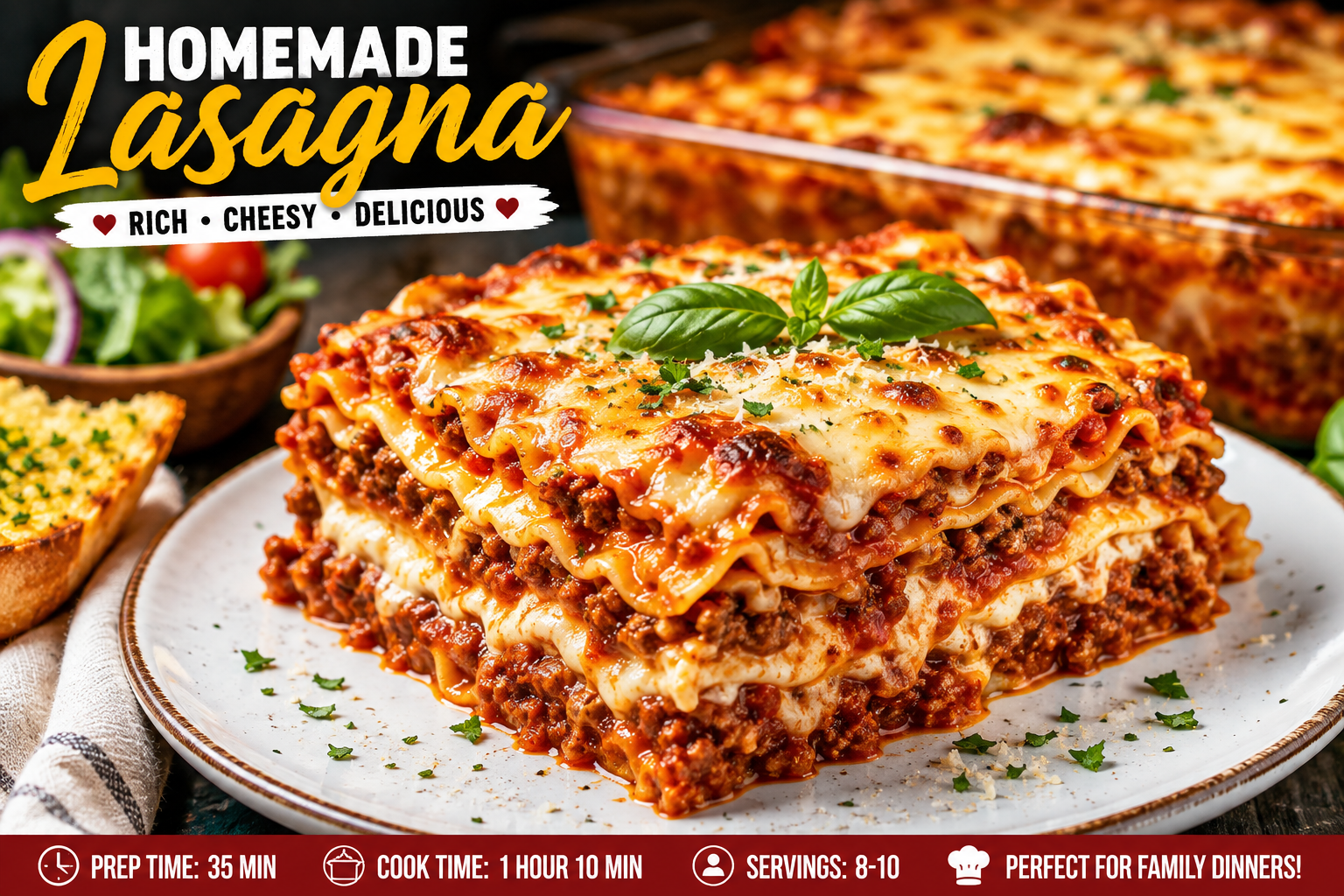
Introduction
If you’re looking for the ultimate comfort food that’s rich, cheesy, hearty, and guaranteed to impress everyone at the dinner table, this Homemade Lasagna Recipe is exactly what you need. Layer upon layer of tender pasta sheets, slow-simmered meat sauce, creamy ricotta cheese, gooey mozzarella, and freshly grated Parmesan come together to create one of the most loved Italian dishes in the world. Every bite is filled with incredible flavor, making lasagna the perfect choice for family dinners, weekend gatherings, holiday celebrations, birthdays, potlucks, and special occasions.
Lasagna has remained a timeless favorite for generations because it transforms simple ingredients into an unforgettable meal. While it may look like a restaurant-quality dish, homemade lasagna is surprisingly easy to prepare when each step is followed carefully. The combination of rich meat sauce, creamy cheese filling, perfectly cooked pasta, and bubbling golden cheese creates a comforting meal that’s difficult to resist. Whether you’re cooking for two people or feeding a large family, lasagna is always a crowd-pleaser that brings everyone together around the table.
The history of lasagna dates back centuries and is deeply connected to Italian cuisine. Although many regions of Italy have their own unique versions, the classic meat lasagna has become the most popular around the world. Over time, home cooks have created countless variations using different meats, vegetables, cheeses, and sauces, but the heart of every great lasagna remains the same—beautiful layers of pasta, rich sauce, creamy cheese, and plenty of melted mozzarella.
One of the biggest reasons homemade lasagna tastes so much better than frozen or store-bought versions is the quality of the ingredients. Fresh garlic, onions, herbs, premium ground beef, high-quality tomatoes, creamy ricotta, freshly shredded mozzarella, and real Parmesan cheese create deeper, fresher flavors that simply can’t be matched by processed ingredients. When these ingredients slowly cook together, they develop a rich aroma and comforting taste that fills your kitchen long before the lasagna comes out of the oven.
The meat sauce is one of the most important components of this recipe. Instead of simply combining beef with tomato sauce, a flavorful homemade sauce starts with sautéed onions and garlic before adding ground beef and Italian seasonings. Crushed tomatoes, tomato paste, herbs, and a slow simmer allow the flavors to blend together beautifully. This extra time creates a rich, savory sauce that coats every layer of pasta and provides the authentic flavor people expect from traditional lasagna.
The cheese filling is equally important. Ricotta cheese mixed with eggs, Parmesan cheese, parsley, and simple seasonings creates a creamy layer that balances the rich meat sauce perfectly. Freshly shredded mozzarella melts beautifully during baking, creating those irresistible cheesy layers that stretch with every slice. Using freshly grated cheese instead of packaged shredded cheese gives the lasagna a smoother texture and a richer, fresher taste.
Lasagna is also one of the most versatile recipes you can make. Although this guide focuses on the traditional beef version, you can easily customize it with Italian sausage, ground chicken, turkey, spinach, mushrooms, zucchini, roasted vegetables, or even seafood. Vegetarian lasagna has also become extremely popular, offering all the same comforting layers while replacing the meat with flavorful vegetables. No matter which version you choose, the layering method remains simple and produces consistently delicious results.
Another reason people love lasagna is that it can be prepared ahead of time. You can assemble the entire dish a day in advance, refrigerate it overnight, and bake it just before serving. Lasagna also freezes exceptionally well, making it perfect for meal prep. Preparing two pans at once allows you to enjoy one immediately while saving another for a future dinner. Many people even believe leftover lasagna tastes better because the flavors continue to develop as it rests.
This recipe is ideal for almost any occasion. Serve it for Sunday family dinners, Christmas celebrations, birthday parties, casual gatherings, or simply when you’re craving a warm and satisfying homemade meal. Pair it with garlic bread, Caesar salad, roasted vegetables, or a bowl of soup to create a complete restaurant-style dinner that everyone will enjoy.
Throughout this complete recipe guide, you’ll learn everything you need to know about making the perfect homemade lasagna. From selecting the best ingredients and preparing a rich homemade meat sauce to layering the pasta correctly, baking it to perfection, storing leftovers, reheating, freezing, serving, and discovering professional chef tips, every step is explained in detail. Even if you’ve never made lasagna before, this guide will help you create a beautiful dish that’s both impressive and incredibly delicious.
Whether you’re a beginner in the kitchen or an experienced home cook looking to perfect your favorite comfort food, this Homemade Lasagna Recipe will become one of the most reliable meals in your collection. Once you taste the rich meat sauce, creamy cheese layers, and perfectly baked golden topping, you’ll understand why homemade lasagna has remained one of the world’s favorite family dinners for generations.
Ingredients, Kitchen Equipment, and Preparation Guide
Now that you know why homemade lasagna is loved around the world, it’s time to gather everything you’ll need before you begin cooking. Choosing fresh, high-quality ingredients is one of the biggest secrets to making a lasagna that’s rich, flavorful, and worthy of any Italian restaurant. Although the ingredient list may seem long, most items are common pantry staples, and each one plays an important role in building the perfect layers of flavor.
A great lasagna begins with a deeply flavorful meat sauce, creamy cheese filling, tender pasta sheets, and plenty of freshly shredded cheese. Every ingredient contributes to the final texture and taste, so using the best quality products available will make a noticeable difference. Preparing everything before turning on the stove also makes the cooking process much smoother and helps ensure every layer comes together perfectly.
Ingredients for the Meat Sauce
The meat sauce is the heart of any traditional lasagna. It provides rich flavor, moisture, and the savory base that ties every layer together.
You’ll need:
- 1 pound (450 g) lean ground beef
- ½ pound Italian sausage (optional but highly recommended)
- 2 tablespoons olive oil
- 1 medium yellow onion, finely chopped
- 4 cloves garlic, minced
- 2 tablespoons tomato paste
- 1 large can (28 ounces) crushed tomatoes
- 2 cans (15 ounces each) tomato sauce
- 1 teaspoon Italian seasoning
- 1 teaspoon dried oregano
- 1 teaspoon dried basil
- ½ teaspoon red pepper flakes (optional)
- 1 teaspoon sugar (optional)
- Salt to taste
- Freshly ground black pepper to taste
Allowing this sauce to simmer slowly helps all of the ingredients blend into a rich, thick sauce that’s perfect for layering.
Ingredients for the Cheese Filling
The cheese layer gives lasagna its signature creamy texture and balances the richness of the meat sauce.
You’ll need:
- 2 cups whole milk ricotta cheese
- 1 large egg
- ½ cup freshly grated Parmesan cheese
- 2 tablespoons chopped fresh parsley
- Salt
- Black pepper
Mixing these ingredients together creates a smooth filling that spreads easily between the pasta layers.
Additional Ingredients
To complete the lasagna, you’ll also need:
- 12 lasagna noodles
- 4 cups freshly shredded mozzarella cheese
- 1 cup freshly grated Parmesan cheese
- Fresh basil or parsley for garnish (optional)
Freshly grated cheese melts much more smoothly than pre-packaged shredded cheese and gives the finished lasagna a richer flavor.
Choosing the Best Ground Beef
The quality of the beef greatly affects the final result.
An 80/20 blend is one of the best choices because it contains enough fat to keep the meat juicy while still producing a rich sauce.
If you prefer a lighter version, lean ground beef also works well.
Many home cooks combine ground beef with Italian sausage because the sausage adds extra herbs, spices, and richness that make the sauce taste even more authentic.
Why Fresh Cheese Matters
Cheese is one of the most important ingredients in lasagna.
Fresh mozzarella melts beautifully, creating soft, stretchy layers that make every slice irresistible.
Freshly grated Parmesan provides a rich, nutty flavor that enhances both the meat sauce and the cheese filling.
Avoid using powdered Parmesan whenever possible, as freshly grated cheese produces a much smoother texture and better flavor.
Fresh Herbs vs. Dried Herbs
Both fresh and dried herbs work well in homemade lasagna.
Fresh herbs provide brighter flavor, while dried herbs create deeper, concentrated seasoning during the long simmering process.
Many cooks like using dried herbs in the sauce and fresh parsley as a garnish after baking.
Choosing the Right Lasagna Noodles
There are two common types of noodles:
- Traditional lasagna noodles
- Oven-ready lasagna noodles
Traditional noodles must be boiled before assembling the lasagna.
Oven-ready noodles can be layered directly into the baking dish, saving preparation time.
Both options produce excellent results when enough sauce is used between each layer.
Essential Kitchen Equipment
You don’t need any special equipment to prepare homemade lasagna.
A few basic kitchen tools are enough:
- Large skillet
- Large saucepan
- Large stockpot
- Wooden spoon
- Mixing bowls
- Measuring cups and spoons
- Sharp chef’s knife
- Cutting board
- Cheese grater
- 9×13-inch baking dish
- Aluminum foil
Having everything ready before you begin makes the entire cooking process much easier.
Preparation Before Cooking
Professional chefs always prepare every ingredient before turning on the stove.
Before cooking:
- Chop the onion.
- Mince the garlic.
- Grate the cheeses.
- Measure all seasonings.
- Mix the ricotta filling.
- Prepare the baking dish.
Organizing everything in advance helps you work more efficiently and prevents mistakes while cooking.
By gathering fresh ingredients and preparing everything ahead of time, you’ll set yourself up for success and make the entire lasagna-making process smooth, enjoyable, and stress-free.
Step-by-Step Cooking Instructions
Now that all of your ingredients are prepared, it’s time to assemble everything into a rich, cheesy, and perfectly layered homemade lasagna. Although lasagna may look complicated, the cooking process is actually very straightforward when broken down into simple steps. The key is to prepare a flavorful meat sauce, cook the noodles correctly, create a creamy cheese filling, and layer everything evenly before baking.
Each layer plays an important role in the finished dish. The meat sauce provides bold, savory flavor, the cheese mixture adds creaminess, the pasta creates structure, and the mozzarella melts into beautiful stretchy layers. By following these steps carefully, you’ll achieve a lasagna that’s perfectly cooked, easy to slice, and packed with delicious flavor.
Step 1: Prepare the Meat Sauce
Heat a large skillet or Dutch oven over medium heat.
Add:
- 2 tablespoons olive oil
Once the oil is hot, add the chopped onion.
Cook for 4–5 minutes, stirring occasionally, until the onion becomes soft and translucent.
Next, add the minced garlic.
Cook for another 30–40 seconds, just until fragrant.
Avoid overcooking the garlic because burnt garlic can make the sauce bitter.
Add the ground beef and Italian sausage if you’re using it.
Break the meat into small pieces using a wooden spoon.
Cook for 8–10 minutes until the meat is fully browned.
Drain excess grease if necessary.
Stir in:
- Tomato paste
- Crushed tomatoes
- Tomato sauce
- Italian seasoning
- Oregano
- Basil
- Salt
- Black pepper
- Sugar (optional)
Mix everything thoroughly.
Reduce the heat to low.
Allow the sauce to simmer gently for 30–40 minutes, stirring occasionally.
This slow simmer develops a rich, deep flavor that’s one of the secrets to an outstanding homemade lasagna.
Step 2: Cook the Lasagna Noodles
While the sauce is simmering, bring a large pot of salted water to a boil.
Add the lasagna noodles.
Cook according to the package instructions until they are just al dente.
Do not overcook them because they will continue cooking while baking.
Drain the noodles.
Lay them flat on lightly oiled parchment paper or a baking sheet to prevent sticking.
If you’re using oven-ready noodles, you can skip this step.
Step 3: Prepare the Cheese Filling
In a large mixing bowl combine:
- Ricotta cheese
- Egg
- Parmesan cheese
- Chopped parsley
- Salt
- Black pepper
Mix until smooth and evenly combined.
This creamy filling creates soft, rich layers throughout the lasagna.
Step 4: Preheat the Oven
Preheat your oven to:
375°F (190°C)
Lightly grease a 9×13-inch baking dish with butter or cooking spray.
This prevents the lasagna from sticking during baking.
Step 5: Begin Layering
Spread a thin layer of meat sauce across the bottom of the baking dish.
This first layer keeps the noodles from sticking.
Place a single layer of lasagna noodles over the sauce.
Spread a portion of the ricotta mixture evenly across the noodles.
Add another layer of meat sauce.
Sprinkle generously with shredded mozzarella cheese.
Finish with a light layer of grated Parmesan.
Repeat these layers until all ingredients have been used.
Step 6: Finish the Top Layer
For the final layer, spread the remaining meat sauce evenly over the noodles.
Top generously with:
- Remaining mozzarella cheese
- Parmesan cheese
The generous cheese topping creates the signature golden, bubbly crust.
Step 7: Bake the Lasagna
Cover the baking dish loosely with aluminum foil.
Bake for 25 minutes.
Remove the foil.
Continue baking for another 20–25 minutes until the cheese is melted, bubbling, and lightly golden brown.
If you’d like a darker top, broil for 2–3 minutes, watching carefully to prevent burning.
Step 8: Let It Rest
Remove the lasagna from the oven.
Allow it to rest for 15–20 minutes before slicing.
Although it may be tempting to cut into it immediately, resting helps the layers set properly, making each slice neat and stable.
Step 9: Garnish
Before serving, garnish with:
- Fresh basil
- Chopped parsley
- Extra grated Parmesan cheese
These finishing touches add freshness, color, and even more flavor.
Step 10: Serve
Serve the lasagna while warm with:
- Garlic bread
- Caesar salad
- Roasted vegetables
- Soup
- Fresh garden salad
The combination of rich lasagna and fresh side dishes creates a complete restaurant-style meal that’s perfect for any occasion.
By following these simple steps carefully, you’ll create a beautifully layered homemade lasagna with tender pasta, rich meat sauce, creamy cheese filling, and a perfectly golden cheesy topping that’s sure to impress every guest at your table.
Recipe Variations, Best Cheese Choices, Meat Options, and Expert Layering Tips
One of the biggest reasons Homemade Lasagna has remained one of the world’s favorite comfort foods is its incredible versatility. While the traditional recipe combines pasta, meat sauce, ricotta, mozzarella, and Parmesan cheese, there are countless delicious variations that allow you to customize every layer according to your taste.
Whether you prefer extra cheese, different meats, fresh vegetables, or healthier alternatives, lasagna can easily be adapted without losing its rich and comforting flavor. In this section, you’ll discover the most popular lasagna variations, learn how to choose the best cheeses and meats, and understand the professional layering techniques that make every slice hold together beautifully.
Classic Beef Lasagna
The traditional version remains the most popular.
It includes:
- Ground beef
- Tomato meat sauce
- Ricotta cheese
- Mozzarella cheese
- Parmesan cheese
- Lasagna noodles
This timeless combination creates rich flavor and perfectly balanced layers.
If you’re making lasagna for the first time, the classic version is always the best place to start.
Italian Sausage Lasagna
Many Italian restaurants combine ground beef with Italian sausage.
Italian sausage adds:
- Extra herbs
- Richer flavor
- More moisture
- Slightly spicy taste
A mixture of half beef and half Italian sausage creates one of the most flavorful meat sauces possible.
Chicken Lasagna
If you prefer poultry instead of beef, chicken is an excellent alternative.
Use:
- Cooked shredded chicken
- Diced chicken breast
- Rotisserie chicken
Pair it with a creamy Alfredo-style sauce or traditional tomato sauce for a lighter variation.
Vegetarian Lasagna
Vegetarian lasagna is just as satisfying.
Popular vegetables include:
- Spinach
- Mushrooms
- Zucchini
- Eggplant
- Bell peppers
- Broccoli
Roasting the vegetables before layering removes excess moisture and concentrates their flavor.
Four Cheese Lasagna
Cheese lovers often prepare a four-cheese version.
Popular cheeses include:
- Ricotta
- Mozzarella
- Parmesan
- Provolone
Some cooks also add Fontina or Asiago cheese for even more richness.
Best Cheese for Lasagna
Choosing quality cheese dramatically improves the finished dish.
The most commonly used cheeses are:
- Whole milk ricotta
- Fresh mozzarella
- Parmesan
- Provolone
Freshly grated cheese melts much better than pre-packaged shredded cheese.
Best Pasta Sheets
Lasagna can be prepared using:
- Traditional noodles
- Oven-ready noodles
- Fresh pasta sheets
Traditional noodles create the most authentic texture, while oven-ready noodles save preparation time.
How to Build Perfect Layers
Restaurant-quality lasagna depends on even layering.
The correct order is:
- Meat sauce
- Pasta
- Ricotta mixture
- Meat sauce
- Mozzarella
- Parmesan
Repeat this sequence until all ingredients are used.
Finish with plenty of mozzarella and Parmesan on top.
Common Layering Mistakes
Avoid these mistakes:
- Too little sauce between layers.
- Too much cheese in one layer.
- Thick pasta layers.
- Uneven spreading.
- Cutting immediately after baking.
Proper layering produces clean slices that stay together beautifully.
Professional Chef Tips
Restaurant chefs recommend:
- Simmer the sauce slowly.
- Use freshly grated cheese.
- Keep every layer even.
- Do not overfill the baking dish.
- Bake covered first, then uncover.
- Rest the lasagna before slicing.
These simple techniques make a huge difference in texture and presentation.
Why Homemade Lasagna Is Better
Making lasagna at home allows you to:
- Choose premium-quality ingredients.
- Control seasoning.
- Use fresh cheese.
- Add extra vegetables.
- Customize every layer.
- Save money compared to restaurants.
The result is a richer, fresher, and more flavorful meal that your entire family will enjoy.
Best Side Dishes, Storage Tips, Reheating Methods, and Meal Prep Guide
A homemade Lasagna is already a complete and satisfying meal, but pairing it with the right side dishes can turn it into a restaurant-quality dining experience. The rich layers of meat sauce, creamy cheese, and tender pasta are beautifully balanced by lighter side dishes such as salads, roasted vegetables, and fresh bread. Whether you’re preparing dinner for your family, hosting guests, or planning meals for the week, choosing the right accompaniments makes the experience even more enjoyable.
Lasagna is also one of the best recipes for meal preparation because it stores, freezes, and reheats exceptionally well. Many people even believe it tastes better the following day as the flavors continue to blend together. In this section, you’ll learn the best side dishes, beverages, storage methods, freezing instructions, reheating techniques, and meal-prep ideas to keep your homemade lasagna tasting fresh and delicious.
Best Side Dishes for Lasagna
Because lasagna is rich and cheesy, lighter side dishes create the perfect balance.
Some of the best options include:
- Garlic bread
- Cheesy breadsticks
- Caesar salad
- Garden salad
- Roasted broccoli
- Green beans
- Steamed asparagus
- Roasted Brussels sprouts
- Sautéed spinach
- Roasted carrots
Fresh vegetables provide a refreshing contrast to the rich pasta and cheese while adding extra color and nutrition to the meal.
Garlic Bread
Garlic bread is one of the most popular side dishes for lasagna.
Its crispy crust and buttery garlic flavor pair beautifully with the rich tomato sauce.
Simply spread softened butter mixed with minced garlic and parsley over slices of French bread.
Bake until lightly golden.
Serve warm for the best flavor.
Fresh Caesar Salad
A crisp Caesar salad balances the richness of homemade lasagna.
Combine:
- Romaine lettuce
- Parmesan cheese
- Homemade Caesar dressing
- Croutons
- Fresh black pepper
The crisp texture and creamy dressing complement the soft layers of lasagna perfectly.
Roasted Vegetables
Roasted vegetables add both nutrition and flavor.
Excellent choices include:
- Broccoli
- Zucchini
- Bell peppers
- Mushrooms
- Brussels sprouts
- Cauliflower
Lightly season with olive oil, salt, pepper, and Italian herbs before roasting until tender.
Best Drinks to Serve
Refreshing beverages pair wonderfully with rich baked pasta.
Popular choices include:
- Sparkling water
- Fresh lemonade
- Iced tea
- Apple juice
- Grape juice
- Citrus-infused water
Cold drinks help balance the richness of the cheese and meat sauce.
How to Store Leftovers
Lasagna stores exceptionally well.
Allow it to cool completely before refrigerating.
Transfer individual portions into airtight containers or cover the baking dish tightly with plastic wrap or foil.
Store in the refrigerator for:
Up to 4 days
Proper storage keeps the pasta moist while preserving the flavor.
Can You Freeze Lasagna?
Yes.
Lasagna is one of the best freezer-friendly meals.
To freeze:
- Allow it to cool completely.
- Cut into individual portions or freeze the entire pan.
- Wrap tightly with plastic wrap and aluminum foil.
- Label with the date.
Freeze for:
Up to 3 months
When ready to eat, thaw overnight in the refrigerator before reheating.
How to Reheat Lasagna
In the Oven
Preheat the oven to:
350°F (175°C)
Cover the lasagna with foil.
Bake for:
25–30 minutes
Remove the foil during the final few minutes if you’d like the cheese to become slightly crispy again.
In the Microwave
Place one portion on a microwave-safe plate.
Cover loosely.
Heat for:
2–3 minutes
Continue heating in 30-second intervals if necessary.
From Frozen
If baking directly from frozen:
Bake at:
350°F (175°C)
for approximately:
60–75 minutes
Cover with foil until the final 15 minutes.
Meal Prep Tips
Lasagna is perfect for meal prep.
You can:
- Prepare the meat sauce in advance.
- Mix the cheese filling ahead of time.
- Assemble the lasagna the day before baking.
- Freeze individual servings for future meals.
These simple preparations save valuable time during busy weekdays.
Serving Tips for Parties
If serving a crowd:
- Cut neat squares after allowing the lasagna to rest.
- Garnish each serving with fresh parsley.
- Offer extra Parmesan cheese at the table.
- Serve garlic bread and salad separately.
Guests can easily enjoy a complete Italian-style dinner.
With proper storage, reheating, and meal-prep techniques, your homemade lasagna will remain just as rich, cheesy, and satisfying as the day it was baked. Whether you’re serving it fresh from the oven or enjoying leftovers the next day, every bite will be full of comforting homemade flavor.
Nutrition Facts, Health Benefits, Professional Chef Tips, and Frequently Asked Questions
Homemade Lasagna is often considered one of the world’s greatest comfort foods. Rich layers of pasta, meat sauce, creamy ricotta, mozzarella, and Parmesan create a satisfying meal that’s perfect for sharing with family and friends. Although lasagna is known for being hearty, making it at home allows you to control the quality of the ingredients, portion sizes, and seasonings, making it much healthier than many frozen or restaurant versions.
In this section, you’ll learn about the nutritional value of homemade lasagna, its health benefits, professional chef tips, and answers to the most common questions people ask before preparing this classic Italian-inspired dish.
Nutritional Information
The nutritional values below are approximate for one serving of traditional homemade lasagna.
- Calories: 450–650 kcal
- Protein: 25–35 grams
- Carbohydrates: 35–45 grams
- Fat: 20–30 grams
- Fiber: 3–5 grams
- Calcium: 30–40% of the Daily Value
- Iron: 20–30% of the Daily Value
The exact nutritional values depend on the meat, cheese, and pasta used.
Health Benefits
Although lasagna is often viewed as indulgent, it also provides many important nutrients when prepared with fresh ingredients.
High in Protein
Ground beef, ricotta cheese, mozzarella, and Parmesan are all excellent sources of protein.
Protein helps:
- Build muscle
- Repair body tissues
- Keep you feeling full longer
- Support healthy metabolism
A protein-rich meal like lasagna is especially satisfying and filling.
Excellent Source of Calcium
The generous amount of cheese provides plenty of calcium.
Calcium supports:
- Strong bones
- Healthy teeth
- Proper muscle function
- Normal nerve function
Using fresh dairy products increases both nutrition and flavor.
Provides Iron
Ground beef naturally contains iron.
Iron helps:
- Produce healthy red blood cells
- Transport oxygen throughout the body
- Reduce tiredness caused by iron deficiency
Choosing lean beef still provides these important nutrients.
Tomatoes Provide Antioxidants
Tomato sauce contains natural antioxidants such as lycopene.
These antioxidants help support overall health and add rich flavor to the meat sauce.
Fresh Herbs Add Nutrition
Adding parsley, basil, oregano, and garlic provides additional vitamins, minerals, and natural antioxidants while enhancing flavor.
How to Make Lasagna Healthier
If you’re looking for a lighter version, try these simple adjustments:
- Use lean ground beef or ground turkey.
- Choose part-skim ricotta cheese.
- Reduce the amount of mozzarella.
- Add spinach, zucchini, or mushrooms.
- Use whole wheat lasagna noodles.
- Serve with salad instead of extra bread.
These changes reduce calories while maintaining excellent flavor.
Professional Chef Tips
Restaurant chefs rely on a few simple techniques that produce perfect lasagna every time.
- Simmer the meat sauce slowly.
- Use freshly grated cheese.
- Spread every layer evenly.
- Don’t overload the pasta with filling.
- Cover during the first half of baking.
- Allow the lasagna to rest before slicing.
- Garnish just before serving.
These techniques create clean slices with beautiful layers.
Frequently Asked Questions
Can I prepare lasagna the day before?
Yes.
Lasagna is actually one of the best make-ahead meals.
Assemble it completely, cover tightly, and refrigerate overnight.
Bake it the following day.
Can I freeze unbaked lasagna?
Absolutely.
Wrap the assembled lasagna tightly with plastic wrap and aluminum foil.
Freeze for:
Up to 3 months
Bake after thawing overnight in the refrigerator.
Can I use cottage cheese instead of ricotta?
Yes.
Many home cooks replace ricotta with cottage cheese.
The texture becomes slightly lighter while still producing creamy layers.
Why is my lasagna watery?
Common causes include:
- Using watery vegetables.
- Not simmering the sauce long enough.
- Cutting immediately after baking.
- Overcooking the noodles.
Allowing the lasagna to rest for 15–20 minutes solves many of these problems.
Can I use oven-ready noodles?
Yes.
Oven-ready noodles save preparation time and absorb moisture from the sauce while baking.
Simply ensure the sauce contains enough liquid.
How do I know when the lasagna is done?
The cheese should be:
- Melted
- Bubbling
- Light golden brown
The internal temperature should reach approximately 165°F (74°C) before serving.
Why This Recipe Always Works
This homemade lasagna recipe succeeds because it focuses on fresh ingredients, balanced layers, and proper cooking techniques.
Every layer contributes something special:
- Rich meat sauce
- Tender pasta
- Creamy ricotta
- Gooey mozzarella
- Savory Parmesan
- Fresh herbs
Together they create one of the most comforting and satisfying meals you can prepare at home.
Whether you’re cooking for a family dinner, holiday celebration, weekend gathering, or meal prep, this homemade lasagna is guaranteed to become one of your most-loved recipes. Once you’ve mastered the layering technique and rich homemade sauce, you’ll enjoy restaurant-quality lasagna whenever you want.
Recipe Variations from Around the World, Creative Serving Ideas, and Common Mistakes to Avoid
One of the biggest reasons Lasagna has remained one of the most beloved pasta dishes in the world is its incredible versatility. Although the classic Italian-style meat lasagna continues to be the most popular version, home cooks and professional chefs have created countless delicious variations using different meats, vegetables, sauces, and cheeses. No matter your personal preference, there is a lasagna recipe that perfectly suits your taste.
In this section, you’ll discover some of the most popular lasagna variations, creative serving ideas, and the common mistakes that can prevent your lasagna from turning out perfectly.
Classic Italian Lasagna
The traditional version remains the gold standard.
It includes:
- Homemade meat sauce
- Lasagna noodles
- Ricotta cheese
- Mozzarella cheese
- Parmesan cheese
Each layer is carefully assembled before baking until golden and bubbling.
This version is ideal for anyone making homemade lasagna for the first time.
White Chicken Lasagna
If you prefer chicken instead of beef, White Chicken Lasagna is an excellent choice.
Replace the meat sauce with:
- Cooked shredded chicken
- Creamy Alfredo sauce
- Ricotta cheese
- Mozzarella cheese
- Spinach
The result is rich, creamy, and incredibly satisfying.
Vegetarian Lasagna
Vegetarian lasagna is packed with fresh vegetables while still delivering all the comfort of the classic version.
Popular vegetables include:
- Spinach
- Mushrooms
- Zucchini
- Eggplant
- Bell peppers
- Broccoli
Roasting the vegetables before layering removes excess moisture and intensifies their flavor.
Seafood Lasagna
For seafood lovers, try using:
- Shrimp
- Crab
- Scallops
- White fish
Pair them with a creamy white sauce instead of tomato sauce for a luxurious variation.
Extra Cheesy Lasagna
Cheese lovers can create an even richer version by combining:
- Ricotta
- Mozzarella
- Parmesan
- Provolone
- Fontina
These cheeses melt together into an incredibly creamy filling.
Healthy Lasagna
For a lighter version:
- Use lean ground turkey.
- Choose part-skim ricotta.
- Reduce the mozzarella.
- Add extra vegetables.
- Use whole wheat pasta sheets.
These simple changes reduce calories while maintaining wonderful flavor.
Mini Lasagnas
Instead of making one large baking dish, prepare individual portions using:
- Small ramekins
- Mini baking dishes
- Muffin tins
Mini lasagnas are perfect for parties, meal prep, and individual servings.
Creative Serving Ideas
Lasagna doesn’t always have to be served alone.
Pair it with:
- Garlic bread
- Caesar salad
- Tomato soup
- Roasted vegetables
- Bruschetta
- Garlic knots
- Fresh garden salad
These side dishes complete the meal beautifully.
Common Mistakes to Avoid
Even experienced cooks sometimes make small mistakes.
Avoid these common problems:
- Using watery meat sauce.
- Overcooking the noodles.
- Adding too much filling.
- Using pre-shredded cheese.
- Skipping the resting time.
- Baking uncovered for the entire cooking time.
Correcting these mistakes produces cleaner slices and much better flavor.
Restaurant Secrets
Professional chefs rely on several techniques that dramatically improve homemade lasagna.
They always:
- Simmer the sauce slowly.
- Use freshly grated cheese.
- Build even layers.
- Bake covered first.
- Finish uncovered for a golden top.
- Rest before slicing.
These simple techniques produce beautiful, restaurant-quality results every time.
Why Homemade Lasagna Is Worth Making
Making lasagna from scratch allows you to:
- Choose premium-quality ingredients.
- Adjust seasoning.
- Control the cheese.
- Add fresh vegetables.
- Avoid preservatives.
- Feed a large family for less than restaurant prices.
The result is richer, fresher, and far more satisfying than frozen or store-bought lasagna.
Final Thoughts
Lasagna is much more than just a baked pasta dish—it’s a comforting family meal that brings people together. Whether you enjoy the classic beef version, a creamy chicken variation, or a vegetable-packed alternative, every homemade lasagna delivers warmth, flavor, and satisfaction.
Once you’ve mastered the layering technique and discovered your favorite combination of ingredients, you’ll find yourself making lasagna again and again for holidays, family dinners, celebrations, and cozy weekends at home.
Best Ingredients, Cheese Guide, Pasta Selection, and Professional Chef Secrets
Making an unforgettable Homemade Lasagna isn’t just about following a recipe—it’s about choosing the right ingredients and understanding how each one contributes to the finished dish. Professional chefs know that the difference between an average lasagna and an exceptional one comes down to ingredient quality, proper preparation, and attention to detail. Even small changes, such as using freshly grated cheese instead of packaged cheese or simmering the meat sauce a little longer, can dramatically improve the final result.
In this section, you’ll learn how to select the best ingredients, understand the role of each component, discover restaurant-quality cooking techniques, and avoid the small mistakes that often prevent homemade lasagna from reaching its full potential.
Choosing the Best Pasta
Lasagna noodles create the structure that holds every delicious layer together.
There are three common types available:
- Traditional dried lasagna noodles
- Oven-ready lasagna noodles
- Fresh homemade pasta sheets
Traditional noodles provide the classic texture that many people love.
Oven-ready noodles save preparation time because they cook while baking and absorb moisture directly from the sauce.
Fresh pasta sheets produce an incredibly tender lasagna with delicate layers, making them a favorite among many professional chefs.
Whichever type you choose, always make sure there is enough sauce between the layers so the pasta cooks evenly and stays moist.
The Best Meat for Lasagna
The meat sauce is one of the most important parts of this recipe.
The most popular choices include:
- Lean ground beef
- Ground chuck
- Italian sausage
- Ground turkey
- Ground chicken
Many cooks combine ground beef and Italian sausage because the sausage adds extra richness, herbs, and seasoning to the sauce.
If you’re looking for a lighter version, lean ground turkey is an excellent substitute while still producing delicious results.
Choosing the Best Tomatoes
Tomatoes provide the foundation of the meat sauce.
For the richest flavor, use:
- Crushed tomatoes
- Tomato sauce
- Tomato paste
Tomato paste adds concentrated flavor, while crushed tomatoes create the perfect texture.
Many chefs also add a small pinch of sugar to balance the natural acidity of the tomatoes.
Fresh Garlic Makes a Difference
Garlic is one of the signature flavors in homemade lasagna.
Fresh garlic provides:
- Rich aroma
- Deep flavor
- Better freshness
- More authentic Italian taste
Although garlic powder can be used when necessary, freshly minced garlic always delivers superior results.
The Importance of Fresh Herbs
Fresh herbs brighten the entire dish.
Popular choices include:
- Fresh basil
- Fresh parsley
- Fresh oregano
If fresh herbs aren’t available, dried herbs still produce excellent flavor when added during the simmering stage.
Best Cheese for Homemade Lasagna
Cheese is what makes lasagna creamy, rich, and comforting.
The traditional combination includes:
- Ricotta cheese
- Mozzarella cheese
- Parmesan cheese
Ricotta creates soft, creamy layers.
Mozzarella melts beautifully and creates the classic cheese pull.
Parmesan adds a rich, nutty flavor that enhances every bite.
Some cooks also add:
- Provolone
- Fontina
- Asiago
for even deeper flavor.
Why Freshly Grated Cheese Is Better
Freshly grated cheese melts much more smoothly than packaged shredded cheese.
It provides:
- Better flavor
- Creamier texture
- More even melting
- Restaurant-quality appearance
Grating your own cheese takes only a few extra minutes but greatly improves the finished lasagna.
Professional Layering Secrets
Restaurant chefs pay close attention to layering.
Each layer should remain even from edge to edge.
Avoid creating thick pockets of cheese or sauce in one area.
Consistent layers help the lasagna cook evenly and produce beautiful slices after baking.
Restaurant Baking Techniques
Professional kitchens usually bake lasagna in two stages.
First:
- Cover with aluminum foil.
This traps steam and allows the pasta to finish cooking without drying out.
Then:
- Remove the foil.
The exposed cheese develops a beautiful golden-brown crust that’s one of lasagna’s most recognizable features.
The Importance of Resting
One of the biggest mistakes people make is slicing lasagna immediately after baking.
Fresh from the oven, the cheese is still extremely hot and the layers haven’t fully set.
Allow the lasagna to rest for:
15–20 minutes
This short waiting period allows the cheese to firm slightly, making each slice much cleaner and easier to serve.
Professional Chef Secrets
Experienced chefs follow a few simple rules every time they prepare lasagna:
- Simmer the sauce slowly.
- Use freshly grated cheese.
- Layer evenly.
- Never rush the baking process.
- Let the lasagna rest before slicing.
- Garnish just before serving.
These techniques consistently produce rich, flavorful, restaurant-quality lasagna.
Final Tips Before Baking
Before placing your lasagna into the oven, quickly check:
- The noodles are fully covered with sauce.
- The cheese is evenly distributed.
- The baking dish isn’t overfilled.
- The oven is fully preheated.
- The foil is loosely covering the top.
These small details help ensure perfectly cooked pasta, creamy layers, and a beautifully browned cheese topping every single time.
By selecting premium ingredients and following these professional techniques, you’ll create a homemade lasagna that’s rich, cheesy, perfectly layered, and every bit as delicious as the version served in your favorite Italian restaurant.
Meal Prep, Serving Ideas, Storage Guide, Reheating Tips, and Common Mistakes to Avoid
One of the greatest advantages of Homemade Lasagna is that it isn’t just delicious on the day it’s baked—it also stores beautifully, reheats wonderfully, and is one of the best make-ahead meals you can prepare. In fact, many people believe lasagna tastes even better the next day because the sauce, cheese, and pasta have more time to absorb each other’s flavors. This makes it an ideal recipe for meal prep, busy weeknights, family gatherings, holiday celebrations, and entertaining guests.
Whether you’re preparing lasagna for a special occasion or simply planning meals for the week ahead, understanding how to serve, store, freeze, and reheat it properly will help maintain its rich flavor and perfect texture.
Perfect Side Dishes for Lasagna
Although lasagna is a complete meal by itself, pairing it with the right side dishes creates a balanced Italian-inspired dinner.
Some of the best side dishes include:
- Garlic bread
- Cheesy breadsticks
- Caesar salad
- Fresh garden salad
- Roasted broccoli
- Steamed asparagus
- Green beans
- Roasted Brussels sprouts
- Tomato basil soup
- Minestrone soup
Fresh vegetables provide a refreshing contrast to the rich meat sauce and creamy cheese.
Fresh Salads That Pair Perfectly
Because lasagna is hearty, a crisp salad balances the meal beautifully.
Popular salad choices include:
- Caesar salad
- Italian chopped salad
- Greek salad
- Garden salad
- Cucumber tomato salad
A simple dressing made with olive oil and lemon juice keeps the meal fresh and light.
Best Bread to Serve
Warm bread is perfect for soaking up extra meat sauce.
Excellent choices include:
- Garlic bread
- Italian bread
- French baguette
- Focaccia
- Dinner rolls
- Garlic knots
Serve the bread warm with butter for the best experience.
Perfect Drinks
Refreshing beverages complement lasagna without overpowering its rich flavor.
Some great options include:
- Sparkling water
- Fresh lemonade
- Iced tea
- Apple juice
- Grape juice
- Citrus-infused water
These drinks provide a refreshing contrast to the creamy cheese and rich tomato sauce.
How to Store Leftovers
Lasagna stores extremely well when handled properly.
Allow it to cool completely before refrigerating.
Transfer slices into airtight containers or tightly cover the baking dish.
Store in the refrigerator for:
Up to 4 days
Keeping the lasagna sealed prevents it from drying out.
Can You Freeze Lasagna?
Absolutely.
Lasagna is one of the best freezer-friendly meals.
To freeze:
- Allow it to cool completely.
- Slice into portions or freeze the entire pan.
- Wrap tightly with plastic wrap.
- Cover again with aluminum foil.
- Label with the freezing date.
Freeze for:
Up to 3 months
Thaw overnight in the refrigerator before reheating.
Best Ways to Reheat Lasagna
Oven Method
The oven provides the best texture.
Preheat the oven to:
350°F (175°C)
Cover the lasagna loosely with foil.
Bake for:
25–30 minutes
Remove the foil during the final few minutes if you want the cheese to become golden again.
Microwave Method
For individual servings:
Place one slice on a microwave-safe plate.
Cover loosely.
Heat for:
2–3 minutes
Continue heating in 30-second intervals until fully warmed.
From Frozen
Bake frozen lasagna at:
350°F (175°C)
for approximately:
60–75 minutes
Cover during most of the baking time.
Remove the foil during the final 15 minutes.
Meal Prep Tips
Lasagna is one of the easiest meals to prepare in advance.
You can:
- Make the meat sauce several days early.
- Prepare the cheese mixture ahead of time.
- Assemble the lasagna the night before baking.
- Freeze fully assembled pans.
These techniques save time while producing outstanding results.
Common Mistakes to Avoid
Even experienced cooks sometimes make small mistakes.
Avoid these common problems:
- Overcooking the noodles.
- Using watery sauce.
- Adding too little sauce.
- Using pre-shredded cheese.
- Skipping the resting period.
- Overfilling each layer.
- Baking at the wrong temperature.
Correcting these mistakes creates cleaner slices, richer flavor, and better texture.
Restaurant Presentation Tips
Serve lasagna on warm plates.
Garnish each serving with:
- Fresh basil
- Fresh parsley
- Extra grated Parmesan
- Freshly cracked black pepper
Pair with garlic bread and salad for an elegant restaurant-style presentation.
Final Serving Tips
For the very best dining experience:
- Let the lasagna rest before slicing.
- Use a sharp spatula for clean portions.
- Garnish immediately before serving.
- Serve while hot.
- Offer extra Parmesan cheese at the table.
Following these simple techniques ensures every serving looks beautiful, tastes incredible, and delivers the comforting homemade flavor that makes lasagna one of the world’s most beloved baked pasta dishes.
Complete Recipe Summary, Final FAQs, Nutrition Facts, and Conclusion
Congratulations! You now have everything you need to prepare an authentic, rich, and perfectly layered Homemade Lasagna that’s every bit as delicious as the version served in your favorite Italian restaurant. From selecting premium ingredients and preparing a flavorful meat sauce to mastering the layering technique and baking the lasagna until golden brown, you’ve learned every important step required to create this timeless comfort food.
Whether you’re making lasagna for a family dinner, holiday celebration, birthday party, weekend gathering, or meal prep, this complete guide provides everything necessary to help you achieve consistently delicious results.
Quick Recipe Summary
Recipe Name: Homemade Lasagna
Cuisine: Italian
Course: Main Course
Preparation Time: 35 minutes
Cooking Time: 1 hour 10 minutes
Resting Time: 20 minutes
Total Time: Approximately 2 hours
Servings: 8–10
Difficulty Level: Easy to Moderate
Complete Ingredient Checklist
Before beginning, make sure you have:
For the Meat Sauce
- Ground beef
- Italian sausage (optional)
- Onion
- Garlic
- Tomato paste
- Crushed tomatoes
- Tomato sauce
- Italian seasoning
- Oregano
- Basil
- Olive oil
- Salt
- Black pepper
For the Cheese Filling
- Ricotta cheese
- Mozzarella cheese
- Parmesan cheese
- Egg
- Fresh parsley
Other Ingredients
- Lasagna noodles
- Fresh basil (optional)
Preparing everything ahead of time makes the cooking process much smoother.
Cooking Timeline
Preparation
- Chop vegetables
- Prepare cheese filling
- Cook noodles (if needed)
- Simmer meat sauce
Assembly
- Layer meat sauce
- Pasta
- Cheese mixture
- Mozzarella
- Parmesan
Repeat until complete.
Baking
- Bake covered.
- Bake uncovered.
- Allow the lasagna to rest before slicing.
Following this order ensures perfectly cooked layers every time.
Final Frequently Asked Questions
Can I make lasagna without meat?
Yes.
Simply replace the meat with vegetables like:
- Spinach
- Mushrooms
- Eggplant
- Zucchini
- Bell peppers
Vegetarian lasagna is equally delicious.
Can I prepare lasagna several days ahead?
Yes.
Assemble the lasagna up to 2 days before baking.
Store it covered in the refrigerator until ready to bake.
Can I use different cheeses?
Absolutely.
Many people combine:
- Mozzarella
- Ricotta
- Parmesan
- Provolone
- Fontina
- Asiago
This creates an even richer cheese layer.
Why is homemade lasagna better than frozen?
Homemade lasagna allows you to:
- Choose premium ingredients.
- Control seasoning.
- Use fresh herbs.
- Avoid preservatives.
- Customize every layer.
The result is fresher, richer, and much more flavorful.
Nutrition Facts (Approximate Per Serving)
- Calories: 450–650 kcal
- Protein: 25–35 g
- Carbohydrates: 35–45 g
- Fat: 20–30 g
- Fiber: 3–5 g
- Calcium: High
- Iron: High
Nutritional values vary depending on ingredients and serving size.
Professional Chef’s Final Advice
Before serving, remember these important tips:
- Simmer the meat sauce slowly.
- Use freshly grated cheese.
- Layer evenly.
- Bake at the proper temperature.
- Let the lasagna rest before cutting.
- Garnish just before serving.
These simple techniques consistently produce restaurant-quality lasagna.
Final Thoughts
Homemade Lasagna is much more than a baked pasta dish—it’s a meal that brings family and friends together around the table. Rich layers of slow-simmered meat sauce, creamy ricotta, melted mozzarella, Parmesan cheese, and perfectly cooked pasta create one of the most comforting meals you can prepare.
Although making lasagna requires a little time, every minute is rewarded with incredible flavor, beautiful presentation, and leftovers that taste just as wonderful the next day. It’s a recipe that’s perfect for celebrations, holidays, Sunday dinners, meal prep, and everyday family meals.
Once you’ve mastered this complete recipe, you’ll have a dependable dish that can be customized in countless ways and enjoyed throughout the year. Whether you keep it traditional or experiment with new ingredients, homemade lasagna is sure to become one of your most requested recipes.
Thank you for cooking with HerHappyKitchen.
We hope this recipe helps you create unforgettable meals and wonderful memories with the people you love.
Happy Cooking! ❤️